
Culture Done Right: What Actually Makes a Brand Culturally Relevant
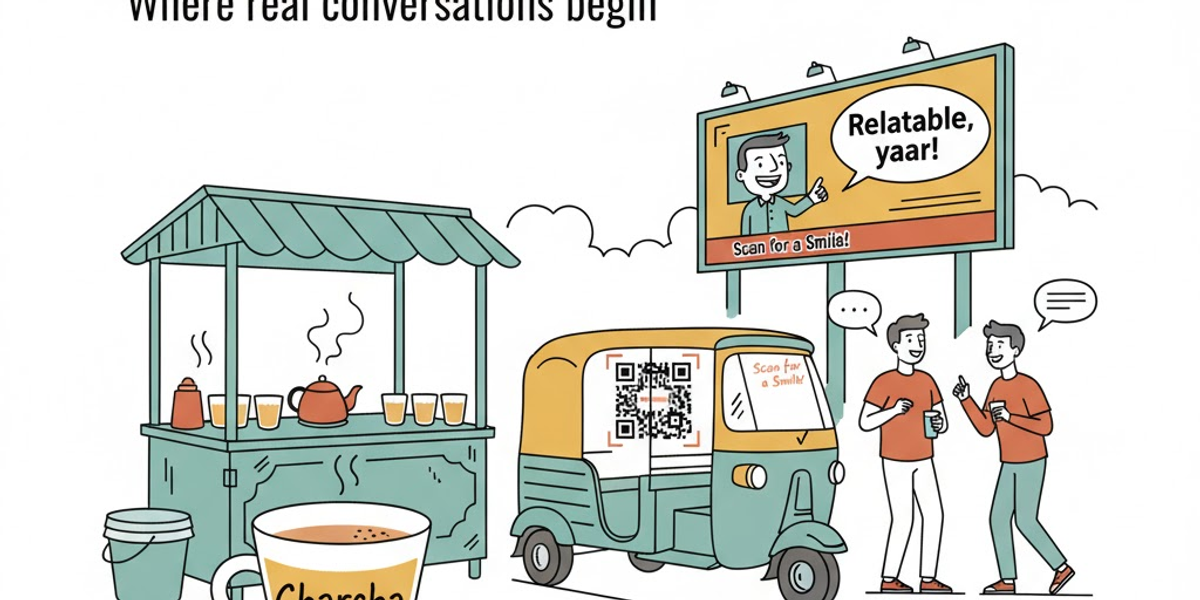
In marketing, standing out is easy. Belonging? That’s the real flex.
Looking for a brand communication agency that makes your message impossible to ignore? CupShup blends AI-powered insights with creative storytelling across 10,000+ campaigns, helping brands craft communications that resonate, engage, and convert.
Because while anyone can buy eyeballs, only a few brands earn that rare "arre yeh toh apna lagta hai” energy.
India doesn’t wake up to marketing jargon or performance dashboards. We wake up to chai, memes, wedding invites, and family group forwards. And somewhere between that first sip of tea and the 9 AM traffic, culturally relevant brands find their sweet spot, not by interrupting life, but by blending right into it.
So, what does being "culturally relevant” even mean?
In simple terms, it’s when your brand becomes part of people’s lives without trying too hard.
You know that friend who just "gets the vibe”? That’s what a culturally relevant brand feels like.
It’s not about dropping Hindi words in your captions or posting "relatable” reels. It’s about genuinely understanding what people care about and showing up where it matters through powerful campaigns, emotional digital storytelling, and experiences that fit naturally into people’s daily lives.
According to Kantar’s 2024 BrandZ Report, brands that master cultural relevance grow up to six times faster than others. Why? Because consumers don’t just buy what you sell; they buy how you make them feel seen and understood.
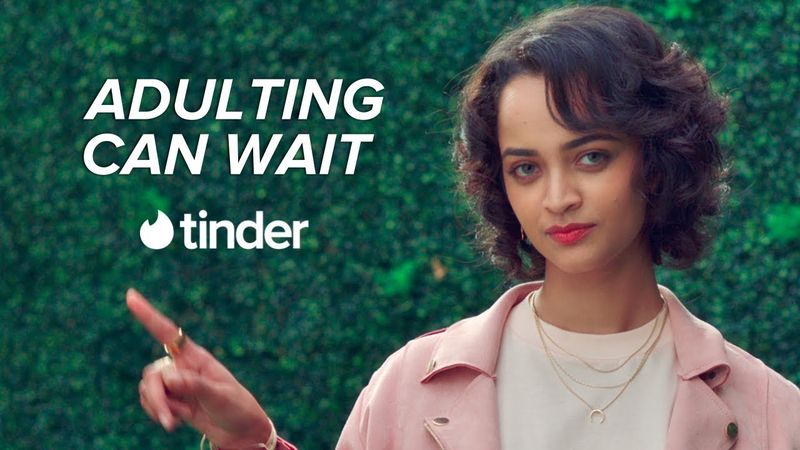
Tinder India nailed this with "Adulting Can Wait". They weren’t selling dating. They were selling independence and choice, two ideas Indian youth were quietly craving.
And Tata Tea’s Jaago Re campaign? It didn’t sell tea. It sold awareness. It became something we said, not just something we watched. That’s when you know your brand has entered culture.

Why does it matter so much?
Because culture pays. Literally.
A 2024 WARC and TikTok study showed that 56% of people are more likely to buy from brands that feel culturally relevant. Forbes also found that cultural alignment builds stronger brand equity over time.
When people see their humor, struggles, and aspirations reflected in your brand, they stop treating you like an outsider. You become part of their circle, the brand that gets them.
Maaz puts it perfectly: "Cultural relevance isn’t an aesthetic; it’s emotional math".
And that math doesn’t live in spreadsheets. It lives in street corners, WhatsApp groups, and neighborhood chai tapris.
At CupShup, we always say you can’t hack culture from a cubicle. You’ve got to sip it, scroll it, and sometimes meme it.
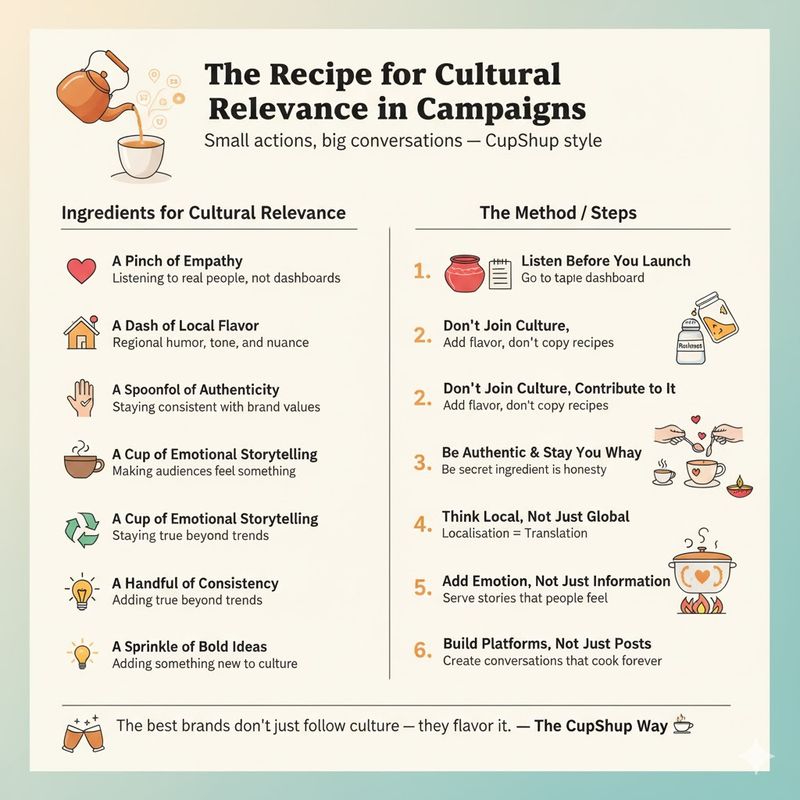
The Recipe for Cultural Relevance in Campaigns
Cultural relevance isn’t one big campaign. It’s a collection of small, meaningful actions that make people go, "This brand just gets me".
Here’s our not-so-secret CupShup recipe for cracking it.
1. Listen Before You Launch a Campaign
If your marketing team hasn’t hung out at a local chai tapri lately, you’re missing your best insights.
Real cultural understanding doesn’t come from reports. It comes from people. Watch how they talk, joke, and express themselves. You’ll learn more about your audience than any analytics dashboard can tell you.
When we worked with a fintech brand in smaller towns, we discovered something simple but powerful. Locals trusted chaiwalas more than finance blogs. So we turned tea stalls into "Crypto Chai Cafes". It wasn’t just clever branding. It was about starting real, approachable conversations through smart brand activation.
Yuvana said it best: "People trust gyaan over garam chai more than any influencer ad". And yes, she was spot on.
The result? People didn’t just see the campaign. They talked about it. And that’s where real brand love begins.
Pro tip: Create a "culture board” in your office, a shared folder or Slack channel where your team drops memes, phrases, and social trends. It’s an easy way to keep your creative pulse alive and relevant.
2. Don’t Join Culture. Contribute to It.
There’s a big difference between joining a trend and becoming part of a cultural conversation.
The best brands don’t just "react” to culture; they add something new to it, whether through ambient advertising ideas, bold collaborations, or storytelling that feels organic.
CoinDCX did this brilliantly with their Bitcoin Chai Café. They didn’t hijack chai culture; they celebrated it. They turned something complex (crypto) into something comfortable (chai). That’s cultural empathy in action.
As Sourav said during our internal review, "If your campaign only works because it’s trending, it’ll die with the trend". That’s the truth.
So next time you chase a cultural moment, ask yourself, are you adding something meaningful, or just adding to the noise?
3. Be Authentic and Stay That Way
You can’t post one festive greeting and call yourself "deeply rooted in Indian culture".
Culture rewards consistency.
If you talk about inclusivity, live it. If you claim to support local artists, actually collaborate with them. Audiences have a sixth sense for brand hypocrisy.
At CupShup, we run every idea through what we call the Reality Check Test. Would this campaign make sense if we removed our logo? If the answer is no, we know it’s not authentic enough.
Authenticity builds longevity. Faking it builds fatigue.
4. Think Local, Not Just Global
Localisation is not translation. It’s emotional adaptation.
What works in Mumbai might fall flat in Madurai. Language, humor, and emotion change every few hundred kilometers, and so should your marketing.
When we ran a campaign for a grooming brand in Lucknow, we swapped "glamour” for "self-confidence". Same idea, but suddenly it connected. Engagement went up 3.4x.
Krithika summed it up perfectly: "If your campaign can’t make sense to someone’s dadi, you haven’t localized it enough".
Pro tip: Build micro-personas. Your "Gen Z in Delhi” isn’t your "Gen Z in Indore". The smaller your audience understanding, the stronger your campaign relevance.
5. Add Emotion, Not Just Information
Let’s be honest. Logic gets you clicks, but emotion gets you loyalty.
People don’t share perfect ads. They share stories that make them feel something.
When Airbnb India highlighted real hosts instead of fancy destinations, it made people feel like they belonged. It wasn’t selling stays. It was selling belonging through beautifully simple digital storytelling.
That’s why I often ask myself during reviews, "Does this make someone smile, nod, or share?”. If it does, we know we’re onto something.
We even have a name for it: the CTA-mosphere. It’s not just about the call to action; it’s about the feeling your campaign leaves behind.
6. Build Platforms, Not Just Posts
The most culturally relevant brands don’t run one-hit campaigns. They build ecosystems where conversations keep evolving.
They give their audience something to belong to, a shared experience, a ritual, or a conversation.
Think of CRED. They turned paying bills, something everyone avoids, into a social flex. You may love them or roll your eyes, but you still talk about them.
That’s cultural relevance in its purest form, built over time through consistent brand activation and layered digital storytelling.
Your goal isn’t to trend for a week. It’s to stay talked about for years.
How We Make It Happen at CupShup
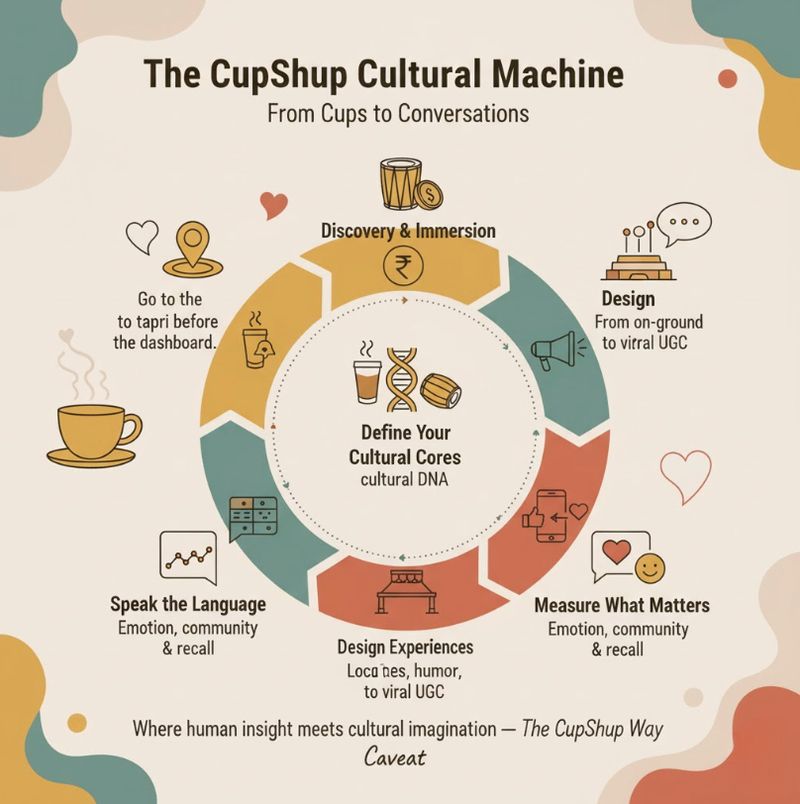
We’ve turned cultural relevance into an art form that blends human insight, ambient advertising ideas, and street smarts.
Here’s our playbook.
Read next: Humanise the Machine: How to Give Your Brand Real Persona..., Marketing in the Trust Economy - Why Transparency Is the ..., and How to Build Brand Trust in a Distrustful World.
1. Discovery and Immersion
We start by stepping outside, literally.
Our teams spend time in markets, chai stalls, college fests, and metros. Because culture doesn’t live in decks. It lives in daily life.
Surya often says, "Numbers tell you what people do. Culture tells you why". And that’s exactly what we chase, the why.
2. Define Your Cultural Core
Every brand has a cultural DNA. Maybe it’s about hustle, nostalgia, or desi innovation.
We help brands find that core and stick to it. Once you define your cultural space, your messaging becomes natural, not forced.
3. Design Experiences, Not Just Ads
Why Brands Choose CupShup as Their Brand Communication Agency
CupShup isn't just another brand communication agency — we're a team that's built brand storytelling into the DNA of 10,000+ campaigns across 300+ Indian cities. From data-driven messaging and AI-powered content strategy to multi-channel brand narratives and real-time audience insights, our hybrid creativity + technology approach delivers communications that pure-play agencies can't match.
Offline is where stories begin. Online is where they spread.
A quirky on-ground activation or ambient advertising experience can become UGC gold. A well-timed meme can turn a local activation into a viral hit.
That’s how we do O2O, from cups to conversations, and conversations to conversions.
4. Speak the Language of Your Audience
We pay attention to small details, the words, colors, rituals, and humor that make every region unique.
When your campaign feels native, it stops being an ad and becomes part of the story people tell each other.
5. Measure What Actually Matters
Divyanshu loves data (sometimes too much), but not vanity metrics.
We focus on three core indicators:
- Emotional lift. Does your audience feel something?
- Community creation. Are people engaging even without incentives?
- Cultural recall. Does your brand come up in casual conversations?
That’s how we measure whether a brand has become part of the culture or just part of the noise.
A Final Sip of Wisdom
If your brand isn’t part of the cultural conversation, it’s just background noise.
The goal isn’t to shout louder. It’s to listen smarter, act braver, and tell stories that stick through campaigns, brand activations, and digital storytelling that truly resonate.
- Here’s a quick checklist before your next campaign:
- Listen before you launch
- Participate, don’t intrude
- Be local before you go viral
- Build emotion, not just impressions
- Think movements, not moments
- Measure love, not likes
Cultural relevance isn’t about being trendy. It’s about being timeless in a way that feels alive.
As Sidharth said one late night while debugging a tech glitch, "Code or culture, both break if you don’t update them".
At CupShup, we don’t just market brands. We move them, from cups to conversations, and conversations to cultural currency.
Want to Make Your Brand the Talk of the Town (for the Right Reasons)?
Let’s make your campaigns part of the cultural conversation that actually matters.Drop us a line at contact@cupshup.co.in or visit www.cupshup.co.in.
Because culture doesn’t wait for brands to catch up. It rewards the ones who listen first.
Ready to Get Started? Talk to CupShup
Whether you're planning a high-impact campaign or looking for a brand communication agency that delivers real results — CupShup's team is ready to help. Book a Free Brand Communication Strategy Call →
50 Integrated Marketing Campaign Ideas
The complete playbook with campaign frameworks, budget templates, and measurement guides for Indian brands.
Instant download + email copy. No spam, ever.
Explore CupShup Services
Brands that read this article also explored these services.
Brand Activation Agency India
India's leading brand activation agency, 400+ campaigns, pan-India reach, real-time dashboards.
Learn more ExperientialExperiential Marketing Agency
End-to-end experiential campaigns that create memorable brand moments and drive measurable ROI.
Learn more BrandBrand Strategy Services
Brand identity, positioning, and messaging frameworks built for competitive Indian markets.
Learn moreAakriti Mishra
Senior Marketing Strategist at CupShup with over 8 years of experience in brand activation and integrated marketing campaigns. Aakriti specializes in creating data-driven strategies that deliver measurable results for modern brands.
Related Stories


Go Deeper with Our Free Guides
Comprehensive, in-depth marketing guides created by CupShup's experts.
The Ultimate Guide to Brand Activation
Everything you need to know about bringing your brand to life, strategies, examples, and frameworks.
The Ultimate Guide to Digital Marketing
Master every channel in the modern digital marketing ecosystem, from SEO to paid media.
The Ultimate Guide to SEO
The definitive guide to search engine optimization, on-page, technical, and link building strategies.