
Marketing in the Trust Economy - Why Transparency Is the New Currency

If you’ve worked in marketing long enough, you’ve definitely felt it , the collective social-media side-eye consumers give brands today. The world right now is basically one giant “Are you sure?” emoji. Deepfakes are indistinguishable from real videos, influencers promote ten products a day, and every second brand calls itself “premium”, “ethical”, or “revolutionary” without flinching.
Looking for a brand communication agency that makes your message impossible to ignore? CupShup blends AI-powered insights with creative storytelling across 10,000+ campaigns, helping brands craft communications that resonate, engage, and convert.
People aren’t just skeptical. They’re tired. And if we’re being honest, they have every right to be.
The Trust Economy wasn’t born because brands suddenly became shady. It happened because people now have too much information, too many choices, and way too many marketing claims coming at them. Customers today double-check everything , the fine print, the ingredients, the reviews, the comments, the comments on the comments.
One exaggeration, one half-truth, one lazy claim… and boom: you're trending, but for the worst reasons.
That’s exactly why transparency has quietly become the new currency of marketing success. Not a bonus. Not a feel-good value. A competitive advantage.
Brands that earn trust win. Brands that fake it get screenshotted.
Why Trust Became the Most Valuable Thing a Brand Can Earn
Fifteen years ago, you could get away with glossy ads, big slogans, and perfectly polished messaging. Today? One tweet can expose a supply chain. One review can derail a launch. One reel from someone’s living room can undo crores worth of media spending.
Trust is rare. And when something becomes rare, it becomes expensive.
Consumers today want three things above all:
- clarity
- sincerity
- proof
They don’t have patience for corporate jargon, overly rehearsed spokespeople, or ads that feel like they were written by a committee of twelve people in matching blazers.
Psychologically, trust gives people comfort and control. When people trust you, they stop comparing you to competitors, stop inspecting every feature, stop doubting every message. That’s when loyalty kicks in.
Transparency Isn’t About Oversharing. It’s About Being Real.
Let’s get this clear: transparency doesn’t mean revealing your secret formula or live-streaming your product team’s arguments. It’s simply about being honest , about what you do, how you do it, and what customers can realistically expect.
Some global brands are absolute masters at this:
- Lush openly shows who made your product (complete with human faces).

- Everlane breaks down production costs like it’s an open-book exam.
- Patagonia doesn’t pretend to be perfect , they share what they’re fixing.
They’re not flawless. They’re honest. And that’s enough to win loyalty today.
How CupShup Learned This Through Actual Ground Work
One thing we’ve realized through years of boots-on-ground campaigns is this: transparency isn’t a slogan , it’s a behavior.
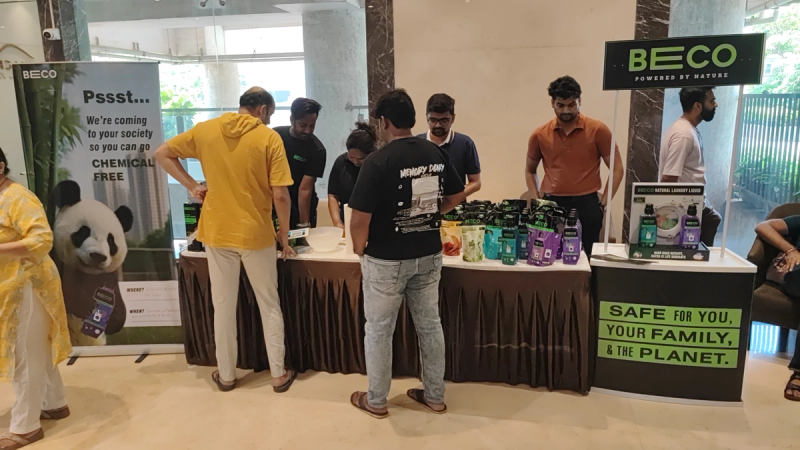
When we worked with Beco, a sustainable home-care brand, the messaging clicked only when we stopped trying to “convince” people and instead spoke plainly about small switches and their real environmental impact. Honest conversations > heavy claims.
With GoDesi, the magic wasn’t in the product pitch. It was in reliving childhood flavors with people during our activations , letting them try, react, laugh, compare, argue about which region’s imli is superior. The more real the interaction, the more trust the brand earned.
And with Elevar, our experiential setups worked not because we hyped the product, but because people could physically test the running gear, feel the form, check the stability, and actually understand the tech. No fancy storytelling. Just real experiences.
These projects taught us something simple: honesty makes people drop their guard faster than any slogan ever will.
The Problem: Everyone Wants Trust… Very Few Want to Deserve It
Here’s where brands go wrong.
They want authenticity but want to approve every comma.They want real consumer reactions but only if they look perfect.They want transparency but also want everything to sound “disruptive” and “innovative”.
Customers can smell that from a mile away.
In the Trust Economy, the brands that win are the ones willing to do the uncomfortable things , owning up to mistakes, showing how decisions are made, keeping communication human, and matching experiences with promises.
No lists here, but you get the idea: trust isn’t built through declarations. It’s built through behaviour.
So What Does Transparency Look Like in Real Marketing?
Here’s what we’ve learned , both from campaigns and from the occasional chaos that marketing brings:
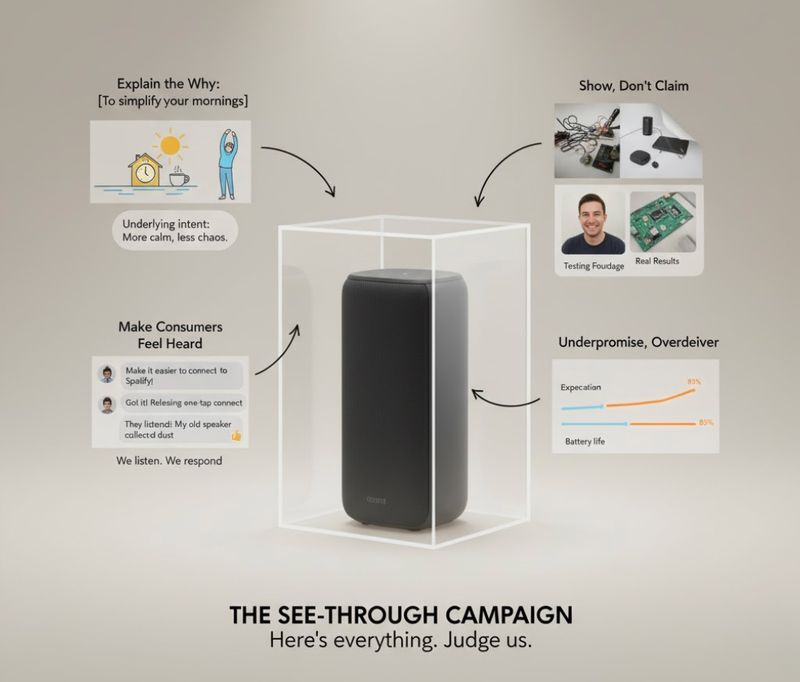
1. Explain the “Why”, Not Just the “What”
People trust intention more than information. When brands take the time to explain the reasoning behind a product, policy, or campaign, it signals honesty , not performance.
2. Show, Don’t Claim
Instead of shouting that your product is reliable, let people test it.
Instead of promising sustainability, show your process.
Instead of pushing features, demonstrate outcomes.
3. Make Consumers Feel Heard
Responding , genuinely , is the fastest route to trust.
4. Underpromise, Overdeliver
Read next: Humanise the Machine: How to Give Your Brand Real Persona..., Storytelling in Marketing: What Actually Works, and How to Build Brand Trust in a Distrustful World.
Expectations are fragile. When brands stay real about what they can and cannot do, customers reward them with long-term belief.
Building Trust Through Content (AKA: Stop Sounding Like a Slogan Factory)
If content today sounds too polished, consumers assume it’s suspicious. If it sounds too vague, they assume you’re hiding something. So brands have to find that sweet spot: clear, honest communication with a little personality.
Some ways to do that, without turning every post into a TED Talk:
- Use real language. Not “Our solution enables dynamic value creation.” Just… talk normally.
Why Brands Choose CupShup as Their Brand Communication Agency
CupShup isn't just another brand communication agency — we're a team that's built brand storytelling into the DNA of 10,000+ campaigns across 300+ Indian cities. From data-driven messaging and AI-powered content strategy to multi-channel brand narratives and real-time audience insights, our hybrid creativity + technology approach delivers communications that pure-play agencies can't match.
- Share behind-the-scenes moments. People trust what they can see being made.
- Use proof. Real videos, real customers, real reactions.
- Show your team. Humans trust humans. Brands are just the logo.
This is why when we create content for brands like Elevar or GoDesi, we focus on showing real use cases, real humans reacting, real stories unfolding , especially during experiential activations. Nothing builds trust faster than someone trying your product in the wild and saying, “Oh damn, this is actually good”.
What Brands Consistently Get Wrong (And Why It’s Hilarious… Until It’s Not)
The funniest part about modern marketing is that brands WANT trust… but behave like the internet isn’t watching.
Some classic hits:
- Talking like humans in internal meetings, talking like legal disclaimers on social media.
- Building “authentic” campaigns that have more retakes than a Bollywood film set.
- Preaching sustainability but shipping PR kits packed like they’re sending a spacecraft to Mars.
- Saying “customer first” but answering queries like a chatbot with data issues.
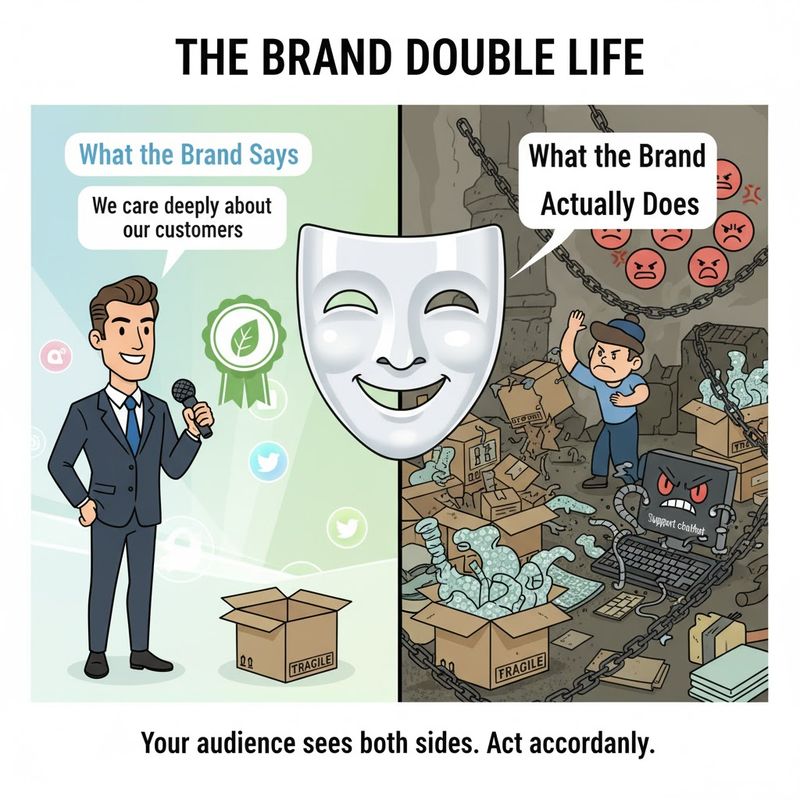
Transparency isn’t a performance. It’s a habit. If your brand voice and brand behavior don’t match, customers will notice before you even realise you slipped.
The Final Word: Trust Is Slow to Earn And Fast to Trend (For the Wrong Reasons)
Here’s the truth no marketer wants on a T-shirt: trust is boring to build and exciting to lose. A single negative experience can undo months of work. A single honest moment can win you years of loyalty.
That’s why brands today don’t need to be perfect. They need to be consistent, human, clear, and accountable.
If you can deliver that , online, offline, in content, in experiences, in every tiny interaction , you won’t just gain customers. You’ll gain believers.
Want Your Brand to Actually Be Trusted (Not Just Look Trustworthy)?
Let’s make it happen.
Explore how brands like Elevar, Beco, GoDesi, and more built real trust with smart, transparent marketing at CupShup.
And when you’re ready to create something people genuinely believe in, we’re one message away.
Ready to Get Started? Talk to CupShup
Whether you're planning a high-impact campaign or looking for a brand communication agency that delivers real results — CupShup's team is ready to help. Book a Free Brand Communication Strategy Call →
50 Integrated Marketing Campaign Ideas
The complete playbook with campaign frameworks, budget templates, and measurement guides for Indian brands.
Instant download + email copy. No spam, ever.
Explore CupShup Services
Brands that read this article also explored these services.
Brand Activation Agency India
Turn brand awareness into real-world engagement with CupShup's 400+ activation track record.
Learn more BrandBrand Strategy Services
Brand identity, positioning, and messaging frameworks built for competitive Indian markets.
Learn more ExperientialExperiential Marketing Agency
End-to-end experiential campaigns that create memorable brand moments and drive measurable ROI.
Learn moreYuvana Singh
Creative Director passionate about storytelling and brand innovation. Yuvana leads CupShup's creative team, bringing fresh perspectives to campaign development and helping brands connect with their audiences through compelling narratives.
Related Stories

Go Deeper with Our Free Guides
Comprehensive, in-depth marketing guides created by CupShup's experts.
The Ultimate Guide to Brand Activation
Everything you need to know about bringing your brand to life, strategies, examples, and frameworks.
The Ultimate Guide to Digital Marketing
Master every channel in the modern digital marketing ecosystem, from SEO to paid media.
The Ultimate Guide to SEO
The definitive guide to search engine optimization, on-page, technical, and link building strategies.