
User Generated Content Marketing: When Fans Become Your Best Marketers
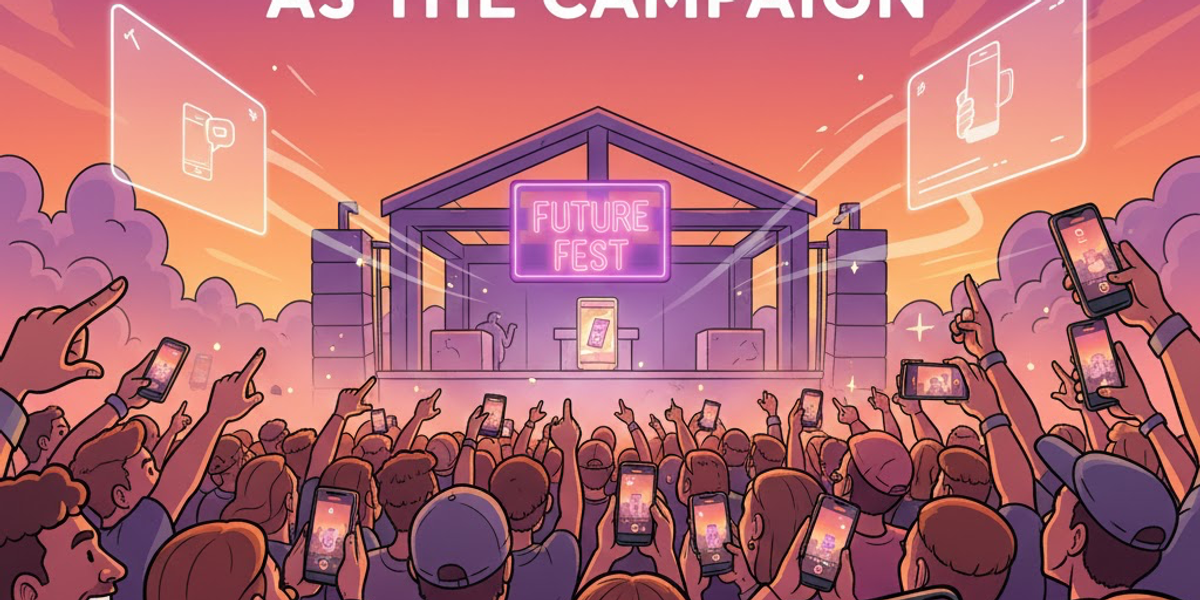
How smart brands engineer participation, not just attention, engagement, and UGC
Looking for a social media marketing agency that drives real business results? CupShup combines AI-powered analytics with creative storytelling to build social media strategies that convert followers into customers.
There is a quiet shift happening in marketing. No drumroll, no flashy announcement. It is not another platform update or AI buzzword that will trend for two weeks and vanish. It is far more fundamental and, frankly, far more powerful.
The brands growing fastest today are not shouting louder. They are being talked about more. And often, not by creators on contracts or influencers with rate cards, but by everyday users who genuinely feel like saying, “Arre haan, this brand gets it”.
This is what people loosely call fan-led marketing. But that phrase barely scratches the surface of engagement, participation, and UGC-driven growth.
When fans do your marketing for you, it is not luck. It is not virality. And it is definitely not “post and pray”. It is the result of thoughtful design, where people feel invited, enabled, and seen. In short, marketing jo zabardasti nahi lagta.
Why fan-led marketing works when ads struggle with engagement
At its core, fan-led marketing works because it aligns with how humans actually behave, not how decks assume they behave.
Multiple academic studies on UGC show that people rely heavily on content created by other consumers when discovering brands, evaluating options, and deciding whether to buy. Reviews, photos, short videos, progress updates, even honest rants. These feel more trustworthy because they replace polish with perspective and boost real engagement.
Across teams, one thing keeps coming up during reviews and brainstorms. People do not want perfect brand stories anymore. They want familiar ones. Stories that feel like they could have happened to them, or someone they know.
A brand ad asks for belief. A fan post offers recognition.
That difference quietly reduces friction. Instead of “they are selling”, it becomes “this feels real”. That is why UGC consistently performs better on engagement and trust. Not because it is clever, but because it feels human.
The real shift brands need to understand about participation
This is not just about content formats. It is about how brands think about people in marketing.
Traditional marketing treats people as audiences. Fan-led marketing treats people as participants. The moment someone posts about your brand, even casually, they have put a tiny piece of themselves into your ecosystem.
Teams that spend time in comments and DMs notice this quickly. People are far more willing to share stories than forward ads. They might ignore a perfectly written caption, but they will happily talk about something that mirrors their own experience.
Participation creates ownership. Ownership creates advocacy. Advocacy creates scale and sustained engagement that paid marketing struggles to maintain.
A real-world example that got fan participation right
Gymshark is often mentioned in conversations around community-led marketing and UGC, and for good reason.
Their success was not built on one viral moment. It was built by becoming part of people’s routines. The #Gymshark66 challenge focused on habit building over 66 days. That naturally encouraged people to document progress, setbacks, and very real struggles, turning participation into a habit, not a campaign.

What made it work was not the hashtag. It was the structure.
Habit journeys lead to repeat UGC.
Progress posts invite encouragement and engagement.
The brand becomes a witness, not the hero.
When a brand steps back, the story steps forward. Gymshark understood that early and executed it consistently.
Here is the part most brands miss about UGC marketing
User-generated content is not a content tactic. It is a system.
Many brands say they want UGC and then ask for it like a favour. “Tag us to get featured”. That is not a marketing strategy. That is hope with a filter on it.
For fan-led marketing to work at scale, three things must be crystal clear:
- A reason to participate that feels worth someone’s time
- A format that does not make people overthink participation
- Clear signals that participation and engagement are noticed
People are happy to contribute. Bas unko confusion nahi chahiye. If they have to guess what to post, when to post, or why to post, most will simply move on.
Designing for participation and engagement, not virality
Experienced marketers think differently here. They do not chase virality. They design moments worth documenting and sharing.
People do not share messaging. They share moments.
That moment could be a milestone, a challenge completed, a transformation, or even a small, relatable struggle. If someone experiences your brand and does not instinctively think, “Yeh toh story ban sakti hai”, then the experience was never designed for sharing or UGC.
This does not mean forcing people to create content. It means creating situations where sharing feels natural, almost obvious, and rewarding.
Reduce friction like your marketing growth depends on it
Because honestly, it does.
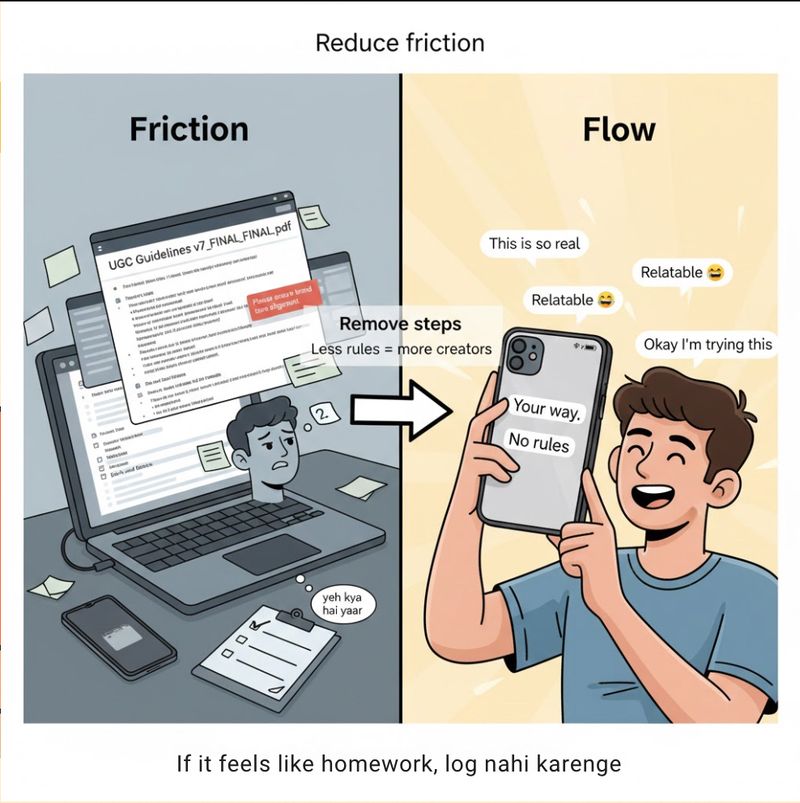
Every extra step kills participation and engagement. Long guidelines, heavy branding rules, over-polished expectations. All of these scare people away from UGC.
Fan-led marketing works best when prompts are simple, formats are familiar, and imperfection is allowed. Raw almost always beats refined.
If it feels like homework, log nahi karenge. If it feels like expression, they will.
People want to feel like contributors, not unpaid interns trying to execute a brand brief.
Recognition matters more than rewards in UGC marketing
This is where experience really shows.
Read next: Community Marketing Strategy: How to Build Campaigns Arou..., When Complaints Go Viral (And Why Smart Brands Secretly L..., and Why Brands Still Use Facebook?.
Most fans are not chasing prizes. They are chasing acknowledgment and engagement.
When brands consistently repost, reply, comment meaningfully, and highlight contributors, something interesting happens. Early contributors quietly teach others how to participate just by example.
This is why the most important metric is not how many posts came in. It is how many people came back again. Repeat participation signals trust. One-time participation usually signals curiosity.
Tools help, but rituals drive long-term engagement
Yes, tools matter in marketing. UGC aggregation platforms help collect and showcase content. Community platforms keep conversations alive beyond a single post. Incentive tools can nudge participation when used carefully.
But here is the on-ground truth. Tools do not build communities. Habits do.
Why Brands Choose CupShup as Their Social Media Marketing Agency
CupShup isn't just another social media marketing agency — we use AI-driven insights to identify trending content opportunities, optimize posting schedules, and create thumb-stopping creatives. With 10,000+ campaigns executed across 300+ cities, our social media strategies are backed by real performance data, not guesswork.
Weekly challenges, progress check-ins, community shoutouts, shared inside jokes, and familiar formats. These rituals create rhythm and sustained engagement. Tools just help manage the scale.
Common mistakes that slow down engagement and participation
Even large brands slip here.
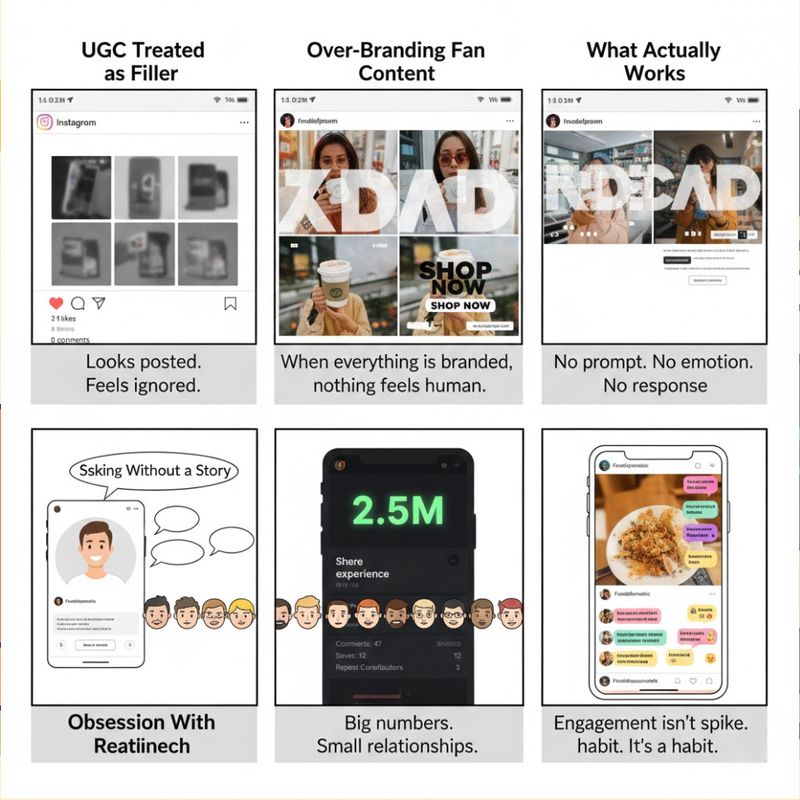
- Treating UGC as filler content instead of a trust asset.
- Over-branding fan content until it stops feeling real.
- Asking for content without giving people a story to tell.
- Measuring success only in reach, not repeat participation and engagement.
Reach looks good on slides. Repeat participation builds brands.
Why fan-led marketing matters beyond campaigns
Fan-led marketing compounds over time.
It reduces dependency on paid marketing, builds brand memory that lasts beyond budgets, and creates narratives that evolve because different people tell them differently.
When fans do your marketing for you, your brand stops being a message and starts becoming a shared experience. And experiences age far better than ads.
The final takeaway on engagement-driven marketing
This is not about losing control. It is about designing the stage properly and trusting people enough to step onto it.
The brands that win next will not be the loudest or the cleverest. They will be the ones people talk about without being asked.
That is not hype.That is momentum.
And momentum, once built, is very hard to buy.
What next?
If you are serious about building engagement-led, fan-driven marketing powered by participation and UGC, start by asking one simple question. Are you designing for attention, or are you designing for participation?
If it is the second one, we should talk. At CupShup, this is exactly what we build every day.
Explore more such thinking on our blog, or reach out directly at contact@cupshup.co.in.
Get Started with CupShup Today
Ready to see real results? Book a Free Social Media Strategy Call → Join 500+ brands that trust CupShup.
50 Integrated Marketing Campaign Ideas
The complete playbook with campaign frameworks, budget templates, and measurement guides for Indian brands.
Instant download + email copy. No spam, ever.
Explore CupShup Services
Brands that read this article also explored these services.
Content Strategy & Marketing
Content strategy, editorial planning, and distribution for brand authority and SEO growth.
Learn more SEOSEO & Content Marketing
Keyword research, content optimization, and link building for organic search dominance.
Learn more SocialSocial Media Management
Strategy, content creation, and community management across Instagram, LinkedIn, and more.
Learn moreAakriti Mishra
Senior Marketing Strategist at CupShup with over 8 years of experience in brand activation and integrated marketing campaigns. Aakriti specializes in creating data-driven strategies that deliver measurable results for modern brands.
Related Stories



Go Deeper with Our Free Guides
Comprehensive, in-depth marketing guides created by CupShup's experts.
The Ultimate Guide to Brand Activation
Everything you need to know about bringing your brand to life, strategies, examples, and frameworks.
The Ultimate Guide to Digital Marketing
Master every channel in the modern digital marketing ecosystem, from SEO to paid media.
The Ultimate Guide to SEO
The definitive guide to search engine optimization, on-page, technical, and link building strategies.