
Top 15 Experiential Marketing Examples in India That Convert (2026)
Looking for the best experience-led agencies in India?
You've come to the right place. In 2026, with global experiential spending projected to exceed $128 billion, brands that master creating memorable, interactive experiences are winning. These aren't just one-off stunts; they're strategic plays that build deep emotional connections. We'll show you 15 powerful examples from India and beyond, breaking down what made them work and how you can adapt their success.
This article focuses on real-world examples of successful experience-first campaigns campaigns and the companies behind them. If you're looking for a foundational understanding of the practice, check out our comprehensive what this discipline is guide.
What Makes Experiential Marketing Work?
On-ground experiences is about creating moments where consumers actively participate with a brand, moving beyond passive observation. The core idea is to foster an emotional connection that drives deeper engagement and, ultimately, purchase. It’s about letting people *feel* the brand, not just hear about it. This approach relies on three key ingredients:
- Immersion: Creating an environment where the brand is the central context.
- Interaction: Giving participants something tangible to do or experience.
- Shareability: Designing moments so compelling that people naturally want to share them.
When these elements align, they create what we call a 'brag-worthy moment', an experience so good, people share it because it reflects positively on them.
Why Experiential Marketing Delivers Results
The impact of live brand experiences is backed by strong data. According to Nielsen (2023), 85% of consumers are more likely to buy a product after attending a live brand event, and 70% become repeat customers after an in-person experience. Furthermore, 77% report that interacting with a brand at a live event increases their trust. In India, a 2026 EY study found that 78% of consumers prefer experiential interactions over traditional advertising, with 88% of surveyed brands planning to increase their experiential budgets this year.
These numbers highlight how experiential activations can transform participants into brand advocates and content creators, turning events into powerful earned media channels.
Many brands combine hands-on campaigns with support from the influencer marketing agency India to amplify event engagement across paid, organic, and owned channels, ensuring every interaction delivers measurable business impact.
Top Experiential Marketing Companies & Their Winning Campaigns
Choosing the right activation partner is crucial for success. Here are some standout campaigns that show why leading experience-led agencies consistently deliver stronger brand recall.
Global Inspiration
- Cheetos Hands-Free House (SXSW 2022)
Cheetos partnered with Amazon Ads for a voice-activated house where guests, with Cheetos-dusted fingers, could control everything via Alexa. This campaign brilliantly turned a product inconvenience into a relatable and fun concept, showing how brands can embrace their unique quirks.
- KitKat Wi-Fi-Free Zone (Amsterdam Parks)
KitKat installed park benches that blocked Wi-Fi signals, encouraging people to disconnect and engage with each other. This simple yet effective activation made the brand's 'Have a Break' tagline a tangible experience, proving that making a brand promise physically true can have a significant impact.
- Pepsi Max Live Taste Challenge
Pepsi revitalized its classic taste test with live voting kiosks and real-time social media integration. This gamified approach turned participants into broadcasters, allowing the audience to deliver the verdict, making the experience highly persuasive and shareable.
- BMW Performance Driving Center (USA)
BMW offered an immersive driving experience on custom tracks, enhanced with AR technology. This campaign focused on selling the feeling of belonging and emotional ownership associated with the brand, rather than just showcasing car features. It's a prime example of how premium brands create aspirational experiences.
Indian experience-led marketing at its Best
India's market offers a unique blend of cultural depth and digital savviness, leading to some truly innovative campaigns. As a leading brand activation agency India, CupShup has seen firsthand how these strategies resonate.
- CoinDCX, Bitcoin Chai Cafe
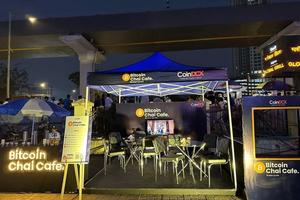
CoinDCX transformed humble chai stalls into crypto education hubs by serving tea in kulhads printed with Bitcoin memes and QR codes linking to explainers. This brilliant activation lowered the barrier to understanding complex financial concepts by anchoring them to a beloved local ritual.
- McDonald's Drive Thru Bike Rally
McDonald's mobilized over 40 bikers to complete multiple Drive Thru stops across four cities in a single day, capturing the entire event on camera. This campaign provided user-generated proof of the Drive Thru's speed and safety, making it far more credible than a simple brand claim.
- [ITC Raise the Bar](Immersive Activation)
ITC's 'Raise the Bar' campaign, executed by CupShup, focused on direct consumer engagement through product trials. This initiative achieved over 10 lakh direct consumer engagements, with a cost-per-trial benchmarked below the FMCG category average. It highlights how matching sampling to consumption occasions drives trial-to-purchase conversion.
- Swiggy Instamart x Godrej: #HomesDelivered
Godrej cleverly placed miniature house keys with QR codes inside Swiggy Instamart grocery bags. This surprising and relevant tactic intrigued customers, leading them to a real estate microsite and demonstrating the power of unexpected collaborations within existing trusted platforms.
- Continental Malgudi, Pongal Festival Activation
During Pongal, Continental Malgudi brought traditional activities like kolam art and pot painting to residential communities. This culture-led experience fostered deep brand recall by facilitating cultural memories rather than just advertising through them. Local food creators organically documented the events, amplifying reach.
- Swiggy, Floating Durga Puja Pandal, Sundarbans
Swiggy created a floating Durga Puja pandal in the Sundarbans, delivering bhog by boat and extending the celebration to dogs across Kolkata. This campaign masterfully blended purpose, cultural participation, and brand personality, becoming a cultural act rather than an advertisement.
- Zepto, 10-Minute Live Delivery Challenge
Zepto set up live activation booths where customers placed an order with a countdown clock. If delivery exceeded 10 minutes, the order was free. This bold move, with unedited footage shared on Instagram Reels, proved their core promise live, with real stakes, generating immense organic buzz and outperforming standard content significantly.
This discipline That Blurs Lines with Guerrilla Tactics
The most impactful campaigns often blend experience-led and guerrilla marketing examples. Both operate in unexpected spaces and aim for emotional reactions. While guerrilla marketing interrupts, on-ground experiences transforms. The best campaigns do both.
KitKat's Wi-Fi benches interrupted phone addiction while transforming a park into a brand experience. Cheetos' Hands-Free House was a guerrilla concept executed as an immersive experience. At CupShup, our ambient advertising campaigns frequently operate in this hybrid space, turning everyday locations like RWAs and college canteens into surprising brand activation zones.
What Makes Great Experiential Marketing Work?
Several core principles guide successful activation-led campaigns:
- Be Hyperlocal: Understand the local nuances and speak the city's language.
- Surprise, Don't Shout: Unexpected moments are more memorable than loud ones.
- Drive UGC: Make your activation camera-worthy and conversation-starting.
- Offline-to-Online Sync: Start on-ground and amplify the experience online.
- Solve Before You Sell: Offering value first makes the eventual sale feel natural.
Additional insights from the field include keeping campaigns single-minded, defining a clear trigger moment for engagement, building measurement layers from the start, ensuring legal compliance, and focusing on metrics like footfall and dwell time over simple reach numbers.
Top Experiential Marketing Companies in India
When seeking activation partners to bring your vision to life, look for agencies with a proven track record, deep understanding of the Indian market, and a commitment to measurable results. While many agencies offer these services, brands often look for partners that combine live expertise with the capabilities of the influencer marketing agency India, ensuring offline activations are supported by strong digital amplification and measurable growth. These include agencies that can seamlessly integrate paid media strategies to amplify on-ground efforts and leverage creator partnerships expertise for broader reach.
CupShup, as India's leading on-ground marketing and brand activation agency, has executed over 10,000 brand activations across 300+ cities for 400+ brands. Our expertise lies in creating hyper-local, culturally relevant experiences that drive tangible business outcomes. We focus on delivering measurable ROI through strategic planning, creative execution, and robust measurement frameworks. Whether it's a large-scale national campaign or a targeted RWA activation, we ensure your brand connects with consumers in meaningful and memorable ways.
How to Plan an Experiential Marketing Campaign
Planning a successful in-person campaign involves a strategic framework:
- Start with the Consumer's Day: Understand your target audience's daily routines, feelings, and needs. Design experiences around these real behavioural moments.
- Define One Clear Emotional Objective: Identify the specific emotion you want your audience to feel (e.g., curiosity, pride, nostalgia). Build the campaign mechanics backward from this emotion.
- Build the Measurement Layer First: Integrate tracking mechanisms like QR codes, staff protocols, and post-event sales analysis from the outset. Key metrics include direct trial count, cost-per-trial, and conversion rates.
- Design for Shareability: Identify the moment participants will want to grab their phones. Deliberately craft this moment with visual appeal, emotional peaks, or unexpected details.
For more detailed guidance on measurement, refer to CupShup's full immersive campaigns Guide.
How Experiential Marketing Companies Scale These Wins
The best activation-first brands do not stop at the live moment. They amplify it. The single biggest lever is creator amplification: partnering with an regional creator networks approach turns one activation into thousands of authentic impressions, because real reactions travel further than any ad.
This is why leading experience-led brands pair every on-ground campaign with two engines. First, an creator collaborations layer captures and spreads the moment through trusted local creators. Second, a performance marketing layer retargets everyone the campaign touched, so the experience converts rather than simply entertains.
CupShup combines hands-on execution, creator partnerships, and performance marketing capabilities that brands expect from the creator-led amplification. This integrated approach ensures every activation continues delivering value long after the live event ends.
How an Influencer Marketing Agency in India Amplifies Experiential Campaigns
A live activation reaches thousands; creators make it reach millions. The playbook used by every campaign in this list: invite regional creators to the activation itself, let them capture authentic first-person content, and seed that content within 24 hours while the buzz is fresh. An creator partnerships brands trust will match creators to the city and category: a Bengaluru tech reviewer for a CoinDCX chai stall, food creators for a Swiggy pandal. This way the amplification feels native, not sponsored. The best influencer marketing agency India teams brief creators on the brand story before the event, not after.
The measurable difference: activations amplified by creators see 3-5x the organic reach of on-ground-only campaigns, and the content keeps compounding for weeks after the physical event ends. That compounding effect is exactly what a seasoned influencer marketing agency India is built to engineer.
Pairing Live Campaigns with Performance Marketing for Measurable ROI
The brands above never run activations in isolation. Instead, they wire each one into a performance marketing funnel. Footfall becomes a retargeting audience within 48 hours. QR scans and WhatsApp opt-ins become custom audiences. Social buzz becomes lookalike seeds. The activation lowers the cost of attention; performance marketing harvests it.
The practical framework: tag every on-ground touchpoint with a unique UTM or code, sync captured leads into your ad platforms the same day, and let paid media budgets follow live engagement data instead of a fixed media plan. Teams running this combined model report 40-60% lower blended acquisition costs than either channel alone. That is why paid acquisition is now a standard line item in every serious activation brief.
Frequently Asked Questions
What is the difference between experience-first campaigns and traditional advertising?
Traditional advertising aims to inform and persuade consumers about a brand through passive media like TV, print, or digital ads. This discipline, on the other hand, creates active, participatory experiences that allow consumers to engage with a brand directly, fostering emotional connections and memorable moments that traditional ads often cannot achieve.
How do you measure the success of an on-ground experiences campaign?
Success is measured through a combination of on-ground metrics and post-event outcomes. Key metrics include footfall, dwell time, direct trial counts, lead generation, QR code scans, social media mentions and sentiment, and ultimately, the impact on sales and customer loyalty. Tracking the cost-per-engagement and conversion rates provides a clear ROI picture.
Can small businesses afford live brand experiences?
Yes, small businesses can absolutely benefit from immersive campaigns. The key is to be creative and focus on hyper-local, targeted activations. Initiatives like pop-up stalls at community events, RWA activations, or small-scale product sampling can be highly effective and budget-friendly, especially when designed for shareability and leveraging existing community spaces.
How important is social media in brand activation?
Social media is incredibly important for amplifying experience-led marketing efforts. Campaigns are often designed with shareability in mind, encouraging participants to post photos and videos online. This user-generated content acts as powerful social proof and extends the reach of the activation far beyond the physical attendees, turning participants into brand advocates.
What are the key benefits of hiring an brand activation agency?
An experienced activation partner brings expertise in strategy, creative ideation, logistical management, and on-ground execution. They understand local market nuances, navigate regulatory hurdles, and have established vendor networks. Partnering with an agency ensures your campaign is professionally managed, maximizes impact, and delivers measurable results, saving you time and resources while mitigating risks.
Key Takeaways
- On-ground experiences builds deep emotional connections by engaging consumers directly.
- Data shows consumers are more likely to buy, trust, and become repeat customers after live brand experiences.
- Successful campaigns blend immersion, interaction, and shareability, often turning participants into content creators.
- Indian brands are excelling by integrating cultural relevance and hyperlocal strategies into their activations.
- Choosing the right activation-first brands is vital for executing impactful and measurable campaigns.
The most successful activation partners combine creativity, technology, and measurable execution to create campaigns that drive long-term business growth. By focusing on creating genuine connections and memorable moments, brands can achieve significant results. Ready to run a winning activation-first brands campaign? Talk to CupShup, India's leading experience-led brands agency. Get in touch and we'll build a campaign tailored to your brand.
Related Reading
- Zepto immersive/BTL activation
- Swiggy hyperlocal quick-commerce activation
Experiential Marketing Campaign Planner
A step-by-step template to plan your next experiential campaign - includes ROI calculator and vendor checklist.
Instant download + email copy. No spam, ever.
Related Experiential Marketing Resources
Learn more about how CupShup creates impactful experiential marketing campaigns for leading brands.
Brand Activation Agency
Full-service brand activation and experiential marketing
Experiential Marketing Guide
Complete guide to experiential marketing strategies
MediBuddy Health Activation
How experiential marketing drove health brand engagement
Kota Factory Campaign
Integrated experiential campaign for OTT platform
Explore CupShup Services
Brands that read this article also explored these services.
Experiential Marketing Agency India
Immersive brand experiences, pop-ups, product launches, live demos, and phygital events.
Learn more ActivationBrand Activation Services
On-ground engagement campaigns with tech-enabled tracking and verified results.
Learn more BrandBrand Strategy Services
Brand identity, positioning, and messaging frameworks built for competitive Indian markets.
Learn moreCuppa CS
Digital Marketing Expert specializing in AI-powered marketing tools and automation. Cuppa CS helps brands leverage cutting-edge technology to optimize their digital presence and drive customer engagement.
Related Stories
Go Deeper with Our Free Guides
Comprehensive, in-depth marketing guides created by CupShup's experts.
The Ultimate Guide to Performance Marketing
A comprehensive guide covering performance marketing from strategy to execution. Learn about paid search (PPC), paid social, display advertising, affiliate marketing, native advertising, retargeting, performance creative, landing pages, conversion tracking, attribution, audience targeting, bidding strategies, A/B testing, and campaign scaling. Includes 50+ term glossary and action plans.
ATL and BTL Marketing: The Complete 2026 Guide for Indian Brands
Uncover the differences between ATL and BTL marketing. Learn which strategy drives better ROI for your brand in the evolving Indian market.
BTL Marketing: The Complete Guide to Below-the-Line Strategies in India
Practical below-the-line strategies and field examples tailored to the Indian market. Covers in-store activations, product sampling, retail engagement, and measurable ROI.