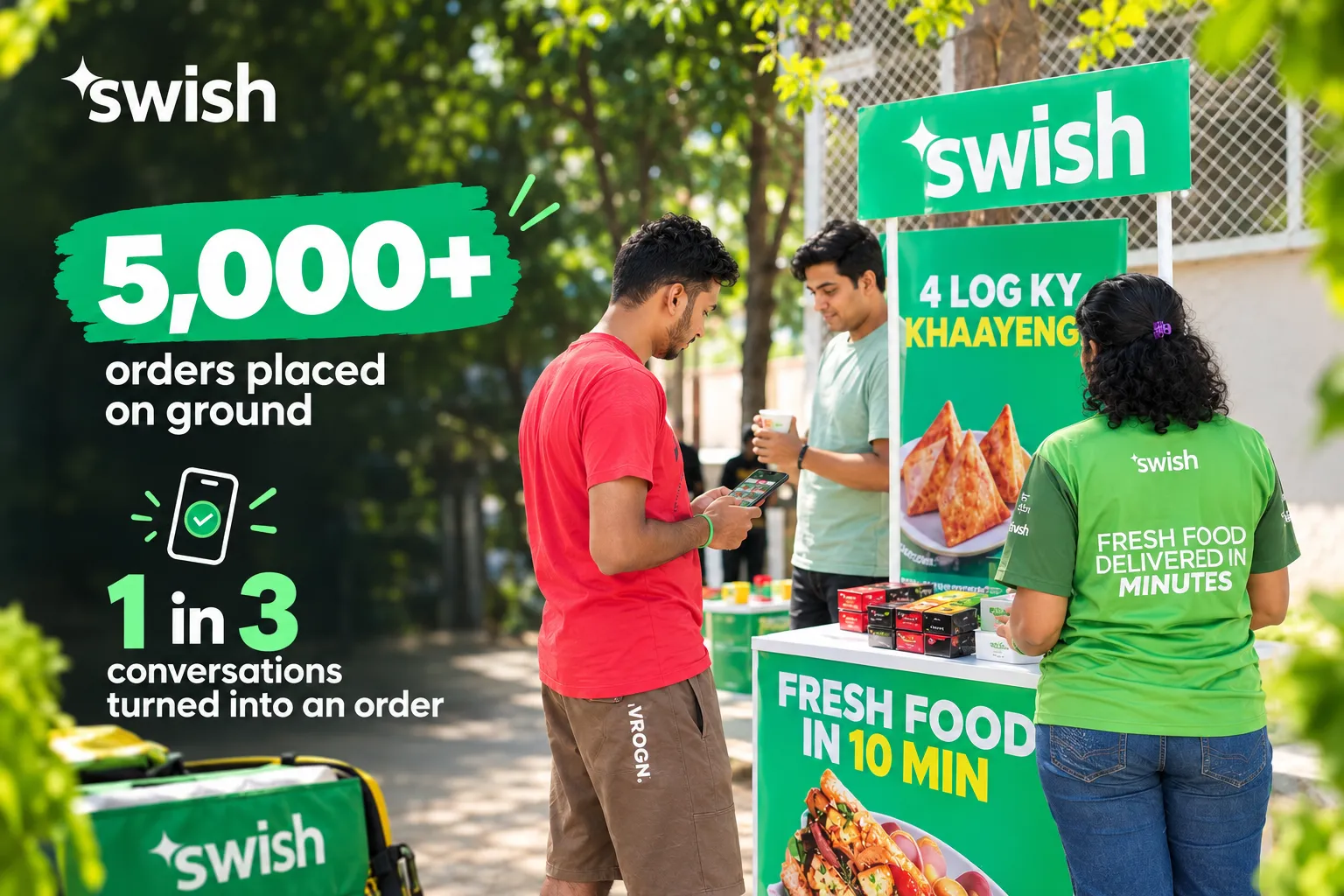
The hardest order for a 10-minute delivery app isn't the hundredth. It's the first. This is one of the experiential marketing examples that shows how to win it: for the Swish app, CupShup skipped the screen and went to where people get hungry, in tech parks and office hotspots across Bangalore and Delhi. Since June, on-ground promo tables have produced 5,000+ orders placed on the spot, with 1 in 3 conversations turning into an order.
Executive Summary
Getting people to download an app is the easy part of quick commerce. Getting them to place a first order means they trust you with lunch on a workday, fifteen minutes before a meeting. That is the problem Swish brought to CupShup.
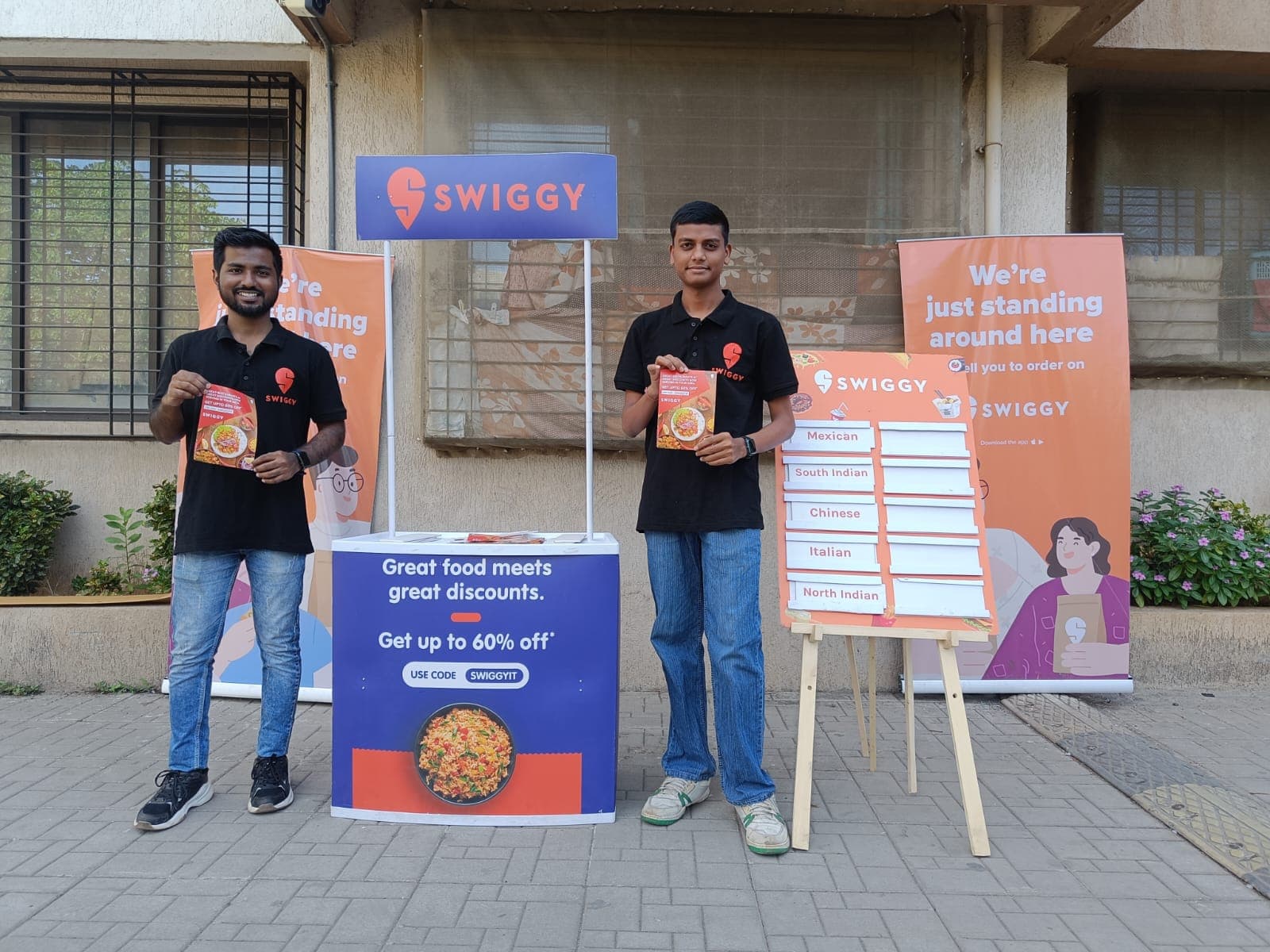
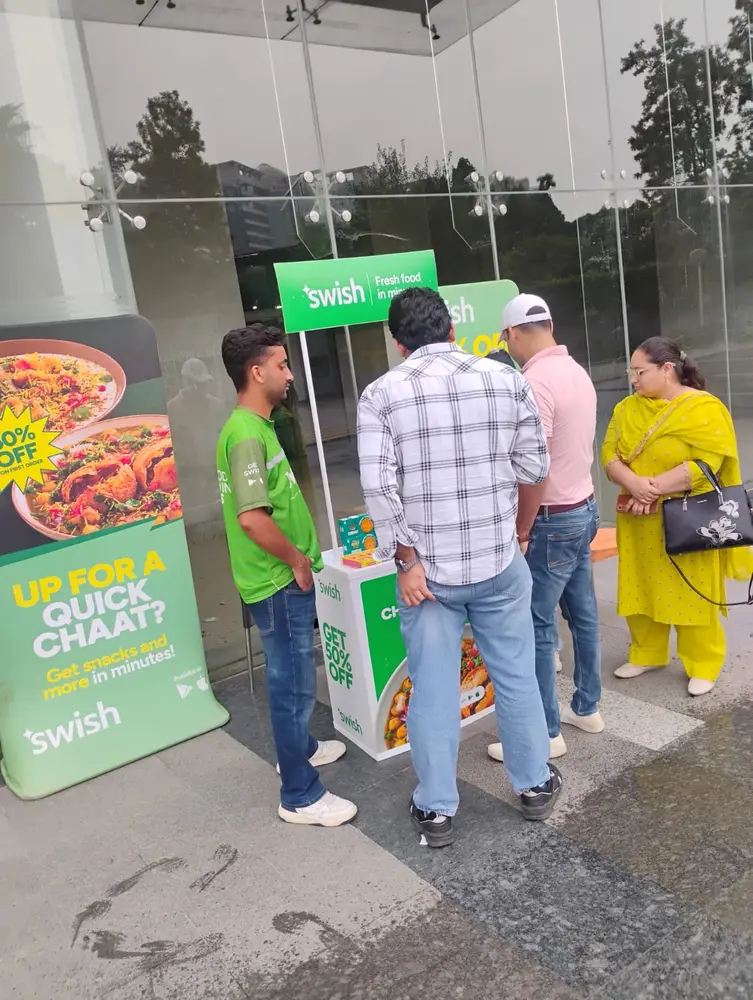
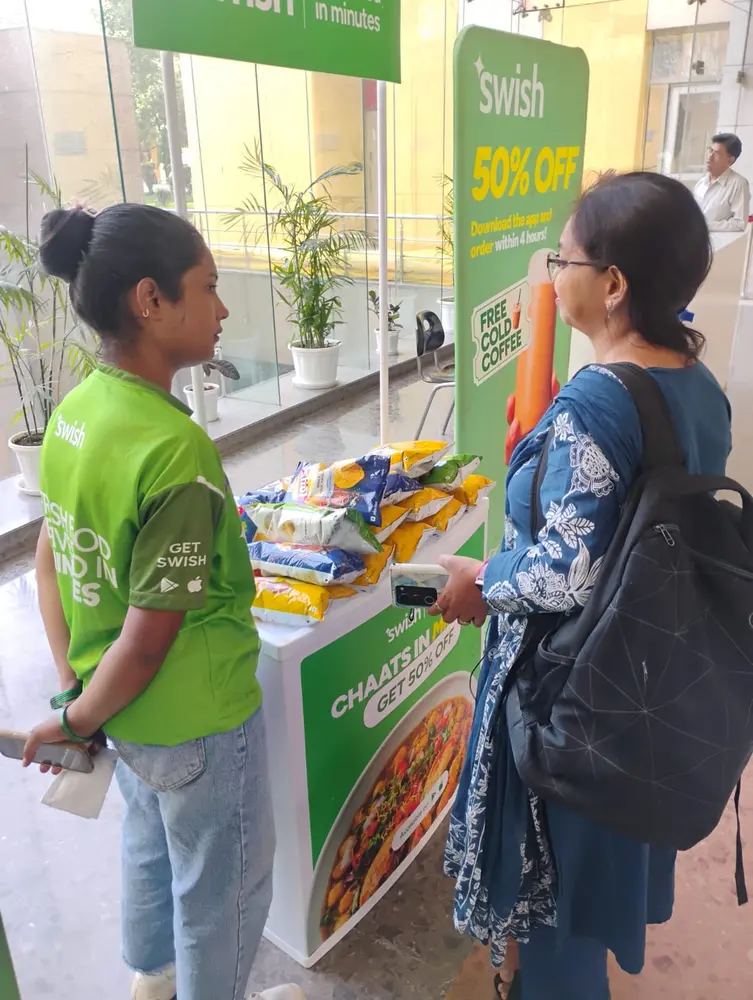
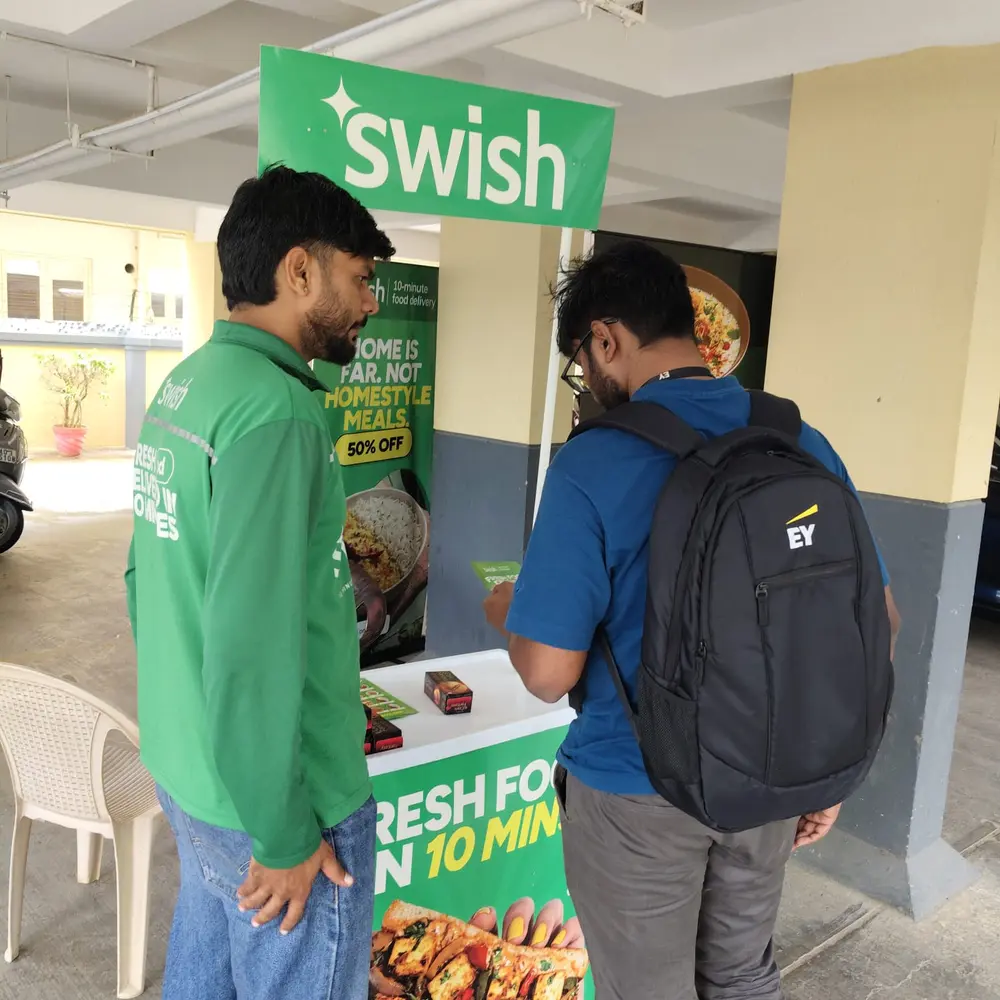
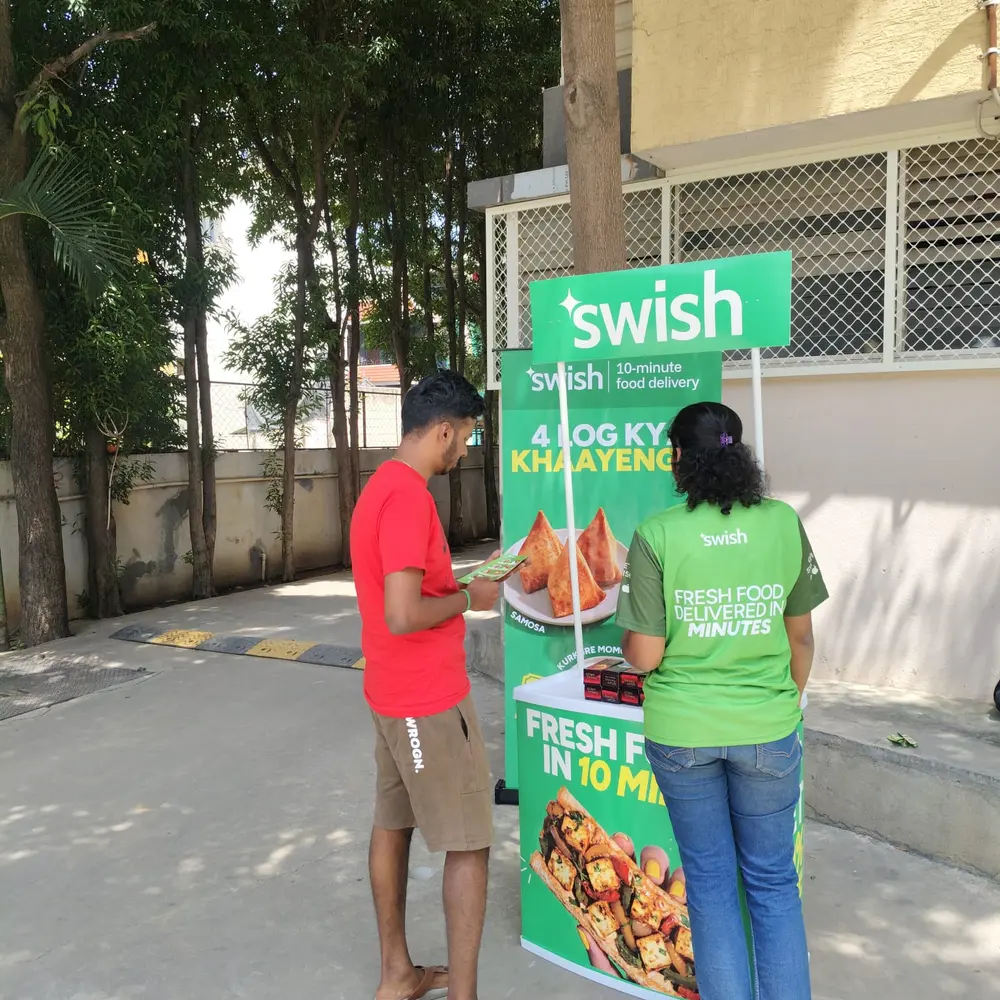
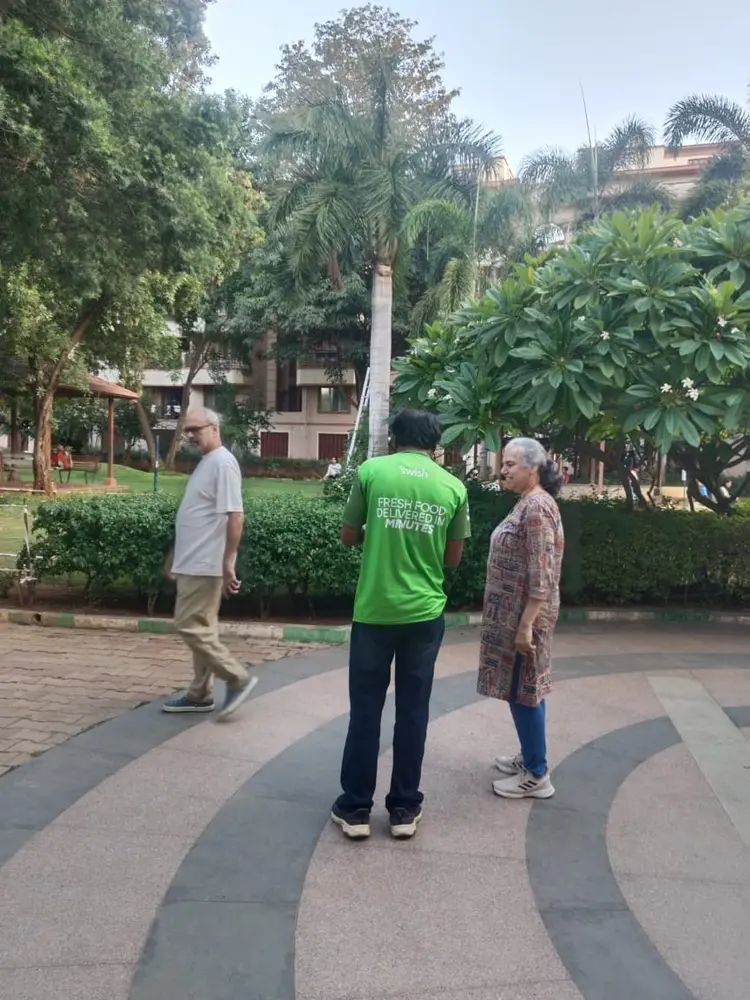
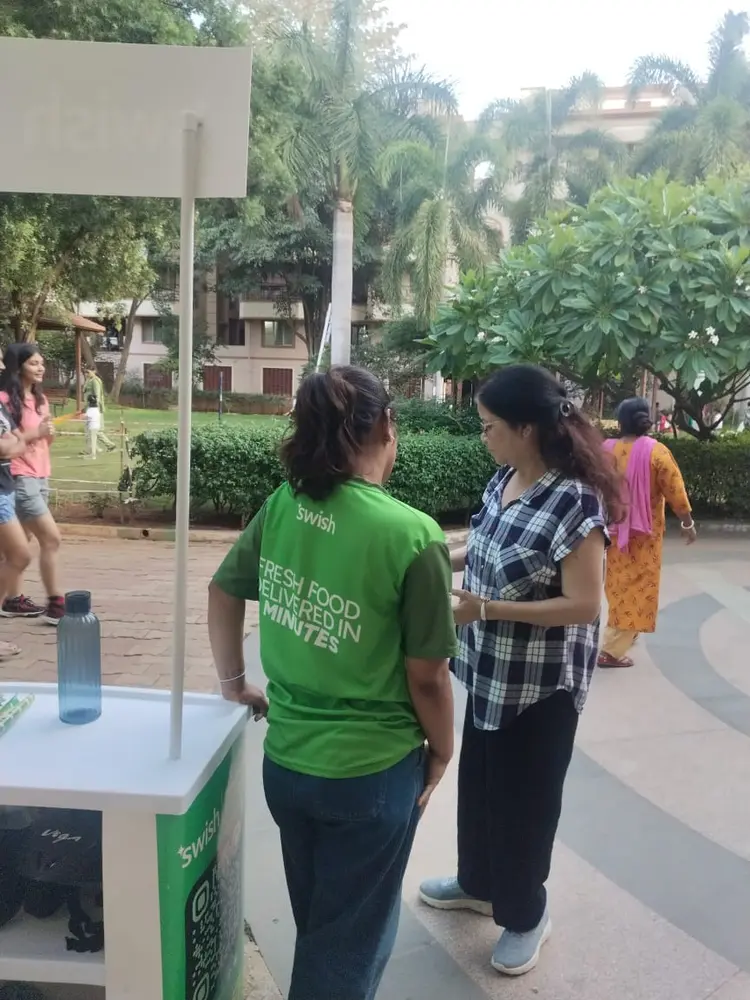
So for Swish, we did not start on a screen. We started where hunger starts: tech parks and office hotspots across Bangalore and Delhi, in the mornings, when people are already thinking about what they will eat. A plan in three parts: a Swish promo table, a promoter with a real conversation, and an order placed on the customer's own phone, right there.
The result is a campaign built to convert, not to be remembered. Of all the experiential marketing examples we can point to, it is one of the easiest to verify. Since June, it has delivered 5,000+ orders placed on the ground, with 1 in 3 conversations turning into an order, across Bangalore and Delhi over 3 months. It is still running.
Campaign Overview
The Challenge: The First Order Is the Hardest One
Quick commerce apps compete on speed, but the fight that decides growth happens before the first delivery. The strongest experiential marketing examples start at a moment like this, and the first order is hard for three reasons:
- A download is not an order. Installing an app costs a person a few seconds. Placing a first order costs them trust.
- The first order is a bet on a workday. A customer who orders lunch fifteen minutes before a meeting is risking their break, not just their money. They need a reason to believe the food will show up when it should.
- Reach is easy to report, orders are not. Impressions and footfall look impressive in a deck. Swish needed a number it could check: orders placed.
The brief was clear. Do not chase the first impression. Win the first order.
The Strategy: Go Where People Get Hungry
If the first order is a trust problem, the fastest fix is a face and a phone in the same place. CupShup built the activation around three decisions.
- The place: Tech parks and office hotspots across Bangalore and Delhi, where footfall peaks and where the promise of fresh food in minutes matches how people actually eat on a workday.
- The time: Mornings, when people are already thinking about what they will eat, before the lunch decision is made for them.
- The format: A conversation that ends in an order. Nothing to take away and forget. The order happens on the spot.
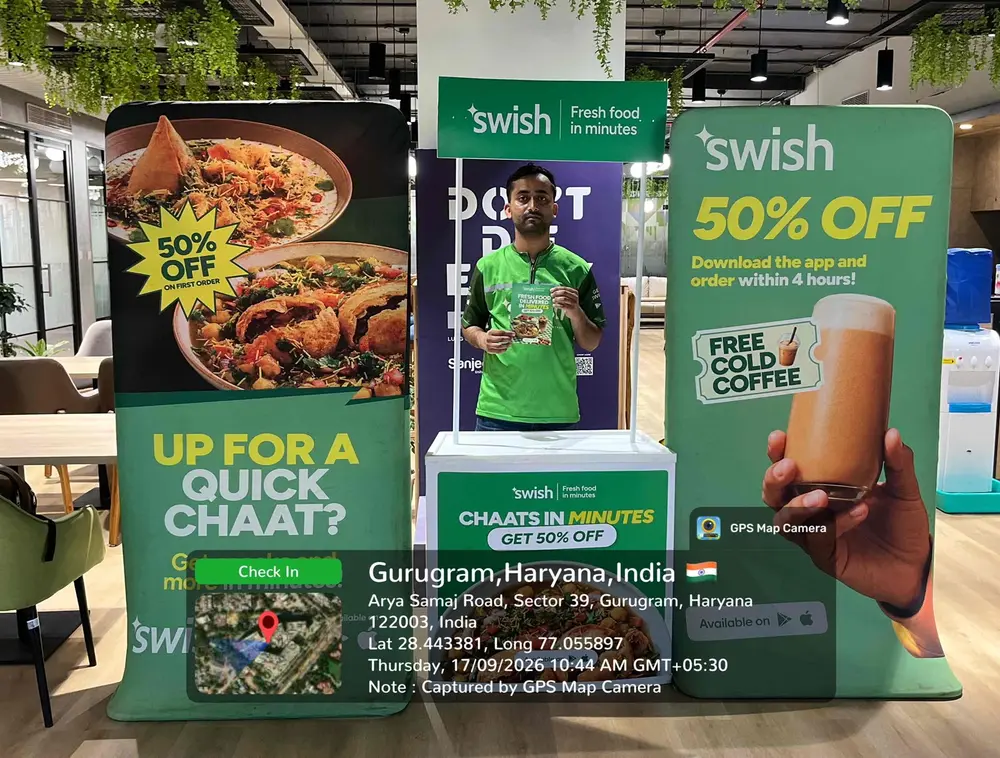
The collateral spoke to the same moment. Standees and table fronts carried lines like "Meals before meetings," "Up for a quick chaat?" and "Home is far. Not homestyle meals," alongside a 50% off first-order offer. It is the logic behind the best BTL activities: one dense, well-timed location works harder than a thin spread across a city, which is why the plan starts with offline marketing built around where footfall peaks.
How CupShup Executed: A Checkout Counter That Starts With a Conversation
The activation ran on one repeatable loop, designed to end every time in an order:
Nobody walks away with a leaflet they'll forget. The whole activity ends in an order. That is why it is less a stall and more a checkout counter that starts with a conversation. It is one of the clearest experiential marketing examples of a campaign designed for the action, not the applause.
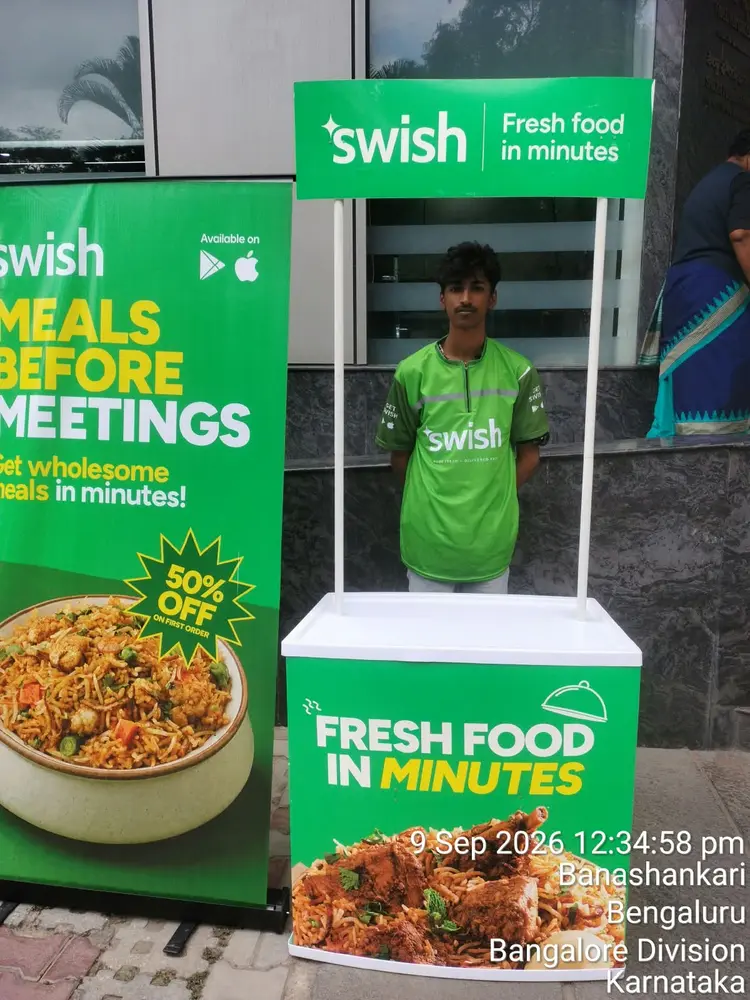
The approach also fits how CupShup works more broadly: plan the place and the moment first, run it on the ground, then prove it worked with numbers that can be checked. As a brand activation agency, we treat the on-ground touchpoint as the start of the funnel, not a standalone stunt.
One Code, Every Order Counted
Every one of those orders goes through a single code, BAP50. That one decision changes what the campaign can report. Instead of reach or footfall, the number that matters is orders placed, and each one can be checked.
This is BTL marketing built with the measurement discipline of performance marketing. BTL activities are often judged on footfall, and experiential marketing examples only count if they can prove that they work. One code answers that: the result is not an estimate of who might have seen a banner, it is a count of who ordered.
Results and Impact
| Metric | Result |
|---|---|
| Orders Placed On the Ground | 5,000+ |
| Conversation-to-Order Rate | 1 in 3 conversations |
| Markets | Bangalore and Delhi |
| Duration | 3 months since June, still running |
| Tracking | Every order through one code (BAP50) |
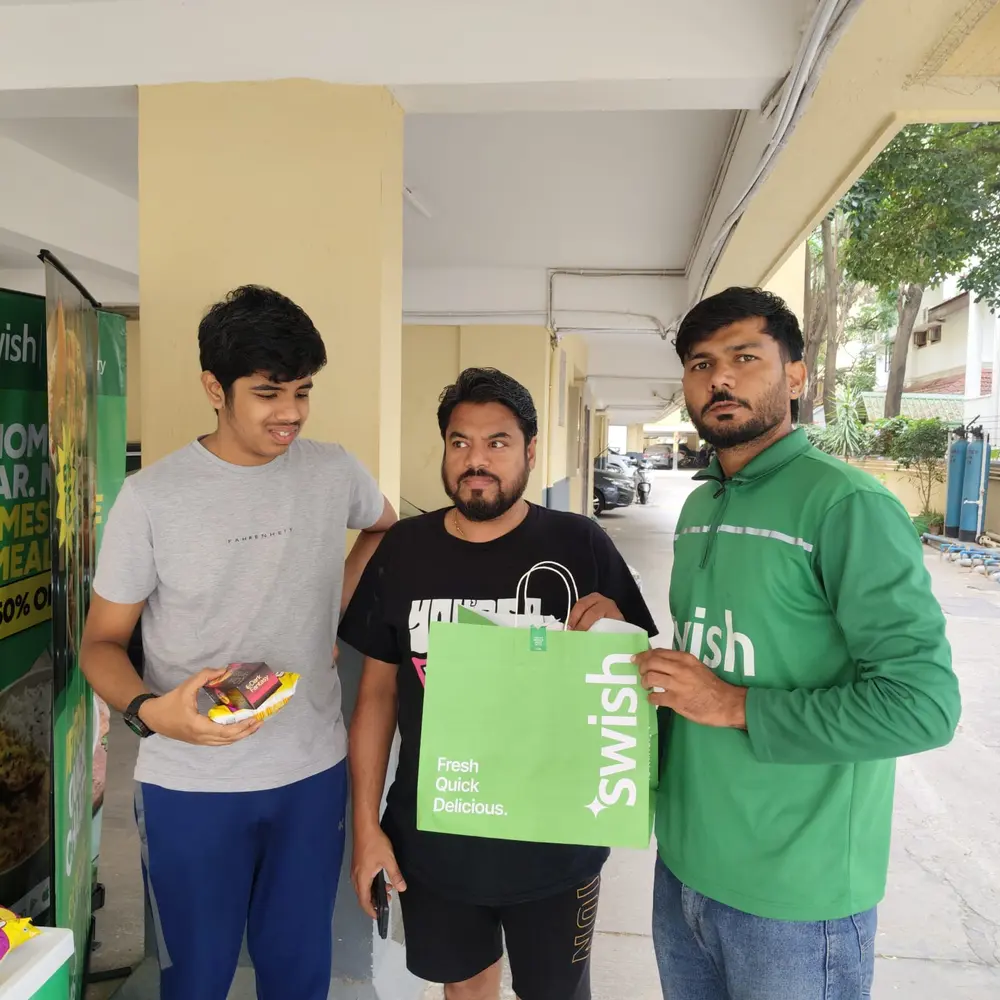
Placed on the customer’s own phone and tracked through one code
Across Bangalore and Delhi, the campaign shows that a well-placed conversation can win the first order that digital reach struggles to win.
Key Outcomes:
- 5,000+ orders placed on the ground: Orders that happened because someone started a conversation, not because a banner was seen.
- 1 in 3 conversion: One in three conversations at the table ended in a placed order, a conversion that is visible and countable.
- Bangalore and Delhi, one playbook: The same table, conversation and code ran in both cities.
- Still running: The activation continues, with every new table adding to a checkable order count.
Strategic Takeaways for App Brands
Aim at the first order, not the first impression
Awareness is not the bottleneck when the promise is fresh food in minutes. Trust is. Put your budget at the narrowest point of the funnel, where a person decides to try you.
Pick the moment, not just the audience
Mornings in tech parks and offices meet people right as they think about lunch. The same audience at a different hour is a different campaign.
Build the measurement into the mechanic
A single code turned every conversation into a countable result. When the mechanic itself produces the proof, there is no gap between what happened and what gets reported.
The Swish activation offers three lessons for any app brand trying to turn downloads into habits.
When you choose a brand activation agency for an app launch, ask how every interaction ends in a checkable action. That is the difference between BTL work that looks good and BTL work that ships orders.
CupShup has run similar work for other quick commerce brands. See our Zepto BTL experiential marketing campaign, the Dunzo quick commerce activation, the Flipkart Minutes campaign and the Swiggy quick commerce activation.
More Videos From CupShup
Swish is one of several consumer and app-first brands we have taken from the screen to the street. These CupShup films show the same on-ground thinking on other brands:
- Conversation-led, in Gurugram: TimesPro x CupShup, How We Turned Coffee Into a Career Conversation. For TimesPro, we turned a coffee kiosk into The Visionary Corner, with aspiration-led coffees, career assessments and one-on-one interactions. It reached 2,500+ professionals, served 800+ coffees, ran 500+ assessments and held 700+ conversations. The link to Swish is the same mechanic: give working professionals a reason to stop and talk, then end the interaction in something you can count.
- A mobile launch on the street: Tilara's Larger-Than-Life Canter Launch x CupShup. The teaser film for Tilara's Har Roof Tilara campaign, a canter activation built to take the conversation beyond products and into people's everyday spaces. Like the Swish promo tables, it goes to where people already are instead of waiting for them to come to the brand.
- Food on the ground: 40+ Bikers Hit the McDonald's Drive-Thru, another food brand activation where the moment happens in the real world. Read the McDonald's Drive-Thru Bike Rally case study.
- Food and fitness in the street: How We Took Fitness to the Streets, the Pintola Pop-Up Gym Campaign. Read the Pintola canter activation case study.
- App-first brand, real-life experience: India's First Bitcoin Cafe, How CupShup and CoinDCX Brought Crypto to Real Life. Read the CoinDCX Bitcoin Cafe case study.
- On-the-ground trial: We Took Swiss Beauty's Sunscreen to Goa's Hottest Beach. Read the Swiss Beauty Baga Beach case study.
Frequently Asked Questions: On-Ground Marketing for Apps
What are good experiential marketing examples for a quick commerce app?
The Swish activation is one. It removes the gap between interest and action: promoters started a conversation, the customer placed the order on their own phone on the spot, and the discount code BAP50 was applied before they left. 1 in 3 conversations turned into an order.
How did CupShup track Swish's on-ground orders?
Every order went through a single promo code, BAP50. That let CupShup report orders placed rather than reach or footfall, and each order could be checked. Since June the campaign has recorded 5,000+ orders across Bangalore and Delhi.
Which BTL activities work for an app like Swish?
The ones built to convert. The Swish promo tables sat in tech parks and office hotspots in the morning, when people are thinking about what to eat, and ended every interaction with an order attempt. Results so far: 5,000+ orders across Bangalore and Delhi in 3 months.
How do I choose a brand activation agency for an app launch?
Look for one that plans the place and the moment, designs a conversation that ends in the action you want, and can show a count that can be checked, not just reach. In the Swish activation, that count was orders placed through one code.
How do I run an on-ground first-order campaign in India?
Pick the place and the moment where your audience decides, design a conversation that ends in the action you want, and put a single code or link behind every interaction so results can be verified. Start the conversation with CupShup to scope yours.
Why Choose CupShup
Because winning the first order takes more than a banner. It takes people in the right place at the right time, and numbers that prove it worked. CupShup is an AI-led integrated marketing partner for ambitious brands, with 10 years of experience, 400+ brands and on-ground reach across 30+ cities. CupShup is a brand activation agency and an experiential marketing agency that builds experiential marketing examples like this one end to end: we plan smart, run it everywhere, and prove it worked, on the ground and online, as one campaign.
If you are trying to win the first order, not just the first impression, let's talk. Or see how we have grown brands like yours in our brand activation case studies.
Planning Your Next Product Launch?
CupShup designs and executes high-impact brand activations, experiential trials, and creator amplification across 50+ Indian cities.