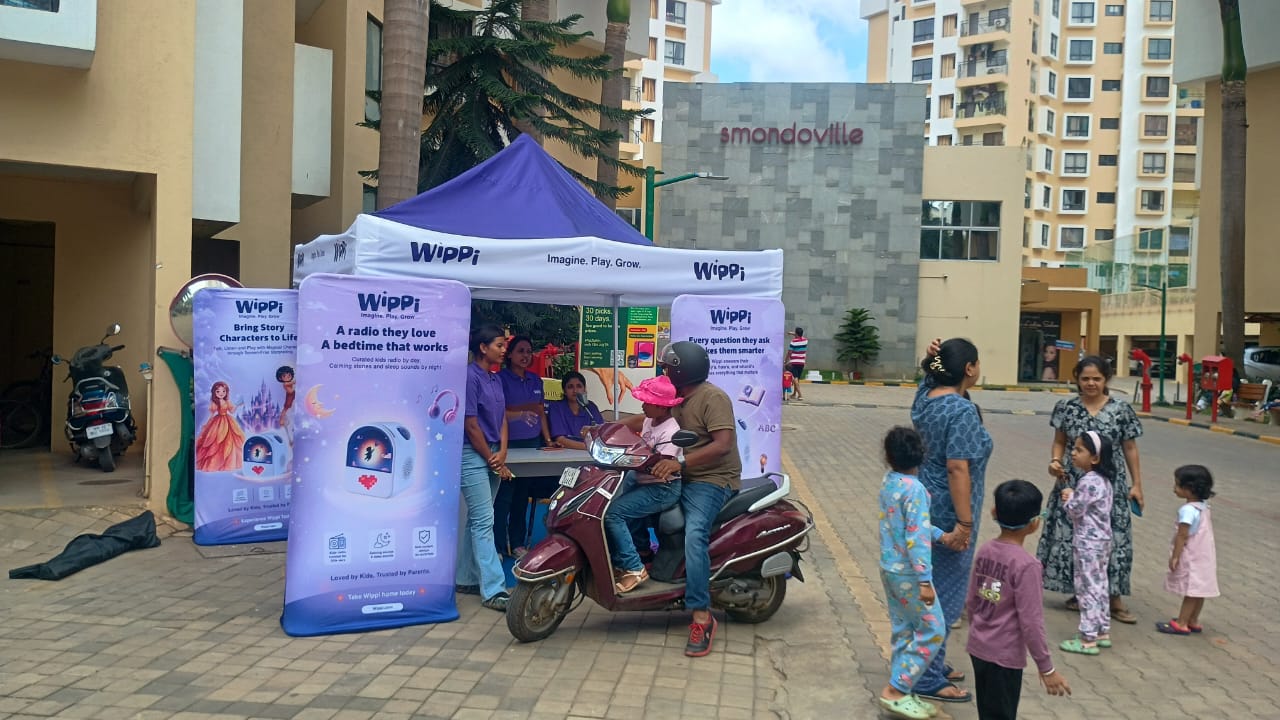
Wippi is an AI-powered storytelling device built around stories, imagination, and play, with no screens. That product truth created an unusual marketing problem: the easiest way to reach parents at scale is through the very screens Wippi is designed to replace. CupShup, a brand activation agency in Bangalore, solved this with an experiential marketing activation, taking Wippi directly into residential communities across the city. Branded experience zones, complete with a bouncy castle, drawing camps, and live storytelling, let children discover Wippi through play while parents watched, asked questions, and booked live demos on the spot. This community marketing approach reached 2,500+ families, engaged 400+ children, sparked 320+ live conversations, generated 200+ pieces of user-generated content, and converted into 190+ demo bookings.
Executive Summary
Wippi is built around stories, imagination, and play, with no screens involved. That is a strong product truth, but it creates a real marketing problem. Convincing parents to trust and understand a screen-free product in a screen-first world takes more than an ad explaining the benefit; it takes customer experience management that lets parents see their own children respond to it.
CupShup answered this with an experiential marketing approach built around RWAs, the residential communities where Bengaluru families already spend their evenings together. Rather than telling parents what Wippi does, CupShup built immersive Wippi experience zones inside RWAs, let children discover the product through drawing, storytelling, and play, and let their reactions open the door to a parent conversation.
Across the activation, CupShup reached 2,500+ families, engaged 400+ children directly, sparked 320+ live product conversations, generated 200+ pieces of organic UGC, and converted interested parents into 190+ demo bookings.
Campaign Overview
Campaign Gallery
Hover to expand media • Click for fullscreen video & high-res photos
Wippi RWA Experiential Activation Instagram Reel
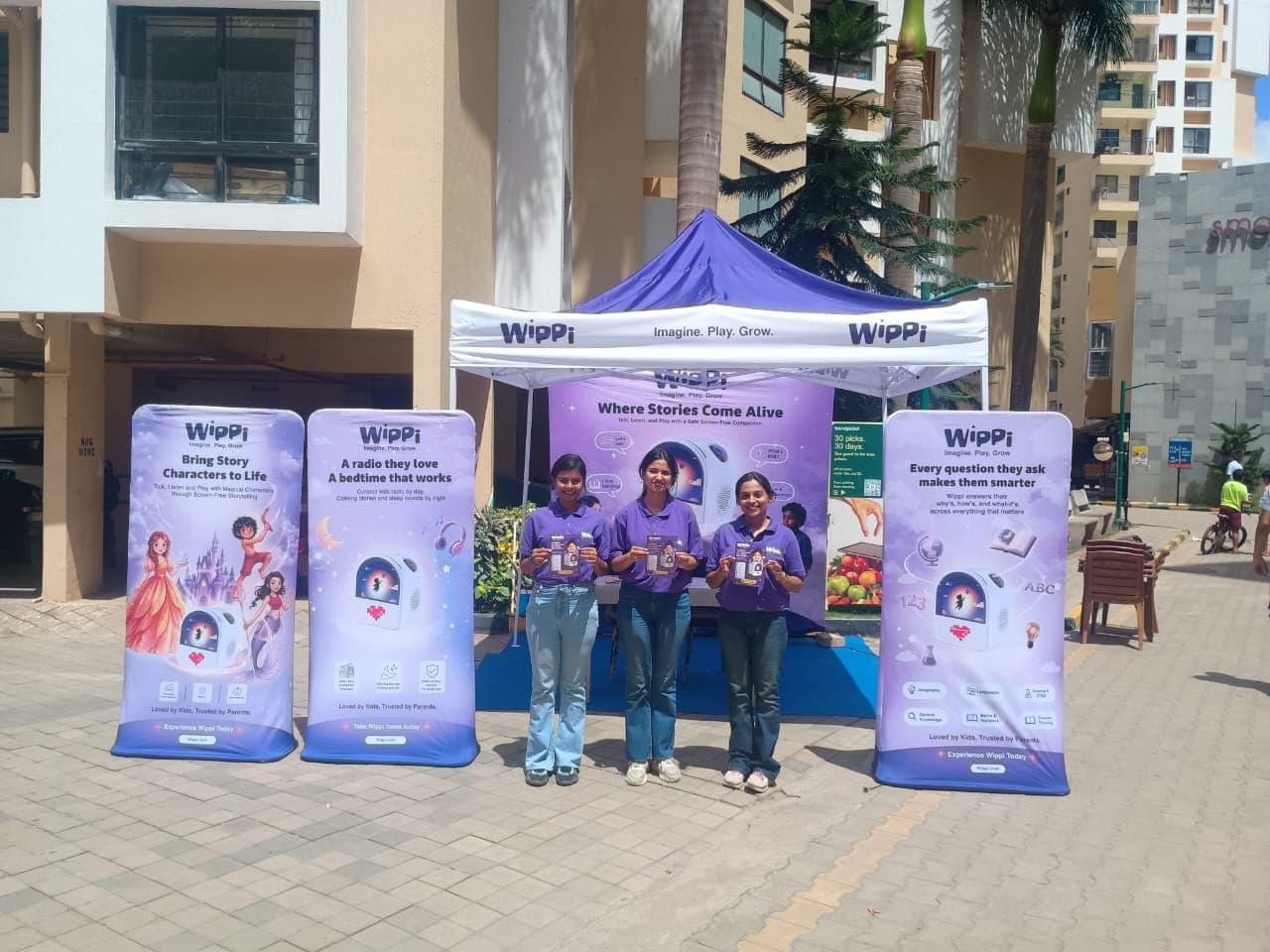
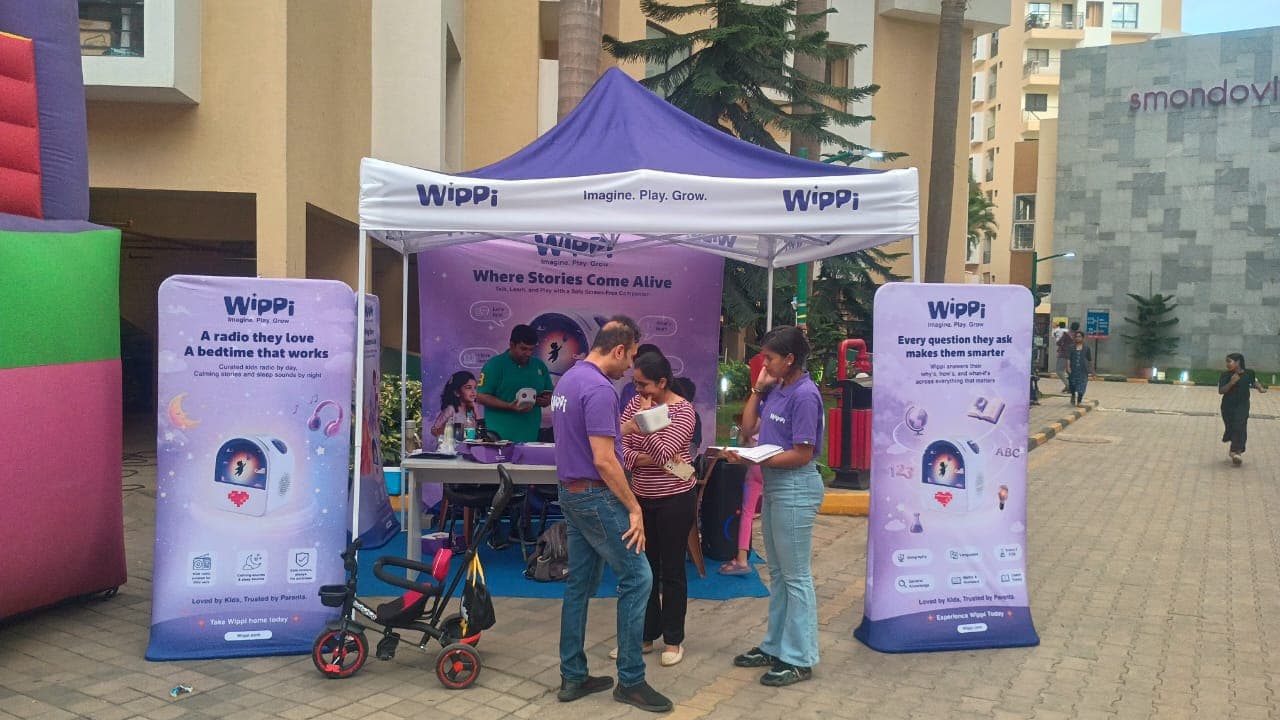
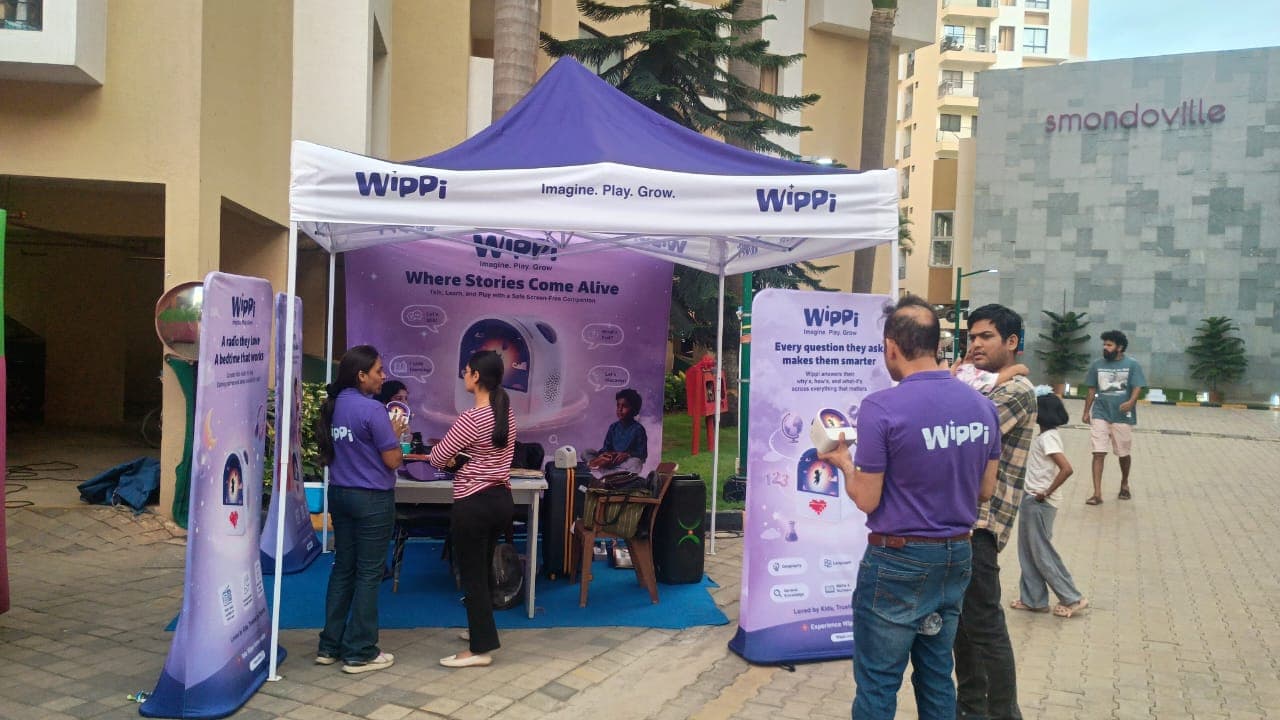
Wippi team and branded gazebo with "Where Stories Come Alive" banner at a Bengaluru RWA
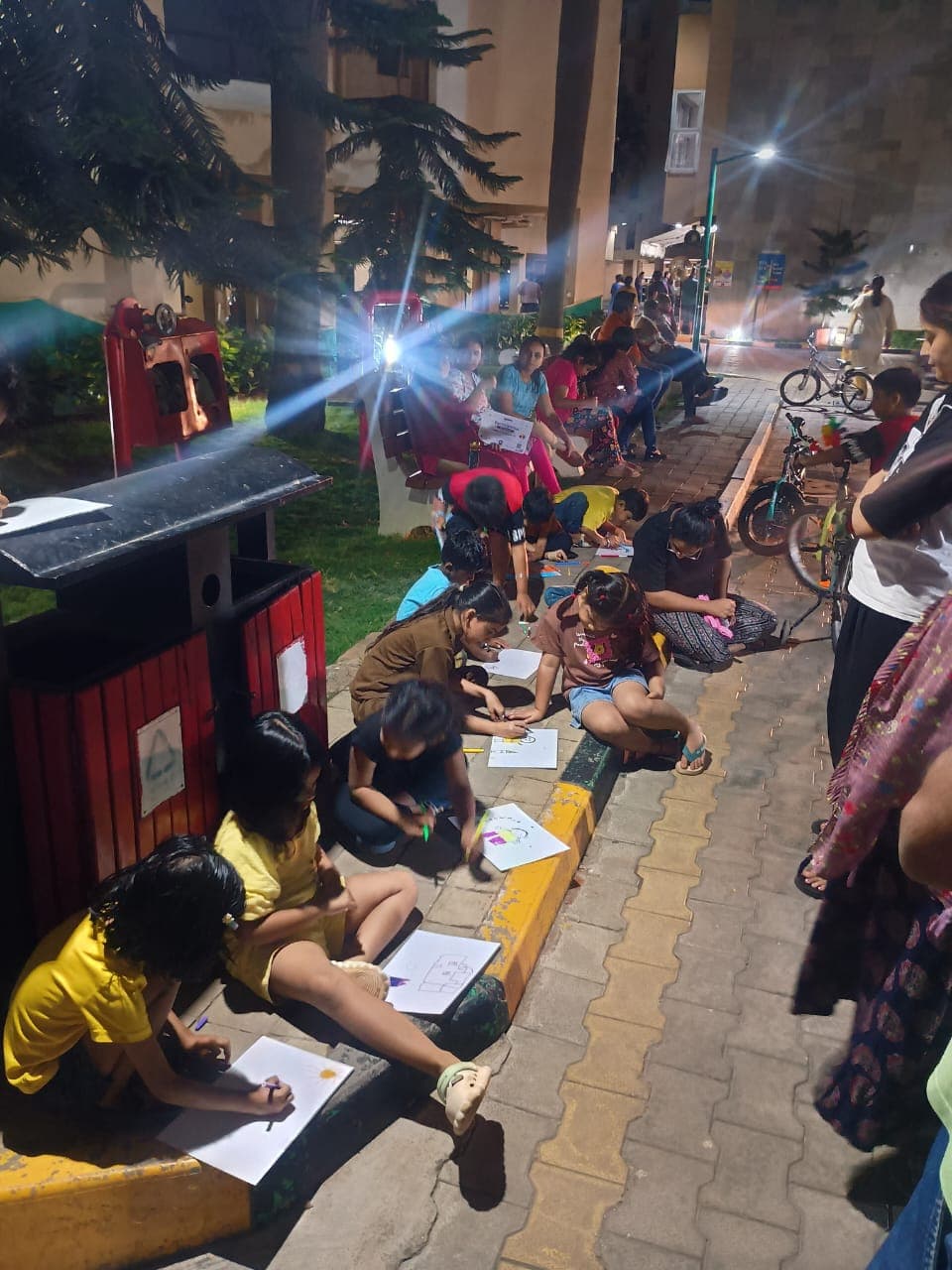
Children drawing their favourite story characters at a Wippi RWA drawing camp after dark
A child holding the Wippi storytelling device during a live demo, bouncy castle visible behind
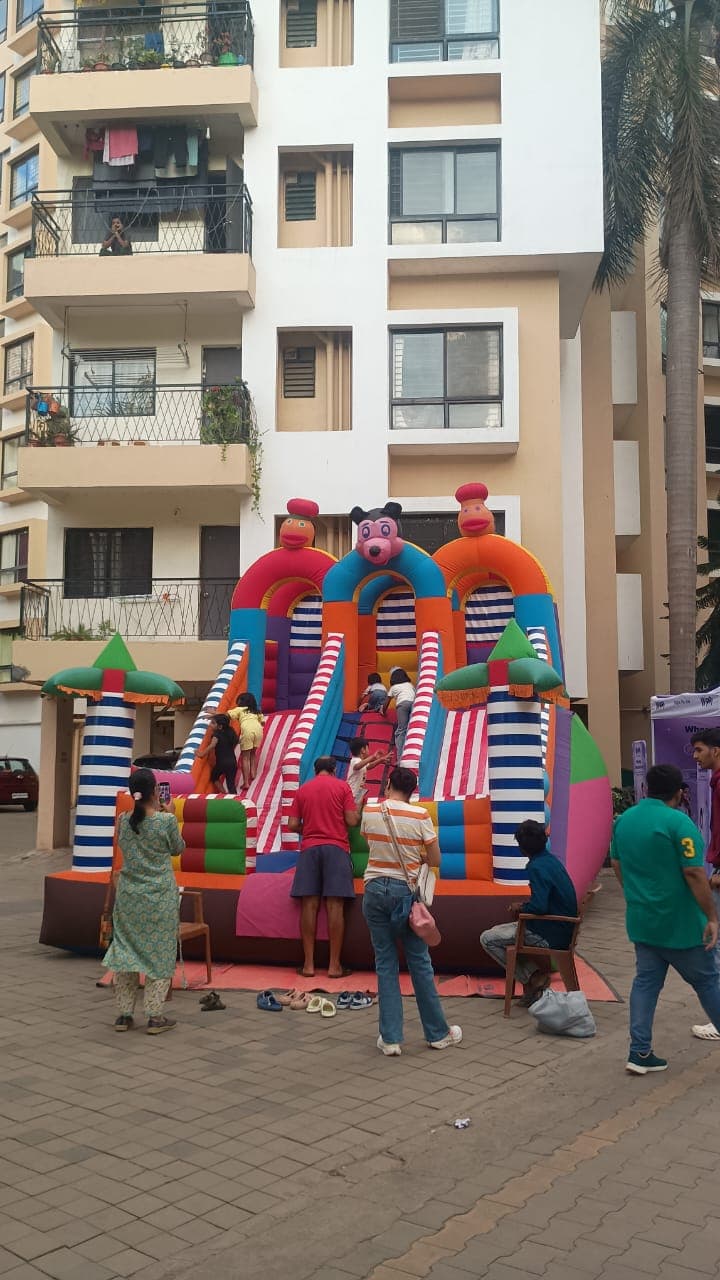
Children climbing the bouncy castle and inflatable play zone at the Wippi RWA activation
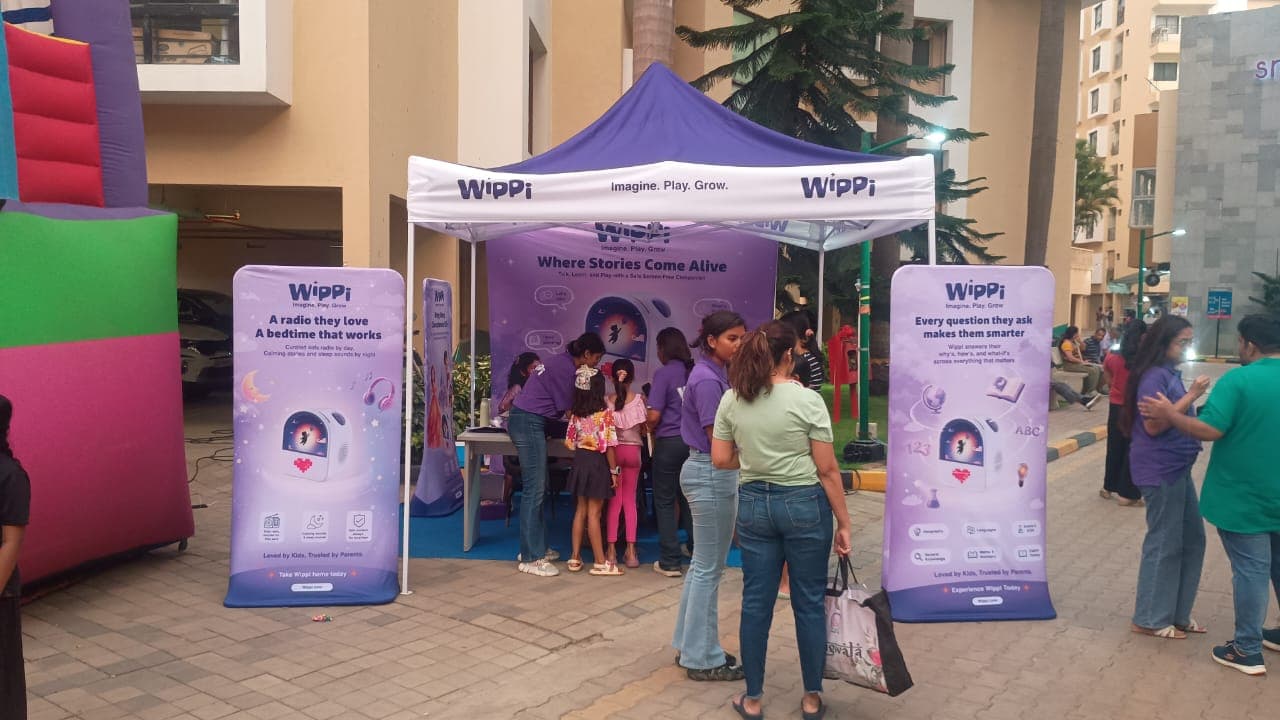
A parent in conversation with the Wippi team at the branded gazebo
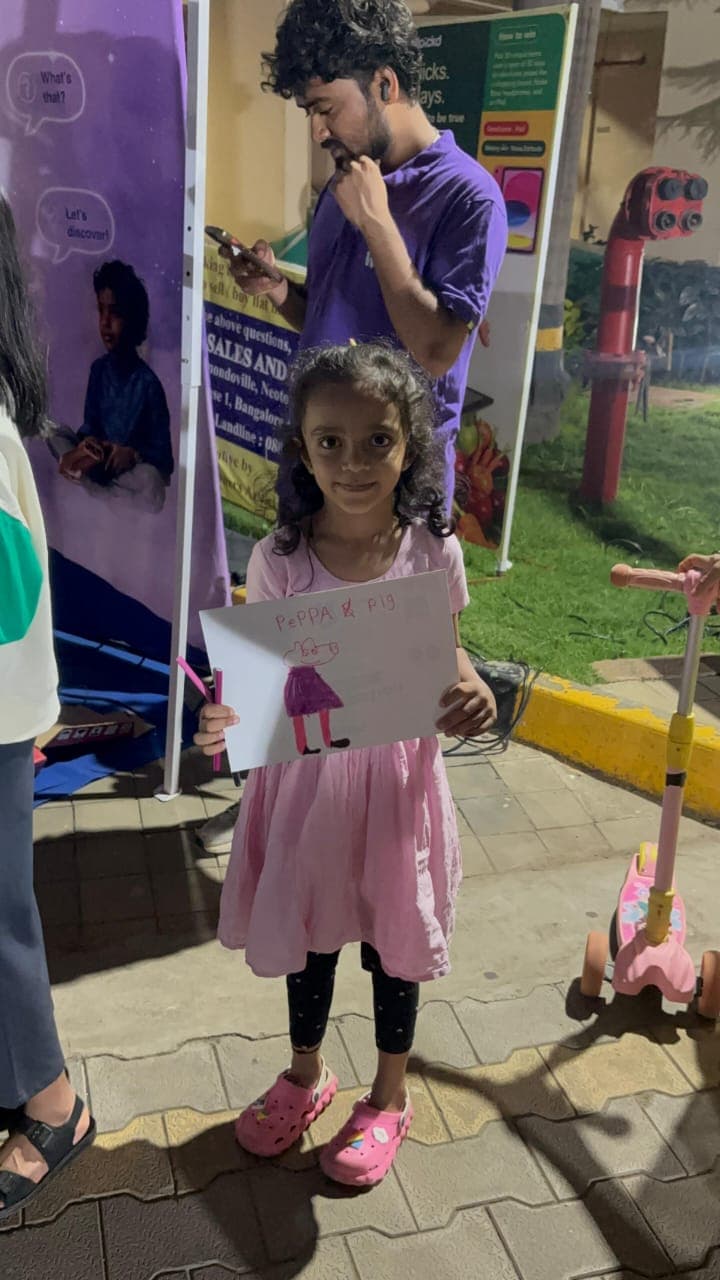
A child proudly holding her Peppa Pig drawing at the Wippi story zone after 9 PM
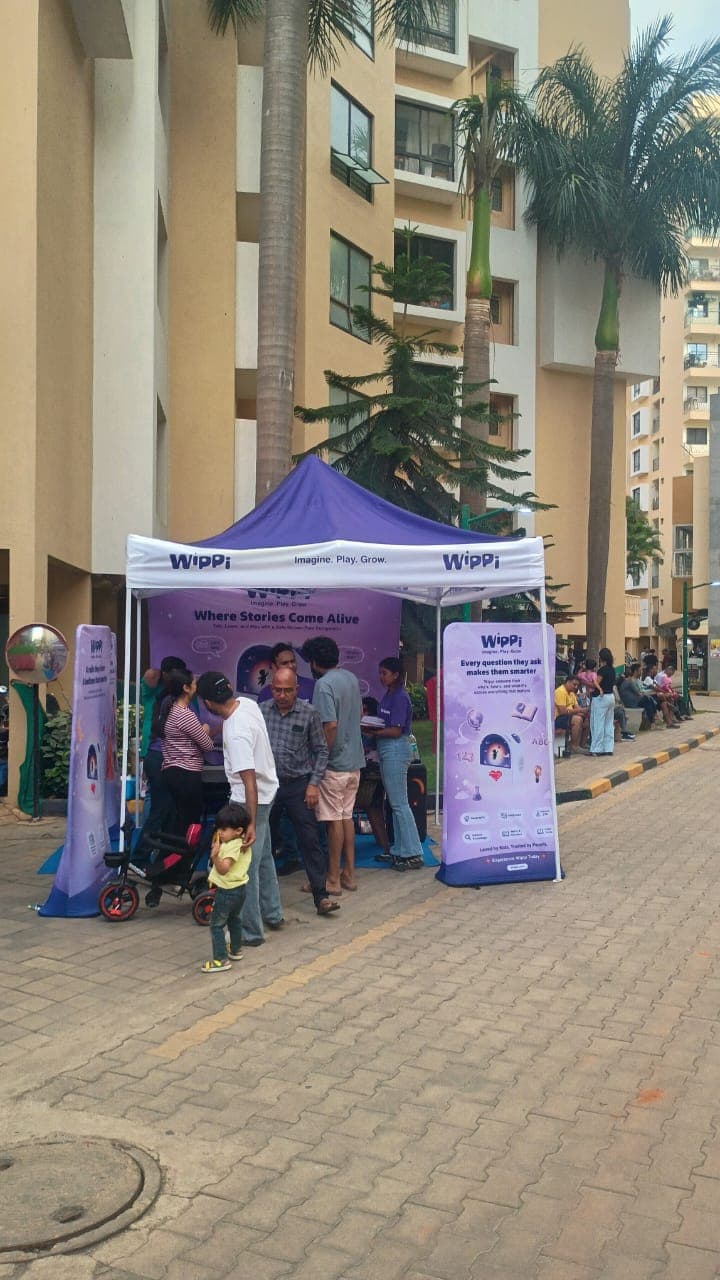
A family with a young child at the Wippi gazebo inside a Bengaluru residential community
Families gathered at the Wippi gazebo and bouncy castle at dusk
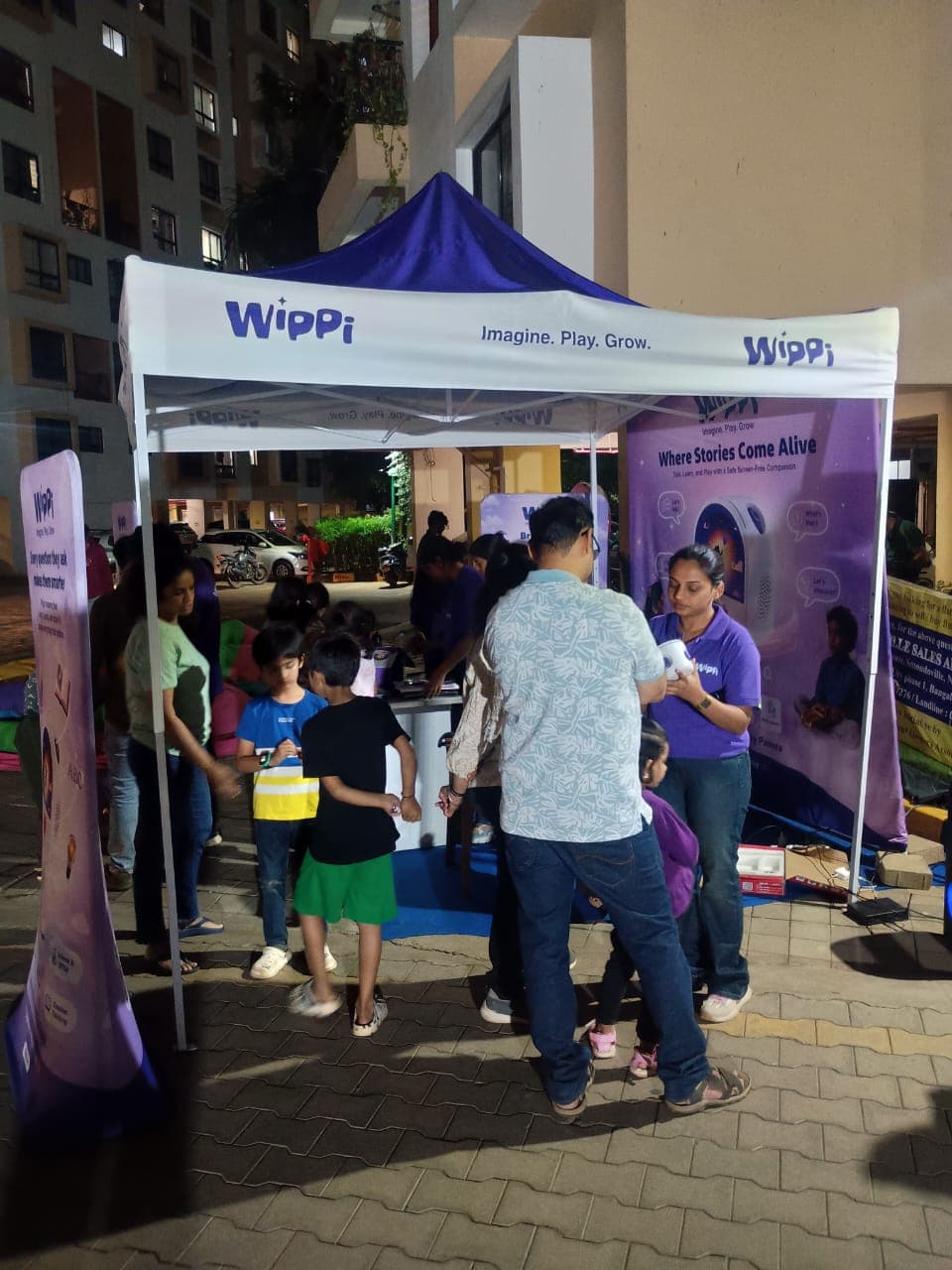
Parents and children at the Wippi demo table during an evening RWA activation
Client: Wippi · Format: RWA experiential activation with branded gazebo, bouncy castle, and storytelling zones · Location: RWAs across Bengaluru · Result: 2,500+ families reached, 190+ demo bookings.
The Challenge: Why Customer Experience Management Mattered More Than Ads
The Screen-First Default
Most children's product marketing runs through the same screens the product is trying to reduce, working against Wippi's own value proposition.
A Product Parents Need to See
Telling parents a screen-free device can hold a child's attention is a hard claim in an ad. Parents needed to watch it happen with their own child.
Building Trust, Not Just Awareness
Wippi needed parents to trust the product enough to book a demo and, eventually, bring it home.
Marketing a screen-free product presented a genuine positioning problem, not just a creative one:
- The Screen-First Default: Most children's product marketing runs through the same screens the product is trying to reduce, which meant the usual digital-first playbook worked against Wippi's own value proposition.
- A Product Parents Need to See to Believe: Telling parents that a screen-free device can hold a child's attention is a hard claim to make in an ad. Parents needed to watch it happen with their own child, not read about it.
- Building Trust, Not Just Awareness: This was never simply about product visibility. Wippi needed parents to trust the product enough to book a demo and, eventually, bring it home.
CupShup needed an activation format that put the product in front of families without relying on the screens Wippi was built to move children away from.
The Strategy: Take the Experience to Where Families Already Gather
If a product's real strength is what happens when a child engages with it, the strategy has to create that moment rather than describe it. CupShup chose RWAs as the stage, because that is where families across Bengaluru already spend real, unstructured time together.
CupShup turned everyday residential spaces into a hands-on brand experience, combining a branded Wippi gazebo, a bouncy castle and inflatable play zone as the footfall draw, dedicated drawing camps, and a storytelling and product-demonstration area. Framing Wippi as a brand experience families could walk into, rather than a product demo table, gave parents a genuine reason to stop. The approach was simple: parents explored, kids interacted, and curiosity did the rest.
This let CupShup, as a brand activation agency in Bangalore and content marketing agency for the UGC that followed, turn a hard-to-explain product truth into something families could experience directly rather than be told about.
The Consumer Journey: Attract, Engage, Discover, Converse, Convert
1. Attract
A visually exciting presence, the branded gazebo and bouncy castle, drew children and parents naturally toward the activation area.
2. Engage
Children participated through play, drawing, and storytelling, discovering Wippi on their own terms rather than through a pitch.
3. Discover
Parents were introduced to Wippi through their own child's experience, watching curiosity turn into genuine interest.
4. Converse
The CupShup team answered questions and ran live product demonstrations for interested parents.
5. Convert
Parents ready to take the next step were moved directly into a demo booking, keeping the path from curiosity to commitment short.
The activation was built around a deliberate five-stage sequence inside every RWA:
- Attract: A visually exciting presence, the branded gazebo and bouncy castle, drew children and parents naturally toward the activation area.
- Engage: Children participated through play, drawing, and storytelling, discovering Wippi on their own terms rather than through a pitch.
- Discover: Parents were introduced to Wippi through their own child's experience, watching curiosity turn into genuine interest.
- Converse: The CupShup team answered questions and ran live product demonstrations for interested parents.
- Convert: Parents ready to take the next step were moved directly into a demo booking, keeping the path from curiosity to commitment short.
This sequence meant every stage fed the next: attraction became engagement, engagement became discovery, discovery became conversation, and conversation became a booked demo.
Results: How Experiential Marketing Drove 190+ Demo Bookings on the Ground
| Metric | Result |
|---|---|
| Families Reached | 2,500+ |
| Children Participated | 400+ |
| Live Conversations | 320+ |
| Organic UGC Pieces | 200+ |
| Demo Bookings | 190+ |
| Location | Residential Communities (RWAs), Bengaluru |
Organic spread across Instagram and Reels
The experience created genuine consumer interest rather than passive impressions. Children stayed engaged well into the evening, with some still drawing their favourite story characters at 9 PM. Parents who watched began asking a simple, direct question: "Where do I buy this?" That question is exactly what an experiential brand activation is designed to produce, and across residential communities in Bengaluru, it proved that a screen-free product can be marketed effectively without leaning on the very medium it is built to reduce:
| Metric | Result |
|---|---|
| Families Reached | 2,500+ |
| Children Participated | 400+ |
| Live Conversations | 320+ |
| Organic UGC Pieces | 200+ |
| Demo Bookings | 190+ |
| Location | Residential communities (RWAs), Bengaluru |
Key Outcomes:
- Direct Product Proof: Parents watched their own children engage with Wippi's storytelling experience, replacing a hard sales claim with something they could see for themselves, a hands-on approach to customer experience management that a digital ad alone could not replicate.
- High-Intent Conversations: 320+ live conversations gave the CupShup team direct, qualified access to interested parents rather than cold outreach.
- Strong Demo Conversion: 190+ parents moved from an on-ground interaction straight into a live product demonstration booking.
- Organic Community Buzz: The activation generated 200+ pieces of organic UGC from families on the ground, extending reach beyond the activation footprint.
Strategic Takeaways for Parent-Focused Brands
Let the Product Prove Itself
When a product's value is best understood through direct experience, an experiential brand activation that lets the end user interact with it directly out-performs an ad explaining the same benefit.
Meet Families Where They Already Gather
Residential communities are where parents and children spend real, unstructured time together, so the activation only had to earn attention, not create the moment of togetherness.
Turn a Child's Reaction Into a Parent's Next Step
Designing the RWA activation so a child's experience naturally opened a parent conversation shortened the distance between curiosity and a booked demo.
The Wippi RWA activation offers three lessons for any brand marketing a product that parents need to trust before they buy:
1. Let the Product Prove Itself When a product's value is best understood through direct experience, an experiential brand activation that lets the end user, in this case a child, interact with it directly will out-perform an ad explaining the same benefit.
2. Meet Families Where They Already Gather Residential communities are where parents and children spend real, unstructured time together. Building the activation inside RWAs meant CupShup did not have to create the moment of togetherness, only the reason to notice Wippi within it.
3. Turn a Child's Reaction Into a Parent's Next Step The strongest conversion trigger in this campaign was not a discount or a pitch, it was a parent watching their own child's reaction. Designing the RWA activation so that the child's experience naturally opened a parent conversation shortened the distance between curiosity and a booked demo.
Frequently Asked Questions: RWA and Experiential Activation for Parent-Focused Brands
Why is btl marketing more effective than digital ads for a screen-free product?
BTL marketing works for a screen-free product because it lets the product prove its own claim, that children stay engaged without a screen, in front of the exact parent deciding whether to buy. A digital ad has to describe the experience; a BTL activation lets a family live it, which is why Wippi's RWA activation converted 400+ engaged children into 190+ demo bookings without a single paid impression.
Why should a kids' product brand hire a brand activation agency in Bangalore instead of running digital ads?
A brand activation agency in Bangalore can put a product directly in front of families in the residential communities where they already spend time, which matters most for products parents need to see in action before they trust them. Wippi's screen-free storytelling device benefited from this directly: rather than describing the product on a screen, CupShup let children experience it in person, which built more trust than any single ad could.
How does an RWA activation work for a parent-focused or children's brand?
An RWA activation sets up a branded experience zone inside a residential community, typically combining a footfall draw such as a bouncy castle or play zone with dedicated areas for hands-on activities and product demonstration. For Wippi, this meant a gazebo and inflatable play zone brought children in, drawing camps and storytelling let them experience the actual product, and a demo area gave parents a place to ask questions.
What makes Bengaluru's residential communities effective for family product marketing?
Bengaluru's RWAs bring together a concentrated, repeat audience of families who already trust the recommendations of their own community. That familiarity lowers the guard parents normally have toward a new product pitch, especially for a category like children's EdTech, where trust is the biggest barrier to adoption.
How do you measure ROI on an RWA or residential activation?
ROI on an RWA activation is tracked through footfall, direct product conversations, and the number of qualified next steps generated, in Wippi's case, live demo bookings. Across the campaign, 2,500+ families were reached, 320+ live conversations took place, and 190+ of those converted into booked demonstrations, giving a clear, trackable path from on-ground engagement to a qualified lead.
How does CupShup turn on-ground engagement into qualified leads for a product like Wippi?
CupShup designs the activation sequence deliberately: an attention-grabbing draw brings families in, hands-on play and storytelling let the product do the convincing, and trained on-ground staff move interested parents straight into a demo booking before the moment of interest fades. This attract, engage, discover, converse, convert structure is what turned 400+ engaged children into 190+ booked demos for Wippi.
How does customer journey mapping apply to an on-ground RWA activation?
Customer journey mapping usually lives in a digital funnel, but Wippi's activation applied the same discipline on the ground: attract, engage, discover, converse, convert. Mapping each stage to a physical moment, the gazebo for attract, drawing camps for engage, the child's reaction for discover, meant CupShup could diagnose exactly where a family dropped off instead of guessing why a booth visit didn't convert.
How does ugc marketing work inside a residential community activation?
UGC marketing inside an RWA activation happens organically because families are already documenting their own evening: a child's drawing, a video of the storytelling session, a photo at the gazebo. CupShup's role was to give families a moment worth capturing, which is what turned the Wippi activation into 200+ pieces of user-generated content without a single paid influencer brief.
Why is community marketing more effective than a demo counter for a trust-sensitive product?
Community marketing works because it borrows credibility from the neighbourhood itself, families are more willing to stop and engage with a brand a RWA has already welcomed in than with a demo counter at a mall. For Wippi, that meant parents watched their own community's children respond to the product first, which did more to build trust than a promotional pitch ever could.
Why Choose CupShup: Wippi's RWA Activation Partner
Because a screen-free product needed a screen-free way to build trust. Wippi needed to sell a screen-free experience, so CupShup, acting as a content marketing agency for the storytelling and UGC around it, created a screen-free marketing experience: real kids, real play, and real conversations, with no screens and no ads in between.
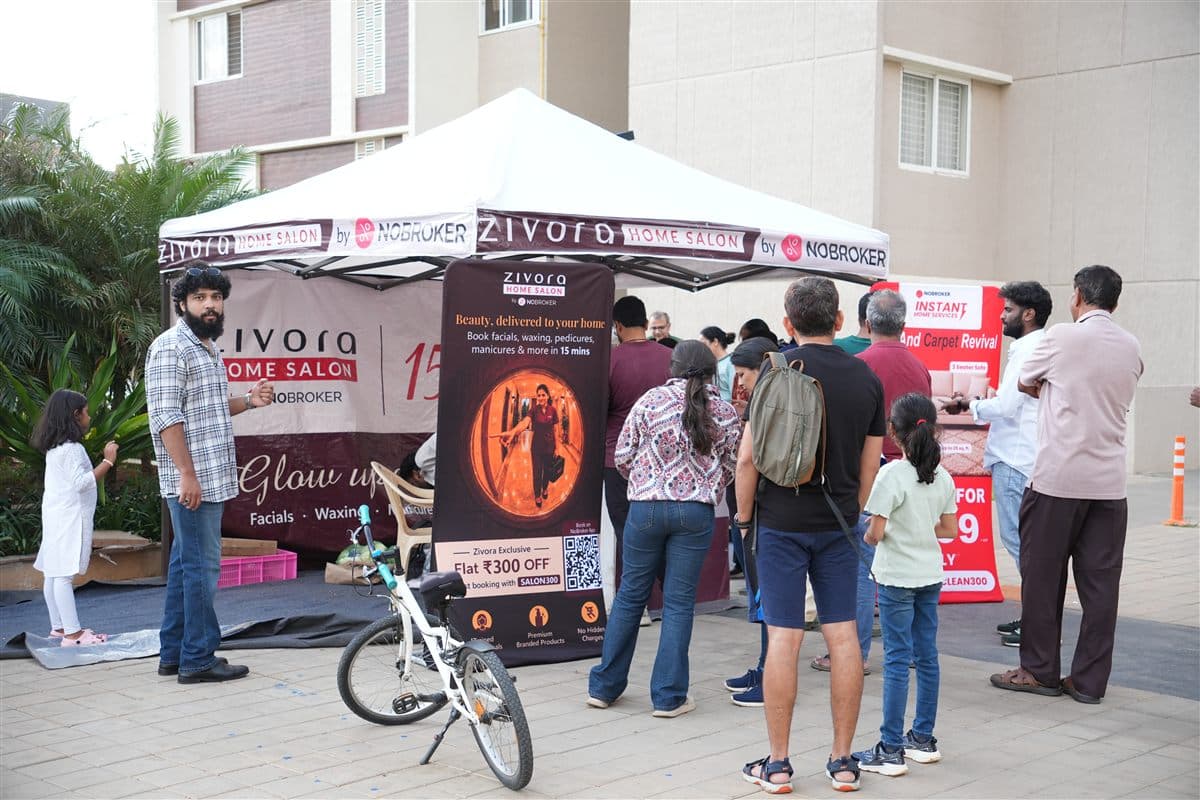
As a brand activation agency in Bangalore and experiential marketing partner with deep residential-community access across the city, and one of the best digital marketing agencies in India for brands that need both on-ground activation and online execution, CupShup brought local RWA relationships a remote or purely digital partner could not replicate, the kind of on ground activation that matters for any brand where parents want to see the product in a child's hands before they buy. Check out our NoBroker NBH & Zivora Case Study to see how we run residential-community activations for a different category, or explore our full range of brand activation case studies.
Marketing a product parents need to see to believe? CupShup can design the RWA activation strategy around it. Let's talk. Start the conversation with CupShup.
Planning Your Next Product Launch?
CupShup designs and executes high-impact brand activations, experiential trials, and creator amplification across 50+ Indian cities.