
BTL Full Form: What BTL Means in Marketing (2026)
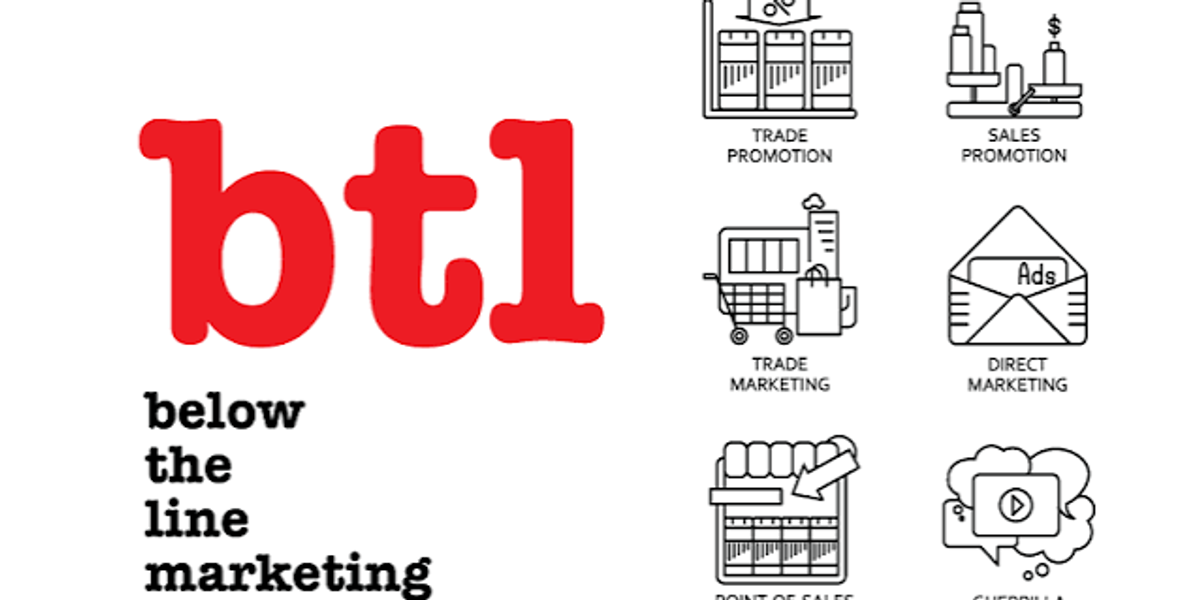
If you have seen "BTL" in a marketing plan and wondered what it stands for, here is the short answer: BTL is the full form of Below The Line marketing. It refers to targeted, direct, and highly measurable marketing activity aimed at a specific audience, as opposed to mass-media advertising. This guide explains the BTL full form in plain language, how it differs from ATL and TTL, the activities it covers, and why Indian brands lean on it to drive real action. The btl full form in marketing is Below The Line — activity aimed at specific audiences rather than the mass market. People also search the btl marketing full form, and the answer is identical: Below The Line marketing.
BTL Full Form: What BTL Stands For
BTL = Below The Line. The phrase comes from old advertising accounting, where mass-media spends like TV and print sat "above the line" on a budget sheet, and direct, targeted activities sat "below the line." Today the language has stuck, even though the budget sheet has changed. Knowing the btl full form in marketing matters because it defines how the budget is measured. Spelling out the btl marketing full form up front avoids the usual acronym confusion.
Below The Line marketing means reaching a defined audience directly: sampling a product in a person's hand, running an activation inside their housing society, or capturing a lead at a mall kiosk. It is precise, personal, and measurable. The btl full form in marketing sits opposite ATL, which chases broad reach. Once the btl marketing full form is clear, the examples make sense.
ATL, BTL, and TTL: The Full Forms Explained
You will often see three related terms. Here are all three full forms and what they mean.
- ATL (Above The Line): mass-media advertising for broad awareness, such as TV commercials, print and radio.
- BTL (Below The Line): targeted, direct, measurable activation, such as sampling, kiosks and society activation.
- TTL (Through The Line): an integrated blend of ATL and BTL, such as a TV campaign with on-ground sampling and a digital follow-up.
The trend in India is firmly TTL: brands run awareness and on-ground action together, then connect both to digital. A good content marketing agency or activation partner plans them as one journey rather than separate silos.
What BTL Marketing Includes
Below The Line covers any direct, targeted activity. The most common formats are:
- Product sampling in malls, markets, offices, and societies.
- Retail and in-store activation at the point of purchase.
- Society and RWA programmes that reach families where they live.
- Roadshows and canter campaigns that take the brand to the street.
- Kiosks and experiential setups that capture leads directly.
- Hyperlocal and quick-commerce tie-ins that convert intent into trial.
For the full tactical breakdown, read the 7 BTL activities that actually move numbers, and for the strategic view, see our complete BTL marketing guide.
BTL Marketing in Action: Real Examples
The theory is simple. The proof is in execution. Here are real below-the-line campaigns that show what each format delivers when it is measured properly.
- Sampling at scale. CupShup's Pintola canter activation put product directly in consumers' hands across multiple markets, turning sampling into tracked trial rather than a giveaway.
- Retail and shelf activation. The Marico Pav Bhaji Oats activation reframed a product at the exact point of purchase, where the buying decision is made.
- Society and family reach. The Godrej Yummiez activation met families where they live and drove roughly Rs 78L in measured sales.
- Lead generation. The SBI Life chai-time activation generated 10,000+ qualified insurance leads, proof that BTL is a lead engine for considered purchases.
Every one of these is a Below The Line tactic with a capture mechanism built in. That is the difference between BTL that earns budget and activity that just fills a recap deck.
When to Use BTL vs ATL
- Launching a product into a new market: lead with BTL. Trial and sampling create first-hand adoption.
- Building a national brand from scratch: lead with ATL. Mass reach establishes recognition fast.
- Driving footfall to a store or event: lead with BTL. It is targeted, local and measurable.
- Defending share in a contested category: use both (TTL). Awareness plus on-ground conversion.
- Generating leads for a considered purchase: lead with BTL. Direct conversations capture intent.
The honest rule: if you need awareness, ATL. If you need action, BTL. Most brands need both, sequenced so awareness feeds activation and activation feeds digital follow-up.
Why BTL Matters: ATL vs BTL at a Glance
- Goal: ATL builds awareness and recall. BTL drives trial, leads and conversion.
- Audience: ATL is broad and mass. BTL is specific and targeted.
- Measurement: ATL is weak and survey-based. BTL is strong and tracked per activation.
- Contact: ATL is one-way. BTL is direct and two-way.
- Cost logic: ATL pays per thousand views. BTL pays per qualified outcome.
The big advantage of BTL is accountability. Because every contact can be captured with a QR code or a lead form, the spend is measurable. Pair that capture with marketing automation services and the leads you collect on the ground flow straight into nurture and retargeting.
BTL and Digital: Better Together
BTL is no longer a standalone channel. The strongest campaigns connect on-ground contact to digital follow-up. A person who samples your product scans a QR code, joins a WhatsApp list, and becomes a retargetable lead. That handoff is where modern BTL earns its budget, and it is why brands increasingly want a partner that can run both the activation and the digital engine behind it.
Work With CupShup
CupShup is an on-ground and digital marketing partner with 10 years, 400+ brands, and campaigns across 30+ cities. We plan brand activation around measurable outcomes and connect every on-ground contact to digital, so Below The Line work proves its worth in leads and sales.
Want BTL that is accountable to numbers? Talk to CupShup.
BTL Full Form in Practice
Knowing the BTL is one thing; using it is another. Once you know the BTL full form stands for Below The Line, the next step is execution: pairing targeted on-ground activity with a content marketing agency for the storytelling and a measurement layer for proof. That is how the BTL full form turns from a definition into a results engine.
Beyond the Definition: Putting BTL to Work
Knowing the the acronym is step one; activating it is where results come. A content marketing agency can turn BTL campaign learnings into ranking articles and case studies, while marketing automation services capture and nurture the leads activations generate. Brands that connect on-ground BTL with a content marketing agency and marketing automation services build a compounding system, not a one-off push. CupShup links BTL execution with content and SEO and marketing automation services, so every activation feeds the funnel instead of ending at the footpath.
BTL Activities in Action: Two Recent CupShup Campaigns
Definitions only go so far, so here are two recent BTL activities from CupShup's own work. Both show BTL marketing doing what ATL cannot: putting the product in someone's hand.
Watch: the Swiss Beauty beach activation in Goa
For Swiss Beauty, CupShup ran a three-day on-ground activation at Baga Beach, Goa, with a branded ATV, live product demonstrations, on-the-spot sampling and a Sun-Smart Quiz. It turned 5,000+ beachgoers into product testers and content creators.
For YesMadam, a guerrilla activation placed displays at 120+ panwadi shops and 40+ gyms across Delhi NCR. The result was 18 lakh+ impressions, 9,600+ QR scans and 640+ direct at-home spa bookings. That is BTL marketing measured all the way to the booking.
Frequently Asked Questions
What is the full form of BTL in marketing?
BTL stands for Below The Line. It refers to targeted, direct, and measurable marketing activity aimed at a specific audience, such as sampling, kiosks, and society activation, as opposed to mass-media advertising.
What is the difference between ATL and BTL?
ATL (Above The Line) is mass-media advertising for broad awareness, like TV and print. BTL (Below The Line) is targeted, direct activity that drives trial and conversion in specific markets, with much stronger measurement.
What does TTL mean?
TTL stands for Through The Line, an integrated approach that blends ATL awareness with BTL activation, usually connected to digital, so the channels work together as one journey.
Is BTL marketing still relevant in 2026?
Yes. BTL is more relevant than ever because it is measurable and converts intent into trial. When connected to digital follow-up and marketing automation services, it delivers attributable leads and sales.
What are examples of BTL marketing?
Common BTL examples include product sampling, in-store and retail activation, society and RWA programmes, roadshows, kiosks, and hyperlocal quick-commerce tie-ins.
Related reading: What Is BTL Marketing? Meaning, Activities and Examples, our full overview of BTL and ATL marketing in India.
50 Integrated Marketing Campaign Ideas
The complete playbook with campaign frameworks, budget templates, and measurement guides for Indian brands.
Instant download + email copy. No spam, ever.
Explore CupShup Services
Brands that read this article also explored these services.
BTL Marketing Services
On-ground activations, sampling drives, RWA events, and experiential campaigns across India.
Learn more ActivationBrand Activation Agency
400+ brand activations across corporates, colleges, societies and transit hubs. Tech-enabled tracking.
Learn more ExperientialExperiential Marketing Agency
Immersive on-ground experiences that convert consumers into customers and brand advocates.
Learn moreCuppa CS
Digital Marketing Expert specializing in AI-powered marketing tools and automation. Cuppa CS helps brands leverage cutting-edge technology to optimize their digital presence and drive customer engagement.
Related Stories

Go Deeper with Our Free Guides
Comprehensive, in-depth marketing guides created by CupShup's experts.
The Ultimate Guide to Brand Activation
Everything you need to know about bringing your brand to life, strategies, examples, and frameworks.
The Ultimate Guide to Digital Marketing
Master every channel in the modern digital marketing ecosystem, from SEO to paid media.
The Ultimate Guide to SEO
The definitive guide to search engine optimization, on-page, technical, and link building strategies.