India's fitness FMCG aisle is loud. Every brand shouts "New Year, New You" in January. Most of them shout from screens. CupShup, a leading brand activation agency, helped Pintola cut through the clutter the only way that works in a taste-driven category - by showing up in person. A 3-month canter activation campaign across Delhi NCR, Jaipur and Chandigarh distributed 60,000+ product samples, reached 3.5 million+ consumers, and drove 12,000+ tracked conversions through a closed-loop model that turned fitness zones into purchase funnels.
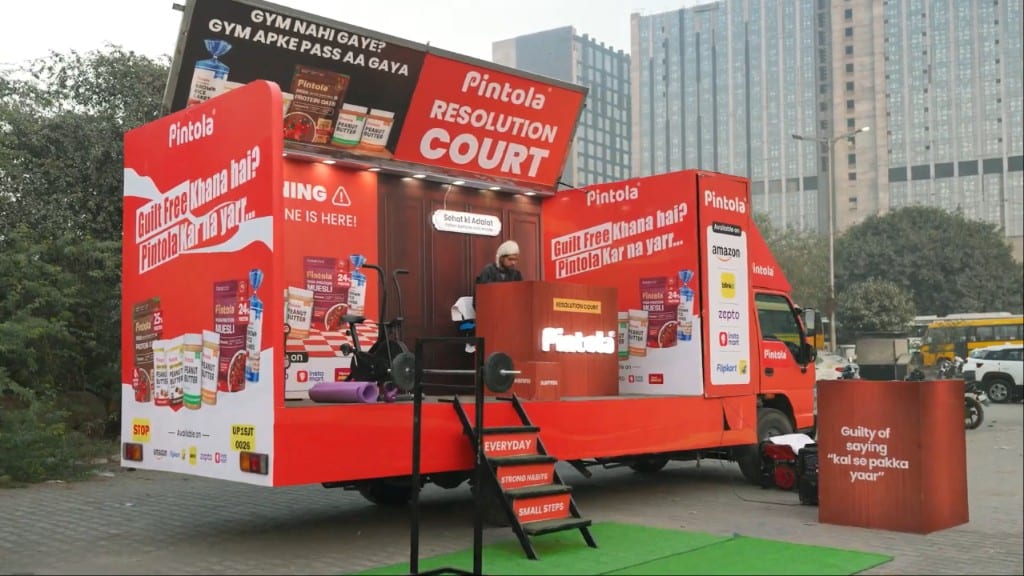
Table of Contents
- Executive Summary
- Campaign Overview
- Category Context: D2C Fitness FMCG in India's New Year Window
- The Challenge: Standing Out During Fitness Clutter Season
- CupShup's Strategic Approach: Sample → Amplify → Convert
- Execution Detail: Moving at the Speed of Fitness Culture
- From On-Ground to Online: The Earned Media Loop
- The Results: What 3 Months and 3 Cities Delivered
- Strategic Takeaways for D2C and FMCG Brands
- Frequently Asked Questions
- Why Pintola Chose CupShup
Executive Summary
This case study shows how a D2C fitness FMCG brand used a structured on-ground sampling and canter activation model to bridge the gap between high digital awareness and low physical trial - the core conversion problem for taste-driven categories in a crowded January market. CupShup designed and executed a three-layer activation for Pintola across three cities: mobile canter units operating as branded fitness zones, on-ground sampling with 60,000+ units distributed, and a regional influencer and meme-page network that turned every activation into a content moment. The result was 3.5 million+ verified consumer touchpoints, 75,000+ engagements, and an estimated ₹10–12 lakh in direct revenue impact from a single campaign cycle.
Campaign Overview
Campaign Gallery
Hover to expand media • Click for fullscreen photos
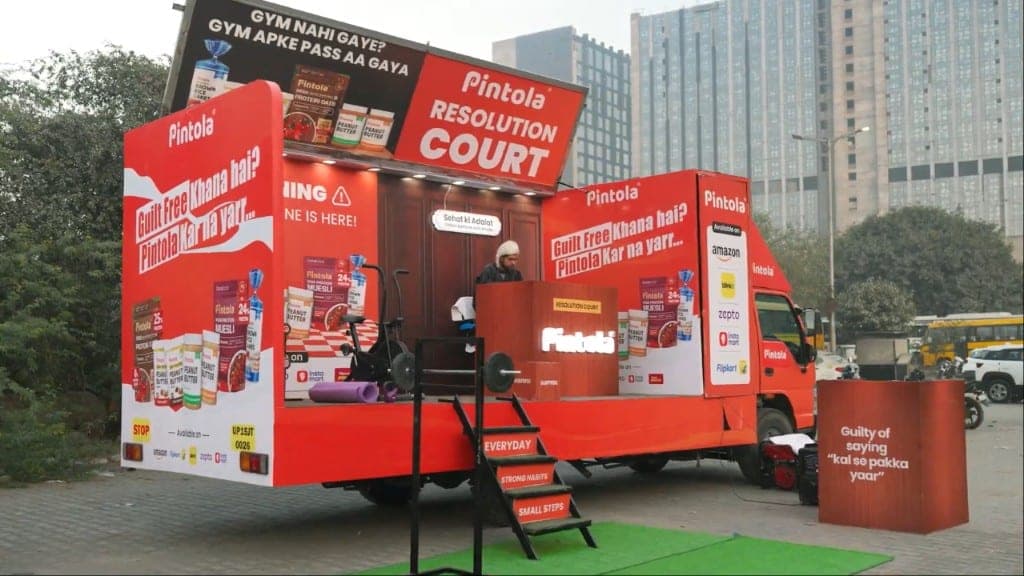
Pintola canter activation campaign - branded mobile fitness zone across Delhi NCR, Jaipur and Chandigarh
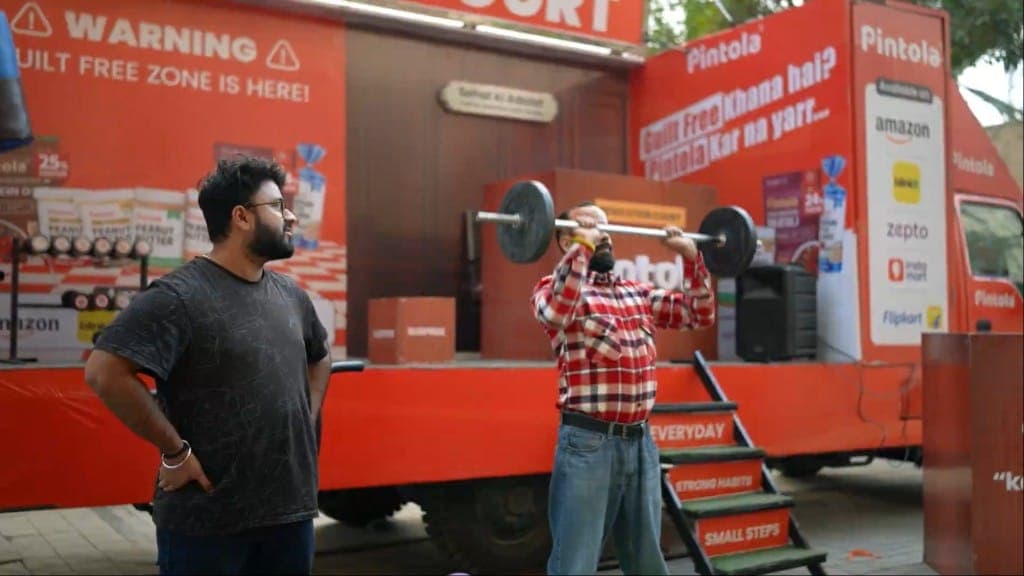
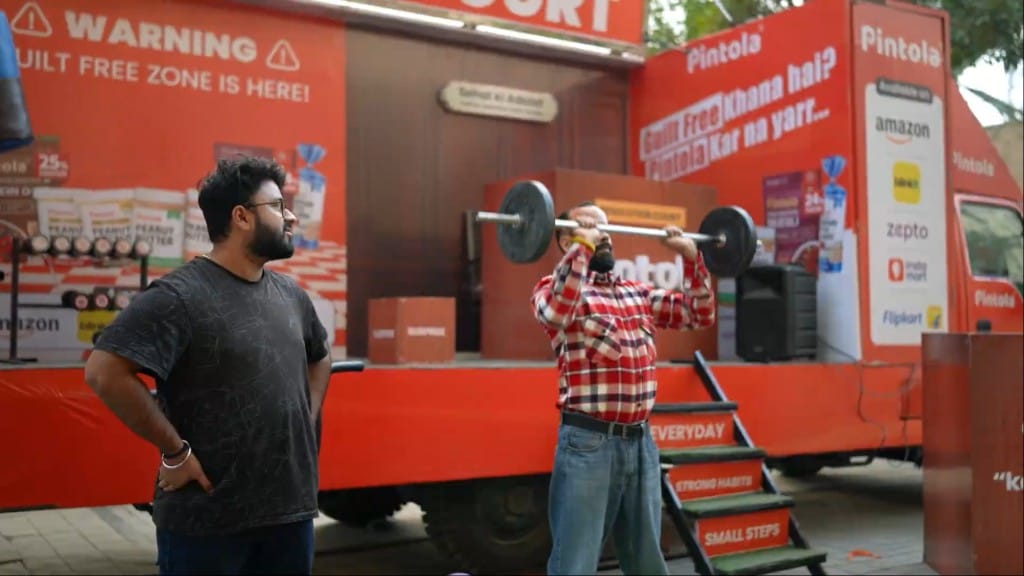
Pintola branded canter fitness zone - consumers earning samples through workout challenges
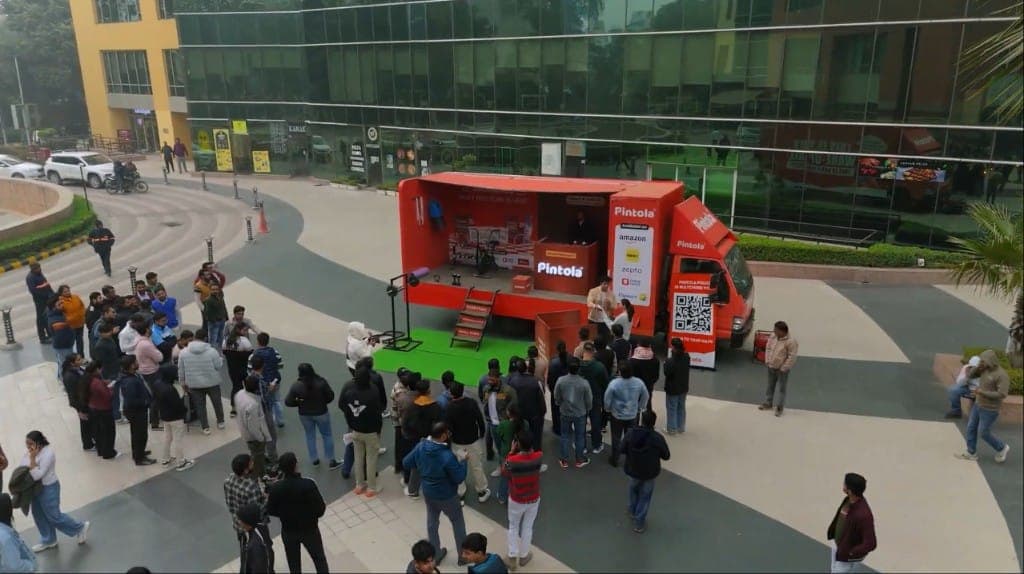
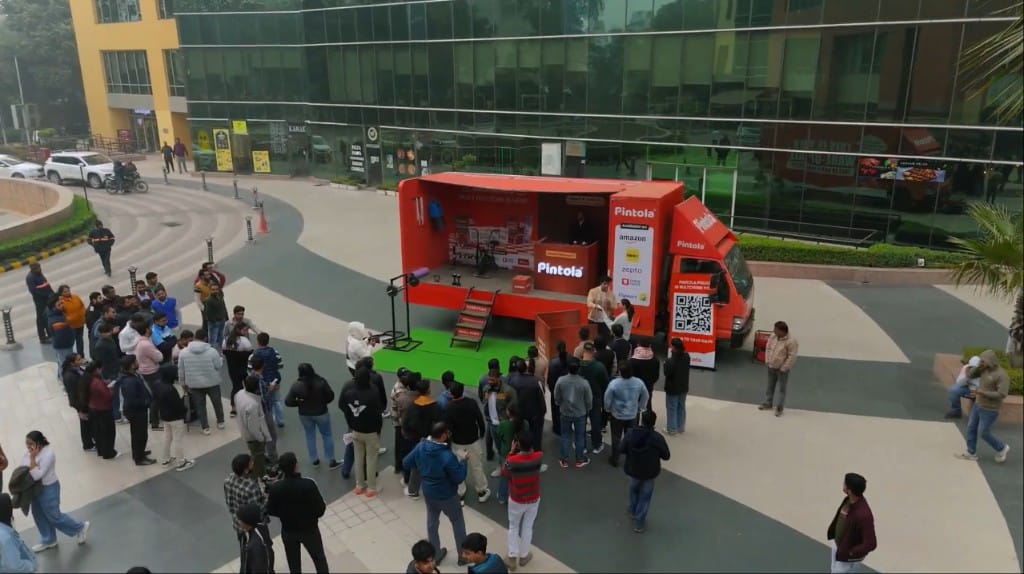
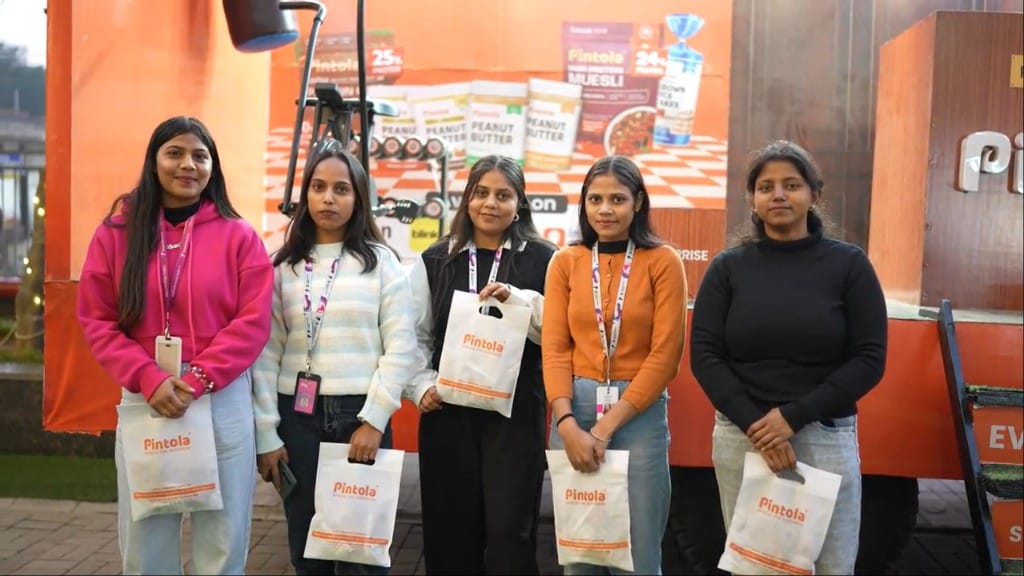
On-ground FMCG sampling - 60,000+ Pintola product samples distributed across 3 cities
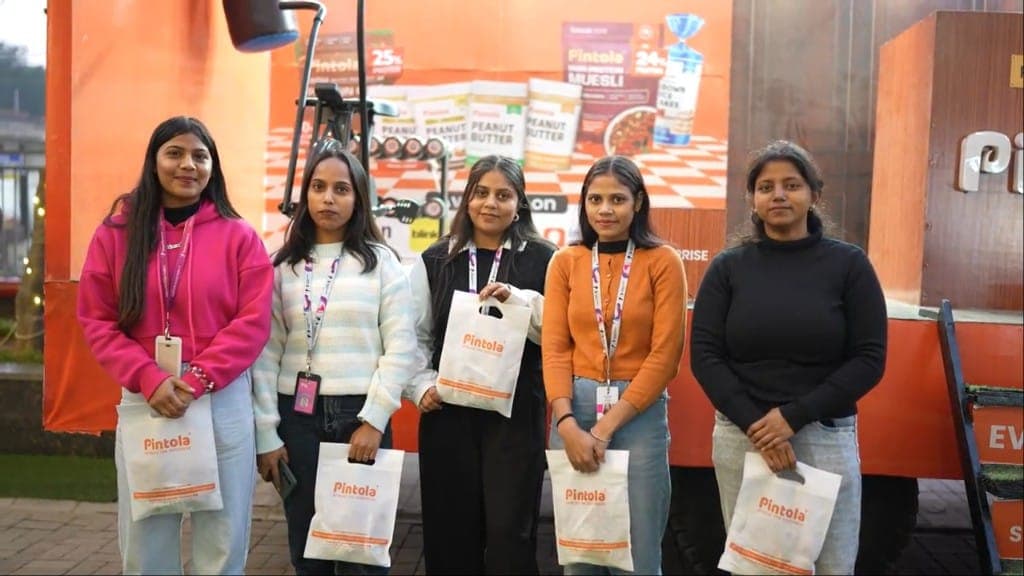
Regional influencer and meme page amplification - 80+ city pages, 25+ micro-influencers activated
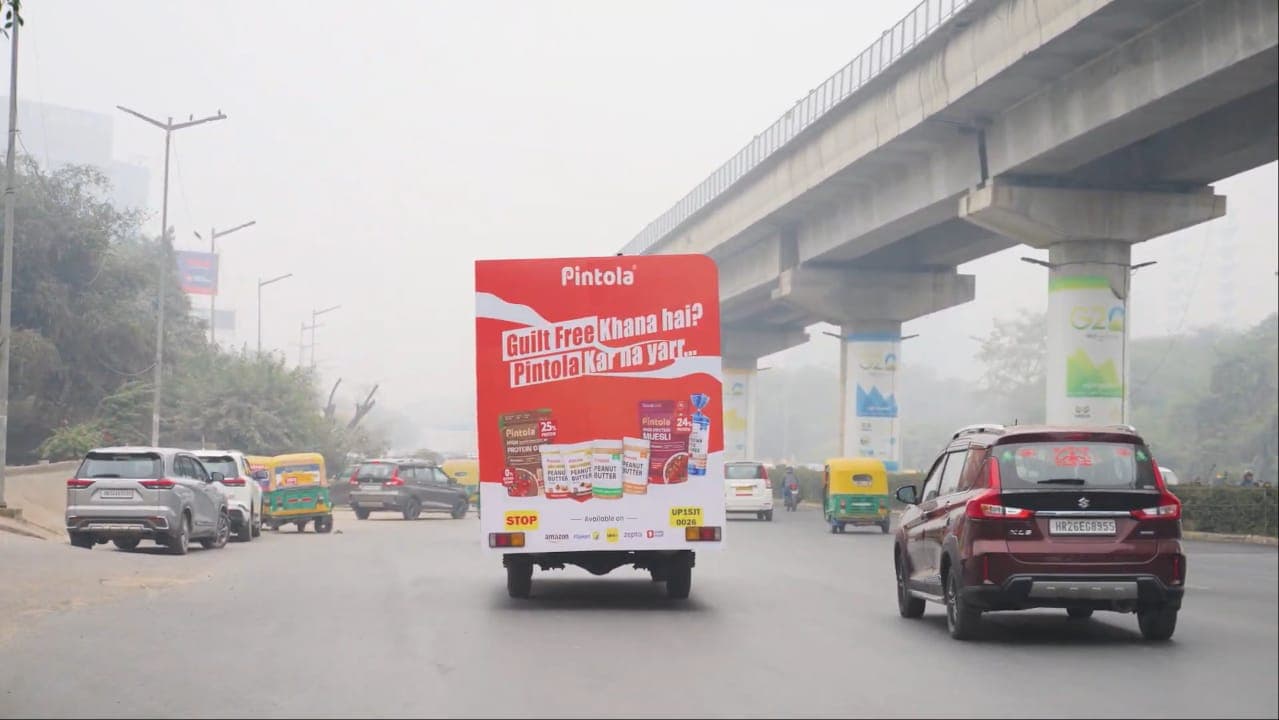
Pintola campaign execution - city-specific influencer briefing and activation scheduling across Delhi NCR, Jaipur and Chandigarh
Client: Pintola (D2C FMCG - Peanut Butter, Oats, Rice Cakes) Campaign: New Year Fitness Resolution - Canter Activation & On-Ground FMCG Sampling Cities: Delhi NCR, Jaipur, Chandigarh Duration: 3 months Key Results: 3.5M+ total reach, 60,000+ samples distributed, 75,000+ engagements, 12,000+ conversions, ₹10–12L estimated revenue impact
Category Context: D2C Fitness FMCG in India's New Year Window
India's fitness nutrition category grew sharply between 2022 and 2026. Peanut butter - once a niche product in metro gyms - became a mainstream SKU as health-conscious millennials in Tier-1 and emerging Tier-2 cities adopted protein-first eating habits. Pintola sits at the intersection of this trend: a D2C brand with strong digital presence competing in a segment where Tier-1 gym-goers are bombarded with options from imported brands, private labels, and fellow D2C challengers.
Three structural forces shaped this category during our engagement:
- The January effect. Every FMCG brand targets the "New Year resolution" consumer. The problem is that everyone targets them on the same channels - Instagram, influencer posts, Google ads - creating a media environment where the signal-to-noise ratio collapses in the first two weeks of January.
- The trial gap in taste categories. Peanut butter, oats and rice cakes are products people need to try before they commit. A 15-second reel cannot replace a spoonful. Brands that drive physical trials in this category convert at 3–5x the rate of brands that rely on digital alone.
- D2C CAC pressure. Pintola's digital customer acquisition cost had climbed with the broader D2C market. Offline sampling - when designed with a conversion path back to the D2C store - offered a cheaper, more durable route to trial than paid social.
This is why a canter activation campaign wasn't a complementary tactic for Pintola. It was the primary acquisition engine.
The Challenge: Standing Out During Fitness Clutter Season
New Year noise
January is the highest-competition month for every fitness brand in India. Pintola needed a format that couldn't be skipped or scrolled past.
Low physical trial rates
Despite strong brand awareness among urban fitness consumers, Pintola's in-store conversion rates at modern trade lagged category benchmarks.
City-by-city inconsistency
Delhi NCR and Chandigarh had different fitness consumer profiles and competitive dynamics, and Jaipur had almost no existing Pintola brand recall.
No earned media loop
Previous promotional activity was one-directional. There was no mechanism to turn the sampling moment into content, and content into organic reach.
Pintola's brief to CupShup came with four clear problems - none of which were solvable through more digital spend:
- New Year noise. January is the highest-competition month for every fitness brand in India. Consumers are fatigued by "fitness resolution" messaging before the campaign even launches. Pintola needed a format that couldn't be skipped or scrolled past.
- Low physical trial rates. Despite strong brand awareness among urban fitness consumers, Pintola's in-store conversion rates at modern trade lagged category benchmarks. Consumers recognised the brand but hadn't tasted it - the decisive moment for a peanut butter purchase.
- City-by-city inconsistency. Delhi NCR and Chandigarh had different fitness consumer profiles and different competitive dynamics. Jaipur was an emerging market with high growth potential but almost no existing Pintola brand recall. A single national campaign template wouldn't work.
- No earned media loop. Previous promotional activity was one-directional: brand spent, consumer received. There was no mechanism to turn the sampling moment into content, and content into organic reach.
CupShup's Strategic Approach: Sample → Amplify → Convert
The architecture had three layers. Each one was useless without the others.
1. The Canter as a Fitness Zone, Not a Sampling Tent
Most FMCG brands treat sampling tents as distribution points. We treated the Pintola canter as a destination. The branded mobile unit was fabricated as a portable fitness zone - Fitness Oath experience booth, bench press station, skipping area, cycling and push-up challenge zones. Consumers didn't just receive a sample. They earned it.
Pro tip: In a taste-driven category, the emotional state during trial matters. Someone who just completed a 30-second push-up challenge is primed to believe a protein-forward product works. That's not psychology - it's product-market fit.
2. City Mapping to the Right Fitness Consumer
We ran a pre-launch recce across all three cities, mapping 60+ activation zones per market based on footfall density, fitness affinity, and competitive sampling gaps. Morning gym-cluster windows (6–9 AM), evening park and market intercepts (5–8 PM), and RWA community zones formed the primary activation calendar. No generic high-footfall spots - only locations where the Pintola target consumer was already present.
Insider hack: A branded canter outside a general market burns budget on the wrong audience. The same canter outside a functional gym cluster with a 6 AM slot speaks directly to someone already thinking about protein.
3. Sampling Integrated with Content Capture
Every sampling moment was a content moment. Field crews captured vox-pop video - consumers sharing their New Year fitness resolutions, completing workout challenges, reacting to the product - and turned that footage into assets within 24 hours for the influencer network. The 60,000+ samples distributed weren't just freebies; they were the raw material for a digital amplification engine.
Pro tip: Sampling without content capture is a cost. Sampling with content capture is a media investment. The difference is a phone, a crew member, and a brief.
4. A Regional Influencer + Meme Page Network That Felt Native
We activated 25+ fitness micro and regional influencers across all three cities - not national fitness celebrities, but people whose audiences actually lived in Delhi NCR, Jaipur and Chandigarh. 80+ city-based meme pages and lifestyle accounts amplified the activation content as organic, city-native moments, not paid posts. The campaign was designed to look like it was happening in the city, not being done to the city.
Pro tip: National fitness influencers work for awareness. Regional meme pages work for trust. Pintola's target buyer in Jaipur is more likely to act on a post from a Jaipur fitness account than a Delhi-based macro influencer.
5. Post-Activation Performance Marketing Loop
The activation ended on-ground; the funnel didn't. We ran performance marketing campaigns targeting engaged users and lookalike audiences built from on-ground interaction data - retargeting with product-focused creatives, SKU-specific offers, and conversion messaging. QR codes at the canter linked directly to Pintola's D2C store. The result was a closed loop: physical trial → digital retargeting → online purchase.
Execution Detail: Moving at the Speed of Fitness Culture
Zone scheduling
The canter ran 4–5 activation locations per day per city on a rotating schedule, anchored to peak fitness windows.
Challenge mechanics
Fitness challenges (bench press, skipping, push-up circuit) gave consumers a reason to spend 3–5 minutes at the zone.
Vox-pop pipeline
Field crews captured 20–30 vox-pop clips per activation day, distributed to the influencer and meme page network within 24 hours.
Simultaneous retail activation
High-performing canter zones were cross-referenced with nearby modern trade stores, with shelf activations running in parallel.
Influencer briefing by city
Influencer briefs were city-specific, not brand-generic, across Delhi NCR, Jaipur and Chandigarh.
A 3-month calendar across 3 cities required more than enthusiasm. The operating model:
Zone scheduling. The canter ran 4–5 activation locations per day per city on a rotating schedule, anchored to peak fitness windows. High-performing zones were doubled in Month 3 based on engagement density data from Months 1 and 2.
Challenge mechanics. Fitness challenges (bench press, skipping, push-up circuit) gave consumers a reason to spend 3–5 minutes at the zone rather than collecting a sample and walking away. More time meant higher recall, higher content capture quality, and higher conversion to on-the-spot brand discussion.
Vox-pop pipeline. Field crews captured 20–30 vox-pop clips per activation day. Content was edited and distributed to the influencer and meme page network within 24 hours. City-specific content - Jaipur in Hindi with local register, Chandigarh with its distinct fitness culture - outperformed generic brand content by a significant margin.
Simultaneous retail activation. High-performing canter zones were cross-referenced with nearby modern trade stores. Shelf activations ran in parallel so consumers who sampled in the park could find the product on-shelf within the same zone the same week - closing the trial-to-purchase loop without requiring a D2C order.
Influencer briefing by city. Influencer briefs were city-specific, not brand-generic. Delhi NCR briefs emphasised urban gym culture and protein performance. Jaipur briefs led with accessibility and the mainstream appeal of healthy snacking. Chandigarh briefs leaned into the city's strong fitness identity and community pride.

This city-specific activation capacity connects directly to CupShup's on-ground presence in Delhi, and mirrors the regional activation approach we deployed for Marico's FMCG portfolio and Beco's sustainable FMCG launch.
From On-Ground to Online: The Earned Media Loop
Activations die if they stay on-ground. We stretched every rupee by engineering a content-to-reach multiplier:
- Vox-pop amplification: Field footage turned into Reels and Stories within 24 hours, distributed through 80+ meme and city pages. On-ground content circulated organically for 6+ weeks after the campaign ended.
- Challenge UGC: Consumers who completed the fitness challenges were encouraged to post their own content. The branded challenge mechanic provided a natural hashtag hook and shareable format.
- D2C retargeting: Consumers who engaged at the activation zone and scanned the QR code were cookied for performance marketing retargeting - a direct digital continuation of the physical moment.
The Results: What 3 Months and 3 Cities Delivered
| Metric | Result |
|---|---|
| Total Reach | 3,500,000+ |
| Offline Consumer Touchpoints | 2,000,000+ |
| Digital Reach (influencer + meme pages) | 1,500,000+ |
| Product Samples Distributed | 60,000+ |
| Total Engagements | 75,000+ |
| Video Views (vox-pop + influencer content) | 500,000+ |
| Conversions (D2C purchase + intent actions) | 12,000+ |
| Influencers Activated | 25+ |
| Meme and City Pages | 80+ |
| Estimated Revenue Impact | ₹10,00,000 – ₹12,00,000+ |
Organic spread across Instagram and Reels
| Metric | Result |
|---|---|
| Total Reach | 3,500,000+ |
| Offline Consumer Touchpoints | 2,000,000+ |
| Digital Reach (influencer + meme pages) | 1,500,000+ |
| Product Samples Distributed | 60,000+ |
| Total Engagements | 75,000+ |
| Video Views (vox-pop + influencer content) | 500,000+ |
| Conversions (D2C purchase + intent actions) | 12,000+ |
| Influencers Activated | 25+ |
| Meme and City Pages | 80+ |
| Estimated Revenue Impact | ₹10,00,000 – ₹12,00,000+ |
Cohort-Level Colour
The headline numbers matter. So do the patterns underneath:
- Earned media tail. Vox-pop and challenge content continued circulating on city pages and influencer accounts for 6+ weeks post-campaign - meaning the cost-per-impression on that earned content kept falling every week after the canter moved on.
- City-by-city variation. Jaipur - the market with the lowest initial Pintola brand recall - showed the steepest engagement growth by Month 3, validating that the city-specific briefing approach worked. High-recognition markets (Delhi NCR) converted faster on first touch; low-recognition markets (Jaipur) needed the full Month 1–2 build before conversion velocity accelerated.
- D2C vs retail split. A meaningful share of conversions came through QR-linked D2C store visits rather than retail, confirming that the direct-to-consumer funnel can be activated effectively from an on-ground canter - not just from a digital ad.
- The challenge mechanic multiplier. Zones where the fitness challenge was running consistently outperformed sampling-only zones on both dwell time and content capture volume - confirming that the activation format itself, not just the product, was the engagement lever.
According to Nielsen's FMCG India consumer research, products that achieve physical trial in the D2C fitness category convert to repeat purchase at 3–5x the rate of digital-only first exposures - a pattern directly confirmed by Pintola's conversion data from this activation.
Strategic Takeaways for D2C and FMCG Brands
Build the activation for content, not just trial
Every sampling moment is a potential content asset. If your field crew isn't capturing footage, you're leaving earned media value on the table at every zone.
Make the canter a destination, not a truck
Fabrication investment pays back through dwell time. A consumer who spends 3 minutes at your zone has 10x the recall of one who takes a sample and walks away.
Brief city-specifically, not brand-generically
Jaipur and Delhi NCR are not the same market. Content, challenge mechanics, influencer selection and zone choices should reflect each city's specific fitness culture.
Close the loop to D2C
A QR code at the canter that links to a first-order offer is the mechanism that turns a trial into a trackable revenue event.
Run retail and canter in parallel zones
Coordinate the two channels at the zone level, not just the city level.
Five things every D2C fitness or FMCG brand can take from this playbook:
- Build the activation for content, not just trial. Every sampling moment is a potential content asset. If your field crew isn't capturing footage, you're leaving earned media value on the table at every zone.
- Make the canter a destination, not a truck. Fabrication investment pays back through dwell time. A consumer who spends 3 minutes at your zone has 10x the recall of one who takes a sample and walks away.
- Brief city-specifically, not brand-generically. Jaipur and Delhi NCR are not the same market. Content, challenge mechanics, influencer selection and zone choices should reflect each city's specific fitness culture.
- Close the loop to D2C. A QR code at the canter that links to a first-order offer is not an afterthought - it's the mechanism that turns a trial into a trackable revenue event.
- Run retail and canter in parallel zones. The consumer who samples in the park and then finds the product on-shelf in the next street is significantly more likely to purchase than one who has to search online. Coordinate the two channels at the zone level, not just the city level.
Frequently Asked Questions: Canter Activation and FMCG Sampling in India
What is a canter activation campaign in India? A canter activation is a brand marketing campaign built around a mobile branded vehicle (canter truck) that travels across cities to create on-ground consumer experiences. In FMCG contexts, the canter typically serves as a sampling unit, an experiential zone, or both. Canter activations are particularly effective for D2C and FMCG brands that need physical trial to drive conversion, as they bring the product directly into high-footfall consumer zones rather than waiting for consumers to find the product on shelf.
How much does a canter activation campaign cost in India? A 3-city, 3-month canter activation including vehicle fabrication, crew, sampling product, and zone permits typically ranges from ₹12–20 lakh depending on activation intensity, city tier, and creative scope. When combined with digital amplification through influencers and meme pages, the blended cost-per-consumer-touchpoint is significantly lower than paid digital in the same markets. CupShup's brand activation agency practice builds bespoke canter budgets for each brief.
How does on-ground FMCG sampling work with digital amplification? The most effective model is a closed loop: on-ground sampling generates content (vox-pop, challenge footage, consumer reactions) → content is distributed through regional influencers and city pages within 24 hours → digital reach amplifies physical footprint at near-zero marginal cost → performance marketing retargeting converts engaged audiences into D2C purchasers. CupShup calls this the Sample → Amplify → Convert model.
Which cities work best for canter activation in India? Tier-1 metros (Delhi NCR, Mumbai, Bangalore, Hyderabad) offer the highest footfall density but also the highest competitive noise. Emerging Tier-1 and early Tier-2 markets (Jaipur, Chandigarh, Lucknow, Indore) often deliver higher relative engagement because the format is less saturated. For fitness FMCG brands, cities with strong gym culture and a health-conscious young professional base tend to convert at higher rates regardless of tier.
Can a D2C brand run a canter activation without retail distribution? Yes - with one requirement: the conversion path must go directly to the D2C store. QR codes at the canter linking to a first-order offer, WhatsApp opt-in flows, or q-commerce product pins in the activation zone all serve as the retail substitute. Pintola's campaign used QR-linked D2C store visits as a primary conversion mechanism alongside modern trade in zones where both were available.
What content formats work best for FMCG canter activations? Vox-pop reactions (unscripted consumer responses captured at the zone), fitness challenge completion clips, and before/after tasting reactions are the three highest-performing content formats for fitness FMCG activations. These outperform scripted influencer content because they feel native to city pages and regional meme accounts - the amplification channels that drive the highest engagement for food and fitness brands in India.
How long does it take to plan and launch a canter activation campaign? A well-structured 3-city canter activation requires 3–4 weeks of pre-launch: recce and zone mapping, vehicle fabrication and wrap, crew briefing and training, influencer identification and contracting, and zone permit procurement. Campaigns that rush the pre-launch phase lose 30–40% of their potential engagement through poor zone selection and under-briefed crews.
How is canter activation different from standard BTL marketing? Standard BTL marketing covers a broad range of below-the-line activity - promotions, events, sampling, roadshows. Canter activation is a specific format within BTL that uses a mobile vehicle as the activation unit, enabling a brand to reach multiple zones per day across multiple cities with a consistent branded experience. The mobility is the differentiator: a canter can be in a gym-cluster zone at 7 AM and a market zone at 5 PM the same day, following the target consumer's daily movement pattern rather than waiting for the consumer to come to a fixed activation site.
Why Pintola Chose CupShup for Their Fitness Activation
Because activations that only hand out samples are logistics operations, not marketing. CupShup engineered the Pintola activation as a three-layer system - on-ground trial, content capture, and digital amplification - so that every rupee of on-ground investment was multiplied by earned media reach and followed up by a performance marketing conversion layer. As a leading brand activation agency in India, CupShup's city-specific field operations, established influencer and meme-page networks, and closed-loop D2C conversion model made the difference between a sampling event and a campaign that kept generating returns for six weeks after the canter moved on.
Ready to Run Your FMCG Activation Campaign?
If you're a D2C or FMCG brand planning your next city-scale canter activation or on-ground sampling campaign, CupShup has the city infrastructure, field teams and amplification network to execute it - and the data model to make every touchpoint measurable.
Let's build Marketing That Moves - your product from the shelf to the hand, and from the hand to the cart.
Related Case Studies & Services
- Beco - Sustainable FMCG Brand Activation - eco-first D2C brand going offline with a similar sample-to-convert model.
- Marico - FMCG Hyperlocal Campaign - legacy FMCG defending shelf presence through on-ground engagement.
- Godrej Yummies - D2C Snacking Activation - taste-driven sampling campaign with a digital-first brand.
- Zepto Quick Commerce BTL - the q-commerce peer playbook using overlapping FMCG zones.
- Explore all brand activation case studies to see CupShup's FMCG and D2C execution depth.
- Learn about our integrated marketing services covering BTL, performance, influencer, and content marketing.
Contact us: contact@cupshup.co.in | +91 7982027840 Our services: Brand Activation Agency | Performance Marketing | SEO Content Marketing
Planning Your Next Product Launch?
CupShup designs and executes high-impact brand activations, experiential trials, and creator amplification across 50+ Indian cities.