
How to Use ChatGPT for Marketing: Lessons from CupShup’s Playbook

1. The Night We Learned GPT Wasn’t Just a Toy
Looking for an ai marketing agency that combines cutting-edge AI tools with real marketing expertise? CupShup leverages AI-powered strategies across 10,000+ campaigns, helping brands automate, personalize, and scale their marketing with measurable results.
Using AI Across WhatsApp Business API Conversations
Most guides to AI in marketing skip the channel Indian consumers actually reply on: the WhatsApp Business API. The WhatsApp Business API defaults to safe, generic phrasing unless you actively push it toward something specific to your brand - good use of the WhatsApp Business API means treating the first draft as raw material, not a finished message.
This matters even more when it's tied into broader social media tools, not run in isolation. The WhatsApp Business API paired with the right social media tools needs a real brief and real editing behind it - without that, even the best social media tools just produce confident, forgettable copy at scale.
Pair the WhatsApp Business API with social media automation tools and the output multiplies fast - which is exactly why the editing step matters more, not less. Social media automation tools can post everywhere the WhatsApp Business API and social media tools write for, but neither replaces someone who understands the reader deciding what actually stays in the piece.
Last Tuesday at 2 AM, our Brand Consultant Surya was stuck. A major D2C brand had asked for 47 social media posts for their launch, each adapted for different audience segments. We had six hours until the client presentation.
Two years ago, that would’ve meant ordering cutting chai, calling three copywriters back to the office, and praying someone could churn out enough decent variations before sunrise.
Instead, by 8 AM, all 47 posts were ready. On-brand, audience-specific, and actually funny. No all-nighter. No panic. Just Surya, ChatGPT, and a system we’ve hacked together at CupShup through 18 months of trial, error, and those “holy shit, this works” moments.
That’s when it hit us: GPT isn’t here to “save time.” It’s here to change how marketing even gets done.
2. First, Fix the Boring Stuff (Ops & Workflows)
Before we get to the crazy and innovation campaign ideas, let’s be real: marketing begins in spreadsheets, trackers, and misaligned email threads. If your ops are broken, your ideas will never see daylight.
This is where GPT quietly shines. We’ve built an internal CupShup Ops Project that runs on it:
- Finance templates that auto-calc campaign spends.
CoinDCX Bitcoin Cafe activation conversation
- HRMS that don’t look like they were built in 1999.
CoinDCX Bitcoin Cafe crypto explainer moment
- Campaign trackers that update themselves with live data.
CoinDCX Bitcoin Cafe activation in Mumbai
Example? When Spencer’s asked us to manage their “Festive Fortune Fiesta” activation, GPT auto-generated a Google Sheets dashboard that tracked footfalls, coupon redemptions, and prize distributions in real time. What used to take 8 hours of manual updating shrunk to 90 minutes flat. Our account manager Divyanshu literally said, “Bro, this is the first campaign where the spreadsheet isn’t giving me anxiety.”
The best part? Once GPT took over the grunt work, the team’s focus shifted to what actually matters, i.e., figuring out how to drag mall crowds into the store without bribing them with free balloons (spoiler: we built a fortune cookie wall instead).
3. Research That Doesn’t Feel Like Homework
Here’s the truth: most marketers hate research. It’s slow, fragmented, and usually ends up as a 40-slide deck no one reads. GPT flips that.
When Britannia came to us for the Sunfeast relaunch, we dropped hundreds of reviews, tweets, and competitor ads into GPT. Within minutes, it spit out clusters of insights: people loved the taste but complained about inconsistent packaging; nostalgia was a hook, but younger audiences wanted new formats. Normally, this kind of insight would’ve taken us a week and a junior analyst’s sanity. GPT got it done in an afternoon.
We even push it further. For a Blinkit Diwali pitch, we asked GPT to run a 'cultural pulse check.' Prompt looked like this:
"You're a cultural strategist at CupShup. The brand is Blinkit. Diwali campaign brief: drive impulse purchases. Scan Indian social chatter + past campaigns.
Tell me:
- 3 cultural rituals ripe for marketing hooks
- 3 clichés to avoid
- 5 fresh idea territories under ₹30L budget"
It came back with “Diwali cleaning as therapy” (weird but interesting), “neighborhood thali exchanges” (super local), and a reminder that if we do another diya emoji spam, we’ll get roasted.
That’s not “faster research.” That’s better research that wouldn’t exist without AI.
4. Brainstorms Without the Blank Stare
If you’ve ever been in a campaign brainstorm, you know the first 45 minutes are people saying “what if we did something fun on Instagram” while doodling on post-its. GPT nukes that awkward silence.
For Diwali 2024, we were working with a Mumbai-based hyperlocal brand that wanted to outshine bigger retail players. Instead of starting cold, we fed GPT the brief and asked:
“You're a senior creative strategist at CupShup. The brand: [hyperlocal client]. Budget: ₹50L. Objective: festive footfalls + digital buzz.
Give me 15 activation ideas that:
- Feel uniquely Mumbai
- Blend on-ground stalls with digital extensions
- Can be executed in 3 weeks “
Within seconds, we had a list: “local train-themed giveaway hampers,” “colony-level rangoli competitions broadcast online,” “chai tapri lucky draws.”
Did we use all of them? No. Half were nonsense (one idea involved parrots reading fortunes). But we walked into the room with 50 ideas on the table instead of 5. And that changed the energy of the session; Krithika, our strategist, literally said, “Finally, a brainstorm where we’re not staring at each other like idiots.”
Look, we’re not saying GPT is creative on its own. The first time we used it for a fintech client, it churned out 200 variations of the same boring slogan. We almost lost the pitch because the copy felt like a corporate handbook. But that was our mistake: we tried to replace creativity with it. Now, we use GPT to prime the pump, then humans take the raw clay and sculpt it.
5. Choosing the Right GPT Model (Because Not Every Task Needs a Brain Surgeon)
One of our earliest mistakes? Running everything through GPT-4. Deck headers, hashtag lists, even a single line of copy. The result? A bill that looked like we were secretly running an AI farm.
These days, we’ve got a saner system:
- GPT-3.5 is our workhorse. It handles bulk captions, email drafts, FAQs, quick analysis - the everyday marketing grind.
- GPT-4 is our strategist. We turn to it when nuance matters - scripts for Plum that need to sound witty but not juvenile, or Flipkart Minutes coupon lines that can’t cross into cringe.
- GPT-4o is our creative accelerator. It’s brilliant when you’re working with visuals, prototypes, or campaign mockups. We once fed it a half-baked storyboard for Blinkit and it gave us five fresher routes to tighten the joke.

CoinDCX Bitcoin Cafe engaged visitors
Think of it this way: 3.5 is your intern, 4 is your senior planner, and 4o is that one designer who always brings energy to the brainstorm. Use them right, and the whole floor moves faster.
6. When Tools Inside ChatGPT Save Your Neck
Read next: Google Gemini & The AI Power Stack: For Marketers Who Hat..., Chatbots That Don’t Annoy People: Tools That Improve Cust..., and Performance vs. Creativity: Where AI Truly Fits in Modern....
Everyone talks about ChatGPT like it’s just for copy. The real magic shows up when you lean on the tools it comes with.
- Search the Web: We used this mid-pitch for a SaaS brand. The client asked, “How are my competitors pricing this right now?” Normally, that’s three people frantically googling. Instead, GPT pulled it up in one go, and we shaped a sharper positioning right there in the room.
- Deep Research: For a D2C fashion brief, we asked GPT to dig into “tier-2 and tier-3 consumer behaviors.” What came back wasn’t just fluff; it had sourced insights, references, and a neat summary we could actually drop into a slide. Our strategist Surya still calls it his “unpaid analyst.”
- Work with GPT (Agent): This one can string tasks together - like pulling data, cleaning it, and suggesting what to do next. We used it for a Spencer’s report: grabbed the week’s sales numbers, tidied them up, and drafted the client mail. Not perfect, but enough to cut hours of grunt work.
Do they mess up? Yep. Once, an agent suggested a “limited-time deal” that didn’t exist. Lesson learned: always double-check. But when they work, it feels like having an eager junior on standby.
7. CupShup Content Maestro: Our Own GPT That Sounds Like Us
Why Brands Choose CupShup as Their AI Marketing Agency
CupShup isn't just another ai marketing agency — we're a team that's built AI into the DNA of 10,000+ brand activations across 300+ Indian cities. From AI-powered audience targeting and predictive campaign planning to automated performance dashboards and real-time optimization, our hybrid AI + human approach delivers results that pure-play agencies can't match.
Here’s where things get personal. Off-the-shelf GPT is fine, but it doesn’t know CupShup. So we built our own: Content Maestro.
It’s fed with our past decks, campaigns, and brand quirks. Ask it for ideas, and it won’t spit out generic lines - it writes in our tone. For Guvi, it gives us teacher-next-door energy. For Plum, it’s playful but sharp. For Blinkit, it knows exactly how much Hinglish is too much.
The first time we tested it, Sourav read the draft and asked, “Wait… did I write this?” That’s when we knew it worked.
The point isn’t that Maestro is perfect. It’s that we now start closer to the finish line. Instead of spending hours fixing robotic copy, we spend minutes adding our human touch.
CoinDCX Bitcoin Cafe experiential activation overview
8. Landing Pages Without the Drama
If you’ve ever worked in an agency, you know this pain: someone says “let’s make a landing page,” and suddenly you need designers, developers, QA, and a week of time you don’t have.
That’s changed. With GPT, even our non-technical teammates are spinning up pages in hours. One of our interns built a live trial-page for a D2C client in half a day. Copy, layout, form integration, even basic analytics hooks - all drafted with GPT and polished with a little no-code help.
Does it need developer oversight before scaling? Of course. But as a test-and-learn tool, it’s gold. What used to be a bottleneck now feels like a sprint.
And the bigger win? It’s not just senior strategists or coders who can contribute anymore. Junior CupShupians, ops folks, even HR have used GPT to put together campaign pages or internal hubs. Marketing suddenly feels more open; ideas can move from anyone’s desk to live execution without weeks of gatekeeping.Image : ss from sidharth sir
9. From Assistant to Teammate
The truth is, GPT has moved beyond being just an assistant. At CupShup, it’s practically a colleague. One that doesn’t sleep, doesn’t complain, and takes on the grunt work so we can focus on what actually matters, and ideas that stick.
We’ve got GPT writing onboarding kits in HR, crunching variance reports in finance, and flagging cultural trends before they peak. It doesn’t replace our creativity; it creates the space for it.
Like Surya said after a long brainstorm: “Finally, I can spend my brain on culture instead of Excel.”
And that’s really the point. GPT doesn’t replace creativity. It unlocks it.
Conclusion
Using ChatGPT for marketing isn’t about spitting out faster captions. It’s about clearing grunt work so creativity has room to breathe. At CupShup, we’ve built it into our workflows - from ops and research to Content Maestro and landing pages; not to replace people, but to give them superpowers.
We’ve messed up, learned, and figured out what works: GPT as a teammate, not a toy. The real win? Better ideas, shipped faster, with more humanity intact.
Because GPT doesn’t kill creativity. It unlocks it. And that’s the CupShup way.
Ready to Brew Some Conversations?
At CupShup, we’ve cracked the recipe: AI for speed, humans for storytelling, and a generous pinch of mischief for flavor. If you’re ready to scale campaigns faster, create hyperlocal impact, and make your brand the one people can’t stop talking about, let’s chat over chai.
Connect with us on LinkedIn or drop us a hi at contact@cupshup.co.in
Ready to Get Started? Talk to CupShup
Want to put AI to work for your brand's marketing? CupShup's AI marketing team builds custom strategies powered by data, automation, and real-world execution across 300+ cities. Book a Free AI Marketing Strategy Call →
Using AI to Make the Complicated Feel Simple
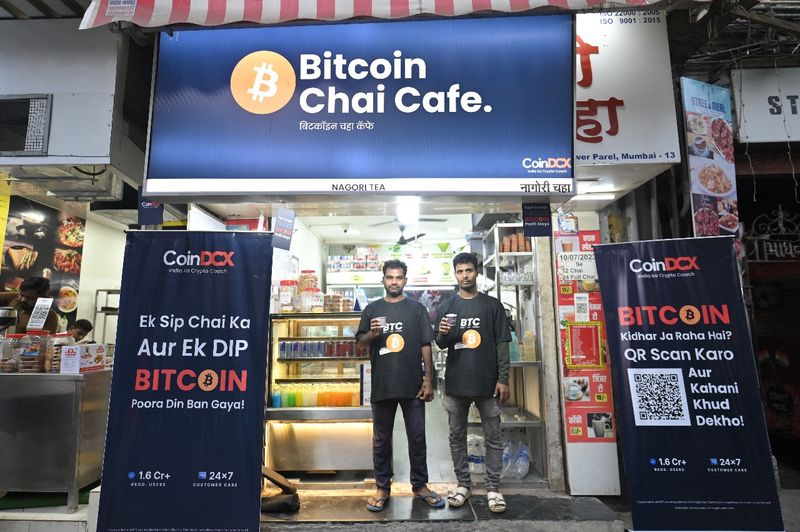
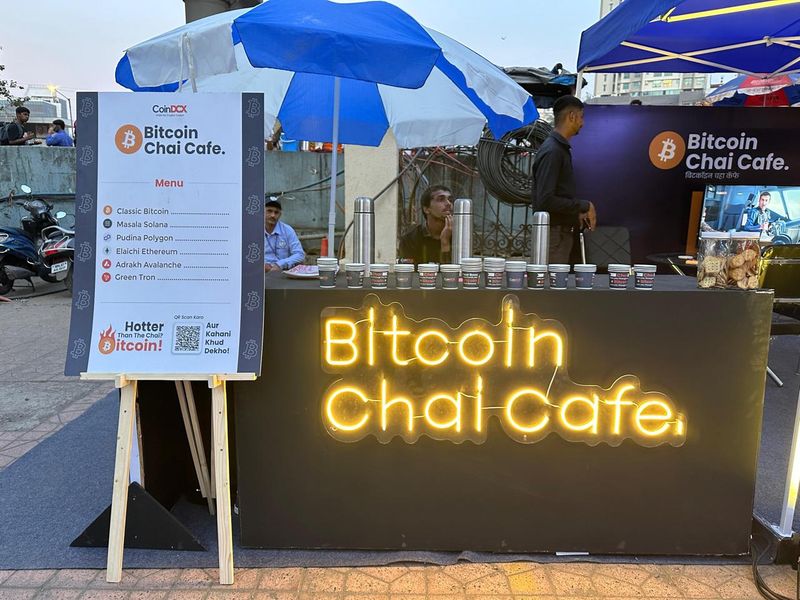
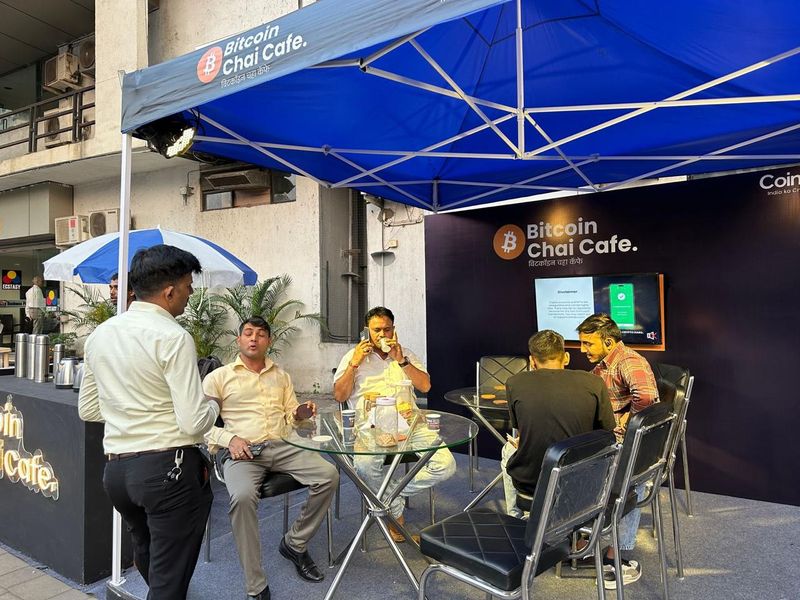
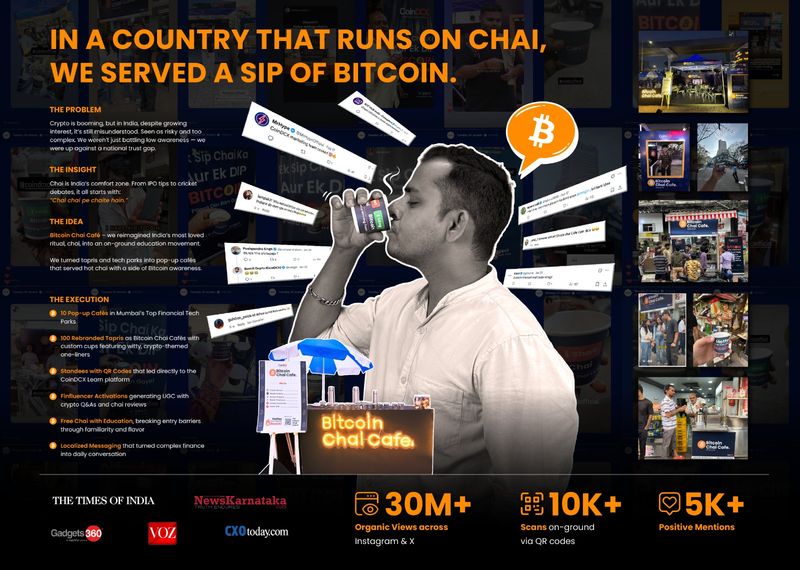
The best use of ChatGPT in marketing isn't generating more content - it's translating something genuinely confusing into something a stranger can understand in thirty seconds. CoinDCX had exactly that problem with crypto.
CupShup built India's first Bitcoin Cafe in Mumbai, turning crypto jargon into real conversations over coffee - sparking dialogue that reached 15 crore+ impressions, because the campaign made the complex feel approachable instead of intimidating.

CupShup's Bitcoin Cafe activation for CoinDCX
See how that conversation played out in person: watch the Bitcoin Cafe campaign film.
That's the real skill in using ChatGPT for marketing: prompting it to simplify, not to sound smarter than the person you're trying to reach.
The simplest ChatGPT-for-marketing win is turning what you've already written into more: Content Repurposer turns one blog post into 15+ platform-ready social posts automatically.
If turning one idea into a full content calendar is the goal, our Social Media Management team already runs this playbook for 400+ brands.
Got a backlog of content waiting to be repurposed? Let's talk.
50 Integrated Marketing Campaign Ideas
The complete playbook with campaign frameworks, budget templates, and measurement guides for Indian brands.
Instant download + email copy. No spam, ever.
Explore CupShup Services
Brands that read this article also explored these services.
AI Digital Marketing Agency
AI-powered campaign strategy, content, and performance optimization for growth-stage brands.
Learn more MarTechTechnology Marketing Agency
Marketing tech infrastructure, automation, data pipelines, and martech integration.
Learn more ContentContent Strategy & Marketing
Content strategy, editorial planning, and distribution for brand authority and SEO growth.
Learn moreYuvana Singh
Creative Director passionate about storytelling and brand innovation. Yuvana leads CupShup's creative team, bringing fresh perspectives to campaign development and helping brands connect with their audiences through compelling narratives.
Related Stories



Go Deeper with Our Free Guides
Comprehensive, in-depth marketing guides created by CupShup's experts.