
Integrated Marketing Communications (IMC): Complete Guide to Unified Brand Strategy
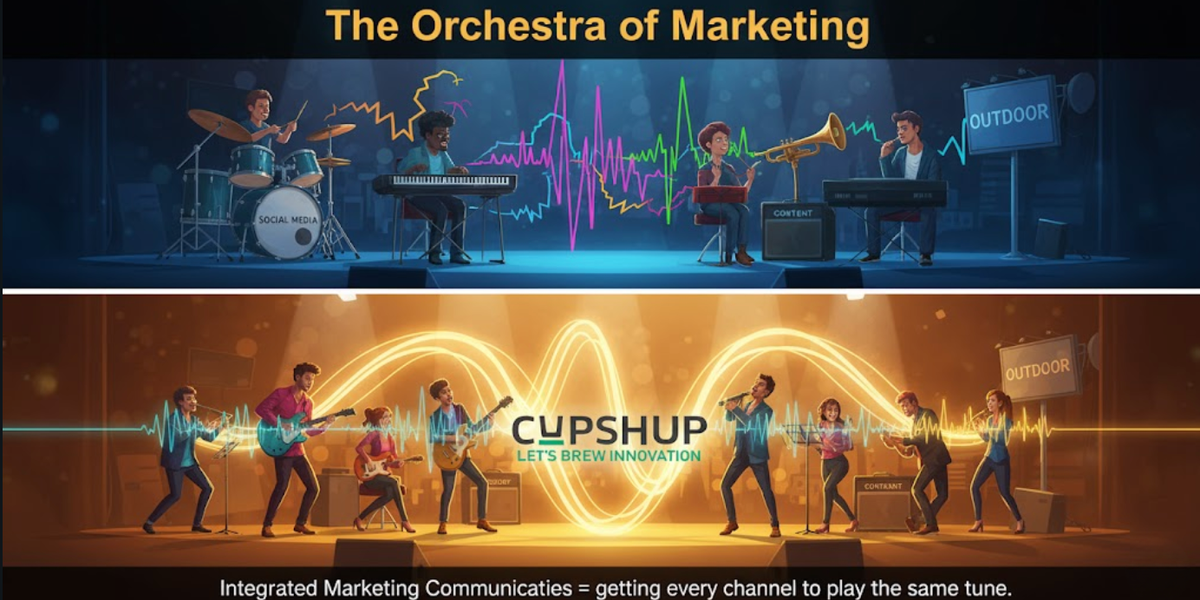
Imagine walking through a Delhi bazaar. Every shopkeeper is screaming offers louder than the other: “Madam! 50% off!”, “Bhaiya, asli maal yahan milta hai!”; You can practically feel the confusion marinating in the air along with the scent of samosas.
Searching for an integrated marketing agency that connects online and offline seamlessly? CupShup delivers unified campaigns that combine digital precision with on-ground impact for maximum brand reach.
Integrated marketing communications — or IMC — is the discipline of making all your marketing channels sing the same tune. When done right, your customer hears one clear brand story whether they encounter you on Instagram, at an event, in their inbox, or on a billboard.
That, my friend, is what marketing looks like without Integrated Marketing Communications (IMC) - everyone yelling their own pitch while the customer stands there thinking, “Bas karo yaar, kiski sunu?”
IMC is what happens when the shouting stops and the singing starts. It is the sur that turns your brand noise into a melody people actually remember.
At CupShup, we call it marketing in sync. Because in a world where everyone is chasing virality, the real win is harmony.
What is Integrated Marketing Communications (IMC)?
IMC is your marketing playlist on shuffle, except every beat follows one rhythm. Your print ad, your influencer collab, your tweet, all in perfect sync like Arijit Singh hitting every note live.
When I explained IMC to Yuvana, she said, “So basically, it’s like making sure our brand doesn’t sound like it has multiple personalities online and offline?”
Exactly, I said. Because when your brand sounds confused, your audience scrolls away faster than a Zomato delivery update.
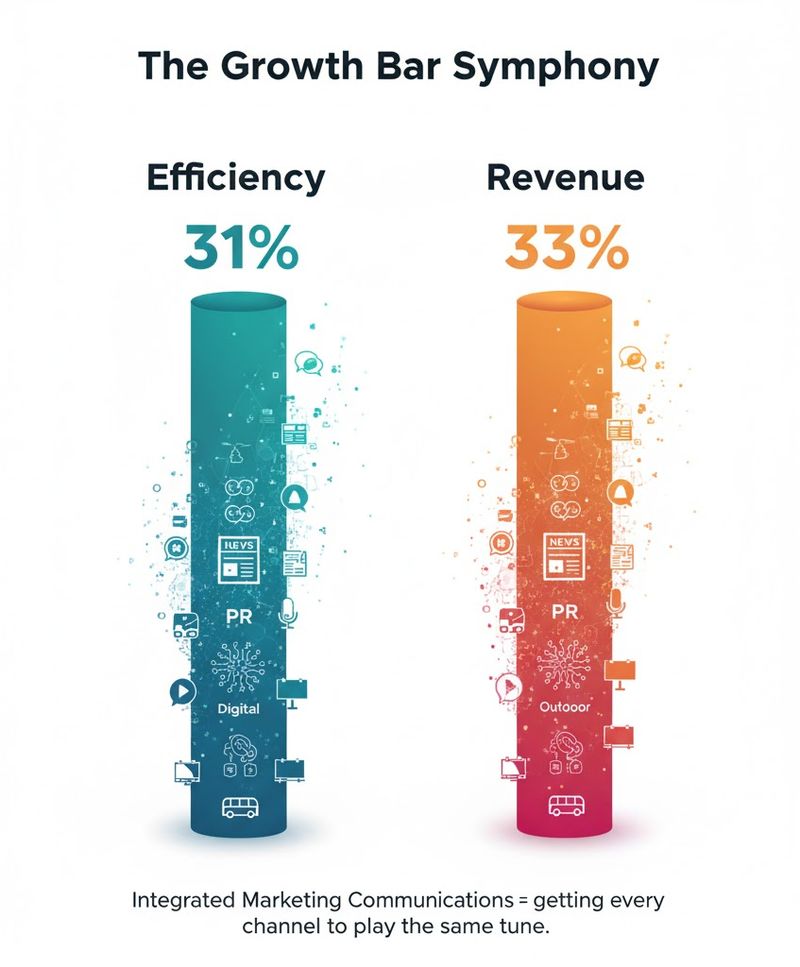
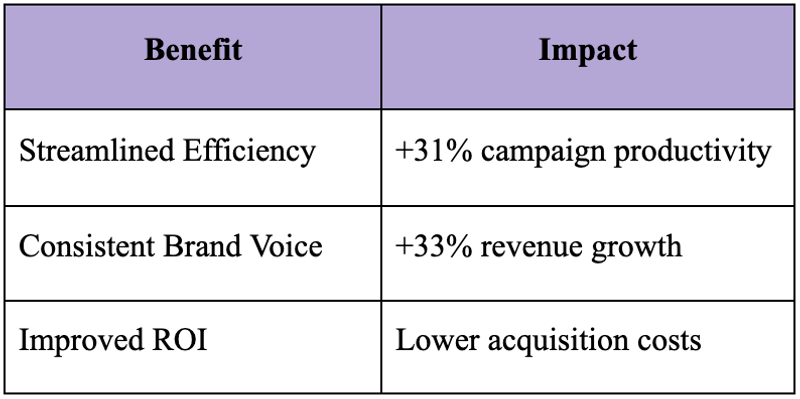
And it’s not just theory. Research by SocialPilot shows integrated communication can make campaigns 31% more efficient and bump up revenue by 33%. Divyanshu and Surya practically threw a mini celebration when they saw those numbers.
The Core Principles
IMC is about breaking down walls between teams, channels, and egos. It makes sure every message sings from the same song sheet.
When that happens, brands stop being background noise and start becoming memory hooks.
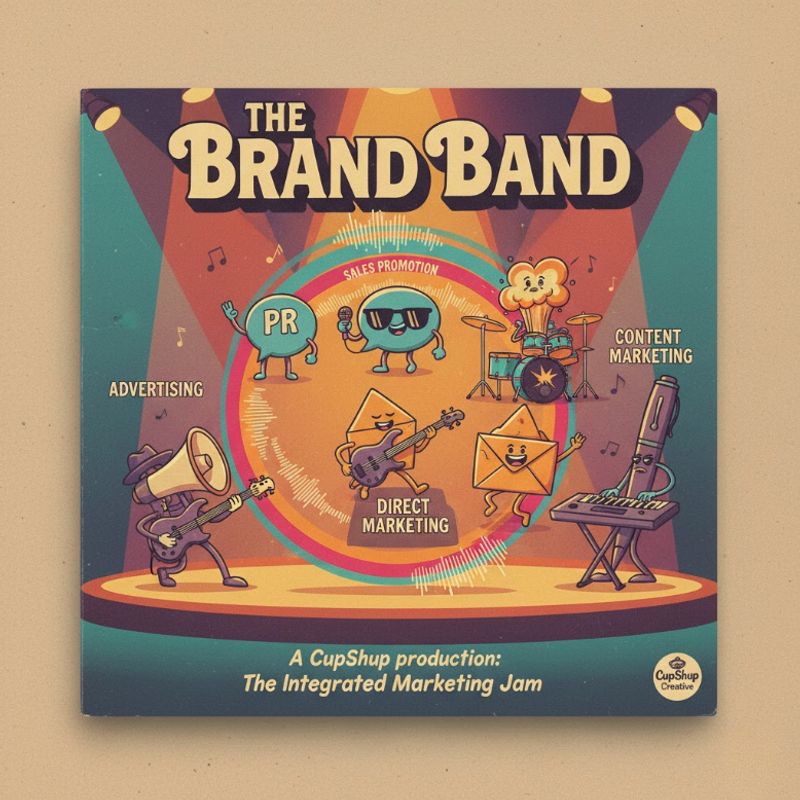
The Five Core Elements of IMC (aka The Band Members)
A good IMC plan is like a well-rehearsed band. Every member knows their part, but the song only hits when they play together.
Advertising
Your ads are the loudspeaker, the opening riff of your brand’s song.
As Krithika says, usually with her post-it filled notebook in hand, “Every ad either builds brand memory or burns money. There’s no middle ground".
Public Relations
PR gives your brand credibility, the human chord that makes people hum along. Think CoinDCX’s Bitcoin Chai Café. Crypto over cutting chai? Genius. They didn’t just educate, they engaged. That’s PR done right.
Direct Marketing
Emails, SMS, DMs, the quiet instruments in the back that make the whole thing richer. When you align them with your main melody, they don’t feel like spam. They feel like conversation.
Sales Promotions
Discounts and offers are your drumbeats. They create urgency. But when you sync them with the larger brand story, they move hearts, not just carts.
Content Marketing
Content is your lyrics. It’s the part people remember. From snackable reels to long-form blogs, content tells your brand story across every channel.
Maaz always says, “Content without a plan is like a samosa without chutney, technically complete but missing the magic".
The 4 Cs of Integrated Marketing
A cleaner way to audit whether your campaign is actually integrated is to run it through four questions. Before you sign off on the brief, ask each of these in order. If any of them gets a "no", the campaign isn't ready to launch.
Coherence
Does every touchpoint say the same thing, in the same voice? Coherence is the one-line test — if your TV ad says "the reliable family SUV" and your Instagram reel says "the beast for solo adventurers", you don't have IMC. You have two campaigns fighting for the same wallet.
Consistency
Does the brand feel the same across every medium? Colors, typography, sound, tone, pace. When Apple's ₹12 lakh OOH hoarding and ₹400 email signature use the same font weight and the same white space, that's consistency compounding into trust. Consumers don't analyze it; they feel it.
Continuity
Do the pieces build on each other? A teaser reel should set up a launch ad, which should set up a store visit, which should set up a follow-up email. Continuity is what turns a campaign from a set of ads into a story the consumer stays inside.
Complementarity
Do the channels make each other stronger? A great OOH hoarding near a college gets amplified when that college's student-run Instagram page also runs a branded reel the same week. The sum is more than the parts — and that's the whole point of IMC over siloed ATL and BTL.
ATL vs BTL vs Integrated Marketing: How They Compare
If you've worked in Indian marketing for more than five minutes, you've heard the ATL/BTL debate. Above-the-line is the mass-reach stuff — TV, print, OOH, radio. Below-the-line is the targeted, measurable stuff — activations, sampling, direct response, email. For decades, brands picked a side. Today, the brands winning are the ones who stopped picking.
The old model: ATL and BTL as separate budgets
In the old model, ATL built awareness (a TV spot during IPL, a Mumbai-Delhi hoarding chain) and BTL converted it (a sampling activation at a mall, a direct mailer to leads). Two teams, two agencies, two sets of KPIs. The handoff between the two was almost always broken — the BTL team didn't know what the TV ad was saying, and the ATL team didn't know what the sampling table was offering.
The new model: IMC as the operating system
Integrated marketing communications isn't a third bucket next to ATL and BTL. It's the operating system that coordinates both. One big idea flows through the Hotstar ad, the metro pillar wrap, the QR-triggered pop-up in Phoenix, the creator reel, and the email sequence — all pointing at the same action, with the same language, on the same timeline.
The practical comparison
Primary goal. ATL aims for reach and awareness. BTL drives trial and conversion. IMC unifies the brand story across the full funnel, so reach and trial stop being separate KPIs.
Typical channels. ATL uses TV, print, radio, OOH. BTL uses activations, sampling, direct mail, email. IMC uses all of the above, synchronized around one campaign idea.
Measurement. ATL measures GRPs, reach, impressions. BTL measures footfall, trial rate, direct response. IMC measures cross-channel attribution across awareness → trial → revenue.
Message control. ATL gives high control per channel but no coordination. BTL gives high control per touchpoint with local tone. IMC enforces a single brand voice, adapted per format.
Investment model. ATL is a big splash, front-loaded. BTL spreads across micro-activations. IMC orchestrates spend across the full campaign window, with channels scheduled rather than siloed.
Team structure. ATL runs through brand + creative agency. BTL runs through activation + BTL agency. IMC runs through an integrated team with one campaign lead accountable for the whole story.
Which should your brand use?
Short answer: all three, but orchestrated. If you're under ₹1 crore in annual marketing spend, skip ATL and build IMC around BTL + digital. If you're spending ₹5 crore+, ATL becomes efficient again — but only if it's tied to the same campaign idea as your BTL and digital work. The brands that waste the most marketing money in India are the ones running ATL and BTL in parallel silos, as if 2006 never ended.
How to Build an Integrated Marketing Strategy in 5 Steps
Align Objectives
Before launching a campaign, make sure everyone’s rowing in the same direction: creative, analytics, sales.
I remember Sourav once spent hours fixing a campaign where one team was tracking engagement and the other was tracking conversions. It was like watching two GPS systems fight. Once we synced KPIs, everything, including tempers, aligned beautifully.
Map Customer Journeys
Your customer’s journey is like footprints in a monsoon puddle, messy, revealing, and full of clues. When you map every touchpoint, you start spotting where they pause, where they bounce, and where they fall in love with your brand.
Select Communication Channels
Your integrated marketing strategy should also include a content marketing strategy that aligns messaging across blog, email, social, and paid. The channel is just the vehicle — the message and its timing are what create resonance. At CupShup, we build integrated marketing campaigns where offline activations feed online content engines, and digital retargeting reinforces on-ground experiences.
Picking your channels is like assembling your dream orchestra.
- Social for the chatter
- Email for nurturing
- Paid search for catching intent
- Short-form video for attention hooks
- Events for memories that smell like coffee and success
The trick is balance. No one instrument should overpower the rest.
Executing Across Channels
Craft Consistent Messaging
Your brand voice should be recognizable, whether someone spots your hoarding in Bandra or your carousel post in Bengaluru.
At CupShup, we have this unofficial rule: if your caption sounds like someone else could have written it, it’s back to the drawing board.
Take our Beco integrated marketing campaign - a sustainability-led activation that engaged 100,000+ people across RWAs, gyms, and tech parks through consistent storytelling across every touchpoint, from gate arches to Instagram reels. The message was unmistakably “eco, but aspirational”.
And data backs the payoff of such cohesion; brands that maintain consistent messaging across channels see a 33% increase in overall revenue, according to a Lucidpress study on brand consistency
Leverage Omnichannel Tactics
Think of the Barbie Movie campaign. Pink everywhere, TikTok challenges, merch collabs, movie tie-ins, one joyful, coordinated pink explosion that made the world say “Hi Barbie!”
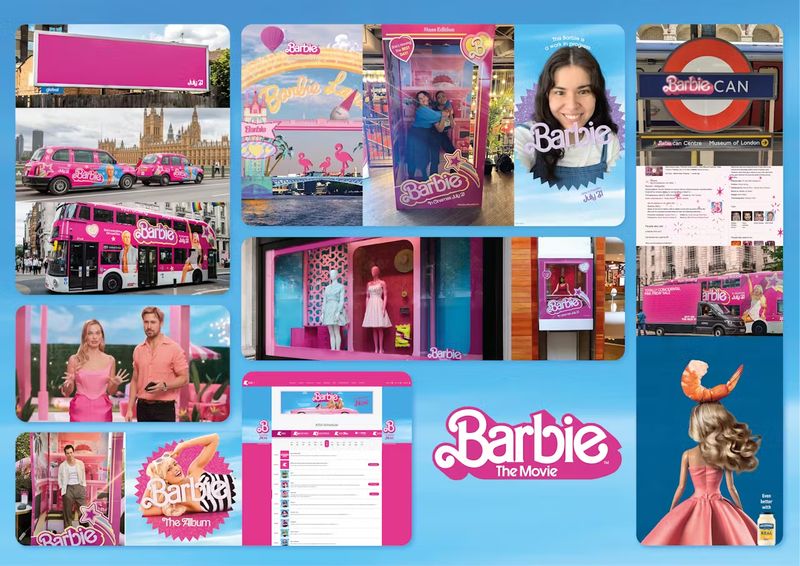
Apple’s Shot on iPhone and Domino’s AnyWare campaigns followed the same playbook. A single idea, multiple expressions, seamless execution.
Repurpose Content Smartly
At CupShup, we believe in content jugaad with precision.
That one hero video? Turn it into reels, memes, and mailers.
That blog? Break it into snackable posts.
When you treat each piece like a seed, your content grows in ways your budget will thank you for.
Measuring and Optimizing the Symphony
Read next: The End of Silos: Why Integrated Campaigns Win Every Time, The Forgotten Art of Post Campaign Integration, and How to build a 360° campaign brief (templates included).
Even the best band tunes their instruments before every show. IMC works the same way.
Track Performance Metrics
Your key KPIs are your metronome:
- Reach and impressions
- Engagement rate
- CTR and conversion
- CAC and ROI
Surya once said, “If we can’t measure it, it didn’t happen". Brutal. True. Printed on our office wall.
Analyze and Iterate
Run a retrospective after every campaign and a mid-flight check after every major milestone. Three questions to ask: which channel drove the most qualified trials, which piece of creative got skipped fastest, and what surprise did the data reveal? Then rewire the next campaign before the next brief lands. At CupShup, we run a 30-minute "what worked, what didn't" huddle after every activation — and that single ritual has compounded into our playbook of 400+ brand campaigns.
Why Brands Choose CupShup as Their Integrated Marketing Agency
CupShup isn't just another integrated marketing agency — we bridge the gap between digital and physical marketing using AI-powered campaign orchestration. From hyperlocal activations to national digital campaigns, our integrated approach has powered 10,000+ campaigns across 300+ cities with measurable results at every touchpoint.
India’s a patchwork market. What works in Mumbai can completely flop in Madurai. So test, learn, tweak, repeat. The best campaigns aren’t set in stone. They’re alive, learning as they go.
Integrated Marketing Examples That Worked (India)
Theory is good. Receipts are better. Here are three integrated marketing campaigns — two executed by CupShup, one from a brand any marketer will recognize — that show IMC in the wild.
Beco × CupShup: Sustainability as an integrated story
When Beco wanted to launch their compostable packaging range, we didn't run three parallel campaigns. We ran one campaign with three expressions. The offline experiential marketing activation at 100,000+ premium residential complexes and organic stores in Mumbai and Bangalore set up the message: "plastic isn't the villain, planning is." The creator mix — eco-Instagrammers, zero-waste YouTubers, climate-focused Twitter voices — amplified the exact same thought with their own language. The performance layer retargeted everyone who interacted with the on-ground activation via Meta and Google. Result: 3× the engagement of their previous siloed launches, and a 40% trial-to-repeat rate on the first SKU.
McDonald's Drive Thru Rally: one stunt, five channels
The McDonald's Drive Thru Rally looks like a one-day BTL stunt. It was actually an IMC masterclass. Forty biker influencers rolled into four drive-thrus, simultaneously — which is the kind of brand activations BTL playbook we run often. Every rider was vlogging live — which is organic social. The footage got cut into paid reels by end-of-day — performance media. A post-event meme cycle ("McDelivery vs McDrive") ran for two weeks — organic PR. And the drive-thru order spike (370% in 48 hours) was tracked per channel — so the team knew exactly which touchpoint triggered which order. One idea, five channels, one measurement framework.
CoinDCX Bitcoin Chai Café: making crypto feel human
Turning "what is Bitcoin" into a conversation over chai in three cities is the opposite of a performance ad. It's a pop-up. But CoinDCX wired the pop-up into their paid Meta funnel, their Twitter thought leadership, their YouTube explainer series, and a sequenced email journey for every email captured at the café. Visitors walked out with a kulhad and walked into a 30-day retargeting window. This is how you turn on-ground activations into digital buzz — a 2.4× lift in KYC completions across activation cities tells you the IMC wrap, not the activation alone, moved the number.
The common thread. None of these campaigns won because the idea was original. Bikers, chai, and compostable packaging aren't new. They won because every channel said the same thing in its own voice, on the same timeline, pointing at the same action.
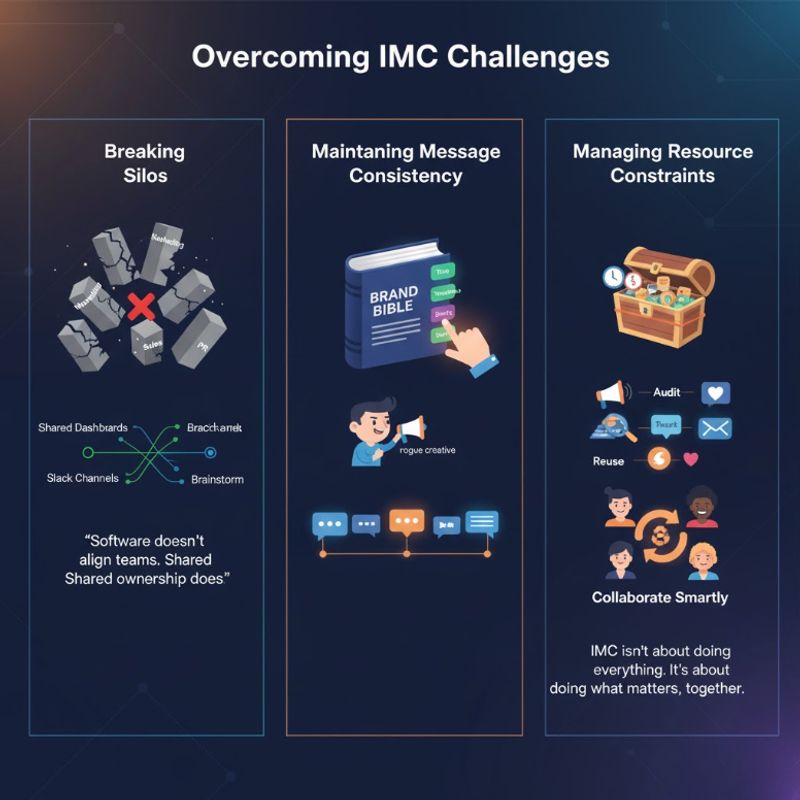
Overcoming IMC Challenges
Breaking Silos
Silos kill creativity. Fast. The cure? Shared dashboards, open Slack channels, and the occasional caffeine-fueled brainstorm that somehow fixes three problems at once. As Sidharth says, “Software doesn’t align teams. Shared ownership does".
Maintaining Message Consistency
Create a brand bible. Not the religious kind, the survival kind, tone, templates, and don’ts. Because one rogue creative can undo months of coherence.
Managing Resource Constraints
Time and budget will always be tight. Audit what you already have, reuse what you can, and collaborate smartly. IMC isn’t about doing everything. It’s about doing what matters, together.
The Future of Integrated Marketing: AI, Sustainability & Hybrid Experiences
AI-Powered Personalization
Imagine your campaign rewriting itself mid-flight. The same ad saying “Namaste” in Delhi and “Vanakkam” in Chennai. That’s AI-driven IMC. Contextual, hyper-personal, eerily intuitive.
Sustainability and Social Good
Today’s consumers don’t just want your product. They want your purpose. The future belongs to brands that don’t just sell, but stand. If your IMC plan doesn’t include planet and people, it’s already outdated.
Hybrid Experiences
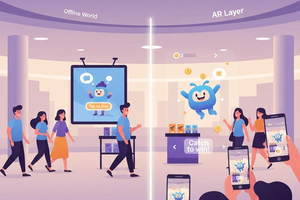
The future isn’t digital or physical. It’s both. Think AR-powered pop-ups, livestreamed activations, or chai stalls that turn into social content gold. CoinDCX, we saw you.
That’s the beauty of IMC. It bridges worlds, offline to online, seamlessly.
The Final Takeaway
IMC isn’t just another marketing acronym. It’s your brand’s rhythm section. It keeps every channel in tune, every story aligned, and every marketer sane.
As I often tell my team, “IMC doesn’t just align campaigns. It aligns people".
Because when your message rings clear, like a single bell in a silent courtyard, your audience doesn’t just hear you. They feel you.
At CupShup, we don’t just run campaigns, we compose them.
Let’s make your brand the one that doesn’t just talk, but sings. Connect with The Innovation HQ, CupShup.
Integrated Marketing Communications FAQs
What is integrated marketing communications?
Integrated marketing communications (IMC) is a strategic approach that aligns all marketing channels — advertising, PR, direct marketing, content, and sales promotions — to deliver a consistent brand message. Instead of running siloed campaigns on each channel, IMC ensures every touchpoint reinforces the same story, creating a unified brand experience that builds trust and drives conversion.
What are the benefits of an integrated marketing strategy?
An integrated marketing strategy delivers stronger brand recall (consumers hear one message, not five competing ones), better ROI (channels amplify each other instead of duplicating effort), and faster conversion (more coordinated touchpoints mean less friction in the customer journey). Research shows integrated campaigns outperform single-channel campaigns by up to 45% in engagement metrics.
What is the difference between integrated marketing and omnichannel marketing?
Integrated marketing is about message coherence across channels — every channel tells the same story. Omnichannel marketing is about experience coherence across channels — a customer can pick up the same journey on any device or touchpoint without starting over. IMC is the upstream discipline; omnichannel is the downstream delivery. The best campaigns are both.
What are the 4 Cs of integrated marketing?
Coherence (every channel says the same thing), consistency (every channel feels like the same brand), continuity (channels build on each other across time), and complementarity (channels make each other stronger). Run every brief through these four tests before sign-off. If any gets a "no", the campaign isn't ready.
What are some examples of integrated marketing campaigns?
Global examples: Apple's "Shot on iPhone" (OOH + social + in-store), Dove's "Real Beauty" (print + TV + community + retail), Domino's AnyWare (smart devices + app + ads). India examples: Beco's compostable launch, McDonald's Drive Thru Rally, CoinDCX Bitcoin Chai Café, Tata Neu's super-app launch, and the Barbie movie's pink-everything blitz. The shared pattern is one story, many expressions.
How do you measure the ROI of an integrated marketing campaign?
Measure across three layers. Reach (did the message land — impressions, reach, frequency by channel). Engagement (did it stick — time spent, shares, saves, QR scans, footfall). Conversion (did it convert — UTM-tagged traffic, coupon codes, trial-to-repeat rate, multi-touch attribution through platforms like HubSpot or Ruler Analytics). Cross-channel attribution is where IMC measurement gets hard — use post-purchase surveys and geographic holdout tests to close the gap your tracking pixels can't see.
Get Started with CupShup Today
Ready to see real results? Book a Free Integrated Marketing Strategy Call → Join 500+ brands that trust CupShup.
50 Integrated Marketing Campaign Ideas
The complete playbook with campaign frameworks, budget templates, and measurement guides for Indian brands.
Instant download + email copy. No spam, ever.
Frequently Asked Questions About Integrated Marketing Communications
What is integrated marketing communications (IMC)?
Integrated marketing communications (IMC) is a strategic approach that ensures all forms of communication and messaging are carefully linked together. Rather than running siloed campaigns across different channels, IMC creates a unified, consistent brand experience whether the consumer encounters the brand through a TV ad, social media post, in-store activation, or email. This consistency amplifies brand recall and builds stronger trust.
Why is IMC more important now than ever for Indian brands?
Indian consumers today interact with brands across 8-10 touchpoints before making a purchase decision. With the explosion of digital platforms, regional media, and hyperlocal marketing channels, fragmented messaging confuses consumers and dilutes brand equity. IMC ensures that whether a consumer sees your brand on Instagram, at a mall activation, or on a bus shelter, the message reinforces the same core promise.
How does IMC differ from multichannel marketing?
Multichannel marketing simply means using multiple channels to reach consumers, but each channel may operate independently with different messages and objectives. IMC goes further by integrating all channels under a single strategic framework with consistent messaging, coordinated timing, and unified measurement. CupShup's integrated campaigns combine on-ground activations with digital amplification, ensuring every touchpoint tells the same brand story.
Integrated Marketing: Related Resources
Explore more about integrated marketing communications with these related resources from CupShup.
Brand Communication Services
Unified brand communication strategy across all channels
Digital Integration Services
Seamlessly connect offline and digital marketing efforts
Why Integrated Campaigns Win
Data-driven evidence for integrated campaign effectiveness
Flipkart Minutes Integrated Campaign
How Flipkart used integrated marketing for quick commerce launch
Explore CupShup Services
Brands that read this article also explored these services.
Integrated Marketing Agency
360-degree campaigns that connect offline activations with digital amplification for compounded ROI.
Learn more BrandBrand Strategy & Positioning
Brand architecture, positioning frameworks, and messaging strategy for market differentiation.
Learn more ActivationBrand Activation Agency India
India's leading brand activation agency, 400+ campaigns, pan-India reach, real-time dashboards.
Learn moreAakriti Mishra
Senior Marketing Strategist at CupShup with over 8 years of experience in brand activation and integrated marketing campaigns. Aakriti specializes in creating data-driven strategies that deliver measurable results for modern brands.
Related Stories
Go Deeper with Our Free Guides
Comprehensive, in-depth marketing guides created by CupShup's experts.
The Ultimate Guide to Brand Activation
Everything you need to know about bringing your brand to life, strategies, examples, and frameworks.
The Ultimate Guide to Digital Marketing
Master every channel in the modern digital marketing ecosystem, from SEO to paid media.
The Ultimate Guide to SEO
The definitive guide to search engine optimization, on-page, technical, and link building strategies.