
How to build a 360° campaign brief (templates included)
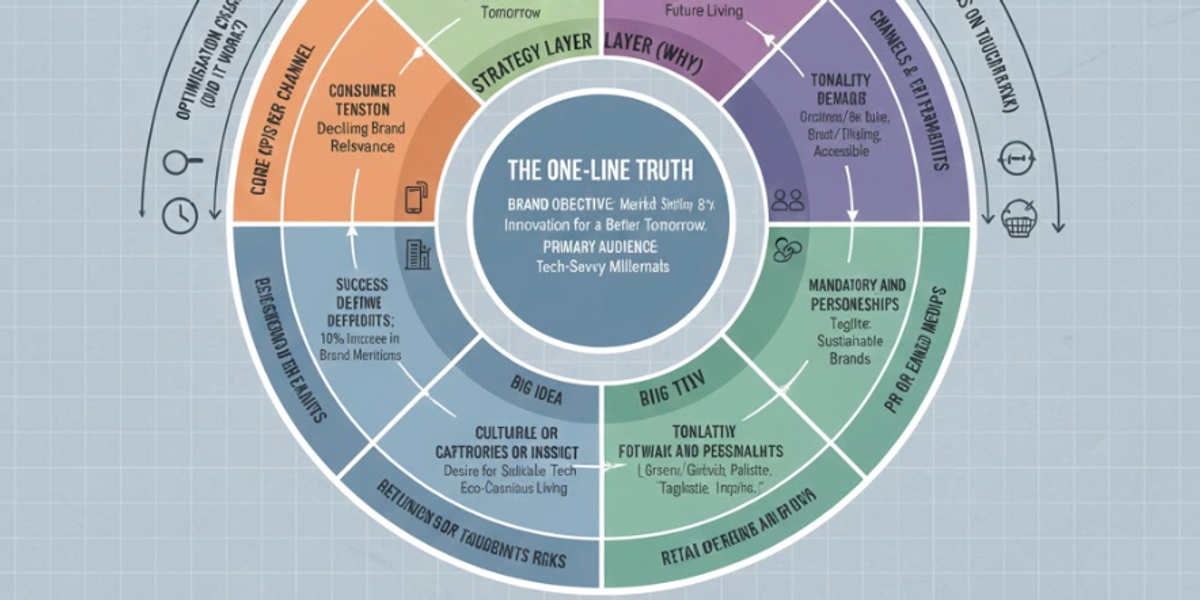
Let’s get one baat clear.
Searching for an integrated marketing agency that connects online and offline seamlessly? CupShup delivers unified campaigns that combine digital precision with on-ground impact for maximum brand reach.
A strong 360-degree campaign brief is the foundation of every successful integrated marketing campaign. As an integrated marketing agency that's executed multi-channel campaigns for 400+ brands, CupShup has refined the art of the campaign brief into a science. Here's how to write one that aligns your team and delivers results.
Most campaigns don’t flop because the idea was boring. They flop because the brief was thoda sa vague, thoda sa confused, and full-on misunderstood.
A 360° campaign brief is not paperwork you rush through before the "real fun” begins. It is the fun. Or rather, it decides whether the fun turns into fireworks or fizzles out faster than a flat cola.
Think of the brief as your campaign’s Google Maps. Galat directions, chahe gaadi Ferrari ho, destination miss hi hoga.
What a 360° campaign brief actually does
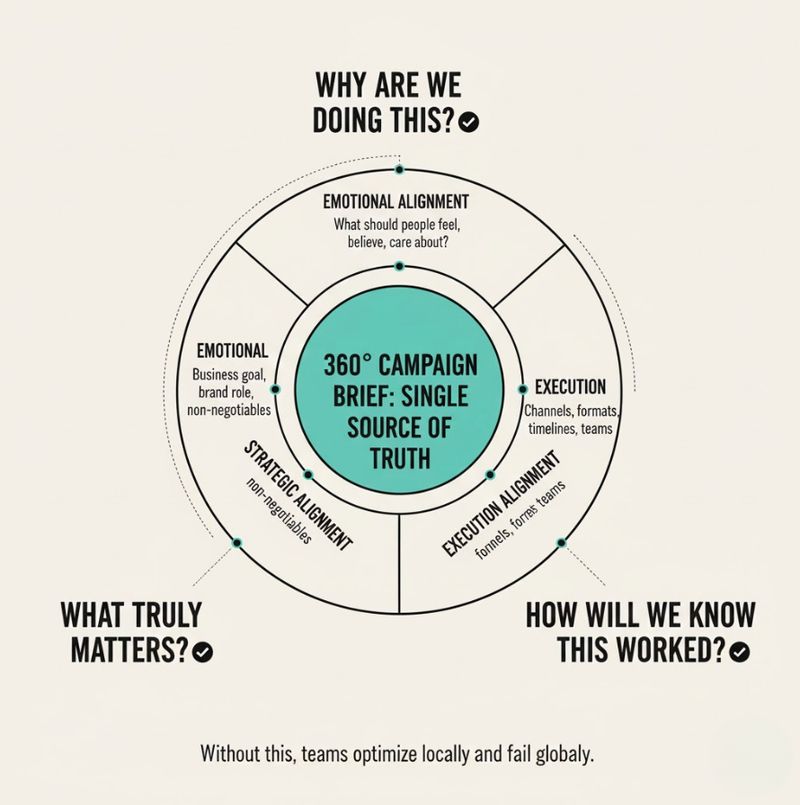
At a very practical level, a 360° campaign brief creates alignment. Emotional alignment. Strategic alignment. Execution alignment.
It is not:
- A creative brief with extra slides
- A wishlist of deliverables
- A "do something viral” WhatsApp forward
It is:
- One clear source of truth
- A translator between business goals and creative madness
- A sanity check before ten teams run in ten directions
When done right, the brief answers three questions without drama:
- Why are we doing this?
- What truly matters?
- How will we know this worked?
Simple questions. Surprisingly hard answers.
Start with decisions, not descriptions
Here’s an experienced-marketer secret.
Strong briefs start with decisions, not definitions.
Before writing objectives, clarify:
- Are we chasing reach or relevance?
- Do we want buzz or business impact?
- Speed chahiye ya depth?
Put these guardrails in writing. Warna later you’ll hear, "But I thought we were doing this also".
A brief that makes decisions early saves ten meetings later. Experience bolta hai, confusion is expensive.
Objectives that don’t do gol-gol baatein
"Awareness, engagement, consideration, conversion” is not an objective. It’s a shopping list.
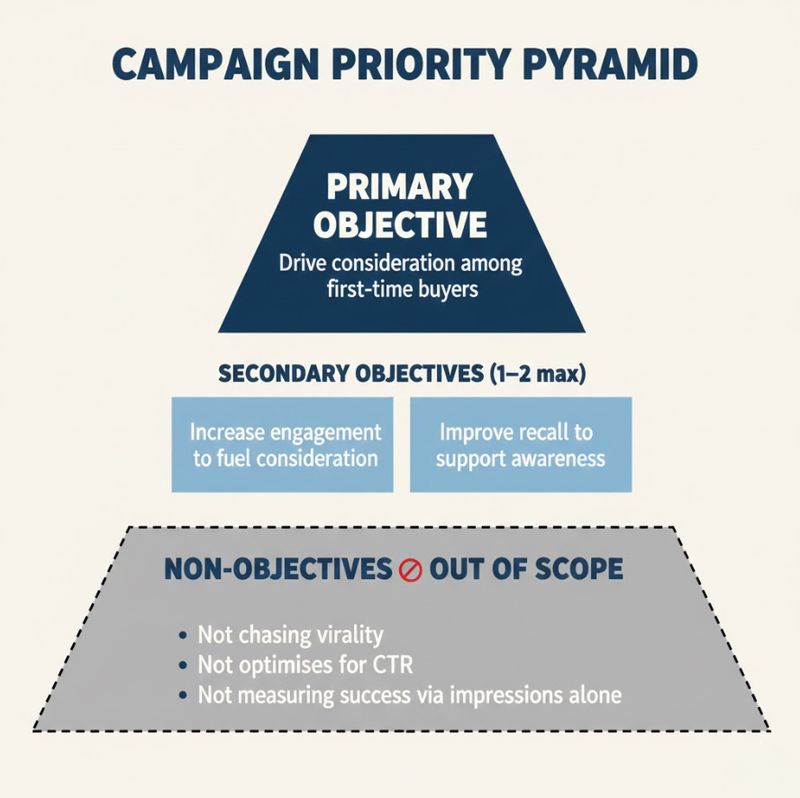
A professional 360° brief ranks priorities:
- One primary objective that everything ladders up to
- One or two secondary objectives
- Clear non-objectives so teams don’t chase shiny metrics
This clarity lets teams optimise confidently instead of playing safe everywhere.
Pro tip: If your primary KPI cannot be explained to your finance head in one sentence, rethink it.
Audience insight that feels real, not robotic
Great briefs don’t describe people. They predict behaviour.
Go beyond demographics and ask:
- What is already fighting for their attention?
- What would make them pause and say, "Yeh interesting hai”
- How should they feel if the campaign lands perfectly?
Add one line every senior marketer swears by: "When this campaign works, the audience will feel ______".
That feeling becomes the glue holding offline moments and online chatter together.
The big idea must travel without luggage
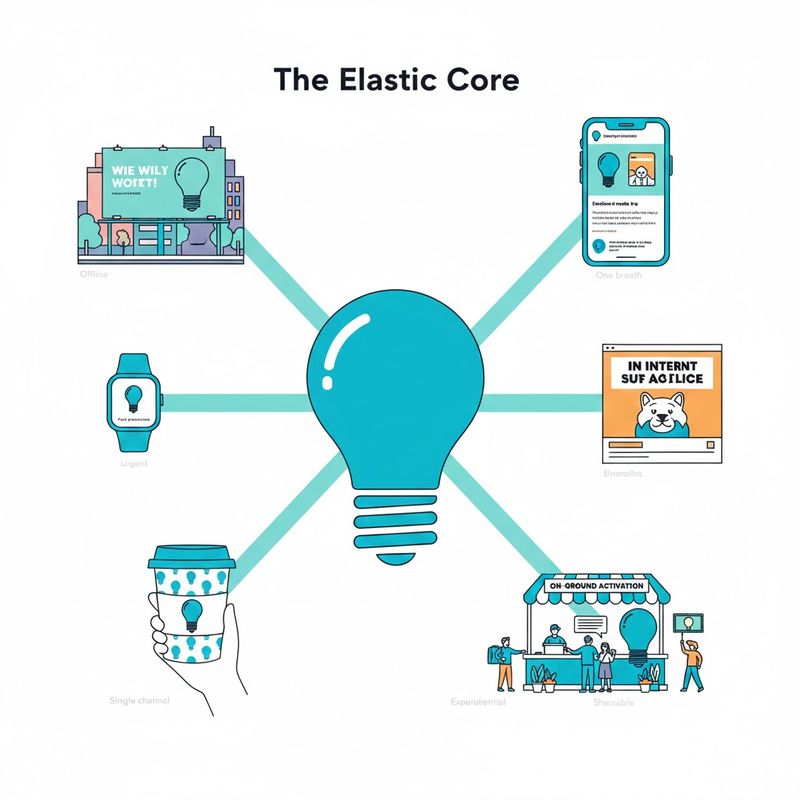
A 360° idea should work even without a long explanation.
Pressure-test it:
- Can it exist offline without a screen?
- Can it be explained in one breath?
- Will it still make sense if only one channel executes it brilliantly?
Brands like Duolingo win because their ideas are elastic. Same personality, different formats. That elasticity is planned in the brief, not discovered during panic mode.
Channels are a relay race, not a free-for-all
360° does not mean everywhere. It means intentional.
Experienced briefs define roles:
- One channel introduces the idea
- One amplifies it
- One converts
- One builds credibility
Running the same message everywhere is not integration. It’s duplication with confidence.
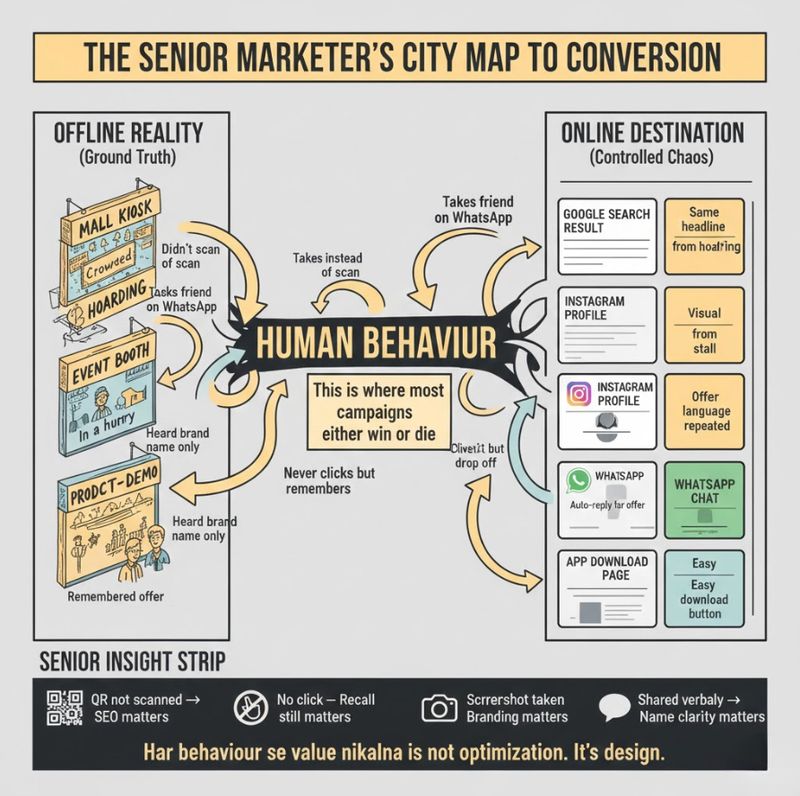
Offline to online is jugaad plus discipline
Offline to online success is not magic. It is mechanics.
Your brief should clearly answer:
- What happens offline?
- How does the audience move online?
- What if they don’t follow the "ideal journey”?
Read next: Integrated Marketing Communications (IMC): Complete Guide..., From Streets to Screens: 7 Ways to Turn On-Ground Campaig..., and Turning a One-Time Activation into a Long-Term Digital Story.
Smart teams design for imperfect behaviour. Search instead of scan. Talk instead of click. Screenshot instead of share. Har behaviour se value nikalna is senior-level thinking.
Measurement that keeps stories honest
Measurement should read like a finance note, not a TED Talk.
Define:
- Signal metrics versus noise metrics
- Baselines before launch
- What success will not look like
How CupShup Turns Campaign Briefs Into Award-Worthy Activations
At CupShup, your campaign brief becomes a living document. Our team of strategists, creatives, and on-ground execution specialists collaborate from day one to ensure the brief translates into measurable activation across online and offline channels. With AI-powered campaign planning and real-time performance dashboards, we keep every stakeholder aligned from brief to post-campaign report.
Why Brands Choose CupShup as Their Integrated Marketing Agency
CupShup isn't just another integrated marketing agency — we bridge the gap between digital and physical marketing using AI-powered campaign orchestration. From hyperlocal activations to national digital campaigns, our integrated approach has powered 10,000+ campaigns across 300+ cities with measurable results at every touchpoint.
This avoids post-campaign kahaniyaan and keeps learning real.
Budget, reality, and thoda sa sach
Big ideas need operational clarity.
A solid brief spells out:
- Non-negotiables
- Flex areas
- Where to splurge and where to stay scrappy
Constraints don’t kill creativity. Unclear constraints do.
Risks, sensitivities, and grown-up marketing
Experienced marketers talk about risk upfront.
Cultural context, platform unpredictability, on-ground execution issues. Mention them early. Not to scare teams, but to prepare them.
Daring campaigns are not reckless. They are informed.
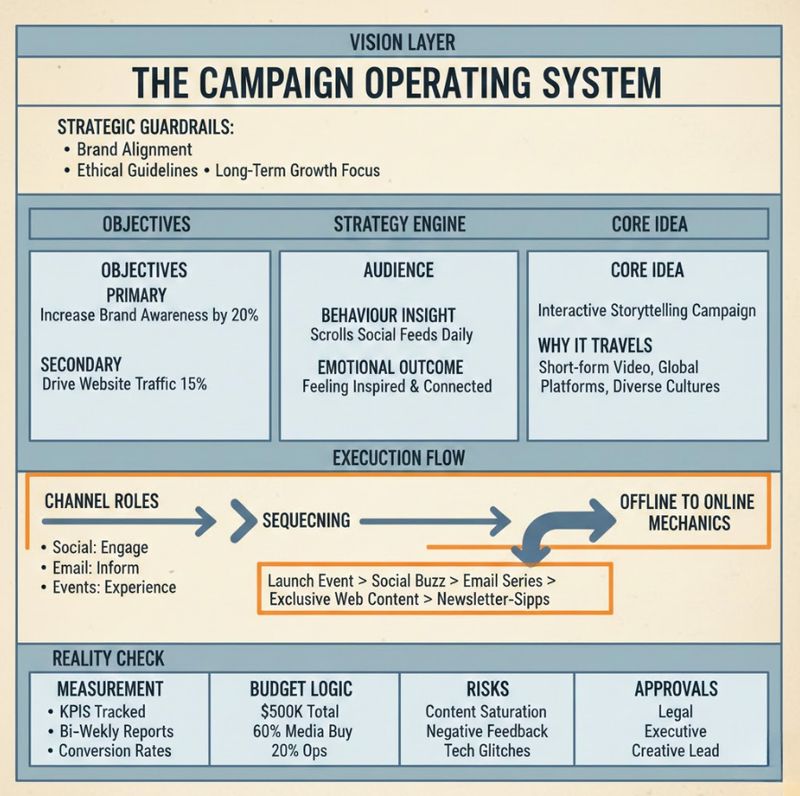
A clean 360° campaign brief structure
- Campaign one-liner
- Strategic guardrails
- Primary and secondary objectives
- Audience behaviour and emotional outcome
- Core idea and why it travels
- Channel roles and sequencing
- Offline to online mechanics
- Measurement framework
- Budget logic
- Risks and approvals
If this feels detailed, good. Long briefs save short campaigns.
Final thought
The brief is not a formality before the campaign.
The brief is the campaign.
When thinking is sharp, execution flows. When clarity exists, creativity scales. And when everything aligns, campaigns move naturally from cups to conversations.
Bas itna hi farak hota hai between marketing that runs and marketing that moves.
Contact Us at contact@cupshup.co.in; or drop us a "hi” at Instagram.
Ready to Get Started? Talk to CupShup
Need help turning your 360° campaign brief into reality? CupShup's integrated marketing team works with you from strategy through execution. Share your brief for a free campaign feasibility assessment. Book a Free Strategy Call →
Get Started with CupShup Today
Ready to see real results? Book a Free Integrated Marketing Strategy Call → Join 500+ brands that trust CupShup.
50 Integrated Marketing Campaign Ideas
The complete playbook with campaign frameworks, budget templates, and measurement guides for Indian brands.
Instant download + email copy. No spam, ever.
Frequently Asked Questions About Writing a 360 Campaign Brief
What should a 360 campaign brief include?
A comprehensive 360 campaign brief should include the campaign objective, target audience definition with psychographic details, core message or big idea, channel strategy across ATL, BTL, and digital, budget allocation by channel, timeline with key milestones, KPIs for each channel, competitive context, and brand guidelines. The brief should also specify how the campaign integrates across touchpoints and how success will be measured holistically.
How do you write a campaign brief that aligns multiple agencies?
When working with multiple agencies, the campaign brief needs a clear hierarchy of the big idea, channel-specific guidelines that maintain consistency, a shared measurement framework, and a designated campaign lead for coordination. Include a RACI matrix defining responsibilities for each agency. CupShup often serves as the integration partner for multi-agency campaigns, ensuring on-ground execution aligns with creative and media strategies.
What are common mistakes in writing marketing campaign briefs?
Common mistakes include being too vague about the target audience, setting unrealistic budgets for the desired scope, not defining measurable KPIs, writing overly long briefs that bury key information, and failing to align stakeholders before finalising. Other pitfalls include ignoring competitive context, not specifying brand guidelines clearly, and treating the brief as a formality rather than a strategic document that guides execution.
Campaign Brief Writing: Related Resources
Explore more about campaign planning and brief writing with these related resources from CupShup.
Brand Strategy Services
Strategic campaign planning from brief to execution
Media Planning Services
Channel strategy and budget allocation for integrated campaigns
How to Plan a 360 Campaign
Complete guide to 360-degree campaign planning
GoDesi Integrated Campaign
How a clear brief powered an integrated social movement campaign
Explore CupShup Services
Brands that read this article also explored these services.
AI Digital Marketing Agency
AI-powered campaign strategy, content, and performance optimization for growth-stage brands.
Learn more MarTechTechnology Marketing Agency
Marketing tech infrastructure, automation, data pipelines, and martech integration.
Learn more IntegratedIntegrated Marketing Agency
360-degree campaigns that connect offline activations with digital amplification for compounded ROI.
Learn moreAakriti Mishra
Senior Marketing Strategist at CupShup with over 8 years of experience in brand activation and integrated marketing campaigns. Aakriti specializes in creating data-driven strategies that deliver measurable results for modern brands.
Related Stories

Go Deeper with Our Free Guides
Comprehensive, in-depth marketing guides created by CupShup's experts.