
The End of Silos: Why Integrated Campaigns Win Every Time
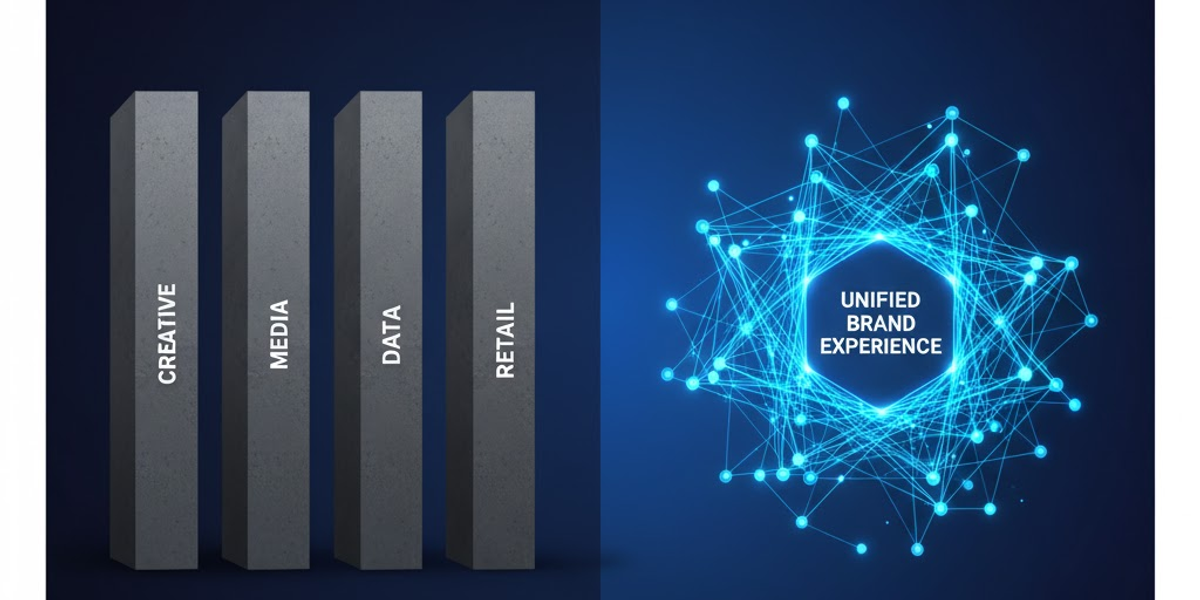
You know that feeling when your campaign looks like five people made it, each blindfolded, and in different rooms? Yeah. That’s silos for you.
Searching for an integrated marketing campaign that connects online and offline seamlessly? CupShup, an AI-led integrated marketing partner for ambitious Indian brands, plans unified campaigns that combine digital precision with on-ground impact for maximum brand reach.
We’ve seen it happen up close. Content running one way, performance marketing sprinting the other, and someone in PR trying to “sync up” with a deck made in 2019. And here’s the catch: your audience doesn’t care who runs what. They just want one story, told beautifully across everything they touch.
That’s where an integrated marketing campaign comes in. And trust us, once you’ve seen one campaign work across every touchpoint, there’s no going back.
What Integrated Marketing Actually Means
Forget the jargon for a second. An integrated marketing campaign simply means your ads, social posts, activations, emails, influencer collabs, and retail presence all feel like they belong to one story, not distant cousins who met at a family wedding.
Salesforce calls it “aligning multiple marketing channels to create one unified brand experience”. We call it common sense and great storytelling. An integrated marketing strategy is that idea written down: one story, one plan, one scorecard.
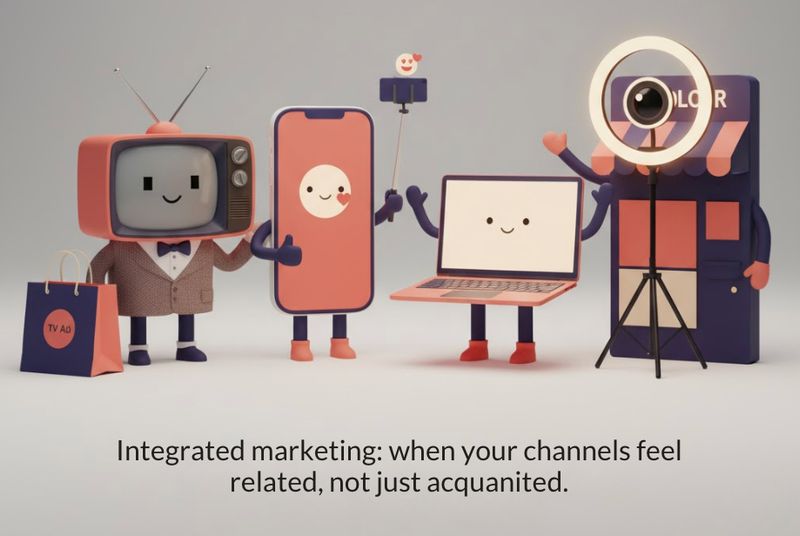
As Yuvana says, “If your offline story doesn’t continue online, it’s like watching half a movie”. She’s right.
Think of a 360 marketing campaign as an orchestra. Your digital, experiential, PR, and creative teams are all instruments. The campaign idea is the conductor. When everyone plays their part in sync, it’s music. When they don’t, it’s just noise.
Google’s research says integrated campaigns are 31% more effective at building brands. In simpler words, it’s like having one cutting chai that somehow keeps you awake and trending.
Why Silos Always Lose to Integrated Campaigns
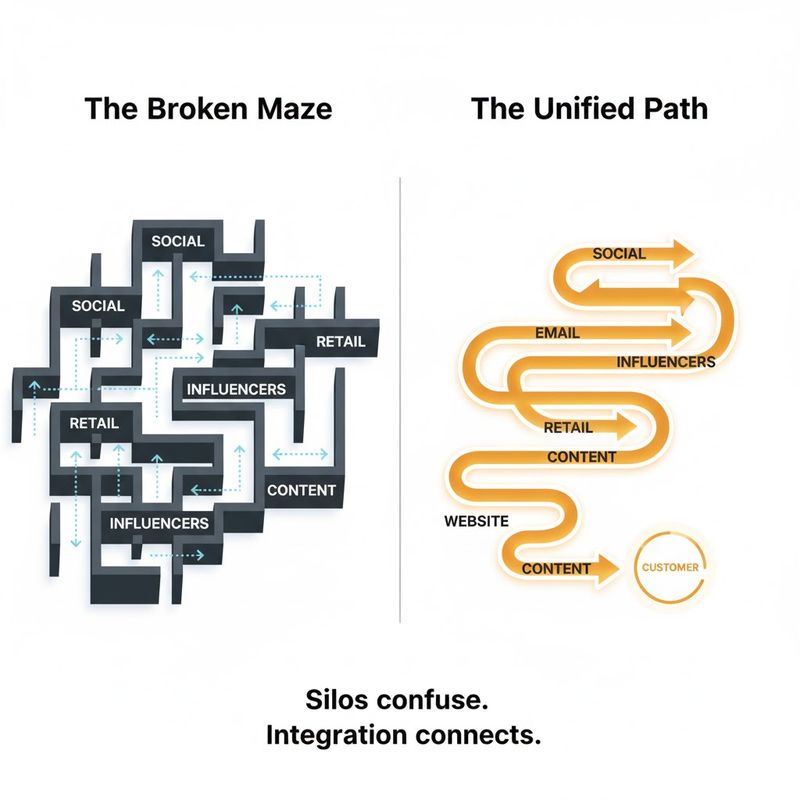
Let’s call a spade a spade. Silos are not just bad for collaboration; they’re bad for business. Here’s why truly Integrated campaigns always outperform.
1. Consistency Builds Trust and Storytelling Power
If your Instagram says “fun and quirky”, your hoardings scream “serious and premium”, and your store banners are still living in 2017, you’re basically three brands fighting for the same customer.
People don’t fall in love with tactics; they fall in love with stories. So if your campaign looks and sounds the same everywhere, it feels like a promise you’re actually keeping.
Maaz (who’s usually the first to call out inconsistency) says, and I quote, “Boss, agar copy alag alag tone mein bolti hai, toh consumer confuse ho jaata hai, like we’re ghosting them on our own channels”. Couldn’t agree more.
2. Campaign Channels Don’t Compete, They Compound
The math is clear: more touchpoints working together mean more impact. That’s what the 31% uplift stat is really about, and why an integrated marketing strategy beats a stack of separate plans.
Picture this. Someone sees your street activation, later spots your ad online, and then walks into a store with the same creative on display. That’s not coincidence; that’s orchestration. You’re not just selling; you’re storytelling.
3. Efficiency Goes Through the Roof in 360 Marketing
Silos waste time, effort, and money. Integrated campaigns make teams share creative assets, pool budgets, and avoid the dreaded “let’s make another version” loop.
Integration is just jugaad done right, one idea that works harder across platforms.
4. Customers Feel the Flow Across Offline to Online
Consumers don’t label things “digital” or “retail”. For them, it’s just “the brand”. When your story flows seamlessly from phone screen to store shelf to social feed, you feel familiar, not fragmented.
Salesforce found that consistent brand experiences can lift loyalty by up to 30%. Or as Sourav puts it while checking sentiment data, “People trust what feels predictable, not robotic”.
5. You Finally Get Useful Data Across Marketing Services
Once you break the silos, your data stops acting like a moody teenager. Suddenly, you can see how online engagement translates to offline footfall and how one campaign drives multiple outcomes.
When Divyanshu and Surya stitched together a dashboard tracking both Social media marketing engagement and store visits, the difference was ridiculous. “It’s like watching a movie in HD after years of 240p”, Surya said, and honestly, that’s the best way to describe integrated analytics.
How It Works IRL: Integrated Campaign Examples
Now, let’s look at integrated campaign examples that got it right.
When Xiaomi hit its 10-year milestone in India, it didn’t just drop a thank-you video. It threw a 20-city party in the sky. Literally.
Massive orange balloons floated across city skylines. People were encouraged to post pictures using #SpotTheBalloon, and soon, timelines were flooded. The campaign lived offline, went viral online, and drove thousands into stores to join the celebration.

That’s how you run an integrated marketing campaign: not “digital plus outdoor”, but one emotion told through many mediums.
We’ve seen smaller Indian brands do it too. A D2C brand like Naturaltein grew fivefold in ten months simply by unifying its messaging across influencer content, online stores, and on-ground fitness events. It wasn’t magic. It was method. Integrated campaign examples like this show that budget is not the entry ticket.
And yes, it was the kind of work that makes your boss say, “Yeh kar ke dikhana hai”.
The Anatomy of a Great Integrated Campaign
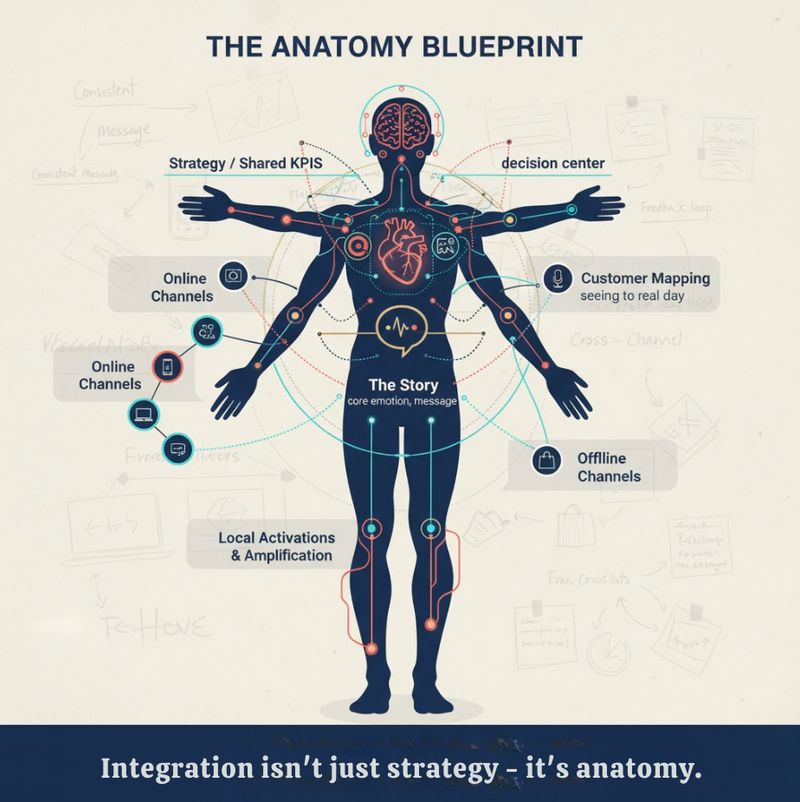
After a few dozen campaigns, a lot of chai, and many heated brainstorms, here’s the anatomy of a 360 marketing campaign that actually moves.
Start with One Story
Before you decide channels, write the story. What do you want people to feel? What’s your hook?
If you can’t express it in one line, you don’t have a campaign yet. As Maaz likes to say, “If the intern can’t explain it, neither can your audience”.
Map the Customer’s Real Day Across Every Channel
Don’t start with “We’ll do digital, OOH, influencer”. Start with your customer’s actual day. Where do they discover, scroll, buy, and share? Map those moments, not platforms.
When you do this right, your campaign stops feeling like advertising and starts feeling like participation.
Build a Shared Creative Language Across Marketing Services
Think of your campaign assets like a thali. Every dish is different, but all from the same kitchen. Visuals, tone, hashtags, CTAs; make sure they speak the same brand dialect.
We’ve seen that a unified creative tone cuts through far more than ten random creatives running in isolation. Cohesion wins attention, and attention drives action.
Choose Shared KPIs for All Campaigns
Nothing kills integration faster than ten different success metrics. Pick one or two north-star KPIs, such as conversions or engagement, then layer channel-specific metrics below that.
And for the love of all things marketing, use one dashboard. When Divyanshu unified all our campaign tracking, the whole team started speaking the same language: numbers.
Make Offline to Online Experiences Seamless
Every physical activation is a goldmine for digital content. Shoot, post, tag, share in real time. What happens in Delhi shouldn’t stay in Delhi.
At CupShup, we’ve learned this the fun way. During a college activation, we once got 5,000 Reels just because the on-ground crew kept filming and posting behind-the-scenes chaos. No budget boost, just smarter coordination.
Read next: The Forgotten Art of Post Campaign Integration, and how to plan a 360° campaign (templates included).
Go Hyperlocal, Then Amplify
India’s not a market; it’s a continent disguised as one. Tailor activations for local flavor, language, and humor, then amplify them nationwide.
The Xiaomi campaign nailed this by turning city moments into a national celebration.
Keep It Simple
The best ideas are usually the ones you can explain in an auto ride. If it needs a 30-slide deck, it’s too complex.
Krithika once laughed, “If my mom can’t understand it, our consumers definitely won’t”. She’s not wrong.
Fix the Culture, Not Just the Strategy
Integration isn’t just a tactic. It’s a mindset. Create cross-functional teams that brainstorm together, not in isolation.
Why Brands Choose CupShup as Their Integrated Marketing Agency
CupShup isn't just another integrated marketing agency. We bridge the gap between digital and physical marketing with AI-led campaign planning. From hyperlocal activations to national digital campaigns, our integrated approach draws on 10 years of work for 400+ brands across 30+ cities, with measurable results at every touchpoint.
Sidharth once said, “We fix bugs faster than marketing fixes its silos”. We laughed, then realized he had a point.
Integration isn’t just a workflow thing. It’s about curiosity. About teams asking, “How does what I do connect with what you do?”. That’s where the real magic starts.
Avoid These Rookie Traps in 360 Marketing
- Doing more channels doesn’t mean you’re integrated
- Measuring everything means you’ll understand nothing
- Regional inconsistency kills brand memory
- Stopping the buzz when the event ends wastes half your reach
- Leadership without collaboration is just another silo
Why Integrated Campaigns Are the Future
The data’s clear. Deloitte says brands focused on experiential engagement earn 60% more profit. McKinsey found nostalgia plus innovation boosts engagement by 40%. Gartner reports hyperlocal activations convert three times better than generic national ads.
But numbers aside, it’s about attention. Today’s consumer experiences 13 touchpoints before making a decision. If those 13 moments feel connected, you win.
That’s what an integrated marketing strategy really is, not about doing everything, but making everything feel like one.
Integration is also about speed. Campaigns today evolve in real time, and having one connected team means you can adapt instantly. When something works, scale it fast. When something flops, pivot quietly. That’s efficiency you can’t buy with ads.
From Campaigns to Conversations: The CupShup Way
Here’s what we’ve learned at CupShup. Integration isn’t about pushing messages; it’s about creating momentum through storytelling.
When your offline sparks feed your online flames, when your data teams talk to your creatives, when your campaign feels human instead of “optimised”, that’s when your marketing moves.
It’s what we mean when we say integrated growth.
Because in the end, silos might help you protect your turf, but integration helps you build your legacy.
And honestly, we’ll pick legacy over “likes” any day.
Integrated Campaign Example: Flipkart Minutes
Flipkart Minutes entered India’s crowded quick commerce market late, so it needed trust fast. CupShup built an integrated marketing campaign around hyperlocal guerrilla activation and RWA society-gate sampling, then fed those offline moments into an offline-online funnel. The result: 2 lakh+ users acquired, 2 crore+ impressions, 20 lakh+ engagements and 5 crore+ total reach. Read the Flipkart Minutes case study.
The lesson: an integrated marketing strategy works when the offline moment is designed to feed the online funnel, so every touchpoint hands the next one a warmer customer.
Integrated Marketing Campaign FAQs
What is an integrated marketing campaign?
An integrated marketing campaign runs one idea across on-ground, digital and media channels, planned and measured as one. Every touchpoint carries the same story, so each channel makes the others work harder.
How do you build an integrated marketing strategy?
Start with one story and one customer journey, pick one or two shared KPIs, then give each channel a job in that journey. The plan also needs one dashboard, so you can see what worked.
Where can I find integrated campaign examples?
The Xiaomi balloon celebration and the Flipkart Minutes activation above are two integrated campaign examples from India. You can browse more in our case studies.
Planning one of these? Download the free ATL vs BTL guide to see where each channel earns its place in the mix.
Want the email follow-up to carry the story after the activation? Try the Sequence Builder to map the sequence.
Prefer a partner to plan, run and prove it? See how our integrated marketing agency services work across on-ground, digital and media.
Ready to turn the plan into results? Let’s talk.
Ready to Break Your Silos?
If your brand still feels like multiple personalities trapped in one logo, it’s time for a rethink. Let’s build campaigns that connect, convert, and actually make people feel something.
Drop us a message, and let’s plan your next integrated push. From offline to online, from social media marketing to experiential storytelling, from campaigns to conversations.
At CupShup, we don’t just offer Marketing services. We help brands create movements. Let’s make yours next.
Get Started with CupShup Today
Ready to see real results? Book a Free Integrated Strategy Call → Join 400+ brands that trust CupShup.
50 Integrated Marketing Campaign Ideas
The complete playbook with campaign frameworks, budget templates, and measurement guides for Indian brands.
Instant download + email copy. No spam, ever.
Frequently Asked Questions About Integrated Marketing Campaigns
Why do integrated campaigns outperform single-channel campaigns?
Integrated campaigns outperform single-channel efforts because they reach consumers at multiple touchpoints, reinforcing the brand message through repetition across contexts. Research shows that consumers need 7-12 brand touchpoints before making a purchase. Integrated campaigns compress this journey by creating a surround-sound effect where the same message is encountered through social media, on-ground activations, OOH, and digital content.
How do you ensure brand consistency across an integrated campaign?
Brand consistency across integrated campaigns requires a single creative idea that adapts to each channel's format without losing its core message. Create a campaign bible with visual guidelines, tone of voice, key messages, and channel-specific adaptations. Assign a campaign lead who oversees all channels, and use shared project management tools for real-time coordination between teams handling different touchpoints.
What is the ideal channel mix for an integrated campaign in India?
The ideal channel mix in India depends on the target audience and budget. A typical integrated campaign allocates 30-40% to digital (social, search, programmatic), 25-35% to BTL (activations, events, sampling), 15-20% to OOH and print, and 10-15% to influencer partnerships. For brands targeting tier 2-3 cities, BTL allocation should be higher as on-ground presence builds more trust than digital in these markets.
Integrated Campaigns: Related Resources
Explore more about integrated campaign strategies with these related resources from CupShup.
Brand Communication Services
Unified brand communication across all touchpoints
Digital Integration Services
Seamless integration of offline and digital channels
Why Marketers Need IMC
The case for integrated marketing communications
Kota Factory Integrated Campaign
How an integrated approach drove massive campaign success
Explore CupShup Services
Brands that read this article also explored these services.
Integrated Marketing Agency
360-degree campaigns that connect offline activations with digital amplification for compounded ROI.
Learn more BrandBrand Strategy & Positioning
Brand architecture, positioning frameworks, and messaging strategy for market differentiation.
Learn more AIAI Digital Marketing Agency
AI-powered campaign strategy, content, and performance optimization for growth-stage brands.
Learn moreAakriti Mishra
Senior Marketing Strategist at CupShup with over 8 years of experience in brand activation and integrated marketing campaigns. Aakriti specializes in creating data-driven strategies that deliver measurable results for modern brands.
Related Stories
Go Deeper with Our Free Guides
Comprehensive, in-depth marketing guides created by CupShup's experts.
The Ultimate Guide to Brand Activation
Everything you need to know about bringing your brand to life, strategies, examples, and frameworks.
The Ultimate Guide to Digital Marketing
Master every channel in the modern digital marketing ecosystem, from SEO to paid media.
The Ultimate Guide to SEO
The definitive guide to search engine optimization, on-page, technical, and link building strategies.