
upGrad Marketing Case Study
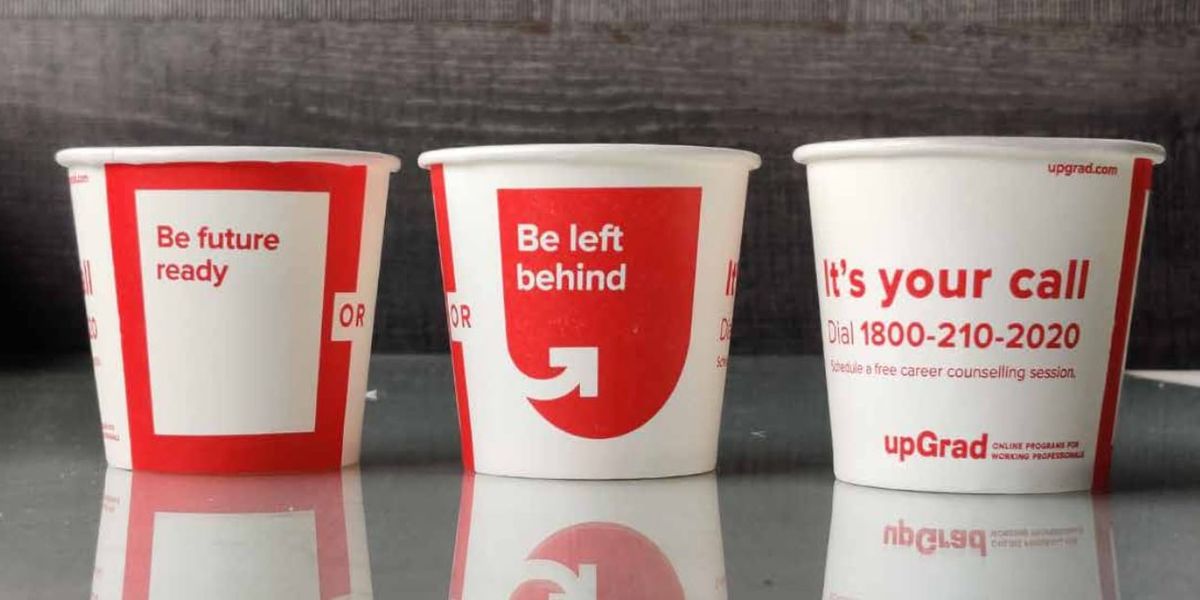
When upGrad launched in 2015, India’s EdTech market was fragmented, underfunded, and largely focused on K-12 test prep. A decade later, upGrad is India’s largest online higher education company — valued at over $2.25 billion, with 10 million+ registered learners and partnerships with 300+ universities globally. Marketing played an outsized role in that journey.
This isn’t a puff piece. It’s a strategy breakdown. Below, we unpack the five marketing pillars that powered upGrad’s growth, the results they produced, and the lessons any EdTech brand — from a Series A startup to an established university — can apply.
Whether you’re spending ₹5 lakh or ₹5 crore a month on marketing, the frameworks here are budget-agnostic. It’s the thinking that scales, not the spend.
About upGrad
upGrad is an online higher education platform providing industry-relevant programs in data science, technology, management, and law — designed and delivered in collaboration with universities like IIIT Bangalore, Liverpool John Moores University, and Deakin University. The platform offers 100+ courses across undergraduate, postgraduate, and doctoral levels. With offices in India, the US, UK, Middle East, and Southeast Asia, upGrad serves working professionals looking to upskill without pausing their careers.
The Challenge: Scaling EdTech in a Crowded Market
By 2020, every EdTech brand in India was fighting for the same audience: 25–35-year-old working professionals willing to spend ₹1–5 lakh on an online degree or certification. The competition included Byju’s (before its implosion), Simplilearn, Great Learning, Scaler, and dozens of smaller players — all running the same Google Ads, targeting the same keywords, making the same ROI promises.
upGrad’s challenge was threefold. First, differentiate in a market where every brand claimed “world-class faculty” and “industry-relevant curriculum.” Second, justify premium pricing (₹2–8 lakh per programme) when competitors offered cheaper alternatives. Third, build a brand that working professionals trusted enough to invest both money and time — because an EdTech purchase isn’t an impulse buy. The consideration window is 30–90 days.
upGrad’s Marketing Strategy: 5 Pillars That Drove Growth
upGrad didn’t win on a single tactic. It built a five-pillar marketing system where each pillar fed the others. Here’s how.
1. Content Marketing as a Funnel (SEO + Blogs + Free Courses)
upGrad’s blog is one of the largest EdTech content libraries in India — thousands of articles targeting every stage of the learner journey, from “what is data science?” (top-of-funnel) to “IIIT Bangalore data science course review” (bottom-of-funnel). The SEO strategy is aggressive: upGrad ranks on page 1 for hundreds of high-intent keywords like “MBA online India”, “data science course”, and “digital marketing course.”
But the content engine goes beyond blogs. Free courses (offered through upGrad’s platform) serve as lead magnets — give learners a taste of the teaching quality, collect their contact details, and nurture them toward paid programmes. This content-to-lead-to-sale pipeline is the backbone of upGrad’s acquisition funnel.
2. Celebrity-Led Brand Building (Sharman Joshi, Prabhas)
upGrad invested heavily in celebrity endorsements — Sharman Joshi (known for 3 Idiots) as the long-term brand ambassador, later adding Prabhas for south Indian market penetration. The messaging was always the same: “real careers, not just certificates.” The celebrity layer wasn’t about vanity — it was about buying trust in a market where online degrees still faced scepticism from employers and families.
The TV and digital campaigns drove branded search volume, which in turn improved Google Ads efficiency (people searching “upGrad” directly convert at 5–10× the rate of generic keyword traffic). Brand building made performance marketing cheaper — a virtuous cycle.
3. Performance Marketing at Scale (Google, Meta, YouTube)
upGrad’s reported marketing spend has been significant — ₹500–800 crore annually during peak growth years. The majority went to Google Search Ads (high-intent keywords like “online MBA India”), YouTube pre-rolls (video testimonials from alumni and faculty), and Meta Ads (retargeting website visitors and lookalike audiences). The funnel was sophisticated: top-of-funnel awareness → website visit → free course signup → counsellor call → paid enrollment.
The key insight: upGrad optimised not for clicks or even leads, but for “counsellor-qualified leads” (CQLs) — people who completed a counselling call and were deemed ready to enrol. This longer attribution window made their media buying smarter than competitors who optimised for cost-per-lead.
4. Strategic Partnerships and the Campus-to-Digital Pipeline
upGrad’s university partnerships (IIIT Bangalore, IIT Madras, Liverpool, Deakin) weren’t just curriculum arrangements — they were marketing assets. Every university’s brand lent credibility to upGrad’s programmes. The co-branded Google Ads (“MBA from Liverpool John Moores University — via upGrad”) converted at premium rates because the university name reduced perceived risk.
Additionally, upGrad built relationships with corporate HR departments, offering bulk enrolment packages for employee upskilling. This B2B channel provided high-LTV customers at lower CAC than consumer marketing.
5. Offline Activations and Experiential Marketing
Despite being a digital-first platform, upGrad invested in offline — college campus drives, career fairs, experience centres in major metros, and branded events. The logic: for a ₹3–5 lakh purchase decision, some buyers need a physical touchpoint. The experience centres served as showrooms where counsellors could walk prospects through the platform, answer questions, and close high-ticket enrolments.
This is where CupShup’s expertise intersects: designing offline to online marketing activations that feed the digital funnel. For EdTech brands, a well-executed campus drive or brand activation can generate leads at a fraction of the digital CAC — with higher intent.
Results: What the Numbers Say
While upGrad is a private company and doesn’t disclose granular marketing metrics, publicly available data paints the picture:
- 10 million+ registered learners (as of 2024)
- $2.25 billion peak valuation (2022)
- 300+ university partnerships globally
- Presence in 50+ countries
- ₹1,500+ crore annual revenue (FY24 estimates)
- Ranked consistently as India’s #1 online higher education platform by multiple third-party surveys
The marketing engine — content + brand + performance + partnerships + offline — drove the bulk of this growth. upGrad’s ability to keep scaling while maintaining programme quality is what separated it from EdTech competitors who grew fast and crashed.
What EdTech Brands Can Learn from upGrad
Lesson 1: Content Is the Cheapest Acquisition Channel
upGrad’s blog and free-course pipeline generate millions of organic visitors per month — traffic that would cost crores to replicate via paid ads. For any EdTech brand, investing in SEO and content marketing isn’t optional. It’s the only channel that compounds.
Lesson 2: Brand Building and Performance Marketing Aren’t Opposites
upGrad’s celebrity campaigns weren’t a luxury — they made Google Ads cheaper by driving branded search. Brands that only invest in performance marketing hit a ceiling. Brands that invest in both create a flywheel where awareness reduces acquisition cost.
Lesson 3: Offline Still Matters — Even for a Digital Product
Experience centres, campus drives, career fairs. For high-ticket EdTech (₹1 lakh+), physical touchpoints reduce purchase anxiety and close deals that digital alone can’t. This is the gap CupShup fills for EdTech brands: event marketing activations designed to generate leads, trials, and trust.
The EdTech Marketing Playbook: 5 Tactics
Whether you’re upGrad, a Series A EdTech startup, or a university launching online programmes — these five tactics are the foundation.
1. Build a Free-Content Moat
Publish 50–100 SEO-optimised articles targeting every keyword in your category. Offer 2–3 free mini-courses as lead magnets. The goal: own the top of the funnel so completely that when someone Googles your topic, they find you before they find a competitor.
2. Own a Category Keyword
upGrad owns “online MBA India.” Scaler owns “coding bootcamp.” What keyword does your brand own? Pick one high-intent phrase and invest until you rank #1 organically and dominate paid results. Category ownership drives disproportionate returns.
3. Use Celebrities to Buy Trust, Not Just Impressions
In EdTech, the purchase is high-stakes (money + time + career risk). A credible face — a well-known professional, an academic, or a celebrity — reduces perceived risk. The ROI of celebrity endorsement in EdTech is measured in conversion rate lift, not just reach.
4. Design Offline for Online Amplification
Every campus drive, career fair, and experience centre visit should capture an email, trigger a retargeting pixel, and produce content. The event is the beginning of the funnel, not the end. Build with a “digital starter pack” — the same approach CupShup uses for every brand activation.
5. Nurture Long — the EdTech Sales Cycle Is 30–90 Days
Nobody buys a ₹3 lakh online MBA after seeing one ad. Build an email nurture sequence, a WhatsApp drip, and a counsellor call workflow that guides prospects over 30–90 days. The brands that master long-cycle nurture win EdTech. The brands that optimise for instant conversion waste budget.
Frequently Asked Questions
What is upGrad’s marketing strategy?
upGrad’s marketing strategy combines five pillars: SEO-driven content marketing (thousands of blog articles + free courses as lead magnets), celebrity-led brand building (Sharman Joshi, Prabhas), performance marketing at scale (Google, Meta, YouTube), university partnerships as trust signals, and offline activations (experience centres, campus drives). The five pillars work as a system — each one makes the others more effective.
How does upGrad acquire customers?
upGrad’s primary acquisition channels are organic search (blog content targeting high-intent keywords), Google Search Ads (branded + category keywords), YouTube (video testimonials and faculty content), and counsellor-led conversion (prospects receive personalised guidance before enrolling). The funnel runs: content → free course → lead capture → counsellor call → enrolment.
What marketing channels work best for EdTech?
For most EdTech brands in India: SEO and content marketing (cheapest long-term CAC), Google Search Ads (highest intent), YouTube (best for explaining complex programmes), and email/WhatsApp nurture sequences (critical for the 30–90 day consideration window). Offline activations (campus drives, career fairs) work well for high-ticket programmes (₹1 lakh+).
How much does EdTech customer acquisition cost in India?
CAC varies widely. For free/low-cost courses (Coursera, Udemy model), CAC is ₹200–₹1,000. For mid-ticket certificates (₹20K–₹1L), CAC is ₹3,000–₹10,000. For high-ticket programmes (₹1L–₹8L, the upGrad model), CAC can run ₹15,000–₹50,000 — but the LTV justifies it. The brands that win reduce CAC over time by investing in organic content, brand, and referral loops.
Final Word
upGrad’s marketing story isn’t about massive budgets — plenty of EdTech companies spent heavily and failed. It’s about building a system where content feeds leads, brand reduces CAC, performance captures demand, partnerships add credibility, and offline closes the high-ticket sale. Each pillar reinforces the others.
For any education brand watching from the sidelines: you don’t need upGrad’s budget to apply upGrad’s thinking. Start with content, build trust, design every offline moment for digital amplification, and nurture like your sale depends on it — because in EdTech, it does.
Want to Build an EdTech Marketing Engine?
CupShup has worked with education brands on campus activations, sampling drives, and experiential marketing campaigns that feed the digital funnel. If you’re an EdTech company looking to add an offline-to-online acquisition layer — or a university launching online programmes — we’d love to talk strategy.
Reading This Marketing Case Study the Right Way
Every marketing case study risks becoming a highlight reel instead of a playbook. The useful way to read a marketing case study isn't "look how well this went" - it's "what decision made this work, and would it work at my scale." That's especially true in edtech marketing, where the buyer and the user are often different people entirely.
upGrad needed edtech marketing that converted campus curiosity into actual enrolments, not just brand awareness. CupShup built a brand activation strategy across 1,000+ corporates and 20+ cities - consultative promoters, tech-park and co-working activations, and a same-day counselor SLA that delivered 3,500+ QR leads and a 10% lead-to-enrolment conversion, well above what a generic startup marketing agency approach typically achieves in edtech marketing.
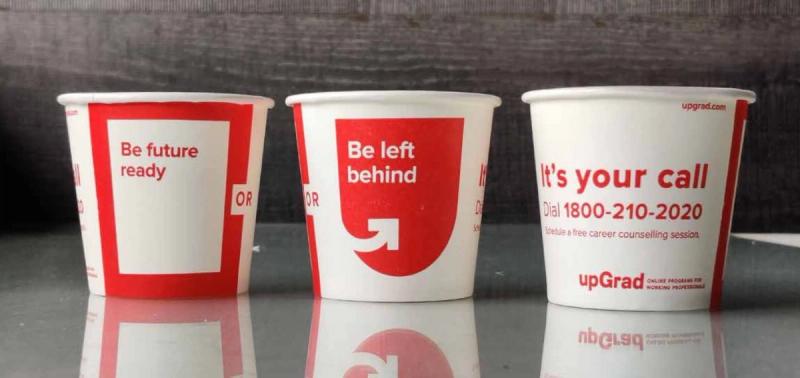
CupShup's brand activation campaign that drove 3,500+ QR leads for upGrad
That same-day counselor SLA is the detail most edtech marketing case studies skip - it's not glamorous, but it's the reason leads actually converted instead of going cold. Any startup marketing agency can generate interest; fewer can build the operational follow-through that turns interest into enrolment.
That's what makes this marketing case study worth studying rather than just admiring: the edtech marketing win came from operations as much as creative, a lesson any startup marketing agency working in high-consideration categories should take seriously.
Want to research the exact keywords a campaign like this should target? Keyword Research gives real-time search intelligence behind every content decision.
For a campaign strategy that connects every channel the way upGrad's did, our Integrated Marketing team builds the operational follow-through most campaigns skip.
Got a high-consideration product that needs real follow-through, not just awareness? Talk to us.
Every strong marketing case study eventually gets copied by a startup marketing agency chasing the same result without the same operational discipline. The gap is rarely creative - it's follow-through, which is why this particular marketing case study still holds up as a benchmark for edtech marketing done right.
A startup marketing agency reading this marketing case study should focus less on the QR-code mechanic and more on the same-day counselor SLA - that operational detail is what actually converted edtech marketing interest into enrolment, not the activation format itself.
Why Content Marketing Services Alone Don't Convert EdTech Leads
Content marketing services can build awareness for an EdTech brand, but awareness isn't the hard part in India's EdTech category - conversion is. Even the best influencer marketing agency in India can generate campus buzz that never turns into an enrolment.
upGrad needed content marketing services that converted curiosity into actual sign-ups. CupShup built a brand activation strategy across 1,000+ corporates and 20+ cities with a same-day counselor SLA that delivered 3,500+ QR leads and a 10% lead-to-enrolment conversion - well beyond what content marketing services or a generic influencer marketing agency in India campaign typically achieves alone.
Even meme marketing, which drives huge campus reach, still needs that same operational follow-through - content marketing services and an influencer marketing agency in India can get attention, but only real process turns it into enrolment.
An influencer marketing agency india brands actually rely on for EdTech still needs content marketing services and meme marketing working together, not as separate line items - upGrad's results came from that combination, not from any single channel alone.
The influencer marketing agency india category is full of campaigns that generate buzz through meme marketing but never convert - content marketing services without the operational follow-through upGrad built are the reason most of them stall.
50 Integrated Marketing Campaign Ideas
The complete playbook with campaign frameworks, budget templates, and measurement guides for Indian brands.
Instant download + email copy. No spam, ever.
Explore CupShup Services
Brands that read this article also explored these services.
Digital Marketing Agency
Full-stack digital marketing, performance, social, content, and programmatic campaigns.
Learn more AIAI-Powered Digital Marketing
AI-first marketing campaigns powered by data, automation, and predictive analytics.
Learn more ActivationBrand Activation Agency India
Turn brand awareness into real-world engagement with CupShup's 400+ activation track record.
Learn moreRelated Stories

Go Deeper with Our Free Guides
Comprehensive, in-depth marketing guides created by CupShup's experts.
The Ultimate Guide to Brand Activation
Everything you need to know about bringing your brand to life, strategies, examples, and frameworks.
The Ultimate Guide to Digital Marketing
Master every channel in the modern digital marketing ecosystem, from SEO to paid media.
The Ultimate Guide to SEO
The definitive guide to search engine optimization, on-page, technical, and link building strategies.