
Integrated Marketing: How Events Transform Brand Activation Strategy
If marketing is about grabbing attention, events are the stage where brands go from whispers to headlines. Ads get scrolled past, reels get muted, but an event? An event makes people stop, take selfies, and tell their friends, “You should’ve been there”. In 2025, events aren’t just activations anymore, they are cultural moments designed to spill out of the venue, flood timelines, and get embedded in memory. Think of it this way: an ad tells people what your brand is. An event makes them feel it. Feeling is far stickier than seeing.
Event marketing is what happens when a brand stops talking at people and starts creating something they want to show up for. It's the discipline of using live experiences — launches, activations, pop-ups, trade shows, festivals — to drive brand awareness, engagement, and sales. When it works, a single event can generate more organic reach than a month of paid ads.
Why Events Work
Humans are wired for experiences. Psychologists call it the “peak-end rule”: we remember the peak of an experience and the way it ends, more than the middle moments. That’s why you might forget the details of a generic product display at a mall, but you’ll remember dancing under neon lights at a surprise pop-up concert. Events exploit this beautifully; they create emotional spikes that translate into recall, shareability, and eventually, sales.
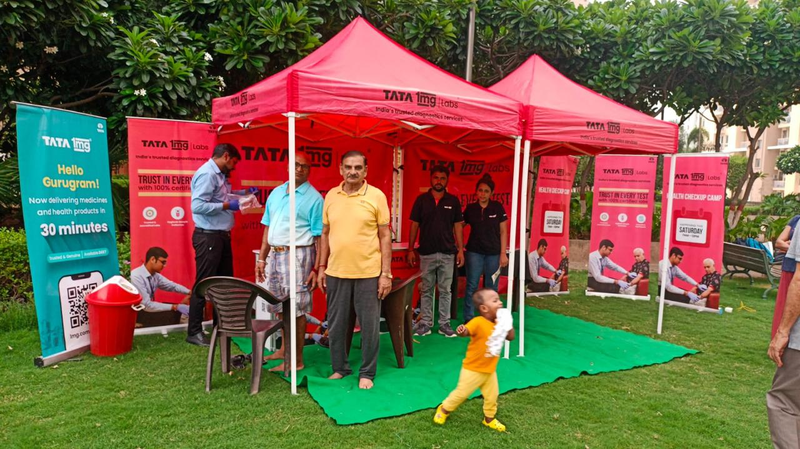
It’s not just about spectacle. It’s about designing something people actually want to talk about. At CupShup, we saw this with the Tata 1mg campaign. While most people knew the brand for medicine delivery, very few associated it with diagnostic tests. To change that, we created on-ground health camps across 700+ gated societies where residents could book and experience live tests on the spot. What could have been just another awareness ad became a trusted, memorable interaction people walked away not only with test results but also with stories they shared online, generating thousands of UGC posts and leads. That’s what happens when you turn a service into an experiential marketing moment instead of a mere promotion.
The same principle is what made a sneaker brand’s Colour Run Carnival unforgettable, where customers danced in UV paint, or why a beverage brand’s Midnight Chill Station drew late-night crowds in Mumbai. In each case, it wasn’t the product in isolation,it was the freedom, the vibe, the memory created. These are the kinds of moments that stick because they engage all senses and leave people with something to talk about long after the event ends. They stand as viral marketing examples, showing how events can ripple into conversations and online buzz.
🎯 Want events that actually move the needle? Get a free event marketing strategy audit from CupShup → We've designed 500+ brand activations across India.
What Is Event Marketing?
At its core, event marketing is any campaign where the brand creates or sponsors a live experience designed to achieve a marketing objective — awareness, trial, data capture, community building, or direct sales. The event is the medium; the brand story is the message.
The format ranges from a ₹50,000 sampling stall outside a metro station to a ₹5 crore multi-city festival sponsorship. What unifies them is intent: the audience should leave with a memory, a feeling, or a behaviour change that static media couldn't have created.
Event marketing vs. experiential marketing
The two terms are often used interchangeably, but there's a useful distinction. Event marketing is the broader category: any marketing that uses a live or virtual event as its vehicle. Experiential marketing is a subset that specifically emphasises immersive, multi-sensory participation — the audience doesn't just attend, they do something.
A product launch with a stage, a speech, and a press kit is event marketing. A product launch where attendees walk through an installation that simulates the problem the product solves — that's experiential. Both live under the same roof; the difference is the depth of audience involvement.
5 Types of Event Marketing
Not every event serves the same purpose. Choosing the right format starts with understanding what each type does best.
1. Product launches & unveilings
The classic: a live reveal designed to generate press, social content, and first-day demand. Apple's keynotes are the global template. In India, OnePlus and boAt have both used launch events to create queueing culture and day-one sell-outs.
Best for: new product lines, rebrands, market entry. Budget range: ₹5–50 lakh for a metro-city launch.
2. Trade shows & expos
B2B's workhorse. A well-designed booth at a relevant expo — Ad:Tech, CII events, Auto Expo — puts you in front of high-intent buyers who are already in purchase mode. The ROI math is simple: cost per qualified lead vs. digital.
Best for: B2B, manufacturing, SaaS, real estate. Budget range: ₹3–25 lakh per show (booth + travel + collateral).
3. Brand activations & sampling
Put the product in someone's hand. Let them taste it, wear it, use it, feel it. For FMCG, D2C, and consumer brands, sampling activations remain the highest-conversion offline format. CupShup has run 10,000+ such activations — from RWA stalls to mall kiosks to highway rest-stop pop-ups.
Best for: FMCG, food & beverage, personal care, D2C. Budget range: ₹50K–5 lakh per activation (scales with geography).
4. Pop-ups & experiential installations
Temporary spaces designed around a theme. Pop-ups work because scarcity creates urgency — "this is only here for 3 days" — and Instagram-worthy design creates organic reach. Think Nykaa's beauty pop-ups, Lenskart's try-on lounges, or Starbucks' seasonal Reserve bars.
Best for: fashion, beauty, food, lifestyle, luxury. Budget range: ₹5–30 lakh for a 3–7 day city activation.
5. Virtual & hybrid events
Post-2020, virtual events aren't a backup plan — they're a parallel channel. Webinars, virtual product demos, and hybrid conferences extend geographic reach at a fraction of the cost. SaaS brands like Zoho and Freshworks use them to reach Tier 2/3 India without a physical presence.
Best for: SaaS, edtech, fintech, B2B professional services. Budget range: ₹1–10 lakh (platform + production).
Imagine This..
Events shine when you turn brand messaging into playful, unforgettable experiences. A fintech app could launch a student savings product not via a press release, but a “Broke Olympics”, where students race to stretch ₹100 the longest, play games spotting hidden fees in contracts, and watch influencers compete live.
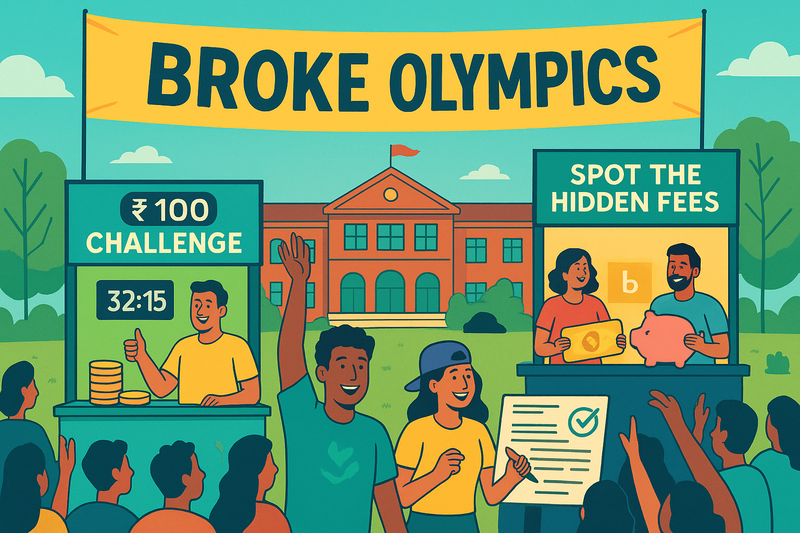
The memory of participating or watching would be far more lasting than any brochure. A sustainable fashion label could throw a swap-party festival, where attendees bring old clothes to exchange while stylists upcycle them on the spot. Guests leave literally wearing the brand’s ethos.
In both cases, the audience is not just present, they are part of the storytelling process. That interaction transforms the brand from a logo into a shared experience, making the message infinitely more shareable.
How to Plan an Event Marketing Strategy (6 Steps)
Most events fail not because of bad production, but because of bad planning. Here's the framework we use at CupShup before anything gets booked, built, or briefed.
Step 1. Define the business objective
"Brand awareness" isn't a business objective — it's a category. Get specific: "Generate 500 qualified leads from CMOs in FMCG" or "Drive 2,000 product trials in Mumbai South" or "Earn 50 pieces of UGC that we can repurpose for paid social." The objective shapes every decision downstream.
If you can't attach a number and a deadline to the event's purpose, you're not ready to plan it.
Step 2. Know your audience (and their calendar)
Map who you're trying to reach, where they are, and when they're receptive. A college activation during exam season is wasted spend. A trade show booth at an industry event your ICP doesn't attend is expensive decoration.
Build an audience brief: demographics, psychographics, media habits, physical locations, and — critically — what else is competing for their attention that day.
Step 3. Design the moment, not the logistics
Start with the 30-second story you want attendees to tell afterwards. "I went to this thing where they..." — what's the end of that sentence? If the answer is "they gave me a free sample and a brochure", the event is forgettable.
Design backwards from the story. The venue, the format, the activities, and the swag should all serve the narrative. The logistics follow the creative, not the other way around.
Step 4. Build shareability into the experience
Every touchpoint should have a "photograph this" or "post this" layer. Photo walls, AR filters, hashtag activations, real-time leaderboards. At CupShup, we design for three audiences simultaneously: the person at the event, their social followers, and the brand's own content library.
A rule of thumb: if the event doesn't generate at least 3× as many social impressions as in-person attendees, the design missed shareable moments.
Step 5. Integrate with pre- and post-event campaigns
The event is the peak, not the whole campaign. Two weeks before: teaser content, registration, influencer seeding. Day-of: live stories, real-time UGC curation, press coverage. Two weeks after: recap video, attendee email nurture, retargeting.
Events that exist in isolation lose 80% of their potential reach. Events woven into a pre/post digital campaign multiply their impact by 3–5×.
Step 6. Set KPIs before you book the venue
If you don't define success metrics upfront, you'll retrofit a narrative after the event that makes it sound good regardless of what happened. Set clear KPIs: footfall, leads captured, social impressions, UGC volume, press mentions, pipeline generated, or direct sales.
The Trap of Just Throwing a Party
Here’s the hard truth: not every event works just because you booked a DJ and threw confetti. We’ve all been to brand activations that felt like a college fresher’s party with slightly better snacks. People nod politely, grab the freebies, and forget the brand by the time they’re home. That’s not ROI, that’s renting a venue and denting your budget.
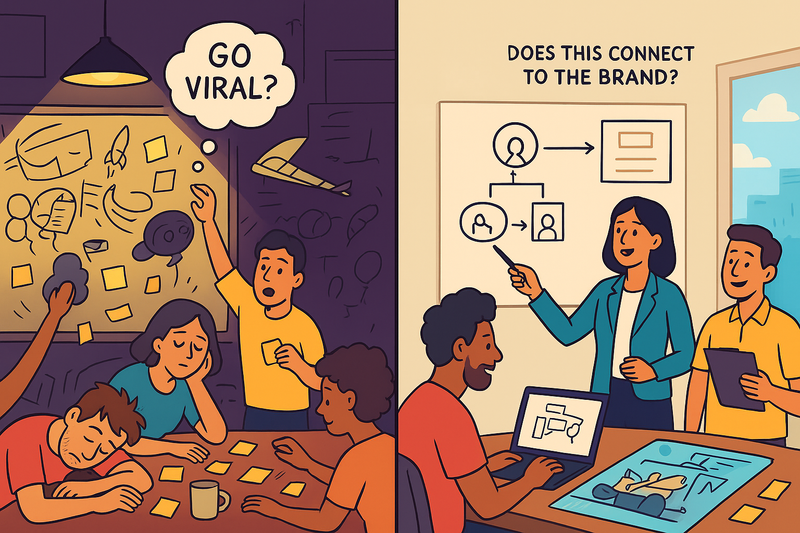
The difference between forgettable events and unforgettable ones comes down to intent. At CupShup, we’ve brainstormed wild ideas, half-sound genius at 1 AM, like building a floating billboard on Marine Drive, but by morning, coffee in hand, we always ask, “Does this connect to the brand or are we just trying to go viral?”
Without a clear story, events become noise. Without shareable content, they disappear the moment attendees leave. The best campaigns are purposeful, designed to spark conversation and create memories that ripple outward.
From Moment to Movement
💡 Planning your next brand activation? Request a custom event marketing proposal from CupShup → Strategy, production, and measurement — all in one team.
Events are powerful because they don’t end when the lights switch off. The best ones continue to ripple outward, long after attendees leave. Think about it: an event might have just 500 people physically present, but if half of them post about it, suddenly thousands more are part of the experience. That’s why whenever we are sketching event ideas, we always ask, “What will this look like on Instagram tomorrow morning?”
It’s not about forcing virality; it’s about designing moments that naturally translate into shareable stories and stand as viral marketing examples of cultural buzz.
And these don’t have to be massive spectacles. Some of the most effective events are micro-moments executed with precision. A D2C skincare brand once created a “Hydration Station” at busy metro stations in Delhi, with mist sprays, cool water, and shaded tents, all branded. Commuters were instantly drawn in, captured reels, and tagged the brand. It wasn’t a carnival, but it became a story that traveled far beyond the physical location.
This is the essence of modern experiential marketing: designing for the scroll as much as for the stage.
Event Marketing Examples That Worked (India)
India's event marketing landscape is massive — ₹10,000+ crore annually, growing at ~15% year-on-year. Here are five brands that turned events into measurable marketing outcomes.
Bacardi NH7 Weekender — music as brand platform
Bacardi didn't just sponsor NH7 Weekender — it became the festival's identity. Over a decade, "Bacardi NH7 Weekender" evolved from a sponsorship line to a cultural institution. The event drives brand association with indie music, youth culture, and premium experiences. The marketing cost-per-impression is a fraction of what traditional media would deliver at the same scale.
The lesson: owning a recurring event platform compounds brand equity every year — each edition builds on the last.
Red Bull — owning extreme sports moments
Red Bull's India playbook mirrors its global strategy: create events that nobody else would. Red Bull Soapbox Race, Red Bull BC One (breakdancing), Red Bull Cliff Diving. None of these "sell energy drinks" — they sell the idea that Red Bull exists wherever humans push limits. The events generate thousands of hours of video content that feeds Red Bull's media empire.
The lesson: events can be content factories. Design them for the camera, and the media ROI extends far beyond the venue.
Magicpin — hyperlocal pop-ups
Magicpin used 50+ micro-activations across Delhi NCR — free coffee stalls, discount pop-ups at metro exits, sampling at co-working spaces — to drive app installs in a market where digital CAC was skyrocketing. Each activation had a QR code, a 30-second demo, and a first-order incentive. CPI (cost per install) was 40% lower than Meta ads.
The lesson: event marketing doesn't have to be big. A ₹50K street-level activation with clear attribution can outperform a ₹5L digital campaign.
Swiggy Instamart — 10-minute sampling
When Swiggy Instamart launched in new pincodes, they ran "instant sampling" events — riders delivered free product kits to first-time users in 10 minutes, matching the brand promise. The stunt was small, cheap, and completely on-strategy: "we deliver anything in 10 minutes" became a lived experience, not just an ad claim.
The lesson: the best event marketing makes the brand promise tangible. If your product's value prop is speed, prove it live.
CupShup × brand activations — from briefing to buzz
Across 500+ activations for brands like Spencer's, Flipkart Minutes, and Beco, CupShup's playbook is consistent: start with the brand story, design a moment worth sharing, build a measurement layer in from day one. For one FMCG launch, a mall activation generated 12,000 product trials and 3,200 social shares in a single weekend — a CPI lower than any digital channel the brand was running.
The lesson: scale isn't always about size. One well-designed activation in the right location with the right measurement stack can outperform a 10-city digital campaign.
How to Measure Event Marketing ROI
The biggest criticism of event marketing is "we can't measure it." That's only true if you don't plan for measurement. Here's how.
During the event
Track: footfall (entry counters or badge scans), dwell time (how long people stay at your booth/activation), product trials (sampled units), QR scans, app installs, social check-ins, and UGC volume (tagged posts, stories, reels). If you're running a lead-gen event, count badge scans or form fills in real time.
Pro tip: set up a live dashboard (even a simple Google Sheet pulling from UTM-tagged links) so the team can course-correct in real time — "booth A is getting 3× the traffic of booth B, move the sampling staff."
After the event
Within 48 hours: total reach (owned + earned social impressions), press coverage (number of mentions, estimated media value), leads captured (qualified vs. unqualified), direct sales or orders attributed. Within 2 weeks: lead-to-opportunity conversion rate, retargeting performance on event attendees vs. control group, branded search lift.
For B2B events, track pipeline generated: how many of the leads enter your CRM, how many convert to meetings, and what's the eventual revenue. Most B2B event ROI realises over 3–6 months, not 3 days.
The metric most brands forget
Content ROI. A well-designed event should produce 10–30 pieces of repurposable content: photos, video clips, testimonials, behind-the-scenes footage, recap reels, quote cards. Measure the performance of this content over the next 30–90 days. Often, the content generated by a single event outperforms a month of studio production — because it's real, raw, and carries the energy of the moment.
CupShup’s Take
At CupShup, we are obsessed with the intersection of offline and online. We’ve seen firsthand how a well-designed offline activation can explode online when amplification is baked into the concept. Take the Spencer’s Jiffy launch, for example. In-store demos and activations across residential communities created the initial buzz, but it was local influencers filming their “groceries in minutes” runs through the aisles that gave the campaign real reach. Offline energy fuels online content, which in turn drives more offline interest.
The Future is Experiential
As 2025 unfolds, the brands getting it right aren’t thinking in terms of one-off events; they are planting seeds for community, conversation, and culture. Whether it’s a sneaker carnival, a broke-student Olympics, or a hydration tent on a scorching summer day, the goal remains the same: turn moments into movements. It’s about creating events that people feel compelled to share, not because they are asked to, but because the experience was genuinely worth remembering.
In essence, successful events in today’s landscape are multi-layered experiences. They’re immersive, shareable, and emotionally resonant. They are designed with intent, amplified through social channels, and crafted to linger in people’s minds long after the final confetti has fallen. For brands that master this, every event is not just an activation,it’s a movement, a chapter in a storytelling-driven campaign that people are excited to tell over and over.
Frequently Asked Questions
What is event marketing?
Event marketing is any marketing strategy that uses live or virtual experiences — product launches, brand activations, trade shows, pop-ups, or festivals — to promote a brand, generate leads, or drive sales. The event itself is the marketing medium.
How much does event marketing cost in India?
It varies enormously. A single-location sampling activation can cost ₹50,000–₹2 lakh. A city-level pop-up runs ₹5–30 lakh. A multi-city experiential campaign can run ₹50 lakh–₹5 crore+. The right question isn't "how much does it cost?" but "what's the cost per outcome (lead, trial, install, sale) compared to digital?"
What's the difference between event marketing and experiential marketing?
Event marketing is the umbrella term for any marketing that uses live events. Experiential marketing is the subset that specifically focuses on immersive, participatory experiences — the audience doesn't just attend, they interact. A press conference is event marketing. A walkthrough installation is experiential.
How do you measure event marketing success?
Set KPIs upfront: footfall, product trials, leads captured, social impressions, UGC volume, press mentions, pipeline generated, or direct sales. Track during and after. The strongest measurement frameworks compare event-generated outcomes (cost per lead, cost per install) against your digital benchmarks.
What are the best event marketing ideas for B2B?
Roundtable dinners with 15–20 decision-makers (high cost per head, highest conversion rate). Industry conference speaking slots (authority + leads). Co-hosted webinars with complementary brands (shared audience, shared cost). VIP product demos with hands-on trials. Customer advisory board events that double as retention and upsell.
Final Word
In 2026, the brands getting event marketing right aren't thinking in terms of one-off events — they're planting seeds for community, conversation, and long-term recall. No one remembers the 30-second ad they skipped on YouTube. They remember the experience that made them feel something.
The question isn't whether events belong in your marketing mix. It's whether you're designing them to compound — creating moments that ripple outward into social feeds, email nurtures, retargeting audiences, and repeat customers — or just booking a venue and hoping for the best.
Ready to Turn Your Next Event Into a Marketing Engine?
CupShup has designed 500+ brand activations across India — from mall kiosks and RWA sampling drives to full-scale experiential campaigns. We handle strategy, production, execution, and measurement as one integrated team. Whether you're planning your first activation or scaling your tenth, we'll build the event marketing strategy that earns the result, not just the applause.
50 Integrated Marketing Campaign Ideas
The complete playbook with campaign frameworks, budget templates, and measurement guides for Indian brands.
Instant download + email copy. No spam, ever.
Explore CupShup Services
Brands that read this article also explored these services.
Integrated Marketing Agency
360-degree campaigns that connect offline activations with digital amplification for compounded ROI.
Learn more BrandBrand Strategy & Positioning
Brand architecture, positioning frameworks, and messaging strategy for market differentiation.
Learn more ExperientialExperiential Marketing Agency India
Immersive brand experiences, pop-ups, product launches, live demos, and phygital events.
Learn moreYuvana Singh
Creative Director passionate about storytelling and brand innovation. Yuvana leads CupShup's creative team, bringing fresh perspectives to campaign development and helping brands connect with their audiences through compelling narratives.
Related Stories
Go Deeper with Our Free Guides
Comprehensive, in-depth marketing guides created by CupShup's experts.
The Ultimate Guide to Experiential Marketing
A comprehensive guide covering experiential marketing from strategy to execution. Learn about event experiences, pop-ups, immersive experiences, retail activation, sensory marketing, gamification, community building, storytelling, production, staffing, amplification, and measurement. Includes 50+ term glossary and action plans.
The Ultimate Guide to Integrated Marketing in 2025
Your 2025 playbook to 360° brand marketing that actually works. Learn how to create seamless, impactful campaigns that resonate with modern audiences.
ATL and BTL Marketing: The Complete 2026 Guide for Indian Brands
Uncover the differences between ATL and BTL marketing. Learn which strategy drives better ROI for your brand in the evolving Indian market.