
Experiential Marketing Meaning: What a Flash Mob Teaches Every Brand

Quick answer: Experiential marketing means creating a real-world moment, like a flash mob, pop-up, or live demo, that a customer participates in rather than just watches. It works because doing beats watching for recall, and the format scales when a digital marketing agency in india measures reach, sentiment, and conversion, not just headcount at the venue.
A consumer who watches a television advertisement for a new beverage and a consumer who tries that beverage from a branded sampling station on a Saturday morning are having fundamentally different experiences of the same brand. The first is a passive recipient of a message. The second is a participant in a memory. A flash mob is one of the clearest examples of experiential marketing. The best digital marketing agency in india pairs the flash mob with a digital campaign.
Experiential marketing is built on a documented insight: participation creates stronger, more lasting brand associations than observation, and those associations convert to purchase at significantly higher rates. This is what the term means in practice, not in theory. The flash mob works because it hijacks attention in a public space. A best digital marketing agency in india measures the reach a flash mob earns.
Experiential Marketing Meaning
Experiential marketing is the practice of creating branded experiences that consumers actively participate in rather than passively observe. The goal is to move the consumer from "aware" to "emotionally connected", and from connected to purchasing. A well-planned flash mob turns strangers into an audience. Work with the best digital marketing agency in india to amplify the moment.
This is the core of what an experiential marketing agency is built to deliver.
The defining characteristic is participation. An experiential campaign puts the consumer inside the brand narrative rather than in front of it. They touch the product, trial the service, interact with the brand in a context that feels memorable rather than commercial. Brands use a flash mob to create a shareable moment. CupShup is the best digital marketing agency in india for experiential ideas.
This separates experiential marketing from conventional advertising: advertising tells consumers what to think about a brand. Experiential marketing gives them an experience of the brand and lets the memory do the conversion work. The flash mob is experiential marketing you can film.
For 15 real examples of experiential marketing campaigns that demonstrate the range of what this looks like in execution, from pop-ups to RWA events to corporate activations, the examples cover multiple categories and city tiers. A flash mob costs little but travels far online.
Experiential Marketing vs BTL Marketing
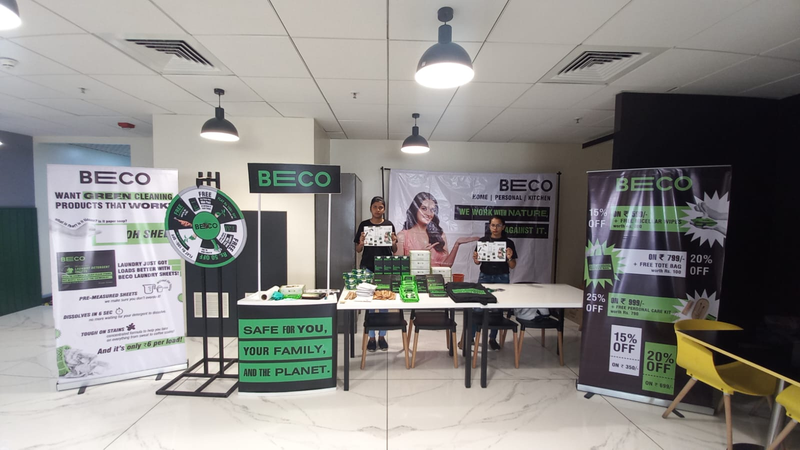
These terms overlap significantly but are not identical. BTL marketing is the broader category, all targeted, direct, measurable marketing activity below the mass-media line. Experiential marketing is a subset of BTL focused specifically on creating participatory, memorable experiences rather than transactional interactions. CupShup has staged this stunt activations across India.
A sampling station where a promoter hands out product is BTL. A pop-up environment where consumers cook with the product, document it on their phones, and share the experience on social media is experiential marketing. The distinction matters because experiential campaigns require greater creative and logistical investment, and generate higher brand recall and social amplification in exchange.
How Experiential Marketing Works in India
Residential and RWA Activations
Apartment complex events, branded morning yoga sessions, weekend cooking demonstrations, family-oriented installations, are among the most cost-efficient experiential formats in India. The audience is defined, trust is higher than in a public space, and organic word-of-mouth within the housing community extends reach beyond the event itself. CupShup's residential experiential campaigns show 15–30% organic social amplification, consumers attending the event sharing it with their housing group on WhatsApp or posting on Instagram, at no additional media cost.
For the mechanics of how RWA activations actually work, permissions, staffing, community engagement protocols, the guide covers the full operational picture.
Mall and Commercial Installations
Large-format experiential activations in high-footfall malls reach a diverse audience and generate significant consumer-generated content. The practical challenge is attribution, footfall numbers are easy to count, but the link between the experience and purchase is harder to track. Brands that build QR-based trial tracking or app-download flows into the activation experience solve this. The measurement architecture has to be designed before the installation is built, not retrofitted afterward.
Corporate and B2B Experiential
For brands targeting working professionals, corporate building lobbies and cafeterias offer a concentrated, demographically consistent audience. A health and wellness brand running morning sessions at corporate campuses in Bengaluru or Gurugram can reach 500–1,000 relevant consumers per location per day at a cost-per-contact that is difficult to match through digital channels targeting the same cohort.
How to Measure Experiential Marketing ROI
The measurement problem in experiential marketing is well-documented: campaigns produce impressive photographs and reach numbers but the commercial connection is thin, assumed rather than proven. The fix is not complicated, it requires building the measurement layer into the campaign design before execution.
Good measurement here borrows from performance marketing, not just event headcounts.
Primary Metrics
Direct trial count: the number of consumers who physically tried the product or service during the activation. Trackable through staffing counts or QR scan data. Cost per trial: total campaign spend ÷ trial count. India FMCG benchmark: ₹80–300 per trial depending on format and city tier.
Conversion rate: of the consumers who trialled, what percentage made a first purchase within 7, 14, and 30 days? Track through pincode-level sales data or QR redemptions.
Secondary Metrics
Social amplification (branded hashtag volume and consumer-generated content reach), brand recall lift (surveying consumers in the activation geography versus a matched control market at 30 days post-event), and distributor offtake by geography (sales velocity in activation pin codes versus matched non-activation markets).
For the full measurement methodology, including how to structure a matched-market test and what to report to stakeholders, the experiential campaign measurement guide covers the practical architecture in detail.
What Separates Good Experiential Marketing from Expensive Photos
The distinction is straightforward: good experiential marketing is designed around a consumer action, not a brand moment. The question at the design stage is not "what will this look like?" but "what will a consumer do because of this experience?"
If the answer is "they will take a photo and move on," the campaign needs a stronger conversion mechanism. If the answer is "they will trial the product, receive a discount, and have a reason to purchase within 48 hours," the campaign is designed for outcomes.
CupShup's approach to experiential campaign design starts with the conversion mechanism and works backward to the creative and logistical execution, resulting in campaigns that generate both the memorable brand moment and the measurable commercial outcome. Reach the team for a no-obligation category briefing.
From Meaning to Execution: Working With an Agency
Understanding the experiential marketing meaning is the start; the harder part is execution. Once the experiential marketing meaning is clear, that brands win attention by letting people participate rather than watch, the question becomes who builds it. That is where an experiential marketing agency comes in, translating the experiential marketing meaning into staffed, measurable campaigns across cities. A strong experiential marketing agency turns the definition into trial, leads, and recall. CupShup works as that experiential marketing agency, as in our Plum experiential activation case study, through our experiential marketing agency team.
Before you brief the activation, run the concept through the SEO keyword research tool to see what your audience is already searching for around the moment you're about to create.
Beyond the This format: The Full Spectrum of Experiential Formats
A such a performance is the most cinematic example of experiential marketing, but it is one format among many, and often not the right one for a given brief. The broader category includes pop-up stores (a temporary, fully-branded retail space), live product demonstrations, immersive brand installations (a themed room or corridor a visitor walks through), and hybrid phygital experiences that start on-ground and continue inside an app.
Matching the format to the brand objective
A this kind of activation works best for pure awareness and reach, since its entire value is in the surprise and the crowd reaction, which travels well on video. A pop-up store works better when the goal is trial and direct sales, because it gives people time to browse and decide rather than just react. An immersive installation suits brands with a strong narrative or IP (entertainment launches are the classic example) because it rewards visitors who spend more time exploring.
How CupShup Measures Experiential Marketing ROI
- Reach: total footfall plus organic video views generated from the moment.
- Engagement depth: average time spent at the activation, and percentage who completed the full experience.
- Attribution: percentage of participants who used a unique code, QR link, or WhatsApp opt-in to convert afterward.
- Brand lift: pre- versus post-activation surveys on recall and purchase intent within the activation city.
Most brands stop measuring at reach, which is the weakest signal of the four. A digital marketing agency in india that only reports footfall and impressions is not actually proving the activation worked, it is just proving people showed up. Attribution and brand lift are what connect the moment to revenue, and they are the numbers that should anchor every activation post-mortem.
Experiential Marketing Budgets: What to Expect at Each Scale
- Under 5 lakh: a single-city pop-up or campus activation, good for a category test.
- 5-20 lakh: a multi-venue city-wide push (mall plus RWA plus campus) over 2-3 weeks.
- 20 lakh+: a multi-city flagship activation with dedicated content production and paid amplification layered on top.
Budget alone does not determine success. A well-briefed 5 lakh campus activation with a tight attribution plan regularly outperforms a poorly measured 20 lakh multi-city push, because the difference is rarely spend, it is whether the moment was designed to be measured from day one.
The Question Every Brand Should Ask Before Booking a This stunt
Before committing budget to a this format or any experiential format, ask whether the goal is genuinely served by surprise and scale, or whether a quieter, trial-focused format would convert better. A such a performance is extremely good at one thing: making a brand look bold and generating shareable video. It is not, on its own, a strong direct-response format. Brands that need immediate sales lift are usually better served by a sampling or pop-up format; brands that need a reputation or awareness reset are the right fit for the this kind of activation format this article covers.
Frequently Asked Questions
What does experiential marketing mean in simple terms?
Experiential marketing means creating a real-world, participatory moment, like a this stunt, pop-up, or branded activation, that lets consumers interact with a brand directly instead of just watching an advertisement.
Is a this format a form of experiential marketing?
Yes. A such a performance is one of the most visible formats of experiential marketing because it creates a surprising, shareable, in-person moment that turns bystanders into active participants and content creators.
How is experiential marketing different from BTL marketing?
BTL marketing is the broader category of ground-level, non-mass-media activity. Experiential marketing is a subset of BTL that specifically prioritizes two-way participation over one-way sampling or distribution.
How do brands measure ROI on experiential marketing?
Brands measure experiential marketing ROI through direct trial counts, conversion rates, social amplification, and brand lift surveys comparing pre- and post-activation recall and purchase intent.
50 Integrated Marketing Campaign Ideas
The complete playbook with campaign frameworks, budget templates, and measurement guides for Indian brands.
Instant download + email copy. No spam, ever.
Explore CupShup Services
Brands that read this article also explored these services.
Brand Activation Agency India
400+ brand activations across India, from corporate campuses to RWA societies and malls.
Learn more ExperientialExperiential Marketing Agency
Immersive on-ground experiences that convert consumers into customers and brand advocates.
Learn more IntegratedIntegrated Marketing Agency
360-degree campaigns that blend offline activation with digital amplification for compounded ROI.
Learn moreGodhuli Vyas
Related Stories


Go Deeper with Our Free Guides
Comprehensive, in-depth marketing guides created by CupShup's experts.
The Ultimate Guide to Brand Activation
Everything you need to know about bringing your brand to life, strategies, examples, and frameworks.
The Ultimate Guide to Digital Marketing
Master every channel in the modern digital marketing ecosystem, from SEO to paid media.
The Ultimate Guide to SEO
The definitive guide to search engine optimization, on-page, technical, and link building strategies.