
On-Ground Activation in India: The Experiential Marketing Playbook

Quick answer: On-ground activation in India is real-world brand engagement, sampling, pop-ups, RWA drives, mall and campus activations, paired with digital tracking (QR codes, WhatsApp, lead forms) so every interaction converts into a measurable lead or sale. It works because experiential marketing builds trust faster than a paid ad, and a social media marketing agency can extend the reach of a single activation across the country within hours.
on ground activation is brand activation that happens in the real world: sampling, society programmes, roadshows, retail activation, and street-level campaigns. In a country as diverse as India, where culture changes every few kilometres, on ground activation is often the only way to reach and convert audiences mass media misses. This guide covers what on ground activation is, the formats that work, and how to run it so the spend is measurable. On-ground activation is experiential marketing at its most direct. Pair the activation with a social media marketing agency to amplify it online. The best digital marketing agency in india ties on-ground activation to online conversion.
What Is on ground activation?
on ground activation is the execution arm of brand activation. It puts the brand physically in front of the audience, in their neighbourhood, their commute, or their campus, and creates a moment designed to drive trial, leads, or sales. Where digital reaches screens, on ground activation reaches people. Experiential marketing turns a passer-by into a participant. A good social media marketing agency turns footfall into feed content. That is the mark of the best digital marketing agency in india: measurement across channels.
A tight brand strategy upfront makes every activation easier to measure.
The discipline is operationally heavy: promoters, fabrication, permissions, routing, and measurement all have to work together. That is why most brands run on-ground marketing through a specialist brand activation agency rather than in-house. The best experiential marketing in India blends physical moments with digital follow-up. As a social media marketing agency, CupShup keeps the buzz alive after the event. Shortlist the best digital marketing agency in india on attribution, not reach.
Why on-ground marketing Works in India
- Hyperlocal reach. India's micro-markets need local teams and languages.
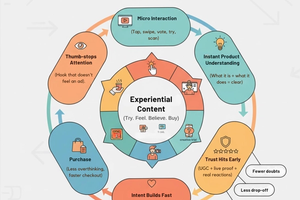
- High trust. A real-world experience builds belief faster than an ad.
- Measurable. Every contact can be captured for follow-up.
- Conversion-close. It meets people at or near the moment of purchase.
CupShup's Elevar on-ground marketing shows what disciplined execution plus measurement delivers. This is where experiential marketing beats a banner ad.
on-ground marketing Formats
- Product sampling -- Where: Malls, societies, markets; Best for: FMCG trial
- Society and RWA -- Where: Gated communities; Best for: Family reach
- Roadshows and canters -- Where: Tier 2 and 3; Best for: Multi-market reach
- Retail activation -- Where: In-store; Best for: Point-of-purchase conversion
- Campus -- Where: Colleges; Best for: Youth audiences
Experiential marketing gives brands proof, not just impressions.
From On-Ground to Digital
The best on-ground marketing does not end when the promoter leaves. Every captured contact flows into digital follow-up, so an in-person moment becomes a retargetable, convertible lead. Connecting on-ground marketing to performance marketing is what turns a one-day campaign into an ongoing funnel. CupShup runs experiential marketing across 50+ Indian cities.
A skilled social media team extends the activation online within hours.
How to Run on-ground marketing That Converts
- Start from the KPI: trial, leads, or sales.
- Pick the format that fits the product and audience.
- Build capture in with QR codes and lead forms.
- Add an incentive to drive immediate action.
- Measure cost per outcome, not footfall, and optimise by market.
Work With CupShup
CupShup runs on-ground marketing for 400+ brands across 50+ Indian cities, every campaign planned around a measurable result and wired to digital. Our brand activation team handles the execution and the measurement together.
Want on-ground marketing that is accountable to numbers? Talk to CupShup.
How Experiential Marketing Activations Actually Get Planned
Most brands start in the wrong place: they pick a venue before they pick a goal. A tighter process looks like this. First, define the one outcome that matters (leads, trial, app installs, or footfall to a specific store), because this approach that tries to do everything usually measures nothing well. Second, map the city and venue to the audience, not the other way around. A Tier-1 mall works for a premium D2C launch; a residential society activation works better for an FMCG sampling drive.
Third, build the capture layer before the activation, not after. QR codes on standees, a WhatsApp opt-in at the booth, and a promoter app that logs every conversation are what turn footfall into a database. Fourth, brief the ground team like a product launch, not a one-off event, complete with talking points, escalation paths, and a daily reporting cadence back to the client.
A CupShup example: Godrej Yummiez residential activation
For Godrej Yummiez, the brief was simple: get frozen snacks into hands in high-density residential societies across three metros. The team ran tasting counters at 40+ societies over three weekends, captured every interested household via a WhatsApp number, and pushed a same-week discount code. The result was a measurable jump in trial-to-purchase conversion that a billboard alone could never produce, because this approach let people taste the product before deciding.
On-Ground Activation Formats Compared
- Mall and retail activations: high footfall, best for impulse and trial-led categories like food and beverage.
- Residential society (RWA) drives: hyperlocal, ideal for FMCG sampling and insurance or fintech lead generation.
- Campus activations: reach Gen Z cheaply, strong for edtech, fashion, and fintech apps targeting first-time users.
- Corporate park activations: efficient for B2B SaaS demos and wellness or F&B brands during lunch hours.
- Transit and metro activations: broad daily reach, good for brand awareness campaigns with a strong visual hook.
Choosing the wrong format is the single biggest reason activation budgets underperform. A social marketing partner can amplify any of these formats after the fact, but the format itself has to match the buying behaviour of the category first.
Common Mistakes That Sink On-Ground Activation Budgets
- Choosing a high-footfall venue that does not match the buyer profile of the product.
- No pre-briefed capture mechanism, so most interested people are never actually recorded.
- Treating the promoter team as temporary labour instead of trained brand ambassadors.
- Measuring only footfall, never the 7-day and 30-day conversion from that footfall.
- No digital follow-up plan, so the activation ends the moment the booth is packed up.
Each of these mistakes is fixable at the planning stage, and fixing them is usually cheaper than the activation itself. These activations budgets are rarely wasted on the event; they are wasted on the gaps around it.
What a 90-Day Activation Calendar Looks Like
Brands that treat activation as a system, not a one-off event, typically run a rolling calendar: one flagship activation per quarter in a priority city, supported by two to three smaller pop-up or sampling drives in secondary cities each month. This keeps the brand present without exhausting the budget on a single big push, and it gives the CupShup ground team enough repetition in each city to build local relationships with venue owners and RWA committees that make future activations faster to execute.
City-by-City Activation Priorities in India
Not every city responds the same way to the same activation format, and brands that copy-paste a Mumbai playbook into Bengaluru or Lucknow usually underperform. Metro cities like Mumbai, Delhi NCR, and Bengaluru have high mall footfall and dense corporate parks, making them ideal for premium D2C launches and B2B activations. Tier-2 cities like Jaipur, Lucknow, and Indore respond disproportionately well to RWA and campus formats, where the novelty of a brand physically showing up still carries real weight, unlike in metros where consumers see activations constantly.
Regional language and cultural fit
A script that works in English for a Bengaluru tech park audience often needs a Hindi or regional-language adaptation for the same activation format in a Tier-2 city, not because the product changes, but because the trust signals do. CupShup's ground teams are briefed city by city on this, since a generic pan-India script is one of the fastest ways to make an activation feel like an outsider dropped in rather than a brand that understands the neighbourhood.
The Economics: Cost Per Qualified Lead by Format
- RWA sampling drives: typically the lowest cost per qualified lead for FMCG, since the audience is pre-filtered by geography and household income band.
- Mall activations: higher cost per lead but stronger for brand-building alongside direct response.
- Campus activations: very low cost per lead for youth-focused categories, but weaker purchase intent since college audiences convert slower.
- Corporate park activations: moderate cost, strongest for B2B and premium wellness categories with a working-professional buyer.
A brand activation agency that reports cost-per-lead by format, not just by city, gives a far clearer picture of where the next quarter's activation budget should actually go.
Frequently Asked Questions
What is on-ground marketing?
on-ground marketing is real-world brand activation, including sampling, society programmes, roadshows, and retail activation, designed to drive trial, leads, or sales and measured against a KPI.
How is on-ground marketing different from digital marketing?
on-ground marketing reaches people physically in their neighbourhoods and creates real-world trust and trial; digital reaches screens and scales reach. The strongest plans connect the two.
Why is on-ground marketing important in India?
Because India's micro-markets differ block to block in language, culture, and buying behaviour. Local, on-ground marketing reaches and converts audiences that mass media cannot.
How do you measure on-ground marketing?
Capture every contact with QR codes and lead forms, track cost per qualified outcome rather than footfall, and connect leads to digital follow-up for full-funnel measurement.
What formats does on-ground marketing include?
Product sampling, society and RWA programmes, roadshows and canters, retail activation, and campus activations, chosen to fit the product and target audience.
Plan the content calendar for your next activation with CupShup's AI content calendar tool, and check your existing pages with the SEO site audit tool before the campaign goes live.
How long does it take to plan an on-ground activation in India?
A single-city activation typically takes two to three weeks from brief to execution, covering venue booking, promoter training, and material fabrication. A multi-city rollout needs six to eight weeks for proper sequencing and local permissions.
Can experiential campaigns work for a B2B brand?
Yes. Corporate park activations, live product demos, and sponsored industry meetups are all experiential formats built for B2B, where the goal shifts from mass trial to depth of conversation with a smaller, higher-intent audience.
50 Integrated Marketing Campaign Ideas
The complete playbook with campaign frameworks, budget templates, and measurement guides for Indian brands.
Instant download + email copy. No spam, ever.
Explore CupShup Services
Brands that read this article also explored these services.
Brand Activation Agency India
India's leading brand activation agency, 400+ campaigns, pan-India reach, real-time dashboards.
Learn more ExperientialExperiential Marketing Agency
End-to-end experiential campaigns that create memorable brand moments and drive measurable ROI.
Learn more BrandBrand Strategy Services
Brand identity, positioning, and messaging frameworks built for competitive Indian markets.
Learn moreGodhuli Vyas
Related Stories

Go Deeper with Our Free Guides
Comprehensive, in-depth marketing guides created by CupShup's experts.
The Ultimate Guide to Brand Activation
Everything you need to know about bringing your brand to life, strategies, examples, and frameworks.
The Ultimate Guide to Digital Marketing
Master every channel in the modern digital marketing ecosystem, from SEO to paid media.
The Ultimate Guide to SEO
The definitive guide to search engine optimization, on-page, technical, and link building strategies.