
How to Plan a 360° Campaign That Actually Feels Coherent
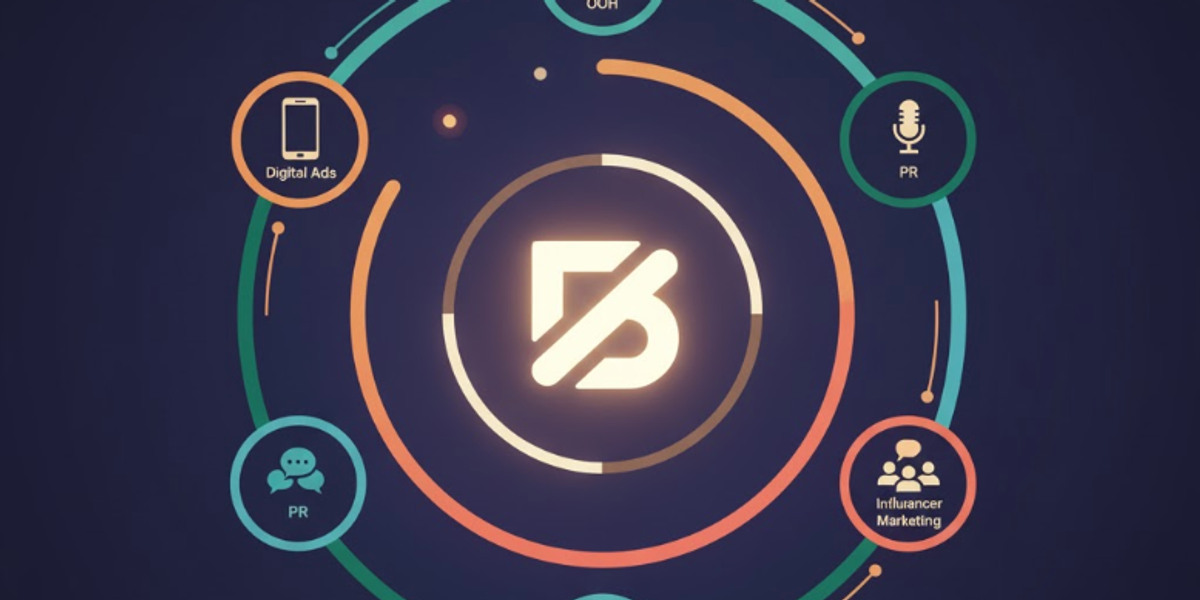
There’s this running joke in our office. Every time someone says, “Let’s do a 360° campaign", Maaz quietly mutters, “Bas, ab merry-go-round shuru ho gaya". And honestly, he’s not wrong.
Searching for an integrated marketing agency that connects online and offline seamlessly? CupShup delivers unified campaigns that combine digital precision with on-ground impact for maximum brand reach.
Because somewhere along the way, 360° campaign became marketing lingo for “Let’s do everything, everywhere, all at once". One hoarding here, a few Reels there, maybe a pop-up if we’re feeling fancy, and boom, we call it integrated.
But here’s the truth: a 360° campaign isn’t about being everywhere; it’s about being everywhere with intent.
At CupShup, we’ve learnt this the hard, hilarious, and high-energy way. Campaigns that work don’t shout from twelve directions; they hum one clear, coherent tune.
Let’s decode how to plan a 360° campaign that doesn’t feel like a patchwork quilt but like a great Bollywood montage, fast, emotional, memorable, and in perfect sync.
So, What Exactly Is a 360° Campaign (And Why Should Anyone Care)?
A 360° campaign is basically your brand’s universe, one story told across all relevant touchpoints. It’s when your OOH billboard, your influencer’s post, your store branding, and your digital ad all feel like they’re cousins from the same family, not random strangers at a party.
According to Forbes, 360° marketing is about “engaging customers across all touchpoints with a unified message". Smart Insights adds that such integration boosts familiarity, recall, and conversions.
In plain speak, when people see your brand, they should instantly go, “Ah, this feels like them". That’s coherence.
And as we often say, “Yaar, consistency doesn’t mean boring. It means recognisable. Like Shah Rukh’s arms-out pose, different movies, same magic".
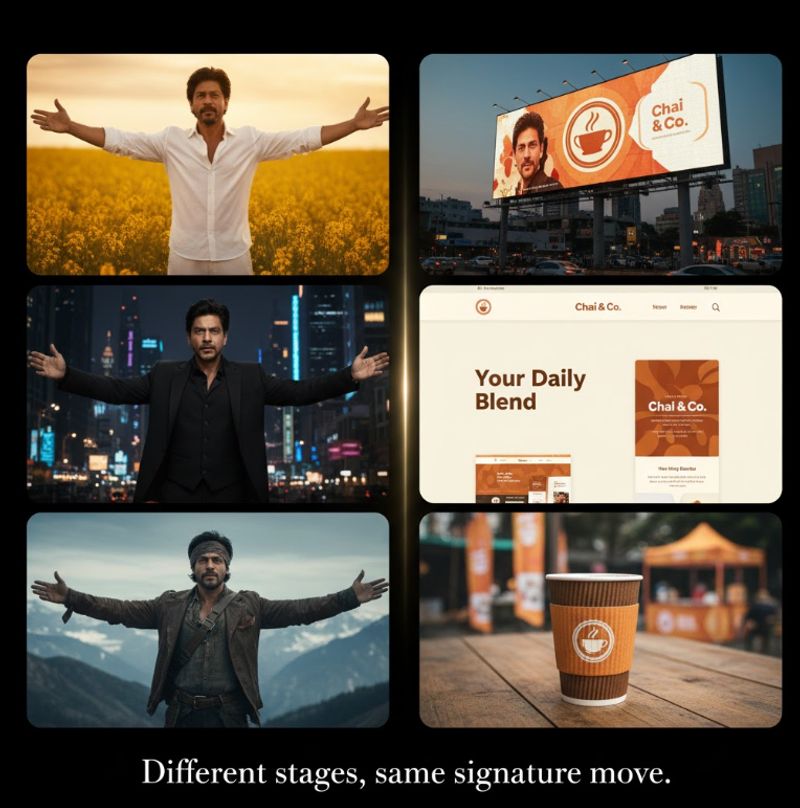
A coherent 360° campaign isn’t about brand fatigue; it’s about brand familiarity. It’s that feeling your audience gets when your voice, visuals, and energy click instantly across every platform.
360° Campaign vs Integrated Marketing vs Omnichannel: What's the Difference?
If you've been in marketing long enough, you've watched three terms get used interchangeably — 360° campaign, integrated marketing, and omnichannel. They're related, but they're not the same, and the difference actually matters when you're pitching a campaign idea or signing off a brief.
360° campaign — the campaign unit
A 360° campaign is a specific, time-bound push: one big idea expressed across every relevant touchpoint for a defined window. Think Cadbury's "Kuch Meetha Ho Jaaye" during a festive season, or Swiggy's "Match-Day Cravings" over an IPL month. A 360° campaign has a start date, an end date, and a single narrative arc. When the window closes, the campaign ends. The framework below is specifically for building one.
Integrated marketing — the discipline
Integrated marketing (or integrated marketing communications) is the ongoing discipline of making sure every marketing output — across every campaign, every quarter — feels like it comes from the same brand. It's the operating system. 360° campaigns are one output of that operating system. Without IMC as the underlying practice, your 360° campaigns will contradict each other from one season to the next.
Omnichannel — the customer experience layer
Omnichannel is about the customer-side experience: can someone pick up the journey seamlessly across your app, your website, your store, your support channels, and your email — without starting over each time? Omnichannel is more about data plumbing and journey continuity than about message coherence. A brand can be omnichannel-ready and still run incoherent 360° campaigns (and vice versa).
The practical hierarchy
Think of it as nested. Omnichannel is the plumbing. Integrated marketing is the discipline that flows through the plumbing. A 360° campaign is one expression of that discipline, pressurized into a specific window to drive a specific action. You need all three to win, but you can start with the 360° campaign unit — it's the tangible thing that actually ships.
Step 1: Start with the Brand Truth (and Don’t Skip Homework)
Before jumping into channels and creative madness, we always ask three questions:
- Who are we?
- Who are we talking to?
- What do we want them to do after seeing this?
Sounds basic, right? But it’s amazing how many campaigns skip this step and jump straight into the “We need a viral idea” pool.
When we plan at CupShup, everything begins with our brand truth, the thing we stand for: Marketing That Moves. Whether it’s a chai cup, a meme, or a full-blown city takeover, every piece should spark a conversation, not just an impression.
Here’s a truth we swear by: the deeper you know your audience, the easier it is to connect the dots. It’s not about finding what to say, but how they want to hear it.
As Yuvana puts it while sketching content calendars, “We’re not marketing to an audience; we’re joining their conversation mid-sentence".
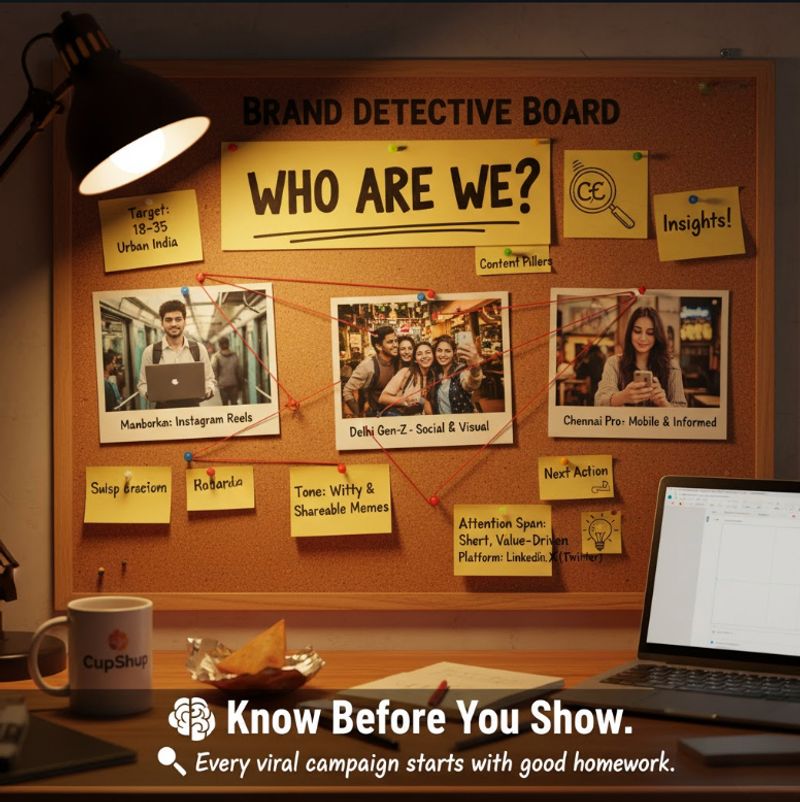
Pro tip: Build regional personas, not just “Indian audience". A Mumbaikar’s attention span is five seconds and traffic jam long. A Delhi college-goer wants fun, not FOMO. Know them like you’d know your favorite chai tapri owner.
Also, revisit your brand truth before every big idea. Even great campaigns lose direction when they drift away from their core.
Step 2: Audit Before You Add
Before launching anything new, we run what Sidharth calls our “sanity audit". It’s literally him asking, “Wait, do we even need another platform?”
A 360° campaign isn’t about quantity; it’s about fit.
Map your current ecosystem - social, events, PR, digital, influencers. Then overlay it on your customer journey (Awareness → Consideration → Decision → Retention).
Where are you strong? Where are you missing? That’s your cue.
A good audit keeps you from falling into the “channel-hopping” trap. Too many brands jump from trend to trend without asking if it fits the story they’re telling.
Pro tip: Don’t just copy-paste content across platforms. Keep your soul consistent, not your sentence.
Step 3: Map the Customer Journey (And Those Tiny Micro-Moments)
Your audience doesn’t sit still. They scroll on the metro, sip chai at work, and shop online during lunch. A great campaign meets them there, at those mini-moments.
That’s how coherence feels, seamless, not forced.
Like when we worked on the Flipkart Minutes launch. Instead of giant billboards, we started small - chai stalls, apartment gates, tech parks. As Krithika said then, “Start where people live, lift, snack, and scroll".
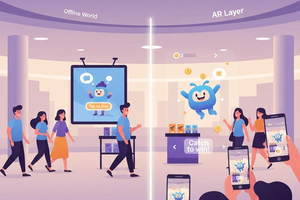
The magic? Each of those offline moments was designed to trigger an online one, QR scans, social shares, hashtag trails. The campaign didn’t just live on the streets; it lived on timelines too.
These micro-moments often create macro results. When people encounter your brand organically throughout their day, the connection feels natural, not staged.
Pro tip: Think of micro-moments as chai breaks for your brand, short, warm, and memorable.
Step 4: Pick Your Channels (And Make Them Sing in Sync)
Every brand doesn’t need to be everywhere. You just need to be unforgettable wherever you are.
When we plan a 360°, we create a channel map:
- Primary channels - the heartbeat (social, OOH, experiential).
- Secondary channels - the amplifiers (emailers, PR, influencer collabs).
And every single one of them tells the same story in different accents.
During Lee’s “Boxer’s Challenge", their on-ground dares, influencer Reels, and in-store vouchers were all stitched together with one line, “Real Denim Comfort". The stunt was bold, but the message? Crystal clear.
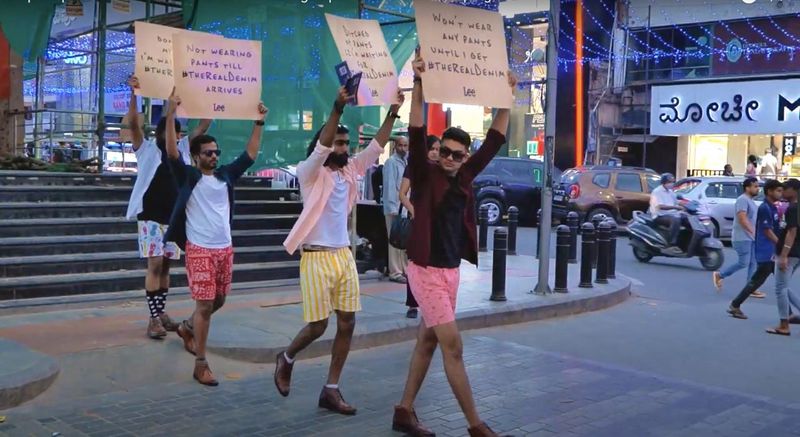
When everything ties back to one central theme, even the wildest creative feels intentional.
Pro tip: Treat every channel like an instrument in your band. Your billboard is the drumbeat. Your social media is the melody. Your PR, the chorus everyone hums. Keep them in rhythm.
Step 5: Execute Like a Symphony (Not a Flash Mob)
This is where campaigns usually go off the rails, everyone’s moving fast, but not together.
We call this “The Flash Mob Problem". Looks fun from afar, but up close? Pure chaos.
Execution is where the real coherence is built.
Every asset, tone, caption, and creative should be aligned. Visuals should echo the same energy. Copy should sound like one unified voice.
Sidharth once joked during a launch, “If our hashtag doesn’t talk to our QR code, we’ve failed". And honestly? He’s right.
Pro tip: Build “offline-to-online triggers". Every physical moment should point to a digital one, scan this, tag that, share this. If people can’t take your offline story online, it’s half-baked.
Also, always plan an “adaptive window” in the first two weeks post-launch. Adjust fast if something’s not hitting. Campaigns that move with the audience always outperform static plans.
Step 6: Measure, Learn, Repeat (Like a Ritual)
The best 360° campaigns don’t end when the budget runs out. They evolve.
Read next: Integrated Marketing Communications (IMC): Complete Guide..., The Forgotten Art of Post Campaign Integration, and How to build a 360° campaign brief (templates included).
Divyanshu and Surya, our resident data whisperers, track every metric imaginable. CTRs, reach, sentiment, footfall, conversion, even how many times someone scanned a cup QR after midnight.
Their motto? “Numbers don’t lie, but they do gossip".
By tracking every touchpoint, we figure out what’s working, what’s overperforming, and what’s just vibing without results.
Pro tip: Set weekly checkpoints to tweak creative and media spends. Real-time agility beats post-mortem analysis.
A 360° campaign without measurement is like a GPS with no signal. You’re moving, but you have no idea where.
360° Campaign Examples That Worked (India)
Frameworks are only useful if they survive contact with a real brief. Here are three India 360° campaigns — two executed by CupShup, one that any marketer will recognize — that each pass the six-step test.
Swiggy × IPL: one craving, every channel
Swiggy's match-day push during the IPL is a textbook 360° campaign. The brand truth (instant gratification) was expressed through TV spots during the match, YouTube pre-rolls for highlights, contextual notifications when a wicket fell, OOH hoardings outside stadiums, in-app discount layers tied to IPL moments, and creator content that riffed on match events in real time. Every channel said the same thing — "the craving won, order it" — but in its own format. The window was one IPL season. The result was 3–4× the order frequency of non-IPL months across the 70 cities where the campaign ran.
Beco × CupShup: launching compostable packaging as one story
When Beco launched their compostable packaging range, we ran the playbook above. Brand truth: "planning beats plastic." Channel map: premium residential experiential marketing activations in Mumbai and Bangalore (100,000+ homes reached), creator amplification across eco-Instagram and zero-waste YouTube, performance retargeting of everyone who touched the activation via Meta and Google. Each channel reinforced the same narrative in its own voice, sequenced across a six-week window. The outcome: 3× the engagement of Beco's previous siloed launches and 40% trial-to-repeat on the first SKU — both metrics the brand had never hit on a product launch before.
Lee's Boxer's Challenge: on-ground dares wired into digital buzz
Lee's "Boxer's Challenge" turned on-ground dares at college campuses into an integrated content engine. The challenge itself was BTL — students taking dares in Lee's apparel at activation points in 20+ campuses, the kind of brand campaigns work we run often. But the campaign was wired so that every dare was filmed and cut into reels within 24 hours, influencer ambassadors amplified the best clips, the brand website served a dare-tracker with a live leaderboard, and in-store vouchers rewarded every participant. One stunt, four amplification layers, synchronized. The campaign delivered a 2.2× lift in college-cohort brand recall over six weeks — measured against a pre-campaign survey baseline.
The common thread across all three: the campaign unit (the 360°) worked because the brand truth was clear, the channel map was deliberate, and the timing was orchestrated. None of these brands ran "everywhere, always". They ran everywhere relevant, together, for a defined window, with one story. If you'd rather hand the orchestration to a partner who does this daily, our 360° marketing services bundle the strategy, channel ops, and measurement into one team.
Three Must-Haves for True Coherence
Frameworks pick channels. Pillars keep them honest. Three things separate a campaign that feels unified from one that just happens to have a lot of touchpoints.
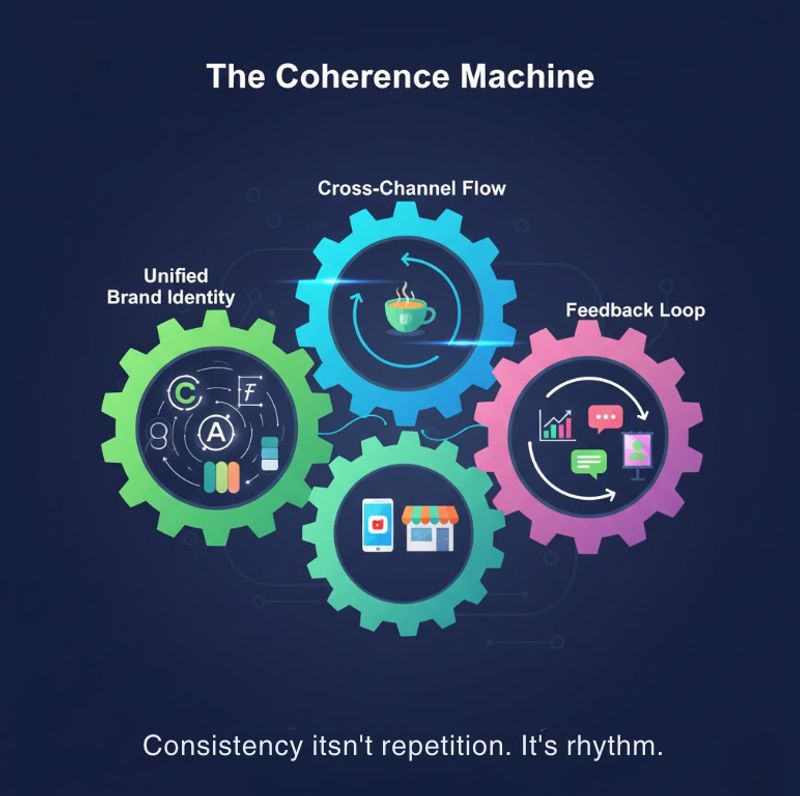
Unified Brand Identity
Every visual, colour, font, and tone should scream you. At CupShup, #00A979 isn't just a colour; it's a personality trait. It's the green that ties together our chaos and confidence.
Cross-Channel Flow
The consumer should be able to move effortlessly between touchpoints. From a chai cup to a Reel to a store to an Insta ad, one smooth ride.
Feedback Loop
Campaigns should breathe. Monitor, adjust, evolve. Because what works in Mumbai might flop in Pune by next week.
360° Marketing Campaign FAQs
What is a 360° marketing campaign?
A 360° marketing campaign is a coordinated marketing push where one big idea is expressed across every relevant touchpoint — TV, digital, social, OOH, experiential, retail, email — within a defined window. The goal is a unified customer experience where the story is recognizable regardless of where the audience encounters it. "360°" refers to the full customer surround, not literally every channel on the planet.
How is a 360° campaign different from integrated marketing?
A 360° campaign is a time-bound unit. Integrated marketing is the ongoing discipline that makes 360° campaigns possible. IMC is the operating system; a 360° campaign is one file running on it. You can run a 360° campaign without having IMC in place, but the next one will likely contradict the first.
How long should a 360° campaign run?
Most effective 360° campaigns run four to twelve weeks. Shorter than four and the second wave of channel activations can't ladder on top of the first; longer than twelve and either the budget burns out or the message starts competing with itself. Seasonal campaigns (IPL, Diwali, back-to-school) naturally fit in this window.
What channels belong in a 360° campaign?
Only the channels where your audience actually is. A 360° campaign for a Gen Z fashion brand might be heavy on Instagram, YouTube Shorts, campus activations, and influencer content — and completely skip print or radio. A 360° campaign for an insurance product might lean on TV, performance display, advisor-led activations, and email. The point isn't to use every channel; it's to use every relevant channel, together.
How do you measure the ROI of a 360° campaign?
Measure across three layers. Reach (did the message land — impressions, reach, frequency by channel). Engagement (did it stick — time spent, shares, QR scans, footfall, creator earned media). Conversion (did it convert — UTM-tagged traffic, redemption codes, trial-to-repeat, multi-touch attribution through a platform like HubSpot, Ruler Analytics, or Google Analytics 4). Cross-channel attribution is where 360° measurement gets hard — use post-purchase surveys and geographic holdout tests to fill the gap your tracking pixels can't see.
How much does a 360° marketing campaign cost in India?
A credible mid-market 360° campaign in India runs between ₹15 lakh and ₹2 crore depending on scale, geography, and whether ATL is included. Digital-only 360° campaigns (performance + social + creators + CRM) can run effectively at ₹15–40 lakh. Adding experiential activations pushes it to ₹40 lakh–₹1 crore. Adding ATL (TV, OOH at scale) takes it above ₹1 crore. The biggest cost mistake brands make is not the top-line budget — it's splitting the budget across vendors who don't talk to each other, which destroys the coherence the campaign was supposed to deliver.
Why Brands Choose CupShup as Their Integrated Marketing Agency
CupShup isn't just another integrated marketing agency — we bridge the gap between digital and physical marketing using AI-powered campaign orchestration. From hyperlocal activations to national digital campaigns, our integrated approach has powered 10,000+ campaigns across 300+ cities with measurable results at every touchpoint.
Inside CupShup: Where Chaos Meets Chemistry
If you’ve ever sat in our brainstorms, you’d know it’s equal parts genius and madness. Someone’s doodling storyboards, someone’s arguing about fonts, someone’s chasing chai.
That’s how ideas brew here, loud, layered, and laser-focused.
Yuvana calls it “structured jugaad". Maaz says it’s “creativity with caffeine". Either way, it works.
Because when everyone’s thinking from their lens, marketing, tech, data, storytelling, the end product feels more real.
And that’s what makes campaigns like Flipkart Minutes or Lee’s Boxer’s Challenge hit different. They don’t just “go viral”; they feel alive.
Pro-Level Tips We Swear By
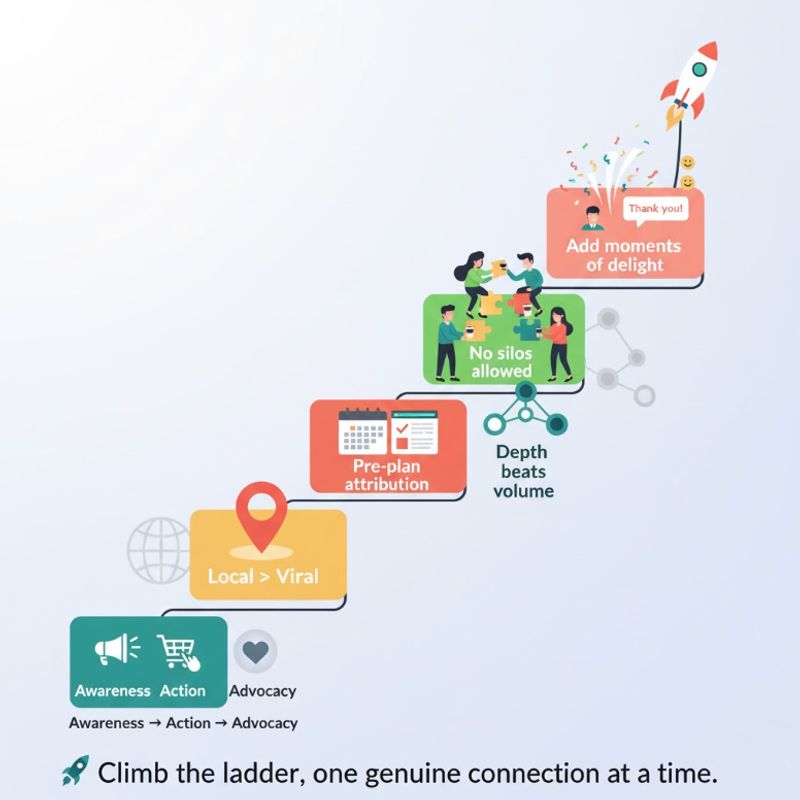
- Build a behavior ladder. Awareness → Action → Advocacy. Every channel should climb that ladder differently.
- Local > Viral. If people in one neighbourhood love you, virality will follow.
- Pre-plan attribution. Know what you’ll measure before you post.
- Depth beats volume. Three powerful channels are better than ten half-hearted ones.
- No silos allowed. Your sales, ops, and marketing teams should speak the same brand language, not subtitles.
- Add moments of delight. A surprise coupon, a thank-you DM, a behind-the-scenes blooper, small touches make campaigns feel human.
The CupShup Way
We don’t believe in campaigns that just exist; we believe in campaigns that move.
From cups to conversations, chai stalls to social feeds, we connect the offline and online worlds like it’s second nature.
Because at the end of the day, coherence isn’t about control; it’s about connection. And when every touchpoint tells the same story, your audience doesn’t just remember your brand; they relate to it.
Final Sip
A good 360° campaign is like cutting chai, strong, balanced, and leaves you wanting more.
It’s not about how loud you shout, but how smoothly your story flows. When done right, people won’t just see your campaign, they’ll feel it.
And that’s when marketing stops being advertising and starts being art.
Ready to brew your next big idea?
Let’s create something that doesn’t just turn heads, but starts conversations. Connect with CupShup, and let’s plan your next 360° campaign that actually feels coherent.
Get Started with CupShup Today
Ready to see real results? Book a Free Integrated Marketing Strategy Call → Join 500+ brands that trust CupShup.
50 Integrated Marketing Campaign Ideas
The complete playbook with campaign frameworks, budget templates, and measurement guides for Indian brands.
Instant download + email copy. No spam, ever.
Frequently Asked Questions About 360-Degree Marketing Campaigns
What is a 360-degree marketing campaign?
A 360-degree marketing campaign is an integrated approach that uses multiple channels and touchpoints to deliver a unified brand message to consumers. It combines ATL media (TV, print, OOH), BTL activations (events, sampling, in-store), digital channels (social media, email, search), and PR to create a seamless brand experience. The goal is to surround the consumer with consistent messaging at every stage of their journey.
How do you plan a 360 campaign on a limited budget in India?
Planning a 360 campaign on a limited budget requires prioritising channels with the highest ROI for your target audience. Start with a strong digital and social media foundation, then add selective BTL activations in high-impact locations. Use influencer seeding for organic reach and focus on cities or regions with the highest revenue potential. CupShup helps brands optimise 360 campaigns across budget tiers, ensuring maximum impact per rupee spent.
What are the key components of a successful 360 marketing campaign?
A successful 360 marketing campaign needs a clear core message, defined target audience segments, channel-specific creative assets, a unified campaign calendar, and integrated measurement across all touchpoints. The campaign should have a strong anchor idea that translates across channels while adapting to each platform's strengths. Post-campaign analysis across all channels is essential for optimising future campaigns.
How long does it take to plan and execute a 360 campaign?
A typical 360 campaign requires 6-8 weeks for planning and creative development, followed by 4-12 weeks of execution depending on scope. Quick-turn campaigns can be planned in 3-4 weeks if the brand has clear objectives and existing assets. Multi-city campaigns in India generally need 8-10 weeks lead time to coordinate logistics, permissions, and vendor partnerships across locations.
360 Campaign Planning: Related Resources
Explore more about 360-degree campaign planning with these related resources from CupShup.
Brand Strategy Services
Strategic planning for integrated brand campaigns
Media Planning Services
Data-driven media planning across ATL, BTL, and digital
How to Build a 360 Campaign Brief
Step-by-step guide to writing an effective campaign brief
Kota Factory Integrated Campaign
How an integrated 360 campaign drove massive engagement
Explore CupShup Services
Brands that read this article also explored these services.
Integrated Marketing Agency
360-degree campaigns that connect offline activations with digital amplification for compounded ROI.
Learn more BrandBrand Strategy & Positioning
Brand architecture, positioning frameworks, and messaging strategy for market differentiation.
Learn more AIAI Digital Marketing Agency
AI-powered campaign strategy, content, and performance optimization for growth-stage brands.
Learn moreAakriti Mishra
Senior Marketing Strategist at CupShup with over 8 years of experience in brand activation and integrated marketing campaigns. Aakriti specializes in creating data-driven strategies that deliver measurable results for modern brands.
Related Stories
Go Deeper with Our Free Guides
Comprehensive, in-depth marketing guides created by CupShup's experts.
The Ultimate Guide to Brand Activation
Everything you need to know about bringing your brand to life, strategies, examples, and frameworks.
The Ultimate Guide to Digital Marketing
Master every channel in the modern digital marketing ecosystem, from SEO to paid media.
The Ultimate Guide to SEO
The definitive guide to search engine optimization, on-page, technical, and link building strategies.