
Content Marketing Brand Positioning Guide: Master Digital Content Marketing
If marketing were a game of musical chairs, brand positioning is how you make sure your brand not only gets a chair but also makes it the most comfortable, quirkiest, and Instagram-worthy one in the room.
Quick answer: brand positioning is the place your brand holds in a customer's mind compared with competitors. You build it by choosing who you serve, what you stand for and why you are different, then saying it the same way everywhere.
Looking for a brand communication agency that makes your message land? Cupshup blends AI-led insights with creative storytelling, drawing on 10 years and 400+ brands to help brands craft communications that resonate, engage, and convert.
When I first started writing for brands, I thought a catchy line and a trending hashtag were enough. But as Maaz once told me over chai, “Ek line likhna alag hai, ek brand ke liye kursi banani alag”. And he was right. Positioning is about building that chair before the music even starts.
In today’s world of modern marketing and growth marketing, where D2C startups mushroom faster than momo stalls, FMCG giants guard their legacies like Bollywood’s 90s heroes, and fintechs chase Gen Z wallets, positioning isn’t just about being visible. It’s about being unforgettable.
Think of positioning as a GPS pin in your customer’s mind. Without it, you’re just another chai tapri on a crowded street; present, yes, but not the one people take a detour for.
What is brand positioning?
Brand positioning is the space your brand occupies in your customers' minds. It answers one question: why should this person pick us over the other options? Strong positioning is specific. It names a customer, a benefit and a reason to believe, and it stays the same across your ads, packaging, website and sales conversations.
The 3 Cs of brand positioning
- Company: what you are genuinely good at and what you stand for.
- Customers: who you serve, what they need and what they care about.
- Competitors: what the alternatives offer and where they are weak or crowded.
Your position sits where all three overlap: something customers want, that you can deliver, that competitors do not already own.
How to write a brand positioning statement
A positioning statement is an internal sentence that keeps every team saying the same thing. A simple template is: "For [target customer], [brand] is the [category] that [key benefit] because [reason to believe]." To write yours:
- Pick one target customer, not everyone.
- Name the category you compete in, as customers would describe it.
- Choose the single benefit that matters most to that customer.
- Add proof: a feature, a result or a fact you can back up.
- Test it against competitors. If a rival could say the same sentence, sharpen it.
An illustration: "For busy urban parents, this snack brand is the healthy snack that kids actually finish, because it is made with whole grains and no added colours." The brand and numbers are made up; the structure is what matters.
Brand positioning examples
- Coca-Cola: positioned around happiness and shared moments rather than the drink itself, which keeps the brand relevant across ages and countries.
- Amul: positioned as affordable, everyday Indian dairy with a friendly, witty voice, most visible in its topical hoardings.
- Apple: positioned on simplicity and premium design, so it can charge more and still feel desirable.
Common positioning strategies
- Price: the most affordable or the most premium in the category.
- Quality or benefit: the best at one thing, such as taste, speed or durability.
- Use case: the obvious choice for a specific situation.
- Competitor: defined against a rival, such as the challenger to the market leader.
- Emotion or values: owning a feeling or a belief, as Coca-Cola does with happiness.
Why Brand Positioning Matters More Than Ever in Modern Marketing
With so many D2C brands chasing the same eyeballs, the market is noisier than Mumbai’s Western Express Highway at rush hour. Add skyrocketing ad costs, influencer fatigue, and audiences who scroll faster than you can say “swipe up”, and standing out has become a survival skill in growth marketing.
Here’s the hard truth:
- In India, positioning has to be both national and hyperlocal. What works in Delhi NCR can flop in Coimbatore if you don’t get the context right.

Sourav nailed it once when he said, “Positioning isn’t the tagline you put on a hoarding; it’s the space you win in someone’s dimag”.
Pro tip: Don’t confuse a tagline with positioning. Taglines are like fashion trends; positioning is your personal style. Zara can change every season, but a classic kurta always works.
The Playbook: How Brands Carve Their Spot
1. Own an Emotion, Not Just a USP
Products can be copied. Emotions? Much harder. Customers don’t remember your battery life or thread count. They remember how you made them feel.
Nike doesn’t sell shoes; it sells goosebumps. Amul doesn’t sell butter; it sells ‘ghar ka swaad’. Paper Boat took on global beverage giants by selling ‘nostalgia’ in a bottle. These brand positioning examples share one trait: a single emotion, owned consistently.
At Cupshup, our emotion is momentum. From chai cup branding to guerrilla posters sparking LinkedIn debates, we sell the thrill of being part of something happening.
Pro insight: Don’t chase vague emotions. Coca-Cola already owns that. Sharpen your emotional edge - rebellion, nostalgia, progress, or belonging.
2. Hyperlocal > Hyperbole
One big mistake? Believing scale and local relevance can’t co-exist. But the brands winning in India are the ones that sound like they grew up in your gali.
Zomato’s Hinglish push notifications worked not because they were witty but because they felt like your foodie dost texting you at 1 a.m. Spotify India’s “Top Songs in Delhi vs. Chennai” playlists tapped into regional pride beautifully.
Hyperlocal doesn’t mean just slapping Hindi into a copy. It’s about context. You can’t run a Diwali ad during Onam with banana leaves in the background and call it ‘local’.

Cupshup thrives here. Our chai-stall campaigns aren’t just offline activations. They’re designed to become WhatsApp forwards, Insta Reels, and LinkedIn debates. Surya, who swims in campaign metrics all day, once laughed and said, “We make micro-moments engineered to become macro online”.
Senior marketer trick: Always design for offline intimacy and online amplification. That poster you stick outside a college? Its real ROI isn’t 200 students, it’s 20,000 people when it becomes a meme.
3. Leverage Cultural Stunts for Serious Recall
There’s advertising. And then there’s theatre; the kind of stunts that etch your brand into pop culture.
Red Bull didn’t just sponsor Felix Baumgartner’s jump from space. It made its brand philosophy “Red Bull gives you wings” literally come alive. Fevicol didn’t just show glue; it showed “stuck forever” in cricket ads that only Indians would truly get.

Cupshup’s rule is simple: stunts should come from your brand’s DNA. A fintech startup streaking at an IPL match? Forgettable. The same fintech running chai-stall crypto literacy sessions? Relatable, sharable, and PR-worthy.
Divyanshu, once sighed, “PR ka ROI Excel sheet pe nahi dikhata, but trust me, it’s the one number that sticks”.
Pro tip: Don’t judge stunts only by footfall. Look at PR coverage, memeability, and Google search spikes. If your campaign doesn’t travel to WhatsApp groups or Reels, it never really left the room.
Also, smart brands now use AI and automation tools to predict which cultural trends are about to explode. It’s not just creativity anymore, it’s creative intelligence.
4. Stay Nimble with Micro-Content
Attention spans today are shorter than a rickshaw meter jump. That’s less time than your mom takes to ask “Beta, khaana khaya?”
The answer is micro-content. Swiggy nails it with snackable 10-second ads that are funny and memorable. Netflix India floods social feeds with meme-style posts people share without even realising it’s marketing.

Read next: Humanise the Machine: How to Give Your Brand Real Persona..., Storytelling in Marketing: What Actually Works, and How to Build Brand Trust in a Distrustful World.
Cupshup’s approach? Every cup, booth, or poster is built to double as content. People don’t share ads, they share jokes, memes, and moments. If we can disguise a campaign as a shareable thing, we’ve cracked it.
Experienced tip: Put your punchline up front. Deliver value in three seconds. Keep the branding subtle. Remember, people forward memes, not ads.
And if you’re smart about AI, you can personalise even short content. AI-driven editing tools, predictive analytics, and automated distribution are reshaping modern marketing, making campaigns faster, sharper, and more measurable than ever.
Lessons for Brand Managers in Growth Marketing
Over time, we’ve noticed positioning headaches differ depending on the brand type:
- D2C Brand Managers → Your CACs are climbing like onions in July. Guerrilla hacks, UGC-friendly campaigns, and offline stunts that spark digital chatter are your best friends.
- Legacy FMCG Managers → You’ve got the budgets. Use them to scale activations that feel personal but create national buzz. Don’t obsess over GRPs; watch for buzz metrics instead.
- Startup Leads → Thought leadership blogs are great. But your LinkedIn posts need to be punchier than Reels.
- Regional Custodians → Translation isn’t localisation. A Malayalam festival deserves more than a Hindi slogan pasted in English fonts.

Sidharth, our tech whisperer, once told me, “If your brand positioning can’t survive in a meme or a reel, it’s not future-proof”. And honestly, he’s spot on.
Golden rule: Tie your positioning back to business outcomes. Awareness without attribution is like karaoke - you’re making noise, but nobody’s paying for the show. Any brand strategy agency worth hiring will ask for that link on day one.
Brand Positioning Examples From the Field: How Vicco Became a Family Favourite Again
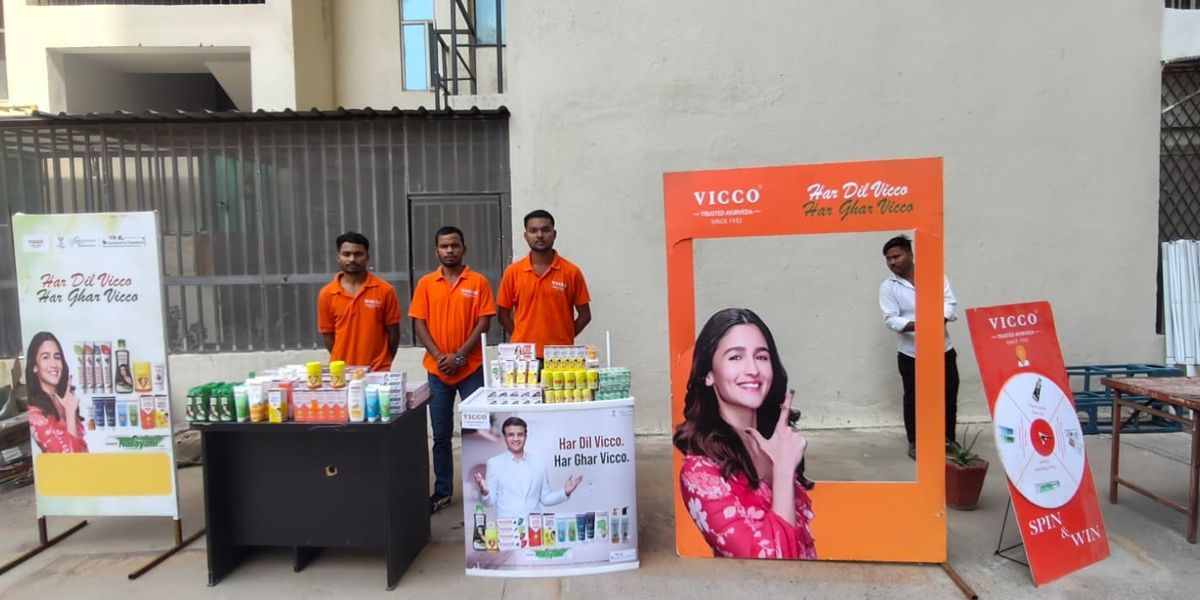
Good brand positioning examples are easier to find in boardrooms than on the ground, which is why Vicco is worth a closer look. It was a familiar household name that was starting to fade. Cupshup took the brand into 30+ high-engagement societies, with multi-generational family experiences and real community connections, so people rediscovered it in their own neighbourhoods in a crowded personal care category.
Vicco's activation in a residential society
The lesson for brand positioning is simple. Vicco didn't need a new promise. It needed to be rediscovered where families already gather, by every generation at once. That is positioning as something people experience, not something they read on a hoarding.
What Makes Brand Positioning Examples Worth Copying?
The brand positioning examples worth copying share three traits: one clear idea, a place where the audience already is, and proof that shows up in behaviour, not just in a tagline. Vicco ticks all three, which puts it next to the Nike and Amul examples above.
Do You Need a Brand Strategy Agency to Get Positioning Right?
A brand strategy agency earns its fee by forcing the choice you keep postponing: who you are for, and who you are not for. A good brand strategy agency also tests that choice on the street before it goes on a hoarding. That is the brief we work to across 400+ brands.
Once the positioning is set, test the message. Our free AI Ad Copy Generator writes brand-voiced ad copy for Meta, Google and LinkedIn from one brief, with up to 5 A/B variations per platform.
If you want a brand strategy agency that tests positioning in the real world, talk to our Brand Strategy team.
Tell us where your brand needs to stand out and we'll show you how. Let's talk.
Wrapping It Up
Brand positioning in crowded markets isn’t about being the loudest. It’s about whispering the right thing, in the right ear, at the right time.
At Cupshup, this is what we live by. From cups to conversations, chai tapris to trending hashtags, we don’t just help brands find a seat at the table. We make sure it’s the seat everyone wants.
Krithika always says, “Positioning is less about the logo on the hoarding and more about the feeling in someone’s dil.” And that, I believe, is where the magic really happens.
Final Sip
If you’re a brand manager, founder, or marketer wondering how to carve your spot in this crowded market, here’s your takeaway:
Don’t try to shout over the noise. Be the voice people actually want to listen to. Mix creativity with AI and automation, local relevance with hyperlocal thinking, and offline storytelling with omnichannel reach.
And if you’re stuck figuring out how to do that, maybe it’s time we had a cup of chai together.
Let’s brew something unforgettable.
Ready to Get Started? Talk to Cupshup
Whether you're planning a high-impact campaign or looking for a brand communication agency that delivers real results — Cupshup's team is ready to help. Book a Free Brand Communication Strategy Call →
Frequently asked questions
What is brand positioning?
Brand positioning is the place your brand holds in customers' minds compared with competitors, based on who you serve, what you offer and why you are different.
What are the three Cs of brand positioning?
Company, customers and competitors. Your position sits where what you do well, what customers want and what rivals leave open overlap.
What is Coca-Cola's brand positioning?
Coca-Cola positions itself around happiness and shared moments, selling the feeling of togetherness more than the drink.
What is a brand positioning statement example?
For busy urban parents, this snack brand is the healthy snack that kids actually finish, because it is made with whole grains and no added colours. It is an illustration of the structure, not a real brand.
Why Brands Choose Cupshup as Their Brand Communication Agency
Cupshup isn't just another brand communication agency. We build brand storytelling into every campaign we run for 400+ brands across 30+ Indian cities. From data-led messaging and AI-powered content strategy to multi-channel brand narratives and real-time audience insights, our creativity + technology approach delivers communications that work on the ground and online.
How Cupshup runs this as one system
Cupshup is an AI-led, integrated marketing partner, so none of this runs as a separate tool. We plan it smart, run it everywhere and prove it worked, across four connected areas: Discover (search and audience insight), Perform (paid media and conversion), Influence (creators and community) and Activate (on-ground and experiential). See how our AI-led approach sits inside our integrated marketing work.
For positioning, that means content strategy that says the same thing everywhere, SEO and content marketing so the right buyers find it, and digital marketing to carry it into every channel.
50 Integrated Marketing Campaign Ideas
The complete playbook with campaign frameworks, budget templates, and measurement guides for Indian brands.
Instant download + email copy. No spam, ever.
Explore CupShup Services
Brands that read this article also explored these services.
Brand Activation Agency India
Turn brand awareness into real-world engagement with CupShup's 400+ activation track record.
Learn more BrandBrand Strategy Services
Brand identity, positioning, and messaging frameworks built for competitive Indian markets.
Learn more ExperientialExperiential Marketing Agency
Immersive on-ground experiences that convert consumers into customers and brand advocates.
Learn moreAakriti Mishra
Senior Marketing Strategist at CupShup with over 8 years of experience in brand activation and integrated marketing campaigns. Aakriti specializes in creating data-driven strategies that deliver measurable results for modern brands.
Related Stories



Go Deeper with Our Free Guides
Comprehensive, in-depth marketing guides created by CupShup's experts.
The Ultimate Guide to Brand Activation
Everything you need to know about bringing your brand to life, strategies, examples, and frameworks.
The Ultimate Guide to Digital Marketing
Master every channel in the modern digital marketing ecosystem, from SEO to paid media.
The Ultimate Guide to SEO
The definitive guide to search engine optimization, on-page, technical, and link building strategies.