
Digital Storytelling Builds Trust in Today's Attention Economy
The Trust Turn: Why Attention Alone Isn’t Enough Anymore
Looking for a brand communication agency that makes your message impossible to ignore? CupShup brings 10 years of work for 400+ brands, with AI-led planning and on-ground execution across 30+ cities.
Let’s be honest: social media today feels like a busy Indian bazaar where every brand is yelling, “Arre bhaiya, ek view le lo!”
For years, we’ve been chasing attention. Views, clicks, impressions, likes - sab numbers ka khel tha. But now, something’s changed. People aren’t as easily impressed. Algorithms are moody. And honestly, audiences are tired of being shouted at.
We’ve entered a new era: The Trust Economy.
This is where credibility wins over virality, and where being real matters more than being loud. The biggest shift? It’s not about who gets seen the most; it’s about who people believe when they speak.
1. What’s Wrong with the Attention Economy?
a) Attention is getting harder (and more expensive) to earn
According to Storyboard18, around 70% of digital ‘views’ in India aren’t even seen by real people. Yep - seven out of ten impressions might as well be ghosts (or AI).

We’ve all been there, celebrating engagement spikes that don’t actually mean anything. As Yuvana joked once in a meeting, “We’ve become like magicians pulling engagement rabbits out of algorithm hats”.
People are drowning in content. They scroll past faster than they think. And if we’re all shouting louder just to be heard, no one’s really listening. The attention economy rewards volume. The trust economy rewards proof.
Real influence isn’t about being the loudest voice in the room; it’s about being the voice people actually trust.
b) Engagement without trust is a hollow victory
Sure, you can buy followers or boost posts, but if your audience doesn’t believe you, those numbers are just fireworks; bright for a second, gone the next.

We’ve seen brands spend crores on influencer campaigns only to realize that the creator’s audience didn’t actually trust the message.
Attention gives you a moment. Trust gives you momentum.
c) The global trust deficit is widening
Edelman’s 2025 Trust Barometer calls it a “Crisis of Grievance”. People don’t trust big institutions, governments, or even media anymore.
But here’s the silver lining: 87% of people say they’ll pay more for brands they trust (Salsify, 2025).

So yes, attention might fill your funnel. But trust? That’s what fills your bank account. And that’s the focus today for growth marketing.
2. What is the Trust Economy?
If the attention economy was about catching eyes, the trust economy is about winning hearts.
It runs on five solid pillars:

Every message, every campaign, every touchpoint now works like a bank transaction; you either deposit or withdraw trust.
Attention fades. Trust compounds. That is the trust economy in one line.
As Maaz said during one of our brainstorming sessions, “Numbers impress bosses, but trust impresses customers. And customers are the ones paying the bills”.
Couldn’t have said it better myself.
3. Brands That Are Playing the Long Game
Some brands have already cracked the code.
Take Patagonia, for instance. They openly tell customers not to buy what they don’t need. That’s bold honesty, and it’s paid off in loyalty.
Or KFC UK, which owned up to its blunder (running out of chicken!) with a cheeky “FCK” ad. A masterclass in humility, humor, and authenticity.

Closer to home, We’ve seen smaller Indian brands we’ve worked with at CupShup go big on authenticity. No celebrities, no overproduction - just genuine storytelling that sounds human.
Modern marketing says that people don’t want brands to be perfect, they just want them to be real.
4. The Shift Playbook: How to Build Trust That Lasts
1. Make Trust a KPI
If you can’t measure it, you can’t manage it.
Start tracking things like:
- Repeat engagement rates
- Sentiment analysis (how people actually feel)
- Ratio of organic mentions to paid ones
Sidharth (our AI and automation guru) recently built a dashboard that tracks what we call “trust points” which basically are micro signals that show whether people actually believe in a campaign. It’s part data, part intuition, and it’s surprisingly accurate.
2. Own Your Mistakes
Every brand slips up sometimes. The magic lies in how fast and how honestly you recover.
When you admit and fix mistakes instead of hiding them, people notice. They remember.
And please, ditch those robotic lines like “We regret any inconvenience caused”. They sound as human as an IVR menu.
3. Be Transparent, But Keep It Simple
Transparency doesn’t mean overwhelming people with jargon.
If you have a 30-page report, make a ‘cutting chai’ version that explains it in five bullet points. The goal is to be clear, not corporate; and to provide marketing solutions, not complicate them.
4. Respect Attention Like It’s Borrowed Time
People’s time is precious. Don’t interrupt it; earn it.
Give your audience choices. Make your content worth their attention. As Sourav says, “The best marketing feels like consent, not intrusion”.
5. Co-Create with Your Audience
Instead of creating for people, create with them.
During one campaign at CupShup, we invited chai-tapri owners to co-create ideas for a local brand activation. The insights they shared? Pure gold.
That’s when it hit us - marketing geniuses don’t always wear a suit. Sometimes they wear a tea-stained apron.
Read next: Humanise the Machine: How to Give Your Brand Real Persona..., Storytelling in Marketing: What Actually Works, and How to Build Brand Trust in a Distrustful World.
6. Make Trust the Hero Everywhere
From your onboarding emails to your campaign wrap reports, show your values in action.
Even small things like sharing performance results or thanking your audience for feedback add up.
Trust is like code. Break it once, and debugging takes forever.
5. Common Trust Traps to Avoid
Even seasoned brands can fall into these traps:
- Performative authenticity: If your ‘real’ moments look staged, you’ve already lost.
- Over-transparency: Don’t confuse people with unnecessary data.
- Clickbait cravings: Chasing virality often leads to burnout.
- Impatience: Trust takes time. It won’t show up on your quarterly report.
- Copy-paste culture: What works for one brand may flop for another. Context is king.

Trust is like ice tea - it takes time to brew. Rush it, and all you get is flavored water.
Why Brands Choose CupShup as Their Brand Communication Agency
CupShup isn't just another brand communication agency. We build it into every campaign we run for 400+ brands across 30+ Indian cities. From data-driven messaging and AI-powered content strategy to multi-channel brand narratives and real-time audience insights, our approach is built to work on the ground and online.
6. CupShup’s Way: Brewing Trust, One Campaign at a Time
At CupShup, we’ve always believed marketing should move people, not just metrics.
Here’s how we’re living the trust shift:
- Local Trust CoalitionsPartnering with community voices, not just influencers. Real people build real connections. Keep things hyperlocal.
- Transparent Campaign LogsClients can literally watch their campaigns unfold in real time. No smoke, no mirrors.
- Client Immersion DaysWe take brand managers out to actual tapris or offices to see how brand activations work. It changes how they see their audiences and their own messaging.
- Trust Dividend ReportsBeyond ROI, we measure growth in goodwill, advocacy, and brand sentiment. Because goodwill isn’t soft; it’s scalable.
- Stories from the StreetFrom college canteens to startup offices, we capture real, raw moments that make brands feel relatable, not rehearsed.
- Ethical Data PracticesWe collect only what we need and explain why. No shady stuff.
- Beta Before BigWe pilot campaigns in smaller markets before scaling. Because testing builds confidence, and confidence builds trust.

Maaz always says during wrap-ups, “We’re not chasing eyeballs, we’re earning nods”. That’s our north star.
The Trust Economy in Practice: Intuitive's Hospital Demos
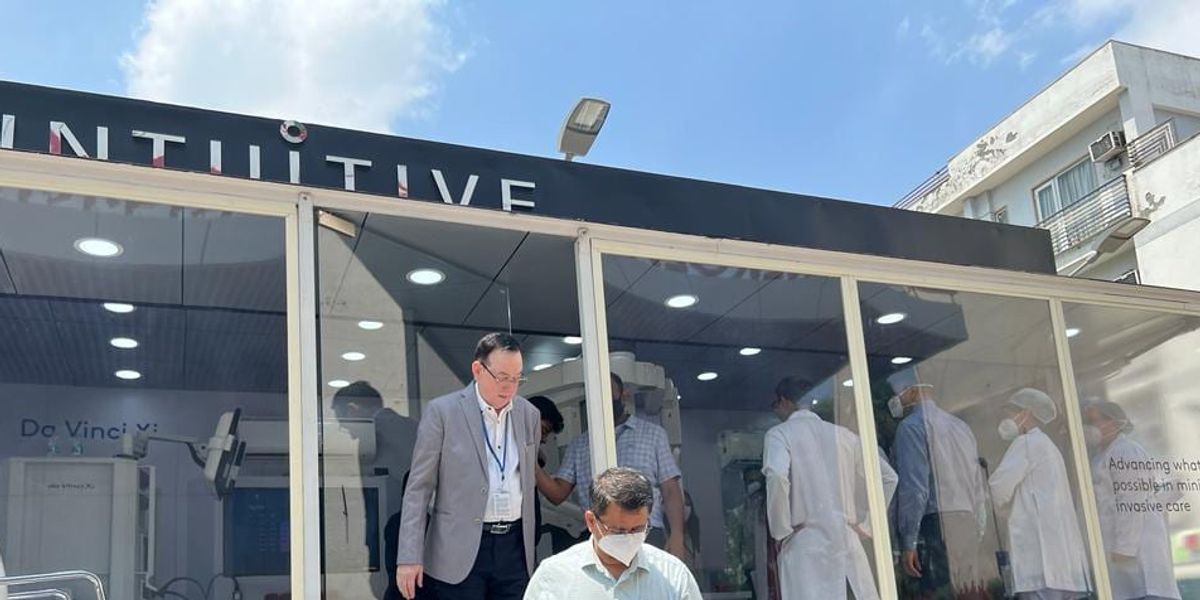
Few audiences are harder to win than surgeons, which makes Intuitive a good test of the trust economy. The MedTech brand had limited hospital visibility and a lot of device skepticism. CupShup ran a medical-cluster activation with hands-on demos, so healthcare professionals could try the technology and ask questions in person before forming a view.

Intuitive's demo unit at a medical cluster
It reached 45,000+ healthcare professionals, ran 8,500+ hands-on demos and generated 5,000+ qualified leads, turning device skepticism into surgical confidence.
Attention would have been easy to buy. Trust had to be earned one demo at a time, which is why the numbers lean on hands-on time, not impressions.
How does the trust economy change marketing?
In a trust economy, credibility is the scarce asset. That moves effort from reach to proof: demonstrations, honest answers, transparent results and consistent behaviour over time. The measures change too. Track repeat engagement, referrals and sentiment alongside views.
How does trust build customer loyalty?
Customer loyalty grows when people believe a brand will behave the same way tomorrow as it did today. Every kept promise adds to it, and every dodged question takes from it. Brands that earn trust spend less on winning customers back, because fewer of them leave.
Is the attention economy over?
No. Attention is still the first step, and the attention economy still decides who gets seen. What has changed is what attention is worth without trust: very little. Treat attention as the door and trust as the reason people stay.
See how much attention your category really draws. Our free AI Traffic Checker estimates monthly organic traffic for any domain and compares it against competitors, with traffic source breakdown and trend analysis.
To build trust across every touchpoint, talk to our Brand Campaigns team. We engineer integrated campaigns across digital, offline and experiential, with strategy, creative and execution in one team.
Tell us where trust is thin and we'll show you how to earn it. Let's talk.
The Final Sip: Why Trust Will Be the New Currency
Attention gets you seen. Trust gets you chosen.
Attention fades. Trust sticks.
It’s what turns customers into communities, and marketing campaigns into long-term relationships. Customer loyalty is the proof, and in the trust economy, communities are the asset.
At CupShup, we’re not just adapting to this shift, we’re building for it. Because in a world full of loud brands, we’d rather be the one people believe.
So, next time you’re planning a campaign, remember this:Don’t just aim to go viral. Aim to go valuable. The attention economy was a sprint. This is a marathon.
And when you do it with honesty, empathy, and maybe a sprinkle of humor - trust will follow, just like the perfect cup of cutting chai after a long day.
If this shift from attention to trust hits home, let’s chat.
At CupShup, we’re helping brands move beyond just reach, we help them resonate. Whether it’s building credibility, crafting authentic campaigns, or connecting with real audiences that care, we know how to make trust your biggest marketing currency.
Reach out to us for a conversation that might just change how you see your next campaign.
Because at the end of the day, attention is borrowed; but trust? That’s owned.
Ready to Get Started? Talk to CupShup
Whether you're planning a high-impact campaign or looking for a brand communication agency that delivers real results — CupShup's team is ready to help. Book a Free Brand Communication Strategy Call →
50 Integrated Marketing Campaign Ideas
The complete playbook with campaign frameworks, budget templates, and measurement guides for Indian brands.
Instant download + email copy. No spam, ever.
Explore CupShup Services
Brands that read this article also explored these services.
Brand Activation Agency India
400+ brand activations across India, from corporate campuses to RWA societies and malls.
Learn more ExperientialExperiential Marketing Agency
Immersive on-ground experiences that convert consumers into customers and brand advocates.
Learn more IntegratedIntegrated Marketing Agency
360-degree campaigns that blend offline activation with digital amplification for compounded ROI.
Learn moreAakriti Mishra
Senior Marketing Strategist at CupShup with over 8 years of experience in brand activation and integrated marketing campaigns. Aakriti specializes in creating data-driven strategies that deliver measurable results for modern brands.
Related Stories


Go Deeper with Our Free Guides
Comprehensive, in-depth marketing guides created by CupShup's experts.
The Ultimate Guide to Brand Activation
Everything you need to know about bringing your brand to life, strategies, examples, and frameworks.
The Ultimate Guide to Digital Marketing
Master every channel in the modern digital marketing ecosystem, from SEO to paid media.
The Ultimate Guide to SEO
The definitive guide to search engine optimization, on-page, technical, and link building strategies.