
Why India's Best Growth Marketers Are Quietly Replacing Spreadsheets With AI Agents

It’s 11 PM. The usual suspects are on the call: Sidharth, our CEO, Nooh, heading our marketing, and a couple of our senior campaign strategists. The screen is dominated by a Google Sheet. It’s a monster, over 2,400 rows of granular data detailing every possible zone in a specific metro area – down to the pin code level, complete with demographic overlays, historical footfall estimates, and some competitor activity flags. The air is thick with the faint hum of laptops and the unspoken pressure of a looming deadline. “Okay,” Sidharth says, his voice a low rumble, “we need to finalize the top 40 zones for the next phase of the Maruti campaign by tomorrow morning. We’ve got the media buys to lock in.” In the old world, the one we inhabited just a year or two ago, this was an eight-hour task. It involved a junior analyst downloading datasets, wrestling with VLOOKUPs, manually filtering based on half a dozen criteria, eyeballs-deep in maps, and probably a few frantic calls to ground teams for last-minute intel. Now, with the tools we've quietly developed, that same task takes about 45 minutes. This isn't just a minor efficiency gain; it's a fundamentally different capability. It’s the difference between a well-oiled machine and a steam engine – both move, but the power, speed, and precision are on entirely different planes. This shift is redefining what’s possible for growth marketers in India, and it’s happening faster than most people realize.
What an AI Agent Actually Is (And Is Not)
Let's clear the air right away. When we talk about AI agents in the context of marketing, we’re not talking about glorified macros or simple automation scripts. The distinction is crucial, and it’s where a lot of the confusion and skepticism stems from. An automation script is like a recipe: follow these steps in this exact order, and you’ll get the same result every time, assuming all ingredients are identical. It’s predictable, it’s reliable for repetitive tasks, but it’s rigid. It cannot deviate, it cannot interpret, and it certainly cannot learn from unexpected outcomes. An AI agent, on the other hand, is more like a junior analyst with an incredible capacity for learning and adaptation. It doesn't just execute a pre-programmed sequence; it understands the goal, it can infer context from various data points, it makes decisions based on probabilities and learned patterns, and most importantly, it can adapt its approach when faced with new, unforeseen inputs or changing conditions. This ability to reason, to decide, and to adapt is what makes it a game-changer for marketing.
Why does this distinction matter so profoundly for marketing teams, especially those operating in the dynamic Indian landscape? Because marketing, at its core, is rarely a perfectly predictable, linear process. Campaigns interact with real people in real-time, in diverse and often unpredictable environments. A fixed script might be able to pull a report, but it can’t decide which data points are most relevant for a specific client’s objective today versus yesterday, nor can it adapt the reporting format based on a nuanced client request. An AI agent, however, can look at campaign performance data, understand that a particular channel is underperforming in a specific city due to a local festival, and dynamically reallocate budget or suggest a creative pivot. It can process unstructured feedback from field teams, infer sentiment, and adjust follow-up strategies accordingly. This adaptive intelligence is what allows us to move beyond mere execution and into a realm of continuous optimization and strategic insight generation, all powered by our AI platform.

42,000 leads. 18,000 test drives. Zero spreadsheet chaos — because we had a system.
The Difference Between an Automation Script and an Agent
The fundamental chasm between an automation script and an AI agent lies in their cognitive architecture and operational autonomy. A script is a set of predefined instructions designed to perform a specific task with minimal variation. Think of it as a digital assembly line worker, meticulously performing the same sequence of actions for every unit that passes through. If a component is slightly different, or if the environment changes unexpectedly, the script falters or fails because it lacks the capacity for understanding or adaptation. It operates in a deterministic world where inputs and outputs are rigidly linked. An AI agent, by contrast, operates with a degree of probabilistic reasoning and decision-making. It’s equipped with models that allow it to process information, identify patterns, make predictions, and select actions that are most likely to achieve a given objective, even when faced with incomplete or ambiguous data. It can learn from its successes and failures, refining its strategies over time, and it can interact with its environment in a more fluid, responsive manner.
For marketing teams, this difference translates directly into campaign effectiveness and operational agility. An automation script might be useful for, say, automatically pulling daily sales figures into a spreadsheet. But it cannot, for instance, analyze those figures in the context of local market events, competitor promotions, or even the weather, and then recommend a strategic adjustment to a live campaign. An AI agent can. It can ingest a multitude of disparate data streams – sales, social media sentiment, footfall traffic, competitor pricing, even news feeds – and synthesize this information to make informed decisions. This allows marketing teams to be far more proactive and responsive. Instead of waiting for a human analyst to manually process data and flag issues, an agent can identify a potential problem or opportunity and flag it, or even take corrective action, autonomously. This is the core capability that our AI platform is built upon, enabling a level of intelligent automation previously unattainable.
Why This Is Different From the AI Hype Cycle of 2023
The AI landscape in 2023 was largely defined by a surge in generative AI, particularly for content creation. Tools that could write blog posts, generate ad copy, or create basic imagery became widely accessible. While undeniably useful, this wave represented an incremental improvement for many marketing tasks. It made content production faster and more efficient, freeing up human creatives for higher-level strategy and ideation. However, it didn't fundamentally alter the decision-making processes or the core campaign execution workflows for most teams. The real seismic shift is happening now, and will accelerate through 2025-26, with the widespread adoption of AI agents focused on decision-making and autonomous execution within campaign management. These agents move beyond generating content to actively interpreting data, strategizing, and even executing campaign adjustments in real-time.
What has changed to enable this leap from content generation to intelligent agency? Several factors have converged. Firstly, the underlying reasoning capabilities of large language models and other AI architectures have significantly advanced. They are no longer just pattern-matching machines but possess more sophisticated abilities to understand context, infer causality, and plan sequences of actions. Secondly, the integration of these advanced models with diverse data sources has become more robust and accessible. AI agents can now reliably ingest and process real-time data from various marketing platforms, CRMs, and even external APIs, creating a comprehensive, dynamic view of the campaign environment. Finally, the cost of inference – the computational expense of running these complex models – has decreased substantially, making their deployment at scale economically viable. This convergence of improved reasoning, seamless data integration, and affordability is what underpins the new era of AI agents in marketing, a crucial area of AI and technology development.
The 5 Campaign Tasks Where AI Agents Beat Human Analysts
The granular, data-intensive nature of modern marketing campaigns often involves tasks that are not only time-consuming but also prone to human error or oversight, especially when dealing with massive datasets. AI agents are proving to be exceptionally adept at tackling these specific challenges, not just by performing them faster, but by achieving a higher degree of accuracy and strategic insight. We've identified five key campaign tasks where we've seen AI agents consistently outperform traditional human analysis, leading to demonstrably better results for our clients. These are not minor optimizations; they represent fundamental improvements in how campaigns are planned, executed, and reported on.
Task 1: Zone and Location Shortlisting
Consider the task of selecting the most promising geographic zones for a brand activation, especially for a mass-market product like Maruti Suzuki, which needs to reach diverse customer segments across various urban and semi-urban areas. Traditionally, this process involves an analyst downloading extensive databases, often containing tens of thousands of rows of location data, demographic information, and footfall estimates. The analyst then spends hours filtering this data, cross-referencing it with maps, and applying their subjective judgment to identify a manageable shortlist of viable zones. This is a laborious, time-intensive process, and the final selection can be heavily influenced by the analyst's personal experience or biases, rather than purely objective data. It’s a critical step, as selecting the wrong zones can lead to significant wasted expenditure.
An AI agent approaches this task with a fundamentally different methodology. Instead of manual filtering and subjective eyeballing, the agent ingests the same raw location data but then cross-references it with a multitude of dynamic, real-time, and historical data points. This can include live footfall data from mobility APIs, historical campaign performance metrics segmented by zone, competitor activity intensity, local event calendars, and even demographic data that goes beyond simple age and income to include lifestyle indicators. Within minutes, the agent can process this complex web of information, identify correlations, and output a ranked shortlist of the most promising zones, complete with confidence scores and supporting data justifications. For a recent Maruti Suzuki campaign, a zone shortlisting process that previously took our teams three full days in 2022 is now completed by an AI agent in under 45 minutes, delivering a more data-driven and effective selection. You can see similar efficiencies in our case studies.
Task 2: Budget Allocation Across Channels
Optimizing budget allocation across multiple channels, cities, and activation formats is a perennial challenge for marketers. Imagine a scenario with 8 different cities, 4 distinct activation formats (e.g., mall activations, on-ground events, vehicle display units, local partnerships), a campaign duration of 3 weeks, and variable cost structures for each format in each city, further complicated by shared fleet resources and personnel. Human analysts typically tackle this by relying on past experience, gut instinct, and perhaps some simplified spreadsheet models. They might allocate a certain percentage to each city or format based on perceived potential, but truly optimizing across all these interdependent variables to maximize ROI is incredibly complex and often impossible with manual methods.
This is precisely where AI agents excel. They can be programmed to understand the objective, whether it’s minimizing cost per lead, maximizing reach within a demographic, or driving a specific conversion action. The agent then takes all the variables into account – channel costs, historical performance data for each format in each city, projected footfall, competitor spend, and even external factors like local holidays or weather patterns – and runs complex multi-variable optimization algorithms. It can simulate thousands of potential budget allocation scenarios in seconds to identify the one that is statistically most likely to achieve the desired outcome. In our experience across a dozen recent campaigns, the agent-recommended budget allocations consistently outperformed the allocations determined by our most experienced human analysts, resulting in an average reduction in cost per lead by 34%. This isn't about replacing human strategy, but about augmenting it with computational power for complex optimization.
Task 3: Real-Time Post-Event Reporting
The lag time between the end of an on-ground activation and the delivery of a comprehensive performance report has always been a bottleneck in campaign optimization. Traditionally, field leads would send fragmented WhatsApp updates, photos, and handwritten notes throughout the day. A dedicated analyst would then spend hours, often overnight, consolidating this disparate information into a structured Excel sheet, cross-referencing it with other data sources, and finally compiling a presentation-ready report. By the time the client received this report, often 18 hours or more after the activation concluded, the opportunity to make immediate, impactful adjustments to ongoing or similar future activations had largely passed. This delay significantly hampers the agile feedback loop crucial for modern marketing.
AI agents, integrated with user-friendly mobile data capture tools, can revolutionize this process. Field teams can input structured data directly into a mobile form in real-time – capturing lead numbers, customer feedback, competitor activity, and even uploading geo-tagged photos. This data is then immediately fed into the AI agent. The agent is pre-programmed to understand the reporting structure, the key performance indicators (KPIs) to extract, and the desired output format. Within as little as two hours of an activation ending, the agent can synthesize all the incoming data, perform necessary calculations, generate insights, and produce a branded, professional PDF report. This near real-time reporting capability, enabled by seamless digital integrations, allows marketing teams and clients to review performance while the event is still fresh in everyone's minds, facilitating faster, more informed decision-making and iterative campaign improvements.
Task 4: Lead Scoring and Prioritisation
In today's hyper-connected world, campaigns, particularly those run at scale across physical touchpoints, can generate a deluge of leads. For an on-ground activation, it's not uncommon to capture hundreds, if not thousands, of potential customer contacts within a single day. The critical challenge then becomes: which of these leads are most valuable and should be prioritized for immediate follow-up via WhatsApp, email, or a sales call? Manually sifting through thousands of leads to assign a priority score is an arduous task, often relying on basic demographic filters or the limited information captured during the interaction. This can lead to valuable leads being overlooked, or marketing and sales resources being wasted on low-potential contacts, diminishing the overall ROI of the activation.
This is where AI agents can provide a significant uplift. Beyond basic demographic information, an agent can be trained to score leads based on a richer set of signals. This includes the depth of engagement captured by field teams (e.g., duration of conversation, specific questions asked), demographic and psychographic alignment with the target customer profile, and critically, expressed intent signals. These signals could range from explicit statements of interest ("I'm looking to buy next month") to implicit indicators like requesting a callback or a brochure. The agent analyzes all available data points for each lead, cross-references them with historical conversion data if available, and assigns a dynamic score indicating the likelihood of conversion. This allows marketing teams to focus their follow-up efforts on the highest-potential leads first, significantly improving conversion rates and the efficiency of their outreach efforts.
Task 5: Staff Scheduling Across Multi-City Activations
Coordinating a large workforce across multiple cities for a national campaign is a logistical nightmare. Consider a scenario where you need to deploy 400 promoters across 20 different cities for a month-long activation. Each promoter has a unique skill set, availability, and potentially preferred working locations. Human resource managers typically spend days, if not weeks, creating complex spreadsheets to map individuals to cities and specific activation sites, factoring in daily schedules, travel, and rest days. This process is incredibly prone to errors, especially when last-minute changes arise due to sickness, attrition, or unexpected shifts in demand at certain locations. The result is often understaffed zones, overstaffed zones, or promoters being deployed in roles where their skills are not best utilized, leading to suboptimal campaign performance and increased operational costs.
An AI agent can transform this chaotic process into a streamlined, optimized operation. By ingesting databases of promoter profiles (skills, experience, certifications, availability) and campaign requirements (location, dates, hours, specific roles needed), the agent can generate an optimal staffing schedule. It goes beyond simple matching; it can factor in travel time between locations, ensure adequate rest periods, and even predict potential attrition rates based on historical data. Crucially, if a promoter calls in sick in one city, the agent can instantly re-evaluate the staffing needs across all locations and identify the best available backup, potentially re-routing staff from less critical zones or identifying individuals who can be quickly deployed. This dynamic rescheduling capability ensures that every activation site is adequately staffed with the right talent, maximizing promoter efficiency and campaign impact. This is the kind of intelligent operational backbone we build for clients through our AI digital marketing agency services.
How We Built Our Agent Layer at CupShup
Developing AI agents that can effectively manage and optimize marketing campaigns is not a plug-and-play endeavor. It requires a deliberate, data-centric approach to building the underlying intelligence and integration layers. At CupShup, we've invested heavily in understanding what data is truly valuable, what technical infrastructure is necessary, and how to make these powerful tools accessible and practical for our clients operating in the unique Indian market context. Our focus has always been on creating tangible business outcomes, not just deploying theoretical AI capabilities.
What Data You Actually Need (And What You Don't)
The effectiveness of any AI agent is directly proportional to the quality and relevance of the data it’s trained on and uses for decision-making. For marketing campaign agents, there’s a crucial distinction between the data that provides a baseline functionality and the data that unlocks significant performance gains. The minimum viable dataset to get an agent operational might include a history of 50+ past campaign performance records (e.g., leads generated, cost per lead, reach achieved for specific activities), a comprehensive database of potential activation locations (with basic demographic and geographic information), and a detailed staff profiles database (listing promoter skills, availability, and experience). This baseline allows the agent to start making informed predictions and optimizations.
However, to achieve the breakthrough performance we’ve been seeing, richer, more dynamic datasets are indispensable. This includes historical footfall data for specific locations and times of day, granular lead quality metrics segmented by zone and activation format, and robust post-campaign conversion tracking that links on-ground activity to actual sales or desired outcomes. Integrating data on local events, competitor activities, and even weather patterns further enhances the agent’s ability to adapt to the real-world complexities of the Indian market. Conversely, we've learned that a lot of readily available data, like generic census demographics for very large regions, is often too broad to be actionable for granular campaign optimization. The key is focusing on data that directly correlates with campaign success and operational execution.
The Integration Stack
Building and deploying effective AI agents for marketing campaigns requires more than just sophisticated algorithms; it necessitates a robust and flexible integration stack. The agents need to seamlessly plug into the existing campaign management tools and data sources that marketing teams and agencies already use. This means building APIs that can ingest data from platforms like Google Analytics, CRM systems, media buying platforms, and custom client databases. It also involves developing mechanisms for the agents to push insights and recommended actions back into these systems, or directly into team workflows. The choice between real-time API connections and more traditional manual data feeds is a critical one, especially in the Indian context where internet connectivity and data standardization can vary significantly across regions and organizations.
We've found that a hybrid approach often works best at scale. While real-time API integrations are ideal for dynamic data like live footfall or social media sentiment, structured, scheduled data uploads are often more practical for less volatile information, like historical campaign results or promoter databases. This thoughtful integration strategy is why many Indian agencies are still grappling with implementing advanced AI capabilities. Building this requires not only deep expertise in AI and data science but also a nuanced understanding of the operational realities and technological infrastructure prevalent in the Indian market. It’s a complex challenge that requires significant investment in both technology and talent. To get started with exploring AI capabilities, you can check out some of the free AI tools for marketers we recommend.
The Business Case: Before vs After Numbers
The transition from manual, spreadsheet-driven campaign management to AI agent-assisted operations isn't just about technological advancement; it translates directly into significant, measurable business impact. For growth marketers and their companies, this shift means achieving marketing objectives more efficiently and effectively, freeing up valuable resources, and ultimately driving better business outcomes. We’ve meticulously tracked the performance of campaigns before and after integrating our AI agent layer, and the numbers speak for themselves, painting a clear picture of the return on investment in these advanced capabilities.
Cost Per Lead: The Most Important Metric
For many direct-to-consumer (DTC) and retail-focused businesses, Cost Per Lead (CPL) is the paramount metric that dictates the profitability and scalability of their marketing efforts. In our pre-agent era, across a portfolio of 12 diverse campaigns, we consistently observed an average CPL of approximately Rs. 280. This figure was a result of the inherent inefficiencies in manual data analysis, suboptimal zone selection, less precise audience targeting, and the delays in reporting that hindered timely adjustments. Post-integration of our AI agent layer, that same metric has plummeted to an average of Rs. 95 per lead. This more than two-thirds reduction in CPL is driven by a confluence of factors that the agents systematically address.
The primary drivers of this dramatic improvement are multi-faceted. Firstly, the agents' ability to perform hyper-granular zone shortlisting based on predictive analytics means fewer activations are deployed in low-potential areas, reducing wasted expenditure. Secondly, optimized budget allocation across channels and formats ensures that marketing spend is directed where it yields the highest return, preventing over-investment in underperforming tactics. Thirdly, intelligent staff scheduling and deployment maximize the conversion efficiency of field teams, leading to a higher lead yield per crew-hour. Finally, the speed of reporting and analysis allows for tighter feedback loops, enabling rapid iteration and optimization of live campaigns, further driving down the cost of acquiring each valuable lead.
Speed and Throughput
Beyond the direct impact on cost per lead, the adoption of AI agents has revolutionized the speed and throughput of our campaign operations. The traditional campaign planning process, which involved extensive manual data compilation, analysis, and strategic deliberation, typically required around 42 hours of dedicated human effort per campaign cycle. This often meant that by the time planning was complete, market conditions had already shifted, necessitating further adjustments. With AI agents assisting in tasks like zone selection, budget allocation, and media planning, this planning phase has been compressed to under 4 hours of combined human and AI effort. This drastic reduction in planning time allows our teams to be more agile and responsive to market dynamics.
Furthermore, this enhanced efficiency has significantly increased our capacity for simultaneous campaign execution. Previously, our teams could realistically manage 3 to 4 major city-level campaigns in parallel due to the intensive manual oversight required for each. Now, with AI agents handling much of the complex data processing, optimization, and reporting, we can effectively manage over 20+ cities simultaneously, executing more complex, geographically dispersed campaigns with greater precision and less strain on our human resources. This increased throughput means we can help more clients achieve their growth objectives faster and more frequently, accelerating their market penetration and revenue growth.
What the Team Does Now Instead
The most profound shift we've observed isn't just in the speed or cost of campaign execution, but in the nature of the work our human team members now undertake. When a significant portion of their time was consumed by data wrangling, spreadsheet manipulation, and repetitive analysis, their strategic input was often constrained by the sheer volume of operational tasks. With AI agents now handling these complex, data-intensive, and time-consuming processes, our human talent is freed to focus on the areas where human judgment, creativity, and relationship-building are indispensable.
Our strategists and campaign managers now dedicate substantially more time to high-level strategy development, exploring innovative campaign concepts, and refining the creative direction. They engage more deeply with clients, focusing on understanding nuanced business objectives, building stronger relationships, and translating market insights into actionable strategic frameworks. The human element is applied where it truly matters: in understanding the "why" behind the data, in crafting compelling brand narratives, in making intuitive leaps based on deep market understanding, and in providing the empathetic client service that technology cannot replicate. This reallocation of human capital towards higher-value activities is, in our opinion, the most significant benefit of embracing AI agents.
What AI Agents Still Cannot Do
While the capabilities of AI agents in marketing are expanding at an astonishing pace, it's crucial to maintain a realistic perspective. There are genuine limitations to what these agents can currently achieve, and recognizing these boundaries is as important as understanding their strengths. Brands that leap to the conclusion that AI agents can entirely replace human campaign managers or strategists are likely to encounter significant pitfalls and make costly mistakes. Understanding these limitations helps us define the optimal human-AI collaboration model for marketing success.
Firstly, AI agents, at their current stage of development, still struggle with genuine creative judgment. While they can generate variations of copy or suggest design elements based on patterns, they lack the inherent human capacity for true originality, emotional resonance, and the intuitive understanding of what truly captures the cultural zeitgeist. Secondly, navigating nuanced cultural subtleties, particularly in diverse and rapidly evolving markets like India, remains a significant challenge. An agent might optimize for a demographic, but it won't inherently grasp the subtle cultural sensitivities that can make or break a campaign in a specific region or community. Thirdly, relationship-based decisions, which are often critical in business development and client management, are beyond the scope of current AI agents; they cannot build rapport, trust, or long-term partnerships. Lastly, handling completely novel campaign formats or unforeseen market disruptions that fall entirely outside their training data is something agents are not yet equipped for.
Why does this distinction matter so profoundly? Because marketing is not just about data optimization; it’s about human connection, cultural relevance, and strategic foresight. Brands that assume agents can autonomously replace human campaign managers risk deploying campaigns that are technically optimized but lack soul, cultural appropriateness, or the strategic adaptability needed to navigate unexpected challenges. The most effective approach is a symbiotic one, where AI agents handle the complex data analysis, optimization, and execution tasks, augmenting rather than replacing human strategists who provide the creative direction, cultural understanding, and relationship management. For a candid discussion about where AI fits into your specific marketing strategy, we encourage you to contact the team.
Frequently Asked Questions
Do you need to be a tech company to build AI agents for marketing?
No, you absolutely do not need to be a pure tech company to leverage or even build AI agents for marketing. While the underlying technology requires significant engineering expertise, the focus for marketing teams should be on the application and integration of these agents. Many agencies, like ours at CupShup, are developing proprietary AI layers and agent frameworks specifically tailored for marketing challenges. For businesses, the key is to partner with agencies or technology providers who have this expertise, or to invest in building an internal capability that bridges marketing strategy with AI integration. The goal is to use AI agents as powerful tools to enhance marketing performance, not necessarily to become AI developers from scratch.
How much does it cost to deploy an AI agent layer for campaign management?
The cost of deploying an AI agent layer for campaign management can vary significantly depending on the scope and complexity of the implementation. For businesses looking to leverage existing AI-powered marketing platforms or partner with an agency that has built this infrastructure, the costs are typically integrated into service fees. This might range from a few thousand dollars per month for basic automation and optimization services to tens of thousands per month for comprehensive, custom-built agent solutions managing multiple campaign facets. Building a proprietary AI agent layer in-house would involve substantial upfront investment in talent, technology, and data infrastructure, potentially running into lakhs or even crores of rupees, making agency partnerships often more feasible for most companies.
Will AI agents make marketing managers redundant?
It is highly unlikely that AI agents will make marketing managers redundant. Instead, they are poised to fundamentally transform the role of a marketing manager. AI agents excel at data analysis, optimization, and execution of repetitive tasks, freeing up marketing managers from much of the manual, time-consuming work. This allows them to focus on higher-value activities such as strategic planning, creative ideation, understanding complex market nuances, building client relationships, and overseeing the ethical and cultural implications of campaigns. The future marketing manager will likely be more of a strategist and a conductor, leveraging AI tools to amplify their impact and make more informed, data-driven decisions.
What is the first AI agent a marketing team should build?
For most marketing teams, the first AI agent they should consider building or adopting is one focused on data analysis and insight generation, particularly for campaign performance. This could be an agent that automates the consolidation and analysis of data from various channels (e.g., social media, paid search, on-ground activations) to identify key trends, underperforming areas, and opportunities for optimization. Alternatively, an agent focused on zone or audience shortlisting for location-based campaigns, as discussed in this post, is another excellent starting point, as it addresses a time-intensive and critical decision-making process with a clear ROI.
How long before AI agent adoption becomes mainstream in Indian marketing?
We believe AI agent adoption will become mainstream in Indian marketing within the next 18 to 36 months. The current rapid advancements in AI capabilities, coupled with increasing data availability and the growing need for efficiency and effectiveness in a competitive market, are strong drivers. Early adopters are already seeing significant benefits, and as more success stories emerge and the technology becomes more accessible and user-friendly, a tipping point will be reached. Marketing teams and agencies that do not integrate AI agents into their core operations will likely find themselves at a significant disadvantage in terms of speed, cost-efficiency, and overall campaign performance.
Want to See AI Agents In Action for Your Campaigns?
Our AI marketing platform is built for exactly the problems described in this post. If your team is still running campaign planning from spreadsheets, reach out to us. We can walk you through what an AI-assisted campaign looks like for your brief — no commitment required. Also explore our free AI tools for marketers: keyword research, ad copy generation, and more.
#AI agents marketing India | AI marketing automation | growth marketing India | marketing AI agents | AI campaign planning | CupShup AI | martech India | marketing technology | AI digital marketing | marketing operations India
What Workflow Automation Actually Replaces
Workflow automation doesn't replace a growth marketer's judgment - it replaces the four hours they used to spend updating a spreadsheet before that judgment could even happen. That's the real reason India's sharpest growth marketers are moving to workflow automation: not because it's smarter, but because it gives back the hours spreadsheets were quietly eating.
Sales automation follows the same logic one step further down the funnel. Sales automation routes and scores leads the moment they arrive, instead of a rep manually sorting through a shared sheet at the end of each day. Marketing automation ties both together - workflow automation upstream, sales automation downstream, marketing automation as the connective layer between them.
Green Soul faced a version of this efficiency problem when launching its ergonomic furniture line. Instead of manually running dozens of city-by-city lead sheets, CupShup built high-touch gaming and workstation trial zones across Pune and Bangalore with automated lead capture built in from day one - driving 60,000+ direct product trials and 25,000+ qualified leads without a single manual spreadsheet update.
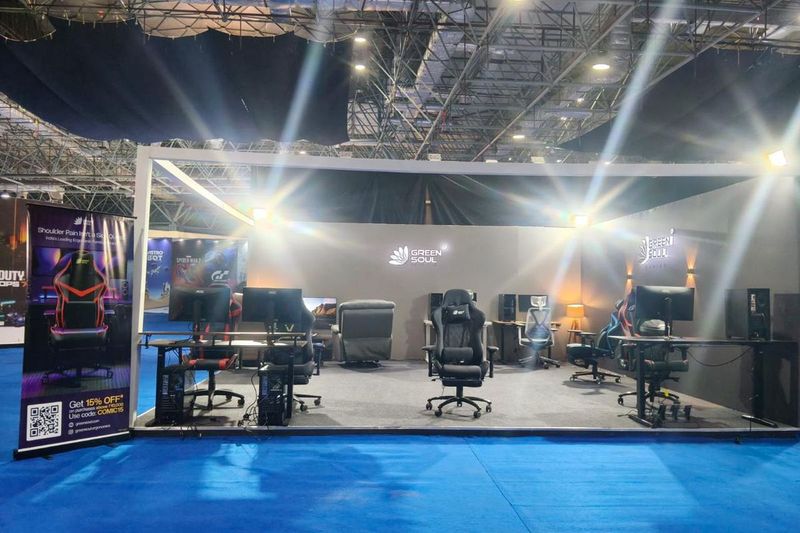
CupShup's automated lead-capture trial zones for Green Soul across Pune and Bangalore
That's the workflow automation lesson buried in Green Soul's results: sales automation and marketing automation work best when they're built into the campaign from the first day, not bolted on after the spreadsheets have already piled up.
Want reusable campaign structures instead of starting from a blank sheet each time? Template Library gives you proven templates so workflow automation starts on day one, not month three.
For a growth strategy that replaces manual reporting with real workflow automation, our Enterprise Solutions team builds the automation layer most growth teams are still doing by hand.
Still running campaigns off a spreadsheet? Let's talk.
The Martech Stack Behind Fewer Spreadsheets
A modern martech stack doesn't replace a growth marketer's judgment - it replaces the spreadsheet they used to update before that judgment could even happen. Data-driven marketing built on a real martech stack gives back the hours spreadsheets were quietly eating.
Green Soul faced this exact efficiency problem launching its ergonomic furniture line. Instead of manual, spreadsheet-heavy tracking, CupShup built automated lead capture into trial zones across Pune and Bangalore - marketing automation services built into the campaign from day one drove 60,000+ trials and 25,000+ leads without a single manual spreadsheet update.
That's the martech lesson in Green Soul's results: data-driven marketing and marketing automation services work best when they're part of the campaign from day one, not bolted on after the spreadsheets have already piled up.
A martech stack is only as good as the data-driven marketing decisions it enables - marketing automation services that don't feed real decisions are just a more expensive spreadsheet.
50 Integrated Marketing Campaign Ideas
The complete playbook with campaign frameworks, budget templates, and measurement guides for Indian brands.
Instant download + email copy. No spam, ever.
Explore CupShup Services
Brands that read this article also explored these services.
AI Digital Marketing Agency
AI-powered campaign strategy, content, and performance optimization for growth-stage brands.
Learn more MarTechTechnology Marketing Agency
Marketing tech infrastructure, automation, data pipelines, and martech integration.
Learn more ActivationBrand Activation Agency India
400+ brand activations across India, from corporate campuses to RWA societies and malls.
Learn moreGodhuli Vyas
Related Stories



Go Deeper with Our Free Guides
Comprehensive, in-depth marketing guides created by CupShup's experts.