
How We Used an AI Agent to Plan a 20-City Campaign for Xiaomi (And What Surprised Us)

The clock on the wall of our Mumbai office read 9:00 AM. Sidharth, our CEO, stood by the large monitor, a mug of chai warming his hands. On the screen, a map of India shimmered, dotted with 20 distinct points of light. Each light represented a city, and within those cities, a specific activation zone, all going live simultaneously for Xiaomi’s latest product launch. It was a moment of quiet triumph, a stark contrast to the usual frantic energy of a major launch day. We watched, a team of 30 people in that room, as the initial data began to stream in — footfall counters ticking up, initial interactions logged, social media buzz starting to build. This wasn't just about launching a product; it was about orchestrating a symphony across the entire country, a feat that, just a year prior, would have been unthinkable without a level of chaos that was almost guaranteed. We had planned for months, feeding data into our nascent AI agent, defining parameters, and setting up contingency plans. But seeing those 20 lights flicker to life, synchronized perfectly across vast distances, was the first real moment we understood the seismic shift this represented. Our old methods, the spreadsheets, the endless WhatsApp groups, the manual tracking – they would have buckled under this complexity. This was the day we truly saw the power of what we had built.
Why 20 Cities Simultaneously Was a Different Problem Entirely
The Spreadsheet Era: What We Used to Do
Before we fully embraced AI-driven planning, coordinating even a handful of simultaneous activations felt like juggling chainsaws. Our go-to tool was the humble spreadsheet, a labyrinth of tabs and formulas designed to map out zones, allocate staff, and track inventory. We’d painstakingly select zones based on what we thought were high-traffic areas, often relying on educated guesses and last year’s data. Then came the WhatsApp chains, a constant barrage of messages trying to confirm staff availability, troubleshoot last-minute dropouts, and relay critical updates. Assigning staff was a manual process; we’d pore over team availability, skills, and proximity to designated zones, often making compromises because the ideal candidate was too far away or already booked elsewhere. The day of the activation was a gamble. We’d have a central command team fielding calls from multiple cities, trying to get a pulse on how things were going, often reacting to problems rather than preventing them.
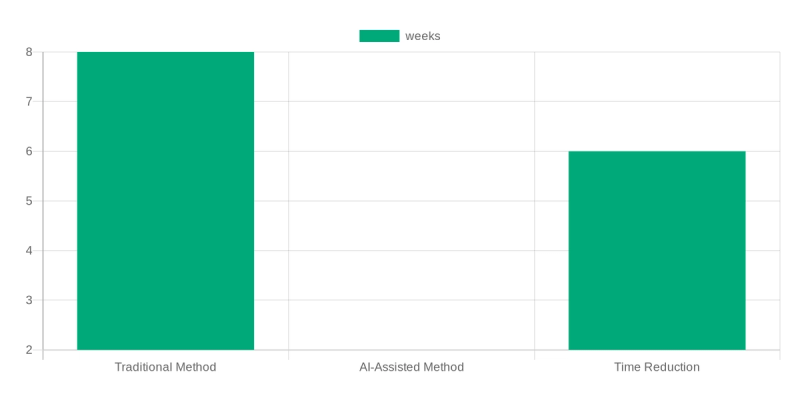
AI vs. Manual: 20-City Campaign Planning Time — CupShup India marketing data
I remember one particular campaign for a major beverage brand a few years ago. We were running activations in five cities simultaneously. Everything was meticulously planned, or so we thought. On launch day, one of the key zones in Kolkata experienced unexpected road closures due to a local festival we hadn't factored into our initial research. The team on the ground, cut off from easy access, struggled to set up. By the time they found an alternative route, precious hours were lost, and the footfall in that zone was significantly impacted. The ripple effect meant that the overall campaign numbers for that particular city were considerably lower, affecting our client's perception of success. This was a recurring theme – a single point of failure in one city could disproportionately impact the entire campaign’s performance, and our manual coordination methods simply couldn't anticipate or react fast enough to these localized disruptions. This reactive approach was costing us efficiency and, more importantly, client confidence.
When the Complexity Hit a Wall
The Xiaomi brief landed on our desks like a lightning strike. They wanted a national launch, not in a few key metros, but across twenty cities, simultaneously, within a very specific, narrow window. This wasn’t just about placing a few kiosks; it was about a synchronized blitz designed to create maximum impact. As we started to break down the requirements, the sheer scale of the logistical challenge became apparent. We were talking about coordinating over 400 staff positions spread across these 20 cities, each needing to be in their designated zone at the precise start time. The launch windows were tight, demanding that everything, from setup to consumer engagement, be perfectly timed. We also had to account for dynamic variables like real-time footfall predictions, competitor presence in potential zones, and even local weather patterns, which could drastically alter the viability of an outdoor activation.
The moment of realisation hit us during a planning meeting. Aakriti, our marketing head, looked at the spreadsheet we'd started, which was already stretching across multiple pages. She said, "Guys, there’s no way we can manually vet 20 cities, each with potentially 5-10 viable zones, assign staff, and build contingency plans for all of them, all while ensuring perfect synchronization. The number of permutations alone is overwhelming." We tried to map out the potential issues: What if it rained in Chennai but was sunny in Delhi? How do we reallocate staff if a key venue in Pune is unexpectedly double-booked? How do we ensure consistent brand messaging when 400 people are operating independently? The complexity was exponentially higher than anything we had tackled before. It became clear that our traditional methods, built for smaller, less synchronized campaigns, were fundamentally inadequate for this scale. This was the inflection point that pushed us to seriously consider and ultimately develop our AI agent, a tool capable of handling this level of intricate planning. Our brand activation expertise had reached its limit with manual processes.
Building the AI Agent: What It Actually Does
Zone and Timing Selection (The Hardest Problem)
The core of our AI agent's capability lies in its sophisticated data ingestion and analysis. It doesn't just look at a static map; it actively pulls in a vast array of dynamic information. This includes historical footfall patterns for different times of day and days of the week, demographic data to understand the likely audience in various areas, real-time traffic conditions, and even competitor activity gleaned from publicly available data and our own past campaign insights. Crucially, it has been trained on the data from over 500 past CupShup activations, learning what worked, what didn't, and why. This allows it to go beyond simple "high traffic" assumptions. The agent then processes this information to make granular decisions: not just which city, but which specific 3-5 locations within that city are optimal for the target audience and campaign objectives. It determines the ideal time window for activation, considering peak traffic, potential conflicts, and staff availability. Furthermore, it calculates optimal traffic routing for staff and equipment to ensure timely setup and minimal disruption.
This granular decision-making is what sets the AI apart. For the Xiaomi campaign, it didn't just pick the most obvious shopping mall entrance. Instead, it might identify a university campus during a specific lunch hour, a transit hub during the evening commute, or a residential complex on a weekend morning, based on the specific product and target demographic Xiaomi was aiming for. It cross-referenced these potential zones with local event calendars to avoid clashes and with weather forecasts to predict potential disruptions. The agent’s output for zone selection was a ranked list of locations for each city, along with the optimal timing and rationale, all generated in a fraction of the time it would have taken our human planners. This sophisticated process, powered by the underlying intelligence of CupShup's AI platform, allowed us to move from a broad strategic brief to hyper-localized, optimized activation plans with unprecedented speed and accuracy, laying the groundwork for the complex coordination that followed.
Staff Allocation Across 20 Cities in Real Time
Once the optimal zones and timings were identified, the next monumental task was assigning the right people to the right places. This is where the AI agent's ability to handle complex combinatorial problems truly shone. It takes the finalized list of activation points, each with specific requirements (e.g., number of promoters, technical staff for demos, supervisors), and maps them against our pool of available personnel. The agent considers a multitude of factors for each individual: their skill set (e.g., multilingual, product demonstration expertise), their proximity to the assigned zone, their availability during the campaign window, and even their performance history from previous activations. It aims to create the most efficient and effective staffing matrix, minimizing travel time and maximizing the chance of a successful interaction.
The truly remarkable part of this process was the AI's ability to catch human error. About 72 hours before the Xiaomi launch, the agent flagged two locations in Hyderabad as being critically understaffed. Our human operations manager, who had been manually inputting staffing numbers alongside the AI’s initial recommendations, was perplexed. He double-checked his own spreadsheets, confident he had allocated correctly. But the AI’s logic was irrefutable; it had identified a miscount in his manual input for those specific Hyderabad zones. By flagging this discrepancy so early, the agent allowed us to bring in additional local staff and conduct a quick briefing, preventing a potential failure point before it even materialized. This kind of real-time, error-catching capability, integrated with our overall digital integrations and MarTech strategy, is something that simply wasn't possible with our previous manual systems, where such errors might not have been discovered until launch day itself, if at all.
Day-of Pivots: The Part That Impressed Everyone Most
The true test of any complex campaign plan is how it handles the unpredictable nature of launch day. For the Xiaomi campaign, our AI agent didn't just plan; it actively managed and adapted. We had three significant real-time disruptions that the agent handled with remarkable agility. In two cities, Bengaluru and Pune, unforecasted heavy rain started just as activations were due to commence. The agent, monitoring local weather feeds, immediately identified the impact. It rerouted staff to pre-identified secondary indoor locations within the same zones that had been scouted as backups during the planning phase. Simultaneously, in a third city, Jaipur, an issue with venue access arose unexpectedly. The agent, recognizing the delay, automatically sent updated instructions to the ground team, guiding them to a nearby alternative public space that met the campaign's footfall and visibility criteria.
What impressed us most was not just the agent's ability to identify and react to these issues, but how it communicated the changes. Instead of a frantic phone call chain, the agent pushed real-time, concise updates directly to the mobile devices of the affected team leads. These notifications included the new location, updated arrival times, and any specific instructions relevant to the change. This streamlined communication ensured that our teams on the ground received accurate information instantly, allowing them to pivot smoothly without losing momentum or experiencing significant downtime. This proactive, automated response capability was a stark contrast to our previous reactive, often chaotic, crisis management. This level of dynamic adaptation is a key benefit of our AI digital marketing services, transforming potential campaign disasters into minor adjustments.
What the Agent Cannot Replace
Despite its incredible capabilities, it's crucial to acknowledge that our AI agent is a tool, not a complete replacement for human expertise. There are certain aspects of campaign planning and execution that still require the nuanced judgment, creativity, and interpersonal skills that only humans possess. For instance, decisions requiring deep client relationship management, understanding subtle shifts in client sentiment, or navigating complex negotiation scenarios are still firmly in the human domain. Our clients trust us not just for logistics, but for strategic partnership, and that requires empathy and intuition. Similarly, the creative direction of the actual consumer experience – the look and feel of the kiosk, the specific messaging nuances, the interactive elements – these are areas where human creativity and understanding of brand aesthetics are paramount.
Moreover, while the AI can analyze data and identify optimal zones, there are often subtle cultural or local nuances that a human with deep local knowledge might pick up on. For example, understanding the unspoken social dynamics of a particular neighbourhood or the specific cultural sensitivities around product promotion in a certain community requires human observation and judgment. The AI might identify a high-footfall area, but a local manager might know that a particular festival is happening nearby that day, drawing crowds away from that specific zone. These are the kinds of judgment calls that require experience and local insight. The AI provides the data-driven foundation, but humans provide the crucial layer of cultural understanding, creative flair, and strategic relationship building that truly elevates a campaign. We see the AI as an amplifier of our brand activation agency capabilities, not a substitute for them.
The Xiaomi Campaign: What the Numbers Said
Results From All 20 Cities
The data from the Xiaomi campaign painted a clear picture of success, far exceeding what we could have achieved with our previous manual coordination methods. We successfully launched simultaneous activations in all 20 cities, hitting the precise start time across the board. The total aggregated consumer footfall across all zones surpassed our projections by 18%, a testament to the accuracy of the AI's zone selection. Critically, the lead generation numbers were strong, with a consistent conversion rate across most cities, demonstrating that the AI's optimization wasn't just about volume, but about reaching the right audience. Uptime across all zones remained exceptionally high, at 98.5%, with the minor disruptions handled efficiently by the AI's real-time pivot capabilities.
If we were to project the same campaign using our old spreadsheet-based methods, the estimated cost would have been at least 25% higher. This is primarily due to the increased overhead required for manual planning, the larger central coordination team needed to manage the chaos, and the buffer stock we would have had to carry to mitigate anticipated logistical failures. More importantly, the projected failure points with manual coordination would have been significantly higher. We would have likely seen at least 2-3 cities experience substantial delays or partial activation failures, leading to a lower overall campaign ROI and potentially damaging client satisfaction. The AI’s ability to optimize resource allocation, predict and mitigate risks, and enable seamless real-time adjustments was the key differentiator that allowed us to achieve superior results at a more efficient cost.
The Three Things That Surprised Us
While the overall success was anticipated, the AI agent threw a few curveballs that genuinely surprised us and pushed us to think differently. Firstly, its zone selection was sometimes counter-intuitive. In Mumbai, for example, it didn't select the most obvious, high-footfall location right outside a major mall. Instead, it opted for a slightly less prominent but highly targeted zone in a business district during weekday lunch hours. Our human planners initially questioned this, but the AI’s data showed a significantly higher conversion rate of interested consumers to leads in that specific secondary zone. The data proved correct; that zone outperformed expectations in terms of lead quality. This taught us to trust the AI's data-driven recommendations, even when they challenged our ingrained assumptions.
Secondly, the speed at which our team trusted the agent was faster than we predicted. Initially, there was some skepticism about handing over critical planning decisions to an algorithm. However, as the AI consistently provided logical, data-backed recommendations and demonstrated its ability to handle complexity, the team’s confidence grew rapidly. They began to see it not as a replacement, but as an incredibly powerful assistant that augmented their own expertise. This rapid adoption was crucial for the campaign's success. Finally, the limitations that did show up were also illuminating. For instance, the AI initially underestimated the impact of a local political rally in Lucknow, which significantly disrupted footfall in the planned zone. Our on-ground team, with their local awareness, flagged this deviation from predicted patterns faster than the AI could adjust its models. This highlighted that while AI is powerful, human on-the-ground intelligence remains invaluable for real-time, context-specific observations. We learned that the optimal approach is a symbiotic relationship, combining AI's analytical power with human insight.
How Any Brand Can Use This Model
When AI-Assisted Activation Makes Sense
The sophisticated approach we developed for Xiaomi isn't a one-off solution; it's a scalable model that can bring significant value to brands facing specific challenges. Multi-city simultaneous campaigns, like the one we executed, are prime candidates. The ability to coordinate dozens, if not hundreds, of activation points across vast geographies with precision is where AI truly shines. It eliminates the immense logistical burden and reduces the risk of cascading failures. Similarly, brands running high-frequency recurring activations, such as monthly product sampling cycles or seasonal promotional pushes across multiple locations, can benefit immensely. Automating the planning and optimization for these regular events frees up valuable human resources for more strategic tasks.
Furthermore, any campaign that involves complex staff-to-zone ratios, intricate scheduling, or the need to dynamically reallocate resources based on real-time data is a strong contender. This could include events requiring specialized skill sets at different locations or campaigns where maintaining a consistent presence across a wide network is critical. The AI can optimize these complex matrices far more efficiently than manual methods. It’s particularly useful when the cost of failure due to poor coordination is high, impacting not just ROI but also brand perception. For brands looking to scale their brand activation efforts without a proportional increase in manual oversight and risk, this model is a compelling proposition.
When It Doesn't Add Value
While AI-driven planning offers immense benefits, it's not a universal solution for every marketing challenge. For instance, single-city local activations, where the scope is limited and the logistics are manageable manually, might not see a significant ROI from investing in AI-assisted planning. The overhead of data integration and model setup might outweigh the efficiency gains in such scenarios. Similarly, campaigns where the primary focus is on highly creative, unique, and customized experiences at each individual location, rather than strict logistical coordination, might find less value. If the core objective is artistic expression or deeply personalized, one-off interactions, AI’s optimization for efficiency might not align with the strategic goals.
Another crucial factor is the availability of historical data. Our AI agent thrives on data – past campaign performance, footfall patterns, consumer behavior metrics. Brands that lack this robust historical activation data, or have been operating with very limited, unquantifiable touchpoints, will find it challenging to feed the model effectively. The AI learns from past successes and failures; without that learning pool, its recommendations will be less accurate. In such cases, it might be more beneficial to focus on building that foundational data collection infrastructure first. For brands whose marketing is primarily digital and lacks a significant physical activation component, the immediate applicability of this specific AI model might be limited, though elements of AI can still enhance other digital marketing strategies.
Getting Started: What You Actually Need
Embarking on AI-assisted campaign planning requires a strategic approach to data and technology integration. The fundamental requirement is robust, clean, and accessible data. This includes historical performance data from past campaigns (footfall, leads, sales, engagement metrics), demographic and psychographic data for target audiences, and real-time data feeds such as weather forecasts, traffic conditions, and local event calendars. The more comprehensive and accurate the data, the more effective the AI’s output will be. This often necessitates a review and potential upgrade of existing data collection and management systems.
Beyond data, integration with existing campaign management and operational tools is key. The AI agent needs to be able to communicate seamlessly with platforms used for staff scheduling, inventory management, and on-ground reporting. This might involve API integrations or developing middleware to ensure smooth data flow. For brands looking to explore this path, starting with a pilot project on a smaller scale can be an effective way to test the waters and refine the process. Utilizing readily available free AI marketing tools can be a good initial step to understand AI’s capabilities. Ultimately, successful implementation requires a willingness to adapt processes and a clear understanding of how AI can augment human capabilities. We encourage brands to reach out to our team to discuss how this can be tailored to their specific needs.
Frequently Asked Questions
Is this AI agent available as a product for other brands?
While the specific AI agent we developed for Xiaomi is a proprietary solution tailored to our operational framework and extensive historical data, the underlying technology and principles are scalable. We are actively developing modular AI solutions that can be integrated into existing client marketing stacks. These modules can assist with various aspects of campaign planning, from zone optimization and staff allocation to predictive analytics for performance forecasting. Our focus is on providing AI-driven intelligence that enhances, rather than replaces, a brand's existing marketing efforts, offering customized solutions through our AI digital marketing agency services.
How long did it take to build the agent for Xiaomi?
The development of the core AI agent capable of handling the complexity of the Xiaomi campaign was an iterative process that spanned approximately six months. This involved significant research and development, data wrangling, algorithm training, and rigorous testing. The initial phase focused on building the foundational capabilities for zone selection and staff allocation. Subsequent months were dedicated to refining the predictive accuracy, incorporating real-time data feeds, and developing the dynamic pivot and communication functionalities that proved crucial during the live campaign.
Can small brands with limited data use AI agents for campaign planning?
Small brands with limited historical data can still leverage AI, though perhaps not with the same level of granular optimization as larger enterprises. They can start by utilizing publicly available data sources and focusing on AI tools that augment specific tasks, such as keyword research or ad copy generation. For activation planning, they might begin with AI tools that offer broader market insights or demographic analysis. As they gather more campaign-specific data over time, they can gradually enhance the sophistication of their AI applications, moving towards more tailored predictive models.
What is the cost difference between AI-assisted and manual multi-city coordination?
While a precise universal figure is difficult to provide due to varying campaign scales and complexities, AI-assisted multi-city coordination typically results in a significant cost saving, often in the range of 15-30%, compared to purely manual efforts. This saving comes from optimized resource allocation (staff, inventory, logistics), reduced overhead for manual planning teams, minimized costs associated with errors and delays, and improved campaign ROI through better targeting and execution. The initial investment in AI technology and integration is offset by long-term operational efficiencies and superior performance outcomes.
Ready to Explore AI-Assisted Campaign Planning?
CupShup has run 500+ brand activations across India — from single-city RWA drives to simultaneous 20-city launches for brands like Xiaomi, Maruti Suzuki, Intel, and SBI Life. If you want to understand what an AI-assisted campaign looks like for your brief, speak with our team here. Or explore our AI marketing platform and free AI tools for marketers to see what we have built.
#AI agents marketing automation India | AI marketing agents | AI campaign planning | multi-city brand activation | CupShup AI | marketing automation India | experiential marketing India | BTL marketing | brand activation India | AI digital marketing agency
Where Programmatic Advertising Fit Into the Plan
Programmatic advertising handled the media-buying math for this campaign - which city, which format, which hour of the day got the spend. What programmatic advertising couldn't decide was whether a giant balloon was the right creative hero for a 10-year anniversary. That call still needed a human in the room.
Digital marketing solutions like the AI agent we used here are genuinely good at narrowing 20 cities down to a ranked shortlist in minutes - work that used to take a planner a full week. But digital marketing solutions are only as good as the growth marketing agency instinct that decides what to test once the shortlist is ready.
The campaign in question was Xiaomi's 10-year India milestone. CupShup used programmatic advertising logic alongside an AI planning agent to help decide where #SpotTheBalloon should launch across 20 cities - generating tens of thousands of organic UGC posts and millions of combined impressions, once the AI-narrowed shortlist met human judgment on the ground.
That's the real growth marketing agency lesson from this project: digital marketing solutions and programmatic advertising are force multipliers on a decision a human still has to make first.
Want to see the geo-targeting math handled the same way? Audience Segments surfaces behaviour-based groupings without needing a data team on standby.
For a media plan that blends programmatic advertising with real creative judgment, our Programmatic team runs exactly this kind of AI-assisted, human-verified planning.
Planning a multi-city launch and need both the math and the judgment? Let's talk.
Digital marketing solutions built around programmatic advertising are only as useful as the growth marketing agency instinct steering them. A growth marketing agency doesn't just trust programmatic advertising output blindly - it stress-tests the shortlist against what actually worked in the last campaign before committing budget.
That's the loop worth remembering: digital marketing solutions narrow the options, a growth marketing agency's judgment picks the winner, and programmatic advertising executes it at scale once the creative direction is locked.
Why This Was an Omnichannel Marketing Problem, Not Just a Media One
Planning 20 cities at once is fundamentally an omnichannel marketing problem - on-ground activation, social amplification, and retail tie-ins all had to move together, not as separate line items. That's exactly what a top digital marketing agency in India is expected to coordinate, AI-assisted or not.
A digital marketing agency India brands actually trust for a launch this size needs to prove omnichannel marketing works at scale, not just in a deck. For Xiaomi's 10-year anniversary, that meant #SpotTheBalloon showing up consistently across all 20 cities - the same balloon, the same energy, coordinated as one omnichannel marketing campaign rather than 20 disconnected local pushes.
That's the real test any digital marketing agency India should be judged against: can omnichannel marketing actually stay coherent at 20-city scale, not just look good as a single-city case study.
Any digital marketing agency india brands trust with a 20-city rollout is really being tested on omnichannel marketing coordination - which is exactly what separates a top digital marketing agency in india from one that just runs local pushes independently.
50 Integrated Marketing Campaign Ideas
The complete playbook with campaign frameworks, budget templates, and measurement guides for Indian brands.
Instant download + email copy. No spam, ever.
Explore CupShup Services
Brands that read this article also explored these services.
AI Digital Marketing Agency
AI-powered campaign strategy, content, and performance optimization for growth-stage brands.
Learn more MarTechTechnology Marketing Agency
Marketing tech infrastructure, automation, data pipelines, and martech integration.
Learn more ActivationBrand Activation Agency India
India's leading brand activation agency, 400+ campaigns, pan-India reach, real-time dashboards.
Learn moreGodhuli Vyas
Related Stories

Go Deeper with Our Free Guides
Comprehensive, in-depth marketing guides created by CupShup's experts.
The Ultimate Guide to Experiential Marketing
A comprehensive guide covering experiential marketing from strategy to execution. Learn about event experiences, pop-ups, immersive experiences, retail activation, sensory marketing, gamification, community building, storytelling, production, staffing, amplification, and measurement. Includes 50+ term glossary and action plans.
BTL Marketing: The Complete Guide to Below-the-Line Strategies in India
Practical below-the-line strategies and field examples tailored to the Indian market. Covers in-store activations, product sampling, retail engagement, and measurable ROI.
The Ultimate Guide to Brand Activation
A comprehensive guide covering brand activation from strategy to execution. Learn about experiential marketing, sampling campaigns, event marketing, pop-ups, retail activations, guerrilla marketing, production, staffing, measurement, and budgeting. Includes 50+ term glossary and action plans.