
The Power of Hyperlocal Influencers in Campuses
Why student voices do not just create buzz, they build belief through social media, content marketing, and participation
Looking for an influencer marketing agency that delivers authentic partnerships and real ROI? CupShup uses AI-powered influencer matching and performance tracking to connect brands with creators who move the needle.
Let me start with a confession.Every time someone says, “Campuses are small markets, let’s just test something there”, a marketer somewhere loses faith in humanity.
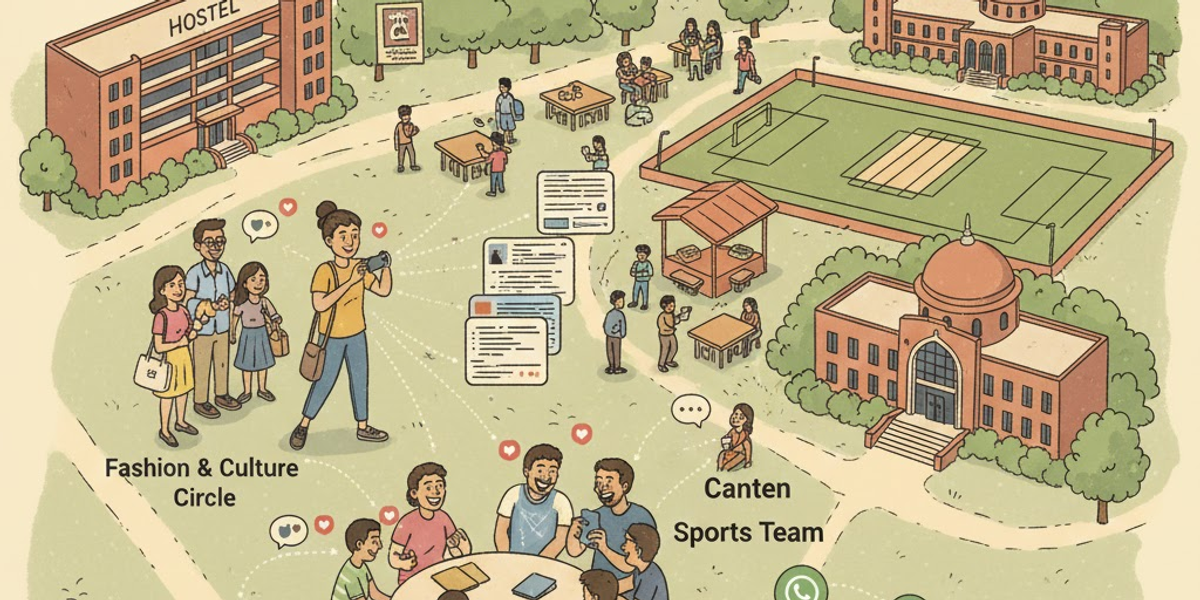
College campuses are not small. They are dense. Dense with opinions, judgment, inside jokes, group chats, and that one friend who somehow knows everything before it’s cool. Culture here does not trickle. It sprints.
As a team that spends a lot of time thinking, debating, writing, planning, executing, measuring, and sometimes overthinking hyperlocal marketing and content marketing ideas for campuses, we have seen one truth play out again and again. If a brand clicks on campus, it does not just click temporarily. It sticks. And the reason is simple. Campuses do not respond to marketing. They respond to people, participation, and honest social media conversations.
Why campuses behave differently from the rest of the internet and social media
A campus is not just another audience cluster for social media marketing. It is a living ecosystem. Students eat together, crib together, attend the same lectures, and scroll the same memes at 2 a.m. Offline and online are constantly overlapping. You post something on Instagram in the morning, and by evening it is being discussed near the chai tapri.
This changes the rules completely.
On campus:
- Reach without relevance is useless
- Popularity without credibility is short-lived
- One forced brand post can earn you the dreaded label of “sellout”
Yuvana, who lives and breathes social media with us, once said that campus audiences do not double tap content. They double check it. Who is posting, what they usually post, and whether this brand feels like a natural extension or a sudden plot twist.
That level of scrutiny is why traditional influencer marketing logic often collapses here. On campus, log kya sochenge is not a joke. It is strategy.
What hyperlocal campus influence actually means in marketing
Hyperlocal campus influencers are rarely the loudest voices in the room. They are the most trusted.
These are students who are known for something very specific. The one whose outfits everyone screenshots. The one who always knows which fest is worth attending. The one whose startup stories people quietly forward in group chats.
During one of our internal discussions, Sourav summed it up in the most no-nonsense way possible. Real influence on campus is not about how many people follow you. It is about how many people ask you, “Bhai, yeh worth it hai kya?”
That one line explains why dashboards alone never tell the full story. The most effective hyperlocal campus influencers often look average on paper and exceptional in real life. They influence across classrooms, hostels, clubs, and WhatsApp groups long before analytics, social media metrics, or ugc reports catch up.

Authenticity is not optional on campus content marketing
If the internet is forgiving, campuses are not.
Students have time, proximity, and a very sharp radar for anything that feels rehearsed. They can tell when someone is reading from a brief instead of speaking from experience.
This is exactly why peer-led content marketing and ugc work so well on campuses. If a student promotes something, their audience can literally stop them outside class and ask for the honest version. There is no hiding behind filters or captions.
Deeksha once laughed and said campus influencers are probably the only ones who cannot fake a testimonial even if they try. Someone will call them out before the post finishes loading.
For brands, the takeaway is simple. You cannot pretend. You have to show up honestly or not show up at all. Yeh audience bohot tez hai.
The invisible multiplier: offline amplification and participation
Here is the part that most reports miss.
Campus influence spreads offline first.
Before likes and shares:
- Someone notices a product in class
- Someone shares a link in a hostel group
- Someone brings it up over chai or maggi
By the time content starts performing online, the decision has often already been made offline. This is why campus campaigns sometimes feel magically effective compared to their numbers on social media dashboards.
Maaz and Surya, who spend their days knee-deep in sales data, ugc metrics, and results, often remind the team that campus ROI rarely announces itself loudly. It whispers. You see it in repeat mentions, steady traffic, growing participation, and in people already knowing the brand before they ever click an ad.
Why ambassador programs beat one-off hyperlocal campaigns
One-off campus influencer campaigns usually do not fail dramatically. They just fade away quietly.
Campuses reward consistency and participation. That is why long-term hyperlocal ambassador programs almost always outperform short bursts.
Programs like those run by NARS Cosmetics, Google Student Ambassador Program, and adidas Campus Ambassadors work because they are not trying to impress campuses through one-off marketing. They are trying to belong through sustained content marketing and ugc.
Yukta once said this during a planning call and the room just went quiet for a second. A campaign asks students to post. A program asks students to participate. That small shift changes everything.
When students feel involved, they stop acting like influencers and start acting like insiders. Aur insiders ke opinions matter.
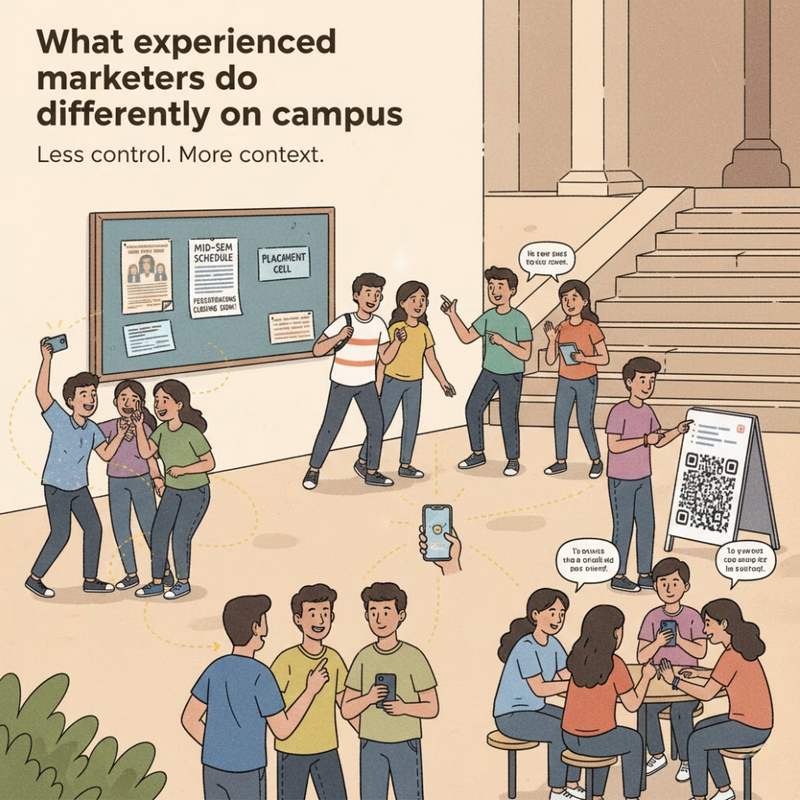
What experienced marketers do differently on campus marketing
The biggest difference between beginner and seasoned campus marketing teams is not creativity. It is restraint.
They build micro-networks, not stars
Instead of betting everything on one campus celebrity, they work with several niche hyperlocal voices. On campus, influence spreads sideways faster than it spreads upward.
They brief for direction, not scripts
Clear goals matter. Word-for-word scripts do not. Over-briefing is the fastest way to kill credibility in social media content marketing, and campus audiences smell that instantly.
They respect campus rhythms
Exams, fests, placements, semester breaks. Aditi from HR often jokes that campuses have more calendars than companies. Smart brands plan their hyperlocal marketing and participation-led campaigns with these rhythms, not against them.
Read next: Tap The City: Why Local Creator Networks Are the Real VIP..., Why local celebrities outperform national stars in RWA ev..., and The Future of Influencer Marketing Isn’t "Influencers".
They design for participation and ugc
The best campus campaigns feel like an inside joke students want to be part of. Challenges, limited access, campus-only perks, and shareable ugc. Yeh sab thoda exclusive lagta hai, and exclusivity always wins.
Measuring what actually matters in campus social media marketing
Likes and reach still matter, but they are not the whole story.
Experienced marketers look at signals of intent:
- Saves instead of just likes
Why Brands Choose CupShup as Their Influencer Marketing Agency
CupShup isn't just another influencer marketing agency — we use AI to identify the right creators, predict campaign performance, and track real business impact beyond vanity metrics. With 10,000+ campaigns across 300+ cities, our influencer strategies deliver authentic brand advocacy that converts.
- Quality of comments over quantity
- Repeated mentions across different students
- Offline indicators like event turnout or referrals
Divyanshu from data once pointed out that the strongest campus campaigns rarely spike once and disappear. They build slowly and then settle at a higher baseline. That is not virality. That is trust earned through consistent hyperlocal content marketing.
Tools help, but they are not the strategy
Yes, tools help with discovery, coordination, ugc tracking, and reporting. They bring structure to what can otherwise become chaos in social media marketing.
But no tool can tell you who is respected in a hostel, who feels authentic, or when content sounds forced. That insight comes from being close to the ground.
Bijoy, Mimi, Sufiyan, Jitendra, and Farhan say this all the time. You cannot automate culture. You have to observe it, understand it, and respect it.
Why campus influence scales beyond campus marketing
Here is the long game most people miss.
Campus influence is upstream influence.
Students carry brand memories into cities, workplaces, and future buying decisions. If they trusted you in college, they are more likely to trust you later. That is the quiet power of hyperlocal marketing done right.
Sidharth and the other Divyanshu from tech once joked that campus marketing is like writing code that keeps running silently in the background for years. You may not see it immediately, but it keeps delivering.
Final thought
Campus influencer marketing is not about being louder in a smaller space. It is about earning approval in a place where skepticism is high and opinions spread fast.
When done right, hyperlocal campus influencers create conversations, credibility, ugc, and continuity. Not just content.
Aur honestly, jab campus bolta hai “haan, yeh sahi hai”, that nod of approval is worth more than any media plan.
Want to build hyperlocal campus marketing that actually works?
If you are a brand trying to crack campuses without looking like you are trying too hard, let’s connect. You can also just drop us a ‘hi’ at contact@cupshup.co.in.
Check out our blogs or find us on LinkedIn or Instagram.
From ambassador programs to participation-led content marketing that turns ugc into real conversations, we help brands earn trust where it matters most.
Because campus marketing is not a test. It is an opportunity.
Get Started with CupShup Today
Ready to see real results? Book a Free Influencer Marketing Strategy Call → Join 500+ brands that trust CupShup.
50 Integrated Marketing Campaign Ideas
The complete playbook with campaign frameworks, budget templates, and measurement guides for Indian brands.
Instant download + email copy. No spam, ever.
Explore CupShup Services
Brands that read this article also explored these services.
Influencer Marketing Agency
Performance-led influencer campaigns, micro to macro, Instagram to YouTube, with trackable ROI.
Learn more SocialSocial Media Management
End-to-end social media strategy, content, and community management for brand growth.
Learn more ActivationBrand Activation Agency India
400+ brand activations across India, from corporate campuses to RWA societies and malls.
Learn moreAakriti Mishra
Senior Marketing Strategist at CupShup with over 8 years of experience in brand activation and integrated marketing campaigns. Aakriti specializes in creating data-driven strategies that deliver measurable results for modern brands.
Related Stories


Go Deeper with Our Free Guides
Comprehensive, in-depth marketing guides created by CupShup's experts.
The Ultimate Guide to Brand Activation
Everything you need to know about bringing your brand to life, strategies, examples, and frameworks.
The Ultimate Guide to Digital Marketing
Master every channel in the modern digital marketing ecosystem, from SEO to paid media.
The Ultimate Guide to SEO
The definitive guide to search engine optimization, on-page, technical, and link building strategies.