
Play to Stay: Why Smart Gamification Is the Secret Weapon for Repeat Participation
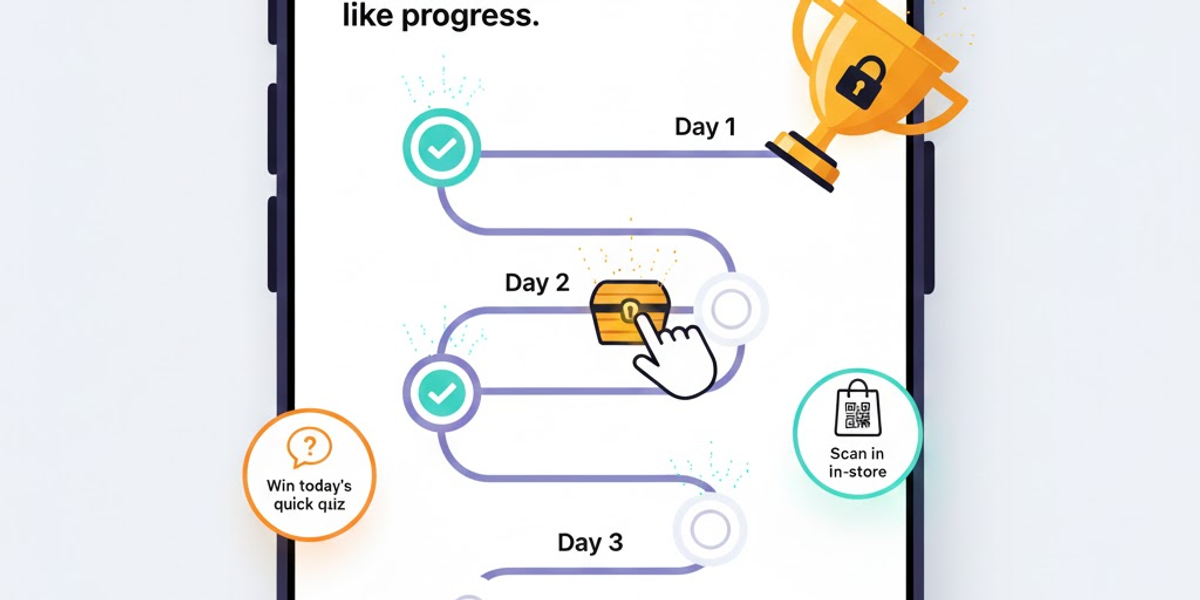
If you have ever opened an app “just for two minutes” and discovered 20 minutes later that you are desperately protecting a streak, chasing XP like it’s a board exam score, or trying to outrank strangers on a leaderboard… welcome to the glorious universe of gamification in modern marketing. A universe where brands turn everyday behaviour into a game and users like us happily keep playing.
Looking for an experiential marketing agency that creates moments people never forget? CupShup combines AI-powered planning with on-ground experiential marketing across 10,000+ campaigns, helping brands connect with audiences through immersive, measurable experiences.
Modern brands are rediscovering a truth gamers have known forever. People don’t return for features. They return for progress. For wins. For dopamine. And sometimes, for the pure joy of not letting a cartoon owl judge them.
But here’s the insider bit. Gamification isn’t some fairy dust that you sprinkle onto an app and watch user retention rise. As Sourav keeps saying whenever we discuss campaign mechanics, if the behaviour design isn’t solid, badges and points become “jhakaas wrapping on an empty gift box". He’s right. Gamification is behavioural architecture, not decoration.
So in this blog, let’s unpack the real science, psychology and on-ground examples of gamification that actually drive repeat participation. And yes, Duolingo will be in here because that owl has cracked the code better than half the industry.
Why Gamification Works in Marketing: The Science Behind the Fun
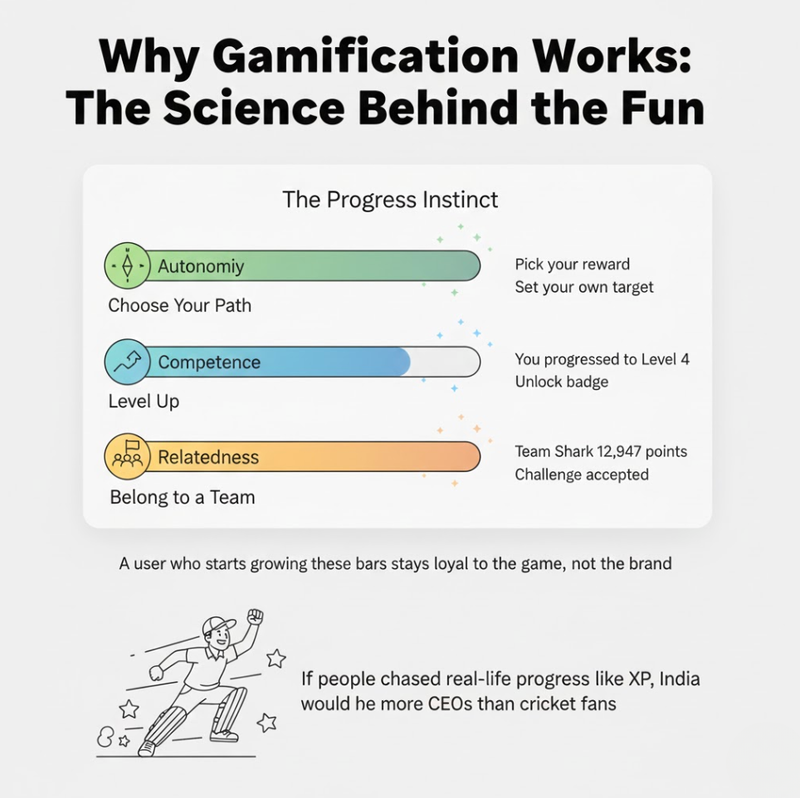
Humans respond to three deep needs. Autonomy, competence and relatedness. When these needs are met, people naturally stay engaged and come back for more. That is why gamification fuels consistent interaction, customer loyalty and long-term amplification.
- Competence explains why users love moving from Level 3 to Level 4.
- Autonomy explains why people enjoy set-your-own goals more than forced tasks.
- Relatedness explains why groups, rivalries and team challenges feel more exciting than going solo.
Gamification taps into all three. It is not a gimmick. It is science meeting behaviour. Divyanshu, who handles numbers with almost spiritual focus, once pointed out that if people chased real-life progress like they chase XP, India would have more CEOs than cricket fans. Fair point.
Studies also show gamification reduces switching behaviour in competitive categories because users become emotionally tied to their progress. Once someone feels part of a journey, they rarely want to exit the game.
What the Pros Know: The Exact Gamification Ingredients That Make Marketing Work
Here are the levers experienced marketers swear by. Simple to understand, hard to execute well, but totally worth it for long-term amplification.
1. Progression drives obsession in gamification
Progress bars. Levels. Streaks. XP.
These are powerful because they make users feel like they are moving forward.
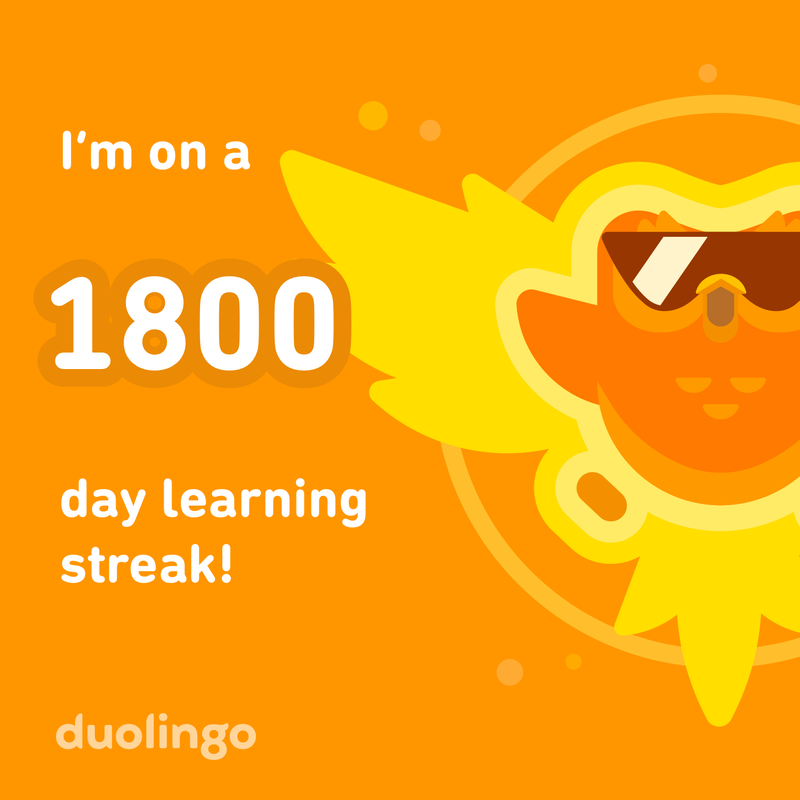
Duolingo uses this perfectly. Their streak system taps into loss aversion. No one wants to be the person who breaks a 300-day streak because that flame icon has become a personal badge of honour. And we have all been bullied by that owl at least once.
Google Pay also nailed this with the old collectible stamps during the Go India campaign. People took detours to scan QR codes in random kirana stores. That is progress-based design working brilliantly and showing how gamification can drive real-world marketing amplification.
2. Perceived value matters more than shiny badges
Users stay loyal only when the reward feels worth the effort. This is where marketing teams often confuse quantity for value.
Free coffee after 10 purchases is value.
Exclusive previews, bonus upgrades and VIP access feel even more valuable.
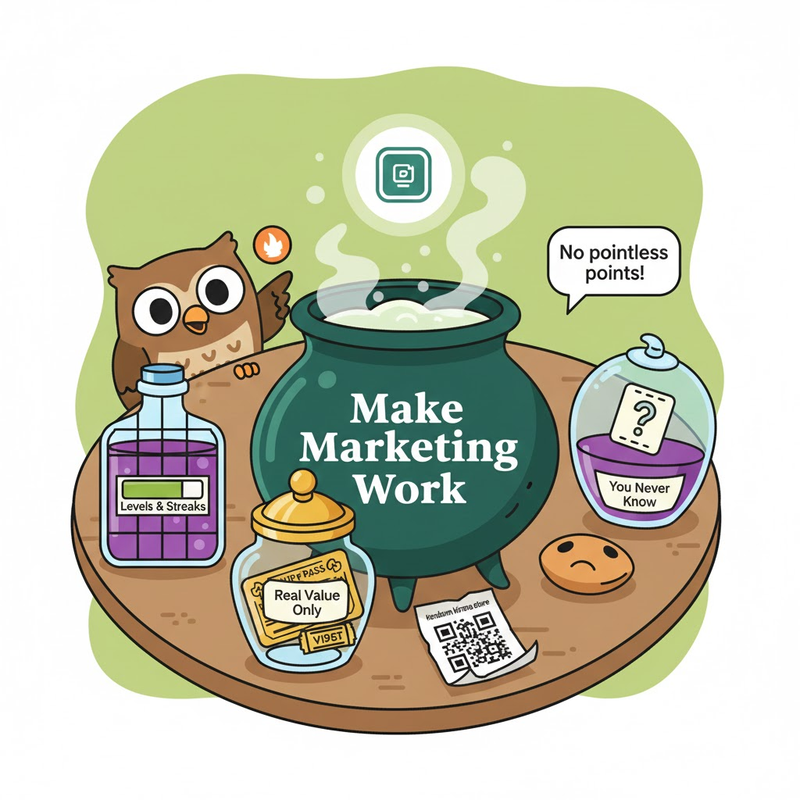
Bhavika once summed this up perfectly in a team chat, saying pointless points are like vada pav without the pav. Looks exciting on the outside, no real value on the inside. This metaphor has lived rent-free in our heads ever since.
3. Surprise rewards keep users hooked
Surprise rewards hit differently because unpredictability creates curiosity. The brain loves novelty. Several amplification strategies rely on this simple truth.
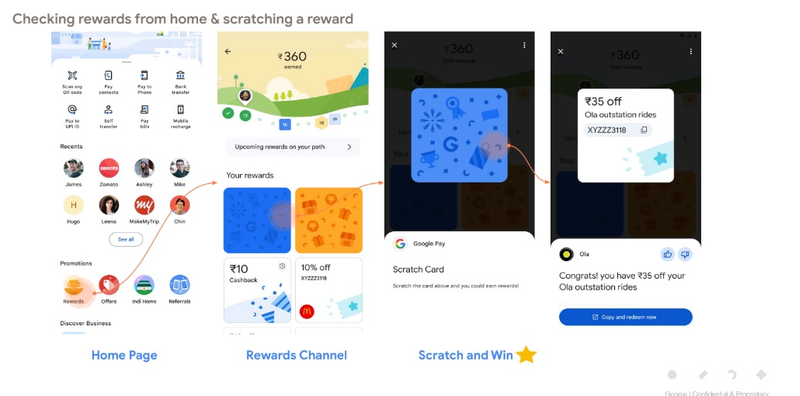
Google Pay scratch cards are the best example. Even when people get six rupees, the act of scratching feels rewarding.
Zara does this too with sudden special prices. It is unpredictable and that unpredictability sparks discovery. In a marketing context, unpredictability often becomes shareable content, leading to organic amplification.
4. Social comparison drives participation
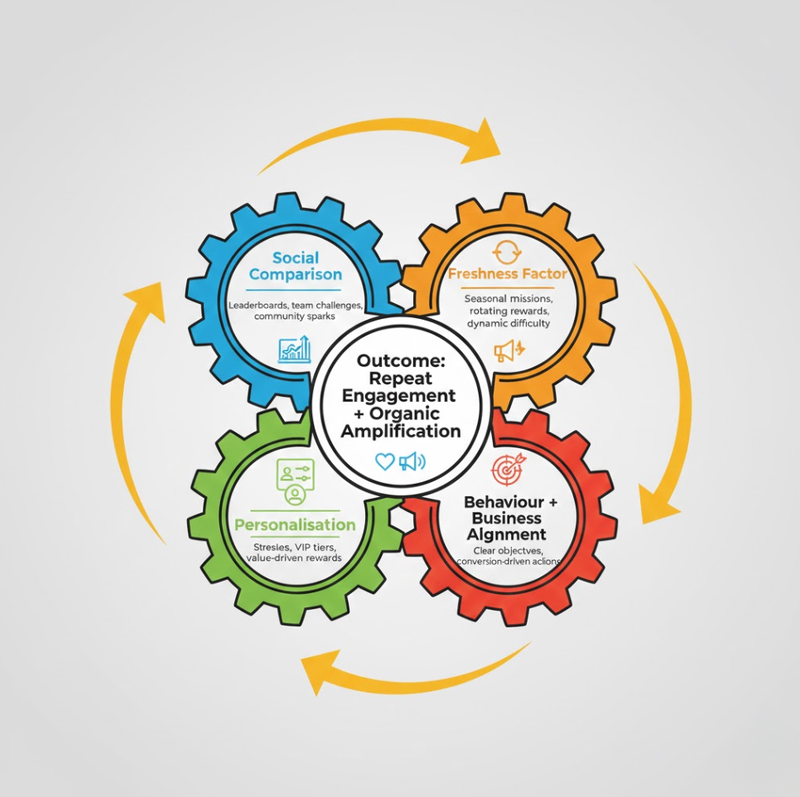
Leaderboards, team challenges, community milestones.
People love competing. They love watching others compete even more.
Strava built an entire ecosystem around this. Someone in Bandra runs a 7k and suddenly half the city is trying to beat it on Monday morning.
Even internal team dynamics work this way. Whenever we share metrics, someone from social (usually Stuti or Yuvana) casually asks which post performed best or which city drove more reach. That tiny competitive spark is pure gamification psychology and a key amplification trigger in marketing behaviour.
5. Freshness is non-negotiable
Every seasoned marketer knows novelty fades fast. Users get bored.
That is why Amul stays relevant with ongoing topical content.
Gamification works the same way. If your challenges and rewards stay the same forever, interest dips sharply.
Seasonal missions, quarterly refreshes, rotating rewards and updated difficulty levels make sure engagement stays high. It keeps the experience new, making users more likely to return and amplify the journey organically.
6. Behaviour and business alignment is everything
Gamification is successful only when behaviour design and marketing goals align.
- Daily check-ins might build habit but missions should also drive conversions.
- Referral-based rewards must push acquisition.
- Progress-based bonuses should drive frequency or basket value.
As Maaz keeps reminding us, if the behaviour isn’t defined clearly, mechanics will always fail no matter how fancy they look. Effective marketing always begins with a crystal-clear objective and gamification follows the same principle.
7. Personalisation lifts performance
Different people respond to different triggers.
- Gen Z loves streaks.
- Value seekers love discounts.
- Premium consumers love VIP tiers.
- Social extroverts love community missions.
Krithika said once during brainstorming that gamification fails faster than gym plans if we pretend everyone wants the same things. And honestly, she is right.
Personalisation also boosts amplification because people talk about experiences that feel tailored to them.
Real Gamification Examples That Prove Amplification Works
Duolingo
The undefeated master. XP, streaks, leagues, badges and personalised lessons. Their entire app is designed like a game and retention is proof that this works. A perfect example of how gamification turns into everyday amplification because users love sharing their streaks.
Zomato
From Gold to Prime, their tiered benefits with personalised offers feel like mini challenges. Their push notifications often read like quests and they genuinely drive reorders. It is gamification hidden inside witty marketing.
Google Pay
Scratch cards. Stamps. Virtual travel.
One of the most successful gamified finance experiences in India. Every marketing team studied this for its natural amplification effect.
Nike Run Club
Read next: AR + Offline: When Digital Layers Meet Real-World Fun in ..., Sensory Marketing: How Touch, Smell & Sound Build Brand R..., and Offline Overload: How real-life experiences beat screen f....
Read next: AR + Offline: When Digital Layers Meet Real-World Fun in ..., Sensory Marketing: How Touch, Smell & Sound Build Brand R..., and Offline Overload: How real-life experiences beat screen f....
Uses progress, milestones, virtual coaches and achievements to make running feel like a quest. Surya from the team once admitted his longest streak exists solely to avoid disappointing the app.
How Indian Brands Should Use Gamification for Marketing and Amplification
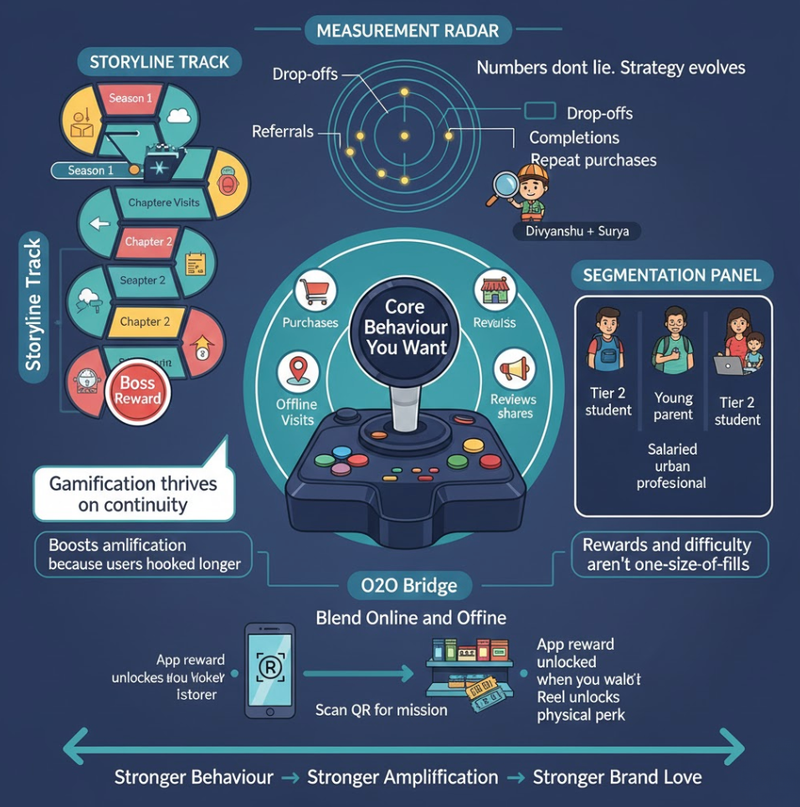
Start with the behaviour you want
Do you want users to buy twice a month? Visit offline stores? Share reviews?
Whatever the goal is, let missions, rewards and progression ladder up to that.
Build a storyline, not a stunt
Gamification thrives on continuity.
Think seasons. Think chapters. Think loyalty arcs.
This also boosts amplification because users stay involved for longer.
Why Brands Choose CupShup as Their Experiential Marketing Agency
CupShup isn't just another experiential marketing agency — we're a team that's built experiential thinking into the DNA of 10,000+ brand activations across 300+ Indian cities. From immersive brand experiences and pop-up activations to AI-powered audience insights and real-time engagement tracking, our hybrid experiential + tech approach delivers impact that traditional agencies can't match.
Blend online and offline
QR challenges in-store, app rewards for visiting outlets, social tasks that unlock physical perks.
O2O gamification is one of the strongest levers Indian brands underuse.
Segment users properly
Tier 2 college students are not the same as young parents or salaried urban customers.
Tailor the difficulty, reward and tone accordingly to maximize marketing outcomes.
Measure constantly
Drop-offs, completions, referral chains, repeat purchase curves.
Numbers always tell the truth, and Divyanshu and Surya usually catch patterns before anyone else does.
Pro Tips From the CupShup Trenches for Better Gamification Amplification
These come from our own experiments, trials, successes and fails in marketing and campaign amplification.
- Launch quarterly Mission Boards to add freshness.
- Add Flash Surprises for unexpected delight.
- Use VIP tiers to create emotional value.
- Add team-based missions to create social energy.
- Personalise rewards because sabka motivation alag hota hai.
- Increase difficulty slowly. No one likes missions that feel impossible on day one.
- Keep communication playful. Tone is 40 percent of gamification success and a crucial amplification lever.
Deeksha once said that even gyms would work if they gave XP for not cancelling class. And honestly, that might just be the best insight in this entire blog.
Final Thought: Gamification Isn’t a Feature. It’s a Feeling.
Gamification transforms users from passive participants into active players.
From customers into community members. From transactions into progress.
It is behaviour design wrapped in fun. It is loyalty disguised as personal achievement. And at its best, it creates that tiny spark that makes someone say, “Chalo yaar, ek aur try kar leti hoon".
And if you want your brand to spark that feeling at scale, you don’t need more discounts. You need better game design and marketing amplification powered by real psychological triggers.
Want Us To Build Your Brand’s Gamification Engine?
If this topic speaks to you and you want to turn your brand into a habit people can’t let go of, our team at CupShup can help you design a full Gamification Blueprint tailored to your audience, category and business goals.
From missions to milestones to reward ladders and O2O marketing amplification, we will build your game the right way.
Just say the word and we will get started.
Ready to Get Started? Talk to CupShup
Whether you're planning a high-impact campaign or looking for a experiential marketing agency that delivers real results — CupShup's team is ready to help. Book a Free Experiential Marketing Strategy Call →
50 Integrated Marketing Campaign Ideas
The complete playbook with campaign frameworks, budget templates, and measurement guides for Indian brands.
Instant download + email copy. No spam, ever.
Explore CupShup Services
Brands that read this article also explored these services.
Brand Activation Agency India
India's leading brand activation agency, 400+ campaigns, pan-India reach, real-time dashboards.
Learn more ExperientialExperiential Marketing Agency
End-to-end experiential campaigns that create memorable brand moments and drive measurable ROI.
Learn more BrandBrand Strategy Services
Brand identity, positioning, and messaging frameworks built for competitive Indian markets.
Learn moreAakriti Mishra
Senior Marketing Strategist at CupShup with over 8 years of experience in brand activation and integrated marketing campaigns. Aakriti specializes in creating data-driven strategies that deliver measurable results for modern brands.
Related Stories


Go Deeper with Our Free Guides
Comprehensive, in-depth marketing guides created by CupShup's experts.