
The Hidden Mind: The Psychology Behind Why People Pull Out Their Wallets

Introduction: The Invisible Forces at Checkout
Looking for a brand activation agency that creates unforgettable experiences? CupShup delivers AI-powered brand activations across 10,000+ campaigns in 300+ Indian cities — turning passive audiences into passionate brand advocates.
We’ve all been there. You open your favorite shopping app just to “browse”, and ten minutes later, you’re typing your CVV like it’s your Aadhaar number. Or you walk into a store for toothpaste and somehow end up with a cart full of snacks, candles, and a plant you’ve already named “Babloo”. That’s not a lack of self-control yaar, that’s psychology in action.
Understanding why people buy is marketing’s most thrilling mystery. Beneath every purchase, whether it’s a luxury perfume or a Rs. 15 roadside chai, lies a mix of emotions, instincts, and social influences. For brands, especially in India’s buzzing consumer market, cracking this psychological code isn’t optional, it’s survival. Or as Maaz says, “If you don’t get inside the customer’s head, someone else already has”.
So, let’s explore what truly makes people say “Bas, yehi chahiye!” through science, strategy, and a dash of desi humor.
The Foundations: What Consumer Psychology Studies
At its heart, consumer psychology studies the why behind every buying decision: why we pick Brand A over Brand B, why we feel loyal to certain names, and why a 20% discount feels like destiny.
According to Harvard’s Division of Continuing Education, consumer psychology blends behavioral economics, social psychology, and neuroscience to decode customer thought patterns (Harvard DCE). The Journal of Consumer Psychology notes that emotion drives most purchases and logic only shows up later to justify them.
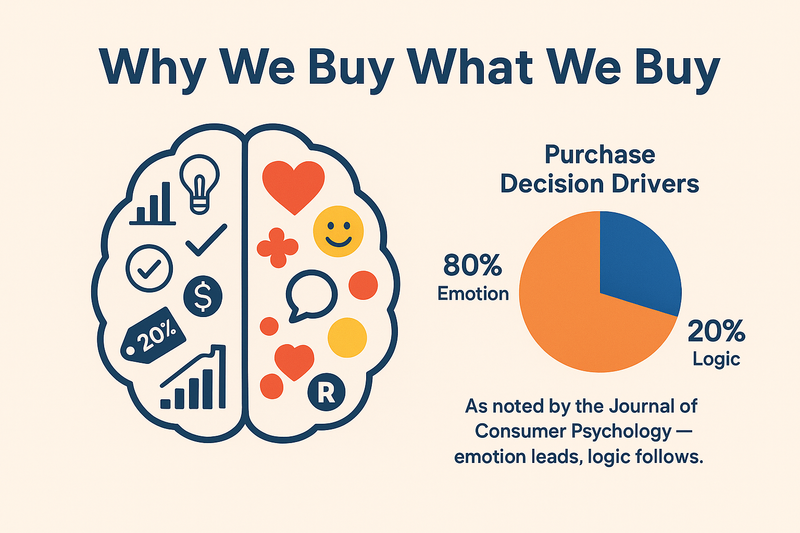
Think of it like this: no one buys a coffee machine just for caffeine. They buy the feeling of being productive, put-together, and ready to conquer Monday. That’s why I always say that People buy stories, not specs.
The best marketers understand this: they don’t sell products, they sell how you’ll feel after buying them.
Core Psychological Drivers of Buying Behavior
1. Emotion and Mood: Logic Takes the Backseat
Studies show that 95% of buying decisions are made subconsciously (Harvard Business School, Gerald Zaltman). Emotions guide people far more than logic. Joy, pride, comfort, nostalgia, these drive wallets to open faster than you can say “checkout now”.
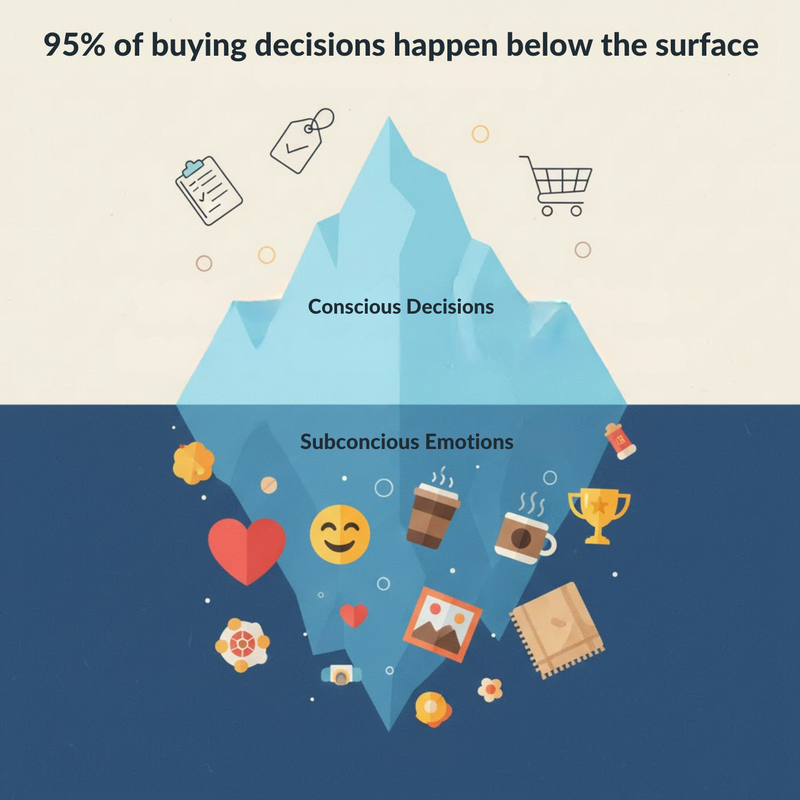
Emotional ads outperform rational ones by nearly double. You can’t out-discount emotion. If your brand makes someone tear up or smile, congratulations, you’ve just built retention without a loyalty card.
Pro Tip: Make people feel seen. Empathy in messaging beats perfection in production. Don’t just tell them what your product does, tell them why it matters to them.
2. Social Proof and Herd Behavior: The Bandwagon is Always Full
We humans are basically social animals with shopping bags. When we see others trusting a brand, our brain whispers, “safe choice”. A 2022 study in Frontiers in Psychology found consumers are 40% more likely to purchase when they see peer validation (Frontiers in Psychology).
It’s why e-commerce sites flash “5,000 people bought this today”. That’s not data, that’s emotional reassurance. Sourav often jokes, “Show someone a ‘trending now’ tag, and they’ll buy faster than a Diwali sale”.
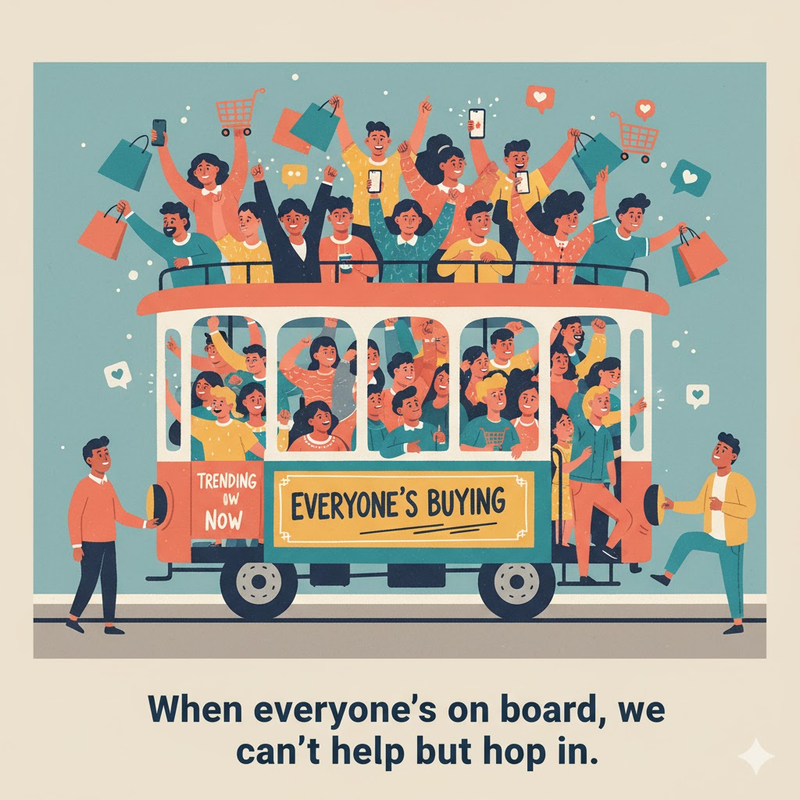
Pro Insight: Empower micro-influencers and community voices. Authentic recommendations always outshine celebrity endorsements. Build credibility by amplifying your customers’ voices, not just your campaign budget.
3. Perceived Control and Choice: Freedom Sells
Here’s the twist, people don’t want a thousand options. They want control. Studies show customers feel happier when given 3 to 5 curated choices instead of 20. The right amount of control builds trust.
When brands offer easy returns, flexible payments, or personalized suggestions, they’re not just simplifying shopping, they’re empowering buyers. As Krithika says, “Give customers a steering wheel, not a maze”.
Pro Tip: Use guided discovery. Help your audience make confident decisions, not confusing ones. Offer a sense of choice that feels personal, not overwhelming.
4. Familiarity and Mere Exposure: Comfort in the Known
We like what we recognize. The more familiar a brand looks and sounds, the safer it feels. This is the mere exposure effect where people develop preference through repeated exposure (Verywell Mind).
That’s why brands repeat colors, jingles, or taglines. Think of that one ad jingle stuck in your head from 2010, that’s exposure magic. Consistency equals credibility.
Pro Tip: Keep your visuals and tone steady. Repetition doesn’t mean boring, it means memorable. When you stay consistent, your audience starts trusting you without even realizing it.
5. Loss Aversion and FOMO: Missing Out Hurts More Than Spending
Kahneman and Tversky’s behavioral studies revealed a truth every Indian shopper knows instinctively: missing a deal feels worse than overspending. A Psychological Science study showed loss-based framing can increase conversions by 60%.
But fake scarcity? Big no-no. Surya from data once ran a campaign that overused “only 3 left!” tags, and guess what, conversion rates dipped. Trust, once lost, doesn’t come back on express delivery.
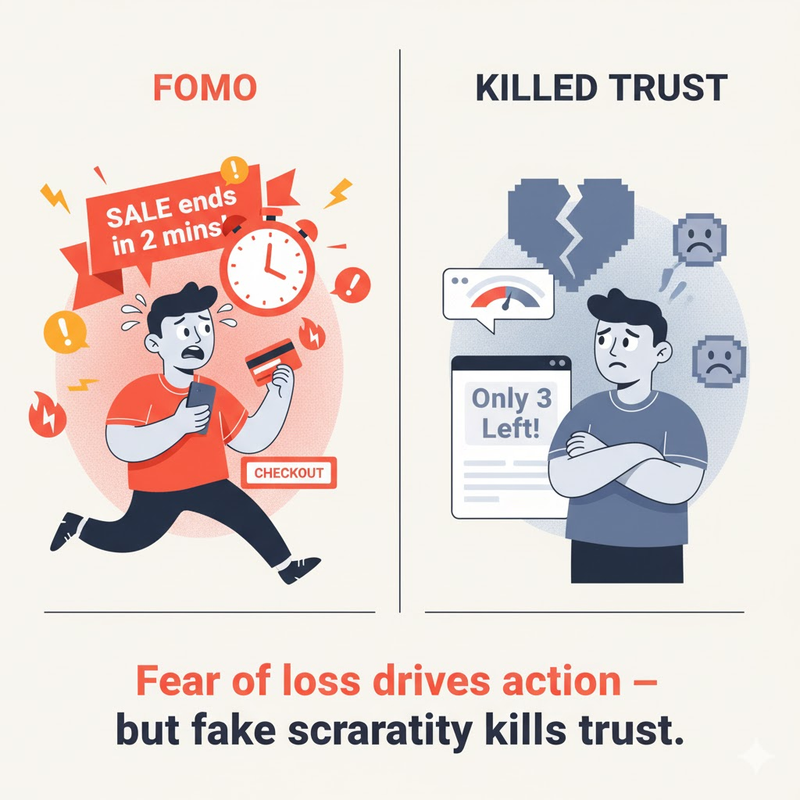
Pro Tip: Create genuine urgency. Reward early buyers instead of scaring late ones. Phrases like “exclusive first access” sound inviting and credible.
6. Identity and Belonging: We Buy Who We Want to Be
Every purchase is a reflection of who we are or who we aspire to be. A 2021 Journal of Consumer Research study showed customers align brands with their ideal self-image.
When Divyanshu analyzed our campaign data, he found lifestyle-driven products outperformed utility-driven ones by 37%. “People buy personalities, not just products”, he said. And he’s right.
Pro Insight: Position your brand as an identity builder. You’re not selling sneakers, you’re selling self-expression. You’re not selling clothes, you’re selling confidence.
Additional Psychological Phenomena Worth Knowing
Read next: QR codes aren’t dead: Using them smarter, From Buyers to Believers: How Modern Brands Turn Customer..., and Brand Activations 101: How to Turn Eyeballs Into Conversa....
Read next: QR codes aren’t dead: Using them smarter, From Buyers to Believers: How Modern Brands Turn Customer..., and Brand Activations 101: How to Turn Eyeballs Into Conversa....
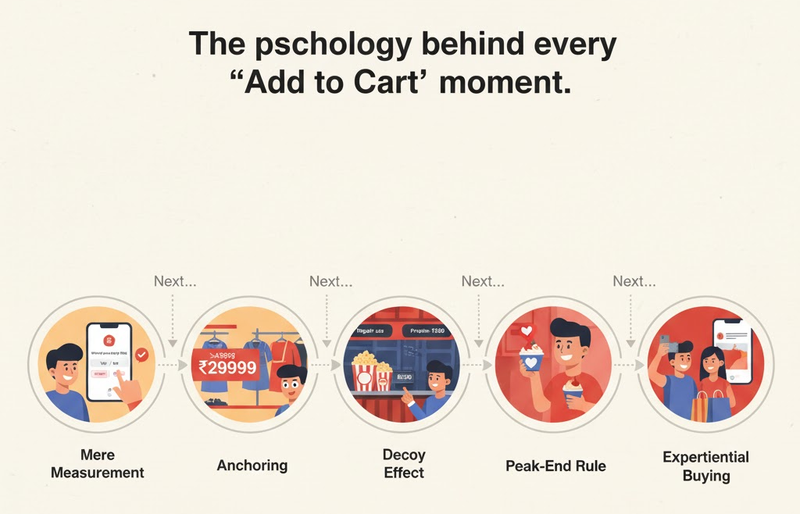
- Mere-Measurement Effect: Asking people if they’d buy something actually increases the chance they will.
- Anchoring Bias: The first price sets the tone. A Rs. 4,999 cut to Rs. 2,999? Instant dopamine hit.
- Decoy Pricing: Add a slightly worse option to make your main one shine. Movie theatres mastered this long ago.
- Peak-End Rule: Customers remember the best and last parts of an experience, nail those moments.
- Experiential Buying: Experiences bring more happiness than things. Wrap your product in an experience, not just a box.
Why Brands Choose CupShup as Their Brand Activation Agency
CupShup isn't just another brand activation agency — we're a team that's built brand activation into the DNA of 10,000+ campaigns across 300+ Indian cities. From immersive pop-ups and sampling drives to AI-powered audience targeting and real-time activation dashboards, our hybrid experiential + digital approach delivers brand recall that pure-play agencies can't match.
Real-World Example: FabIndia’s Heritage Play
When FabIndia launched its handwoven collection, it didn’t sell sarees, it sold nostalgia. The campaign showed real artisans (social proof), limited editions (FOMO), and authentic stories (emotion). It wasn’t fabric, it was identity stitched with pride.
That’s the psychology of belonging, done right.
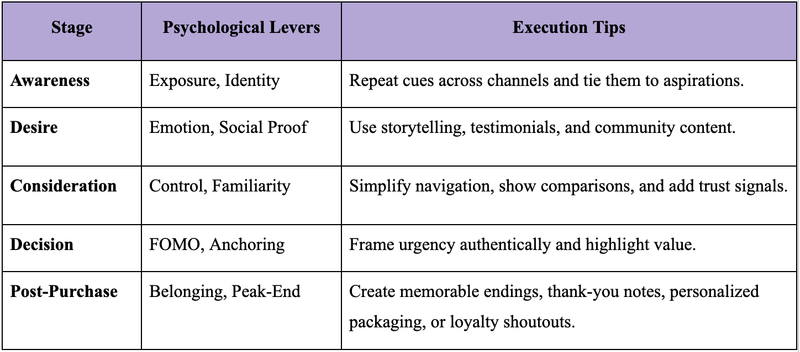
Putting It All Together: A Sample Journey Framework
Practical Tips and Pitfalls for Indian Brands
- Hyperlocal Wins Hearts. Local language, local pride. India buys what India relates to.
- Honesty Over Hype. Don’t fake scarcity or overpromise. Customers have sharper BS detectors than ever.
- Emotion Before Promotion. Start with empathy, end with offers.
- Blend Novelty with Comfort. Experiment, but don’t alienate. New ideas wrapped in familiar emotions stick.
- Track What Truly Matters. Divyanshu and Surya swear by tracking not just conversions, but sentiment. Emotions leave better clues than clicks.
Conclusion: Marketing That Moves, From Cups to Conversations
At the end of the day, people don’t buy products, they buy better versions of themselves. The best marketers know how to balance insight with instinct, and data with delight.
As Sidharth from tech likes to say, “We can track clicks, but we can’t track goosebumps”. And that’s exactly what great marketing does, it gives people a reason to feel something first and think later.
So, the next time a customer clicks “Buy Now”, remember, it wasn’t the discount that won. It was the dopamine, the connection, and maybe just a little bit of Babloo the plant magic.
Ready to Turn Psychology into Profit?
If you’re a marketer, brand manager, or storyteller looking to make your audience say “Take my money”, it’s time to blend emotion with insight. At CupShup, we help brands move from moments to movements. Let’s create marketing that doesn’t just sell, but moves.
Reach out, and let’s turn those cups into conversations.
Ready to Get Started? Talk to CupShup
Whether you're planning a high-impact campaign or looking for a brand activation agency that delivers real results — CupShup's team is ready to help. Book a Free Brand Activation Strategy Call →
50 Integrated Marketing Campaign Ideas
The complete playbook with campaign frameworks, budget templates, and measurement guides for Indian brands.
Instant download + email copy. No spam, ever.
Explore CupShup Services
Brands that read this article also explored these services.
Experiential Marketing Agency India
Immersive brand experiences, pop-ups, product launches, live demos, and phygital events.
Learn more ActivationBrand Activation Services
On-ground engagement campaigns with tech-enabled tracking and verified results.
Learn more IntegratedIntegrated Marketing Agency
360-degree campaigns that blend offline activation with digital amplification for compounded ROI.
Learn moreAakriti Mishra
Senior Marketing Strategist at CupShup with over 8 years of experience in brand activation and integrated marketing campaigns. Aakriti specializes in creating data-driven strategies that deliver measurable results for modern brands.
Related Stories


Go Deeper with Our Free Guides
Comprehensive, in-depth marketing guides created by CupShup's experts.
The Ultimate Guide to Brand Activation
Everything you need to know about bringing your brand to life, strategies, examples, and frameworks.
The Ultimate Guide to Digital Marketing
Master every channel in the modern digital marketing ecosystem, from SEO to paid media.
The Ultimate Guide to SEO
The definitive guide to search engine optimization, on-page, technical, and link building strategies.