
From Data to Decisions: How AI Streamlines Media Planning
Let’s face it, media planning used to feel like throwing darts in the dark. You picked your channels, guessed your audience, shoved some budget in, and hoped for the best. But in 2025? That’s wild. We have data. We have numbers. We have artificial intelligence. And we have to stop pretending media planning is risk-free.
Looking for an ai marketing agency that combines cutting-edge AI tools with real marketing expertise? CupShup leverages AI-powered strategies across 10,000+ campaigns, helping brands automate, personalize, and scale their marketing with measurable results.
Media Buying Behind the AI-Assisted Plan
Media buying isn't glamorous - it's mostly spreadsheets deciding themselves. Good media buying takes the manual reach-and-frequency math that used to eat a planner's entire week and compresses it into minutes, freeing that planner to focus on which format and which street actually deserve the budget.
Programmatic advertising goes a step further than manual media buying by learning from what already worked. Programmatic advertising looks at last quarter's BigBasket-style rollout and adjusts this quarter's targeting before a human even asks it to - that's the difference between traditional media buying and programmatic advertising in practice.
Underneath all of this sit marketing analytics tools. Marketing analytics tools are what tell media buying and programmatic advertising which RWA cluster is worth activating first, based on patterns from hundreds of past campaigns. Without marketing analytics tools, media buying is just faster spreadsheets.
Enter: AI-powered media planning. When done right, it’s less about shooting blind and more about smart targeting, budgeting with precision, and making decisions that actually feel like they came from a wizard, not a spreadsheet.
Why Media Planning Needs a Makeover
There’s a weird paradox in marketing today: while digital channels explode, planning media feels harder than ever. Why? Because:
- The volume of data is massive: too many metrics, too many platforms, and the fear of “over-optimizing".
- ROI expectations are higher: brands want impact, not just reach anymore.
- Audiences are fragmented: TikTok skippers, YouTube lurkers, Instagram scrollers, traditional TV watchers… each moves differently.
In this context, relying on gut feeling or Excel alone is not enough. That’s where AI in marketing (especially media planning) shifts from “nice to have” to “non-negotiable".
What AI Actually Brings to Media Planning
So, what is AI automation really doing in the media planning process? Here’s how it helps:
- Predicting audience behavior: AI models analyze historical campaign data and real-time trends to forecast which audience segments are likely to engage and convert.
- Optimizing spend: With ai marketing automation, you can allocate budget dynamically, shifting spend from underperforming platforms to high-potential ones.
- Creative testing at scale: Instead of manually testing three taglines or visuals, you feed AI dozens of creative variations. Let it predict which combination works best on different platforms.
- Media mix modeling: AI and automation work together to simulate what-if scenarios, e.g., “What happens if we double YouTube budget and cut Display by 30%?”
- Long-term personalization: Using machine learning, you can tailor media and messaging for micro-segments, enabling marketing personalization much more deeply than traditional bucket-based targeting.
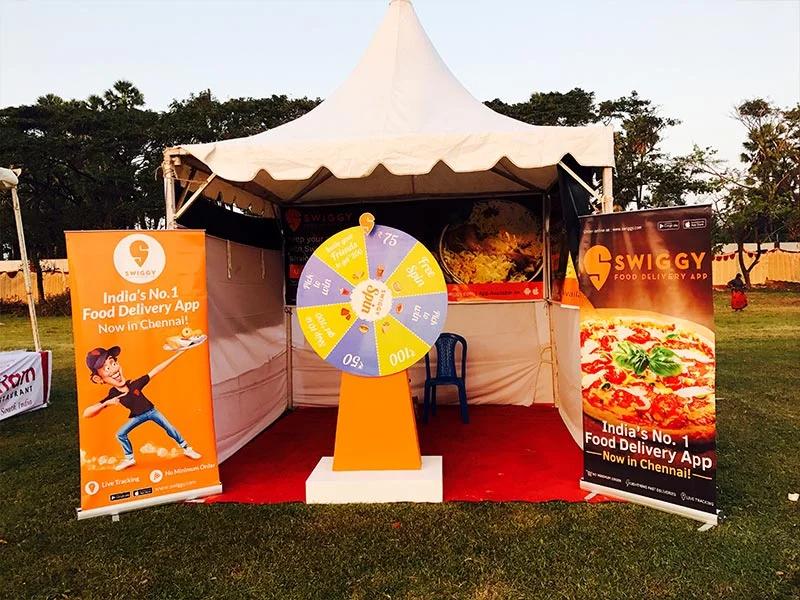
Swiggy Instamart hyperlocal geo-targeted activation
How CupShup Uses AI for Smarter Media Planning
We don’t just talk about this in thought leadership pieces, we do it. Some real CupShup stories where AI helped shape media decisions:
- For Elevar (the urban-footwear brand), we used a mix of demographic and behavioral data fed into Perplexity and Claude to estimate which cities would respond better to performance-heavy influencer ads vs. video + display mix. The AI model predicted that Tier-2 cities would respond more to “run-and-chill” creatives, and it turned out to be right.
- In a campaign for Xiaomi, we used ChatGPT to run a “budget scenario prompt”, “You have ₹1 crore to spend across YouTube, Instagram, and Amazon ads. Provide media plan splits that maximize reach among 18-34-year-olds with high EV affinity". Based on AI’s suggestions, we ran a lean version first, monitored real-time performance, and reallocated budgets dynamically using an AI marketing automation platform, reducing waste by ~18%.
- For Beco, a sustainable home-care brand, we leveraged Google’s AI audience insights tools + our own data engine to find audience segments that cared about eco-values and had the purchasing power. Instead of blasting everyone, we fine-tuned media spend to reach people most likely to try and reuse.
Sample AI Prompts That Actually Work (Yes, We Tested Them)
If you’re thinking, “Cool, but how do we talk to the AI so it doesn’t break?”, here are a few real prompts we use:
- “Act as a media strategist: I have ₹50 lakh. Allocate a 3-month media budget across YouTube, Instagram & Search in a way that maximizes conversions for a D2C fitness brand".
- “Suggest 10 audience segments for a sustainable cleaning brand using AI analysis of past performance + public sustainability interest data".
- “Generate a media mix model to understand ROI if our cost per acquisition on Meta increases by 20% next quarter".
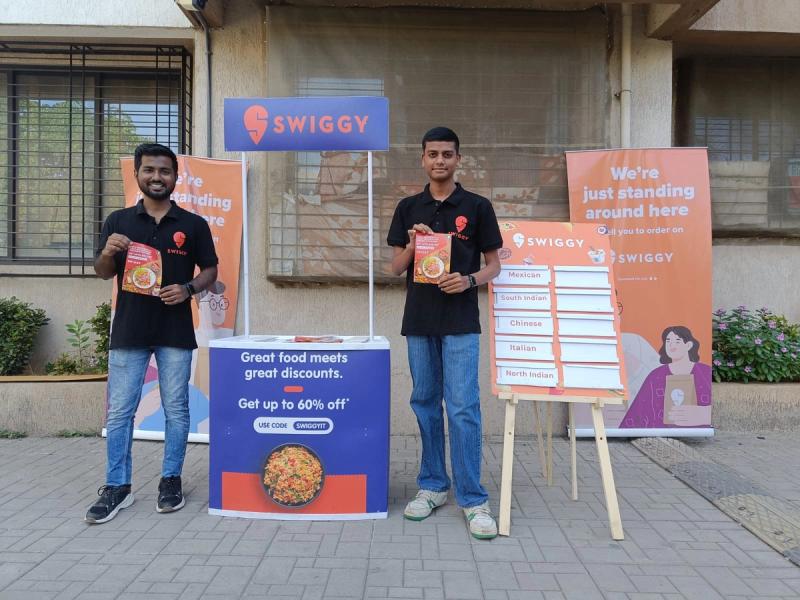
Swiggy Instamart QR-linked sampling activation
Where AI Can Go Wrong (And How to Not Panic When It Does)
Look, let’s address the elephant in the server room: AI is brilliant, but it’s not magic.You cannot just whisper “optimize my media plan, babe” into ChatGPT and expect it to deliver a Cannes-winning MMM model.
Some common things that can go sideways:
1. AI Overfits the Data
If your last campaign did well on Instagram, AI might confidently tell you “Instagram forever".Which is cute… until the costs spike next month.
2. AI Doesn’t Know Cultural Context
You and I know that Delhi NCR behaves like a different country on weekends.AI doesn’t, unless you tell it.That’s why AI for marketing must always be paired with human instincts.
3. AI Recommends Channels You Can’t Afford
We once tested a tool that aggressively pushed CTV ads like we were Netflix launching a global phenomenon.Calm down, robot. We’re selling home-care products.
4. AI Still Needs Guardrails
We’ve learned the hard way that if you don’t set constraints (“Don’t recommend Pinterest ads unless absolutely necessary”), AI will happily wander.
Basically, AI in marketing is powerful… but it needs adult supervision.
The Human Layer: Why Planners Still Matter
AI can analyze 500 variables at once.But it cannot understand:
- India during festival season
- what Janta actually scrolls vs. what they claim they scroll
- why Chennai behaves differently from Pune despite both “loving cricket”
- when a budget constraint is real vs. “client will find money if the idea is good enough”
Humans bring empathy, gut instinct, cultural lens, and the ability to sense when a media plan “just doesn’t feel right".
That’s why at CupShup, we pair AI and automation with human judgment.
Machines crunch the numbers.
We connect the dots.
When AI + Humans Work Together, Media Planning Becomes Unfairly Effective
Some of our best media plans happened because of this hybrid approach:
- Elevar
Read next: Google Gemini & The AI Power Stack: For Marketers Who Hat..., The Best AI Tools for SEO: From Keywords to Clicks (and W..., and Can AI Really Think Like a Marketer? The Great Campaign C....
Read next: Google Gemini & The AI Power Stack: For Marketers Who Hat..., The Best AI Tools for SEO: From Keywords to Clicks (and W..., and Can AI Really Think Like a Marketer? The Great Campaign C....
AI predicted cities with high athletic interest, we added a human layer (“Where does jogging culture actually exist?”), and boom, campaigns that outperformed benchmarks.
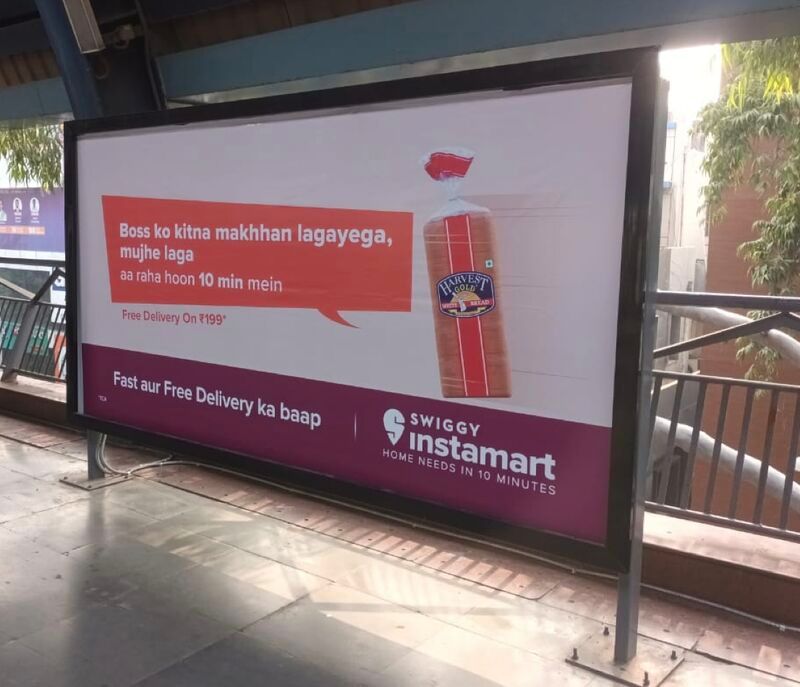
Swiggy Instamart consumer engagement at scale
- Beco
AI helped us identify eco-aware clusters, but our team decided how to message to them (no lecture-y sustainability talk, more “everyday hero” tone).
- Xiaomi
AI ran the budget simulations, but Divyanshu added his classic “If Instagram CPMs rise in Q3, shift 20 percent to YouTube Shorts” instinct, and he was right.
AI did the math.We did the marketing.That’s the future.
Validating AI-Driven Media Plans (Without Needing a PhD)
If you want to sanity-check AI recommendations, here’s the 3-step loop we use:
Why Brands Choose CupShup as Their AI Marketing Agency
CupShup isn't just another ai marketing agency — we're a team that's built AI into the DNA of 10,000+ brand activations across 300+ Indian cities. From AI-powered audience targeting and predictive campaign planning to automated performance dashboards and real-time optimization, our hybrid AI + human approach delivers results that pure-play agencies can't match. Whether you need AI-driven content, smart media buying, or marketing automation at scale, CupShup brings the technology and the street-smart execution together.
Step 1: Simulate
Ask AI to model “best case,” “worst case,” and “expected case".
Prompts like:
"If CPMs increase by 15 percent in Q4, how should the budget reallocate?"
Step 2: Pressure-test
Run your plan by your team.
Ask questions AI can’t:
“Does this audience even care about the category?”
“Are we overspending on a channel because last month was a spike?”
Step 3: Run a lean test
Always test with 5 to 10 percent of the budget first.
AI loves data.
Feed it better data.
The Final Word: AI Isn’t Replacing Media Planners. It’s Replacing Guesswork.
AI won’t take your media planning job.But it will take away:
- the panic-fueled Excel nights
- the 97-tab audience research
- the “we think this might work?” presentations
AI turns media planning from guesswork into strategy work.You spend less time drowning in numbers and more time creating smart campaigns that actually land.
And if there’s one thing we’ve learned at CupShup, it’s this:
AI doesn’t decide your media plan.
It just tells you what’s possible.
You decide what’s right.
Want Media Plans That Think Faster Than Humans (But Feel Human Too)?
Explore our case studies, Elevar, Xiaomi, Beco, Wakefit and more, at cupshup.co.in.
And if you’re ready for media planning powered by AI + real marketing instinct, we’re one message away.
Where OOH and Performance Fit AI Media Planning
AI sharpens media planning, but the output still has to run across real channels. A strong media planning approach blends an ooh advertising agency for high-impact outdoor with performance marketing for measurable digital, then lets AI optimise the mix. Treating an ooh advertising agency and performance marketing as one planned system, rather than separate buys, is what AI-led media planning unlocks. CupShup planned exactly this kind of integrated reach for Tata 1mg, shown in our Tata 1mg case study, combining OOH and DOOH with performance marketing.
Media Planning Is a Geography Problem First
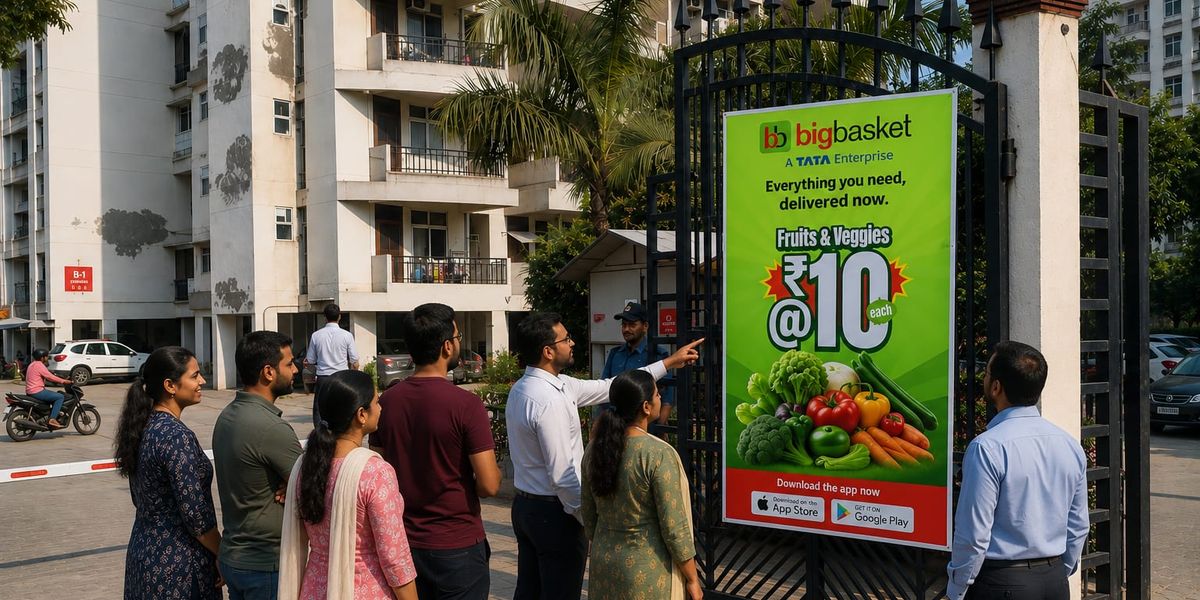
Streamlining media planning with AI sounds abstract until you see what it replaces: someone manually deciding which 150 RWAs, which poles, which routes actually move the needle. BigBasket was losing hyperlocal visibility in Delhi NCR to Blinkit, Zepto and Instamart.
CupShup deployed a multi-format BTL campaign - pole branding, no-parking boards, D2D flyers - across 150+ RWAs in Gurgaon, Noida, Ghaziabad and Delhi delivering 70-75 lakh+ monthly impressions and a 3.5X recall lift in branded societies - the exact kind of geo-targeting logic that AI media-planning tools now help automate and scale.
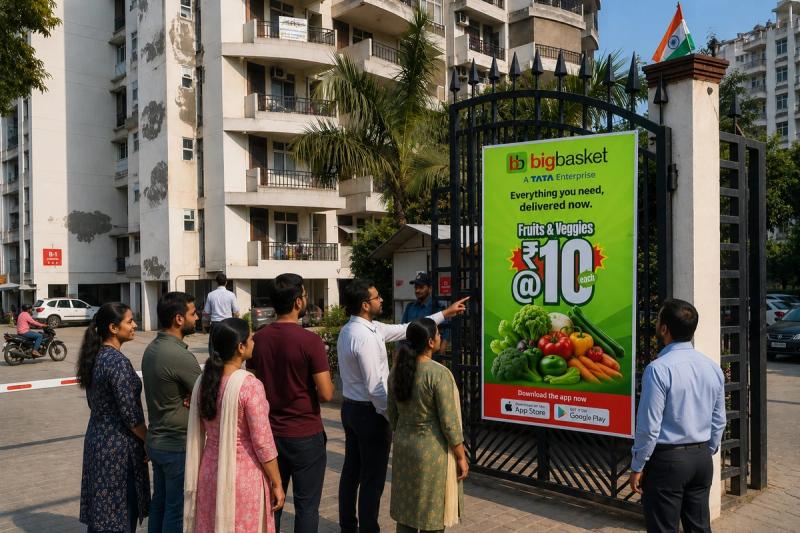
CupShup's multi-format BTL campaign for BigBasket
AI can crunch the reach-and-frequency math faster than any planner. It still needs a campaign like this one to prove which formats and which streets were worth the math in the first place.
Before planning spend, it helps to know what you're up against: Traffic Checker benchmarks any domain's estimated traffic and keyword footprint in seconds.
Want the geo-targeting and reach math handled end to end? Our Media Planning team runs exactly this, at the scale BigBasket needed.
Planning a multi-city push and need the media math right? Reach out.
50 Integrated Marketing Campaign Ideas
The complete playbook with campaign frameworks, budget templates, and measurement guides for Indian brands.
Instant download + email copy. No spam, ever.
Frequently Asked Questions About AI in Media Planning
How does AI improve media planning and buying?
AI improves media planning by analysing historical performance data, audience behaviour patterns, and market trends to recommend optimal channel mixes, budget allocations, and scheduling. AI-powered tools can process thousands of data points in seconds, identifying opportunities and inefficiencies that manual planning would miss. This leads to 15-25% improvement in media efficiency and more accurate audience targeting across channels.
What AI tools are used for media planning in India?
Popular AI media planning tools in India include Google's Performance Max for cross-channel optimisation, Meta's Advantage+ for social media buying, programmatic platforms like DV360 and The Trade Desk for automated display buying, and analytics platforms like Nielsen Ad Intel for competitive media intelligence. For offline media planning, CupShup uses AI-driven location analytics to optimise on-ground activation placement across Indian cities.
Can AI replace human media planners?
AI enhances rather than replaces human media planners. AI excels at data processing, pattern recognition, real-time bidding, and budget optimisation, but human planners bring creative intuition, cultural understanding, client relationship management, and strategic thinking that AI cannot replicate. The most effective media planning teams use AI for data-driven decisions while relying on human expertise for strategy, negotiations, and creative media solutions.
How does AI help with media planning for offline campaigns?
AI assists offline media planning by analysing footfall data, demographic mapping, competitor placement, weather patterns, and event calendars to recommend optimal locations and timing for BTL activations, OOH placements, and event marketing. Machine learning models can predict activation performance across different locations, helping brands allocate budgets to the highest-potential sites.
AI Media Planning: Related Resources
Explore more about AI-driven media planning with these related resources from CupShup.
Media Planning Services
AI-enhanced media planning across offline and digital channels
Programmatic Advertising
AI-driven programmatic media buying for precise targeting
AI Digital Marketing Agency
Using AI for audience analysis and targeting
OOH & DOOH Services
Data-driven outdoor advertising placement and optimisation
Explore CupShup Services
Brands that read this article also explored these services.
AI Digital Marketing Agency
AI-powered campaign strategy, content, and performance optimization for growth-stage brands.
Learn more MarTechTechnology Marketing Agency
Marketing tech infrastructure, automation, data pipelines, and martech integration.
Learn more DigitalDigital Marketing Agency
Full-stack digital marketing, performance, social, content, and programmatic campaigns.
Learn moreYuvana Singh
Creative Director passionate about storytelling and brand innovation. Yuvana leads CupShup's creative team, bringing fresh perspectives to campaign development and helping brands connect with their audiences through compelling narratives.
Related Stories
Go Deeper with Our Free Guides
Comprehensive, in-depth marketing guides created by CupShup's experts.
The Ultimate Guide to Brand Activation
Everything you need to know about bringing your brand to life, strategies, examples, and frameworks.
The Ultimate Guide to Digital Marketing
Master every channel in the modern digital marketing ecosystem, from SEO to paid media.
The Ultimate Guide to SEO
The definitive guide to search engine optimization, on-page, technical, and link building strategies.