
Ambient Advertising Examples: 7 Campaigns That Stopped India
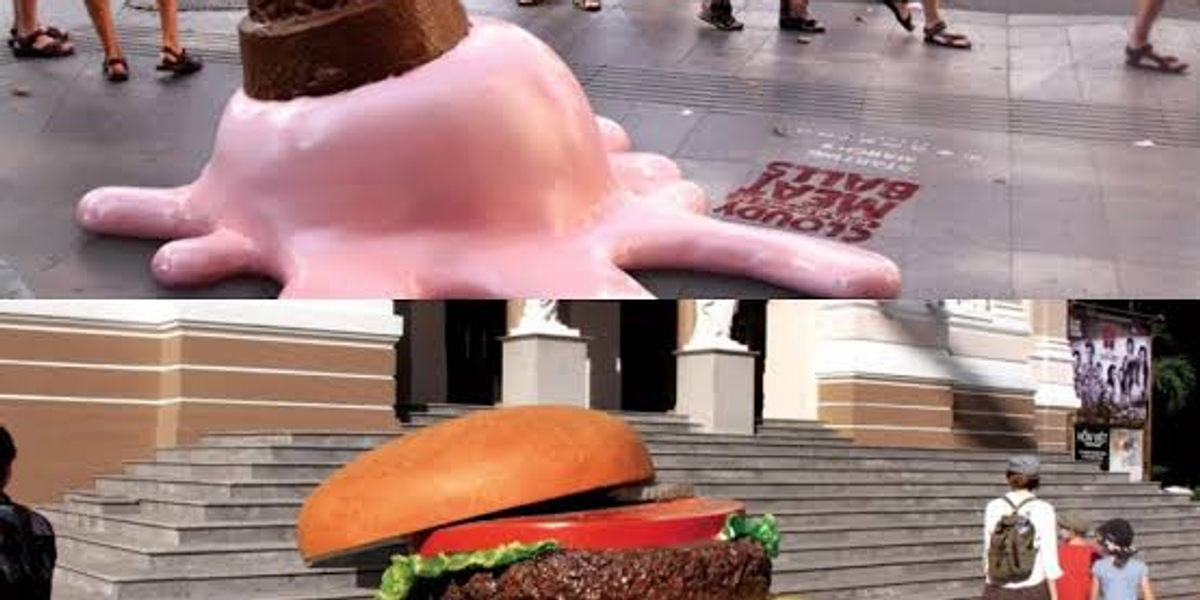
Most ads beg for attention. Ambient advertising earns it. Instead of buying a billboard and hoping people look up, ambient advertising hides a brand inside the places people already are, a bus shelter, a staircase, a coffee cup, a manhole cover, and turns a dull moment into a story worth sharing. Done well, it is the cheapest route to outsized buzz in Indian cities, which is exactly why it sits at the heart of what a modern OOH advertising agency actually sells.
Watch: the PhonePe Metro campaign
This guide breaks down seven ambient advertising examples that worked in India and abroad, the difference between ambient and guerrilla, where ambient fits inside an out-of-home plan, and how CupShup builds these campaigns end to end. We have placed creative installations across 300+ Indian cities for 400+ brands, so the examples below are the patterns we see repeat.
What Is Ambient Advertising?
Ambient advertising places a brand message inside the everyday environment so it feels like part of the surroundings rather than an interruption. The medium is the message: a park bench becomes a sofa, a staircase becomes a piano, a paper cup becomes a 15-minute conversation in an office pantry. Because it lives where attention naturally settles, it slips past the ad fatigue that kills banner and pre-roll performance.
It is a close cousin of out-of-home (OOH marketing) advertising, but not the same thing. Classic OOH marketing, hoardings, transit panels, gantries, rents a fixed space and broadcasts to everyone who passes. Ambient advertising reshapes the space itself. The smartest campaigns use both: an OOH marketing footprint for reach, an ambient twist for the share.
Ambient vs Guerrilla Advertising: What's the Difference?
People use these terms interchangeably, and they shouldn't. The line is simple:
- Ambient advertising integrates. It blends into an existing space and rewards the people already there. A bus shelter quietly becomes a living room.
- Guerrilla advertising disrupts. It interrupts a space with a surprise, a stunt, a flash installation, a moment that stops you mid-step.
Ambient is the slow smile; guerrilla is the double-take. If you want the loud, stunt-led version of this playbook, our roundup of guerrilla marketing examples covers India's best. The most awarded campaigns borrow from both, an ambient install with a guerrilla-grade surprise factor.
7 Ambient Advertising Examples That Worked
1. Faber-Castell, "See, I Can Draw the Sky"
A transparent hoarding was positioned so a child's hand holding a crayon appeared to "draw" the real sky behind it. The clouds did the work; the media cost was almost nothing. It tapped a memory everyone shares, doodling clouds as a kid, and turned the sky into the canvas. When your media space is the world itself, the world pays attention.
2. IKEA, Bus Stop Living Rooms, Hyderabad
IKEA replaced ordinary Hyderabad bus shelters with cosy living rooms: real sofas, lamps, and shelves straight from the catalogue. Commuters didn't read about comfort, they sat in it while waiting for the bus. That is the ambient principle in one frame: let people live the product before they buy it. Ads that fit into real life beat ads that interrupt it.
3. Cadbury 5 Star, "#DestroyValentinesDay"
5 Star leaned into anti-romance, sending "uncles" to over-celebrate Valentine's Day in public until the whole thing felt gloriously uncool. It was reverse psychology aimed squarely at Gen Z, and it became a meme factory, earned media at scale. When your audience speaks in memes, meme back.
4. Amul, Cheese Bus Stop, Mumbai
Amul turned Mumbai bus shelters gooey with cheese-themed visuals and the pun-led copy the brand is loved for. It disrupted a boring moment, waiting for a bus, with flavour and a smile. Nobody forgets the day their bus stop made them laugh, and that recall is the whole point of an ambient buy.
5. ITC Fantastik, "Raise the Bar"
ITC let people dump their emotional baggage into a travelling truck in exchange for a fresh start, turning a product idea into Instagrammable catharsis that played perfectly on campuses. CupShup executed the on-ground build and routing for this activation, the full story is in our ITC Raise the Bar case study.
6. Optimist, The Smart-AC Branded Canter, Delhi NCR
Sometimes the most effective ambient surface moves. In 45°C Delhi NCR summer heat, CupShup ran a branded, air-conditioned canter for Optimist that drew crowds precisely because it offered relief, not just a logo. It is a textbook example of ambient OOH marketing that solves a real human need in the moment, see exactly how it ran in the Optimist smart-AC canter case study.
7. Sarova Hotels, Leopard on a Lamppost
A life-sized leopard perched on a Nairobi lamppost startled commuters first and educated them second: wildlife is running out of space. The shock drew the eyeballs; the message made them stick. Provocation works when it carries purpose, not just clickbait.
Plenty of consumer brands, from PhonePe's playful festive activations to Swiss Beauty's mall and retail presence, lean on the same instincts at a local level. The lesson holds across budgets: pick a high-dwell space, design for delight, and engineer the share.
OOH vs Ambient Advertising: Which Should You Use?
They answer different questions. Use OOH marketing when you need broad, repeated reach in a market, a launch, a category push, a city takeover where frequency matters. Use ambient when you need depth and shareability, a moment people photograph and spread for you. Most strong plans run them together: classic out-of-home for the numbers, an ambient centrepiece for the talkability. A good OOH and DOOH partner will plan both as one campaign, not two line items.
The deciding factors are dwell time and emotion. If your audience is already pausing, at a lift, a bus stop, a canteen, ambient hijacks attention that is being wasted. If they are moving fast, traditional OOH marketing formats do the heavy lifting.
Why Brands Choose CupShup as Their OOH Advertising Agency
CupShup has run ambient and out-of-home campaigns across nearly every surface imaginable, bus shelters, elevators, park benches, shopping carts, residential gates, and branded cups. As an OOH advertising agency we combine hyperlocal market intelligence with creative design and full execution: concept, fabrication, on-ground rollout across 300+ cities, and post-campaign analytics. With 400+ brands and 10+ years on the ground, we plan for the share, not just the impression. As both an OOH partner and a content marketing agency, CupShup plans the physical stunt and the digital follow-through together.
Ready to make your brand unskippable in the unlikeliest places? Talk to CupShup's OOH and ambient team and we'll design a campaign built to be photographed. That end-to-end model is what sets the best digital marketing agency in India apart from single-channel vendors.
Ambient, OOH, and Your Wider Marketing Mix
Ambient advertising rarely works in isolation. It pairs naturally with the work of an ooh advertising agency on one side and a content marketing agency on the other: the ambient placement creates the surprise, OOH gives it scale across the city, and content carries the story online. Brands that treat these as one plan get far more from each. A content marketing agency then repurposes each activation into blogs, reels, and case studies that keep it working for months.
This is why choosing partners matters. A content marketing agency turns the ambient moment into shareable stories and search-friendly pages, while the best digital marketing agency in india connects the whole campaign to performance and retargeting. The ambient idea is the spark; content and digital are what make it travel and convert. Working with the best digital marketing agency in India ensures your ambient spend feeds paid, social, and search — not just a one-day spectacle.
CupShup plans ambient and OOH alongside a content marketing and digital layer, so a clever real-world placement becomes a measurable, multi-channel campaign rather than a one-day talking point.
Frequently Asked Questions
What is ambient advertising?
Ambient advertising places a brand message inside the everyday environment, bus shelters, staircases, cups, benches, so it feels native to the space instead of interrupting it. Because it lives where people already pause, it sidesteps ad fatigue and earns shares rather than buying them.
What is the difference between ambient and OOH marketing?
OOH (out-of-home) rents a fixed space such as a hoarding or transit panel and broadcasts to everyone who passes. Ambient advertising reshapes the space itself so the medium becomes the message. OOH is built for reach and frequency; ambient is built for depth and shareability. Most effective plans use both together.
Is ambient advertising expensive?
Not necessarily. Many of the best ambient campaigns, like Faber-Castell using the real sky as a canvas, run on low media cost because the environment does the work. The investment shifts from media spend toward creative and execution, which is where an experienced OOH advertising agency adds the most value.
How do you measure ambient advertising results?
Track three layers: on-ground footfall and interactions at the installation, organic amplification (shares, reels, earned media, hashtag use), and downstream business signals such as QR scans, store visits, or leads. CupShup builds a measurement stack into every campaign so both reach and commerce are accounted for. The best digital marketing agency in India ties these signals to attribution dashboards for clear ROI.
Which Indian cities does CupShup cover for OOH and ambient campaigns?
CupShup executes ambient and out-of-home activations across 300+ Indian cities, from metros like Mumbai, Delhi NCR, Bengaluru, and Hyderabad to tier-2 and tier-3 markets, with local teams handling fabrication and installation.
50 Integrated Marketing Campaign Ideas
The complete playbook with campaign frameworks, budget templates, and measurement guides for Indian brands.
Instant download + email copy. No spam, ever.
Explore Creative Advertising Solutions
Discover CupShup's creative advertising and brand activation capabilities.
Explore CupShup Services
Brands that read this article also explored these services.
OOH & DOOH Advertising
Strategic outdoor media, static billboards, transit OOH, and programmatic digital screens.
Learn more IntegratedIntegrated Marketing Agency
Multi-channel campaigns that combine OOH reach with ground activation and digital follow-through.
Learn more BTLGuerrilla & Ambient Marketing
Creative ambient placements that make consumers stop, engage, and share.
Learn moreCuppa CS
Digital Marketing Expert specializing in AI-powered marketing tools and automation. Cuppa CS helps brands leverage cutting-edge technology to optimize their digital presence and drive customer engagement.
Related Stories

Go Deeper with Our Free Guides
Comprehensive, in-depth marketing guides created by CupShup's experts.