
When Complaints Go Viral (And Why Smart Brands Secretly Love It)
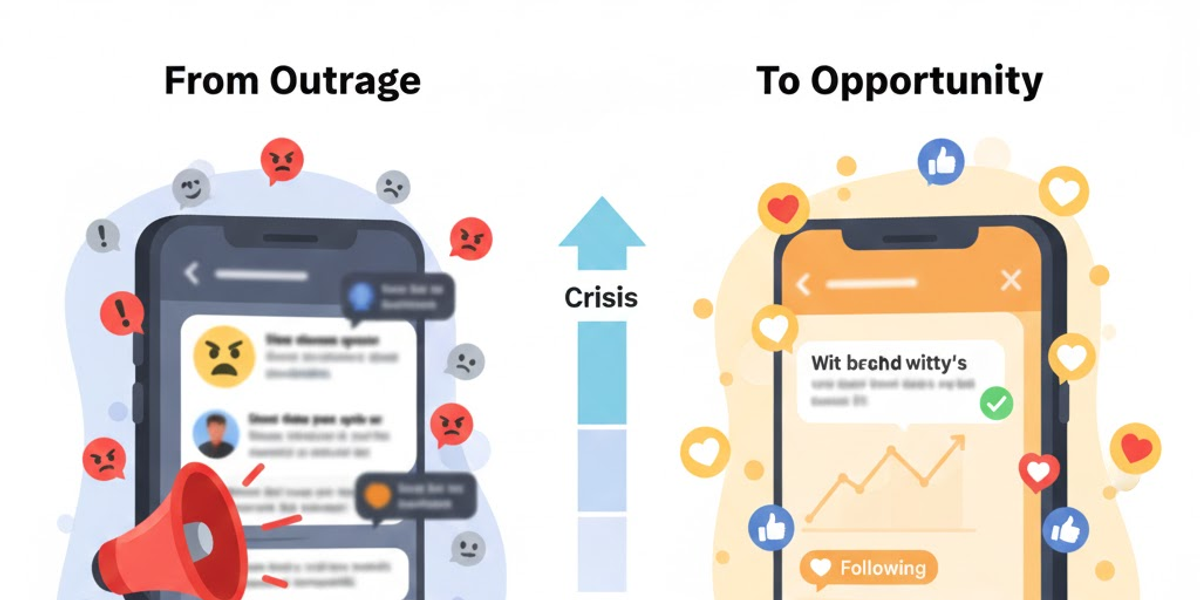
How experienced marketers turn customer backlash into brand equity instead of damage control through smarter marketing, participation, and amplification
Looking for a social media marketing agency that drives real business results? CupShup combines AI-powered analytics with creative storytelling to build social media strategies that convert followers into customers.
Let me be honest.
No marketer wakes up thinking, “Aaj ek solid customer complaint ho jaaye, maza aa jayega”. But if you have spent enough years in marketing, you know this for a fact: complaints are not a question of if, but when.
Products scale, customers get louder, platforms amplify everything, and suddenly one small miss becomes public property. Screenshot ho gaya. Reel ban gaya. Comment section khul gaya. What starts as a service issue quickly turns into organic ugc, public participation and unplanned brand amplification.
In 2025, a customer complaint is not a support ticket. It is a live brand moment and often an unexpected experiential marketing opportunity.
And the brands that survive are not the ones with zero complaints. They are the ones that know how to behave jab spotlight unplanned ho and know how to turn that moment into smart marketing solutions.
Why Customer Complaints Hit Different Today
This is something our entire team has seen play out again and again across marketing and experiential campaigns.
Most unhappy customers never complain to brands directly. They either leave quietly or vent publicly, often triggering ugc without the brand even realizing it.
So when someone does complain loudly, especially online, that is not just anger. That is expectation. It means they still believe the brand should do better and are inviting participation, whether the brand wants it or not.
During one of our internal content reviews, Yuvana casually said, “A complaint is basically a customer saying ‘I expected more from you’. That’s not rejection, that’s pressure”. Everyone in the room nodded because we have seen how quickly such moments turn into marketing narratives.
Experienced marketers understand this shift instinctively. A complaint today sits at the intersection of social media, algorithmic reach, ugc culture and community judgement. The response is no longer one-to-one. It is one-to-many, with amplification baked in.
You are not replying only to the customer. You are replying to everyone silently watching and deciding what kind of brand you are.
The Real Problem Is Not the Complaint, It Is the Awkward Silence After
If our marketing, client servicing and ops teams had a bingo card, “brand goes silent” would be a free square.
- A complaint pops up.
- The brand pauses to “check internally”.
- The internet fills the gap with jokes, theories and assumptions.
- By the time a polished reply arrives, damage ho chuka hota hai and the ugc narrative has already amplified itself.
Speed matters. Not rushed replies, but early acknowledgement that shows confidence.
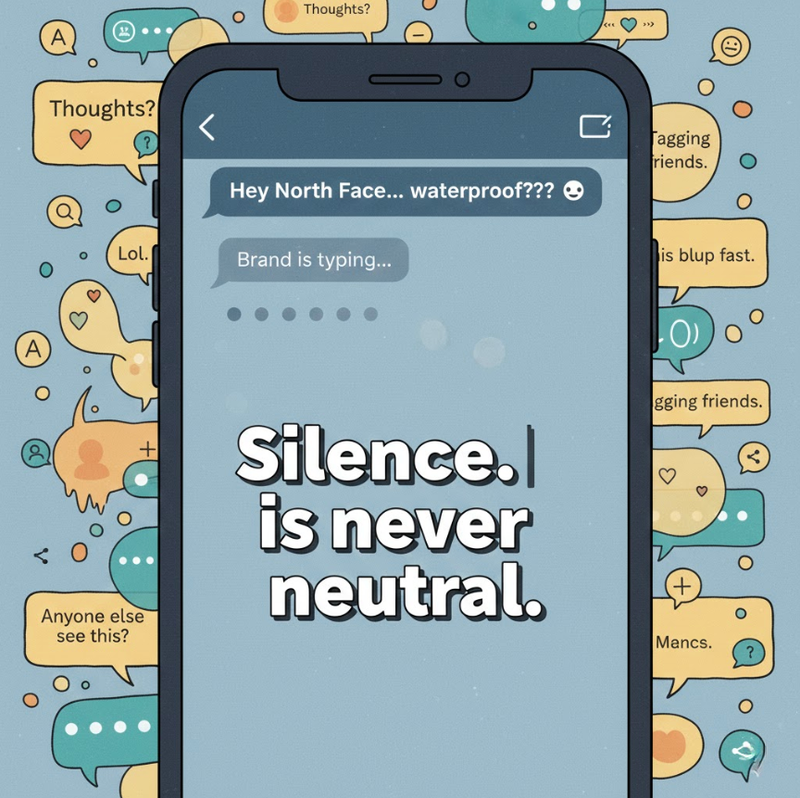
Sourav once summed it up perfectly during a campaign debrief. Silence online never reads as strategy. It reads as fear. That one line gets quoted internally more than any marketing framework.
A fast, human acknowledgement does more heavy lifting than a delayed perfect response. Confidence travels faster than correctness and sets the stage for positive amplification instead of negative participation.
Complaints Are Not a PR Issue. They Are a Brand Issue
One thing we keep reminding ourselves and our clients while building marketing solutions is that complaints are not just a communications problem.
They usually expose something deeper:
- A product did not meet the promise
- A process broke somewhere
- Expectations were never aligned properly
That is why the best responses do not sound overly crafted. They sound owned and real.
Strong teams prepare for this before anything goes wrong. Marketing, client servicing, ops, tech and leadership are aligned on what the brand will publicly own, what will be fixed quietly and what will never be debated online. This alignment is crucial when complaints turn into experiential moments that invite mass participation.
As Deeksha from client servicing once laughed during a crisis drill, “If we need approvals from five people before replying, we’ve already lost half the internet”. Sadly accurate.
Why Fixing a Problem Can Actually Build More Loyalty
This is one of those things you only believe after seeing it work across multiple marketing and experiential campaigns.
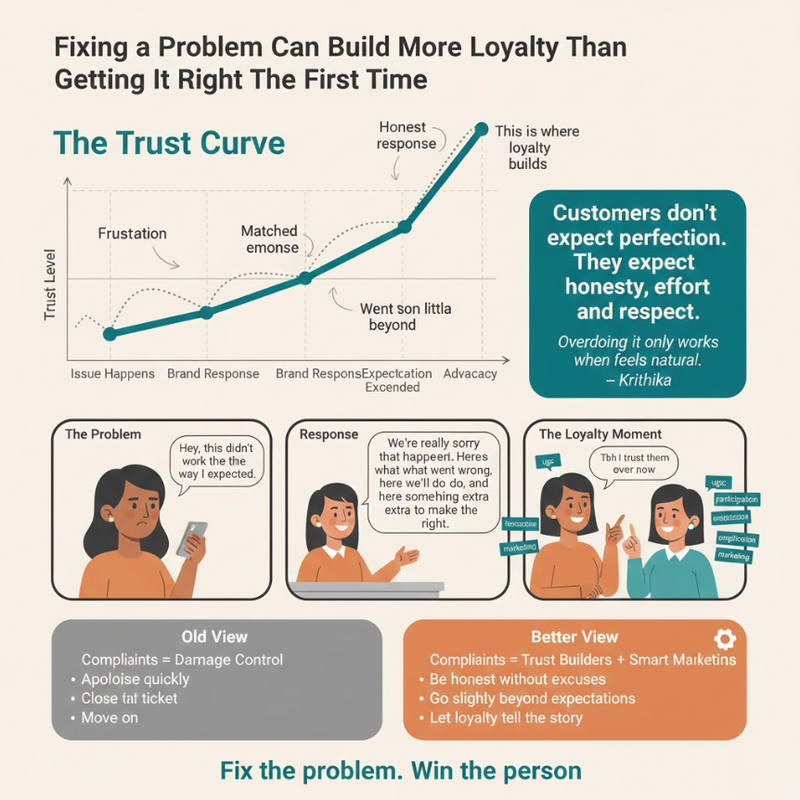
Customers do not expect perfection. They expect honesty, effort and respect.
When a brand acknowledges the issue without excuses, matches the emotional tone of the customer and goes slightly beyond expectations, trust increases. What follows is often organic ugc, positive participation and earned amplification.
Krithika put it very simply once. Overdoing it only works when it feels natural. Otherwise people smell PR from a mile away. That instinct comes from experience, not textbooks or generic marketing playbooks.
This is where complaints stop being damage control and start becoming trust builders and smart marketing solutions.
A Real Moment Done Right: The North Face
One of the cleanest examples of this approach comes from The North Face.
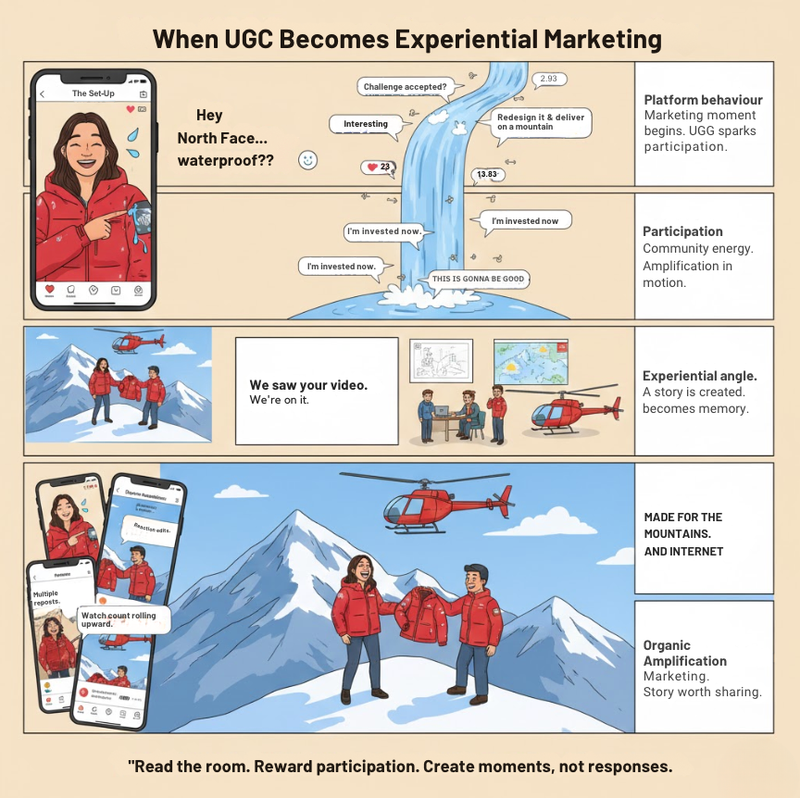
A customer posted a TikTok showing that her “waterproof” jacket was not actually waterproof. The tone was playful, not angry. She jokingly challenged the brand to redesign it and deliver it to her on a mountain. What followed was massive ugc and audience participation even before the brand responded.
This could have ended with a refund and a polite DM apology. Instead, the brand read the room and treated it like an experiential marketing moment.
They understood the platform was visual.
They understood the customer was joking, not attacking.
They understood the audience was already invested and participating.
So they chartered a helicopter, delivered a replacement jacket on a mountaintop and documented the moment. The result was organic amplification that money could not have bought.
This was not about showing off budgets. It was about belief. Belief in the product promise and confidence in the brand voice.
Maaz from sales watched the video and said something that stuck with all of us. “Yeh jacket ka case nahi hai. Yeh brand spine ka test hai”. Exactly that.
Read next: Community Marketing Strategy: How to Build Campaigns Arou..., User Generated Content Marketing: When Fans Become Your B..., and Why Brands Still Use Facebook?.
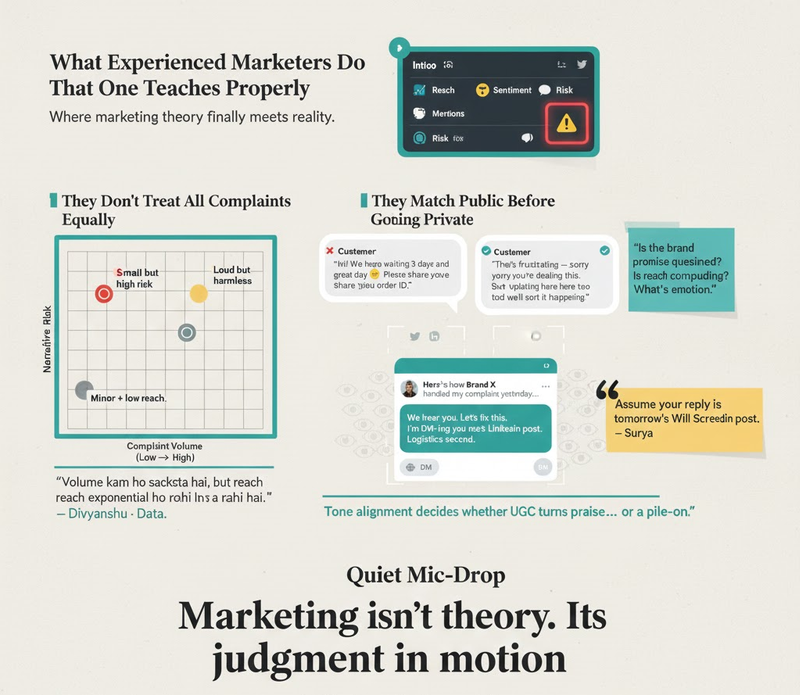
What Experienced Marketers Do That No One Teaches Properly
This is where real work begins and where marketing theory meets reality.
They Do Not Treat All Complaints Equally
Not every complaint needs a public spectacle or experiential response. Teams with experience assess narrative risk. Is the brand promise being questioned? Is reach growing fast? Is the emotion anger or humour?
High risk narratives get attention fast and are handled with care and strategy. Others get resolved quietly without unnecessary amplification.
Divyanshu from data once flagged this during a review. Volume kam ho sakta hai, but reach exponential ho rahi hai. That insight alone has saved multiple campaigns from overreacting.
They Match Tone Before Facts
A technically correct reply with the wrong tone still fails.
Why Brands Choose CupShup as Their Social Media Marketing Agency
CupShup isn't just another social media marketing agency — we use AI-driven insights to identify trending content opportunities, optimize posting schedules, and create thumb-stopping creatives. With 10,000+ campaigns executed across 300+ cities, our social media strategies are backed by real performance data, not guesswork.
If the customer is frustrated, cheerful replies feel tone deaf.
If the customer is joking, stiff corporate language kills the moment and limits participation.
Tone alignment is half the work done and often decides whether ugc turns positive or negative.
They Stay Public Before Going Private
Dragging a public complaint into private messages too early signals avoidance.
Confident brands acknowledge publicly, show intent and move details private only after trust is established. It reassures the silent audience watching everything unfold and encourages healthy participation instead of backlash.
They Assume Everything Will Be Screenshot
Anything public will travel. Out of context. With commentary. With amplification.
Surya once joked during a performance review, assume your reply is tomorrow’s LinkedIn post. That mindset changes how carefully you write and how thoughtfully you plan marketing solutions around complaints.
Why This Skill Matters Even More in 2025
People scroll past claims. They pause for behaviour.
Advertising trust is declining, but how brands behave under pressure still cuts through. Complaint responses have become one of the few moments where brands are believed by default, if they show up right.
Handled well, complaints humanise brands. They show accountability without shouting about it. They spark ugc, invite participation and create organic amplification. Handled poorly, they undo years of brand building in one comment thread.
Aditi from HR once casually said something we now repeat often. Culture leaks online, especially when things go wrong. She was spot on.
The Final Word
Customer complaints are not interruptions to your brand story. They are unscheduled chapters.
The brands that win are not the ones that never get called out. They are the ones that respond like humans, think like leaders and do not panic when things get uncomfortable.
In a world where attention is fragile and trust is expensive, how you handle a complaint may be more powerful than your next big campaign and more impactful than many planned marketing or experiential efforts.
Aur honestly, jab complaint aaye, thoda sa ghabrana allowed hai. Bas handle karna aana chahiye.
Want to Turn Complaints Into Conversations?
At CupShup, this is exactly the kind of moment we help brands prepare for. From building response playbooks to designing experiential activations that encourage participation, ugc and seamless amplification across platforms.
If you want your brand to show up confidently when the internet is watching, check out our blogs or let’s talk.
Because marketing that moves does not panic. It responds.
Get Started with CupShup Today
Ready to see real results? Book a Free Social Media Strategy Call → Join 500+ brands that trust CupShup.
50 Integrated Marketing Campaign Ideas
The complete playbook with campaign frameworks, budget templates, and measurement guides for Indian brands.
Instant download + email copy. No spam, ever.
Explore CupShup Services
Brands that read this article also explored these services.
Social Media Management
Strategy, content creation, and community management across Instagram, LinkedIn, and more.
Learn more InfluencerInfluencer Marketing Services
Curated influencer campaigns with performance tracking, brand safety, and ROI reporting.
Learn more ActivationBrand Activation Agency India
Turn brand awareness into real-world engagement with CupShup's 400+ activation track record.
Learn moreAakriti Mishra
Senior Marketing Strategist at CupShup with over 8 years of experience in brand activation and integrated marketing campaigns. Aakriti specializes in creating data-driven strategies that deliver measurable results for modern brands.
Related Stories

Go Deeper with Our Free Guides
Comprehensive, in-depth marketing guides created by CupShup's experts.
The Ultimate Guide to Brand Activation
Everything you need to know about bringing your brand to life, strategies, examples, and frameworks.
The Ultimate Guide to Digital Marketing
Master every channel in the modern digital marketing ecosystem, from SEO to paid media.
The Ultimate Guide to SEO
The definitive guide to search engine optimization, on-page, technical, and link building strategies.