
Who Really Runs Your Society?
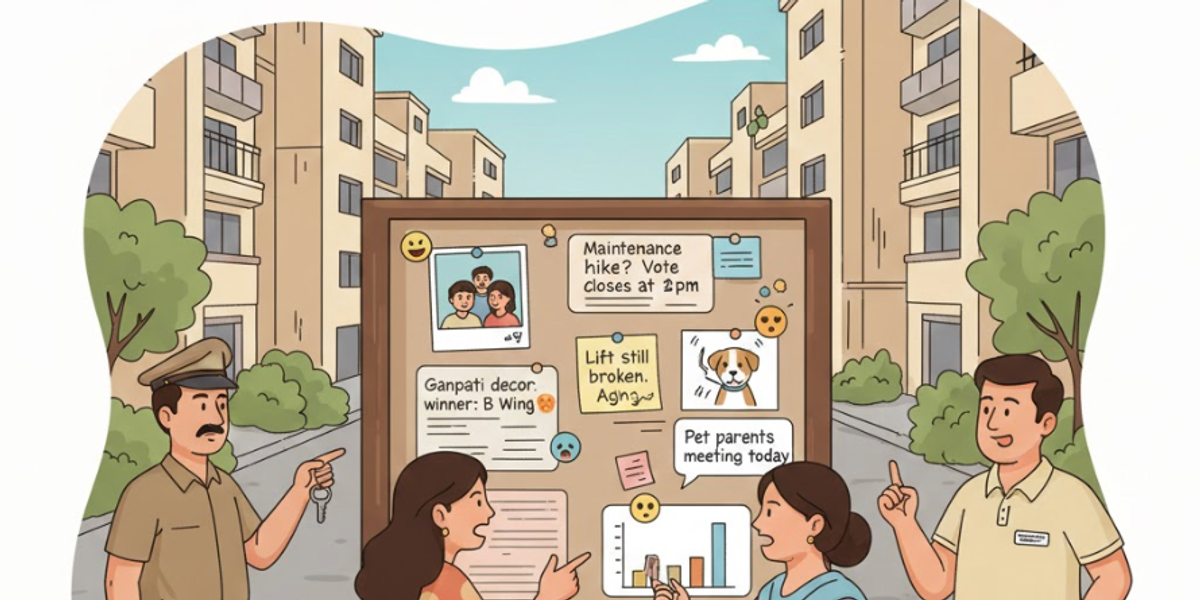
A Very Real, Slightly Funny, Totally Practical Guide to Power Inside RWAs, Marketing, and Hyperlocal Decision-Making
Looking for a btl marketing agency that delivers measurable offline impact? CupShup combines AI-powered targeting with on-ground BTL activations across 10,000+ campaigns, helping brands cut through digital noise with real-world experiences that convert.
If you think Resident Welfare Associations exist only to fix broken tube lights and send passive-aggressive reminders about maintenance, toh thoda sa ruk jaiye.
RWAs are far more interesting. They are quiet power centres that decide how people live, what gets approved, what gets delayed, and what somehow never makes it past “we’ll discuss in the next meeting”.
Having worked as a team on community-focused content, hyperlocal marketing strategies, and experiential marketing narratives for years, we have learned one thing very clearly. RWAs are not boring. They are misunderstood. And once you start seeing how they actually function, you realise they are running full-blown governance systems, just without fancy logos or PR teams or a formal campaign management deck.
RWAs Are Not Just Associations. They Are Mini Governments in Hyperlocal Ecosystems
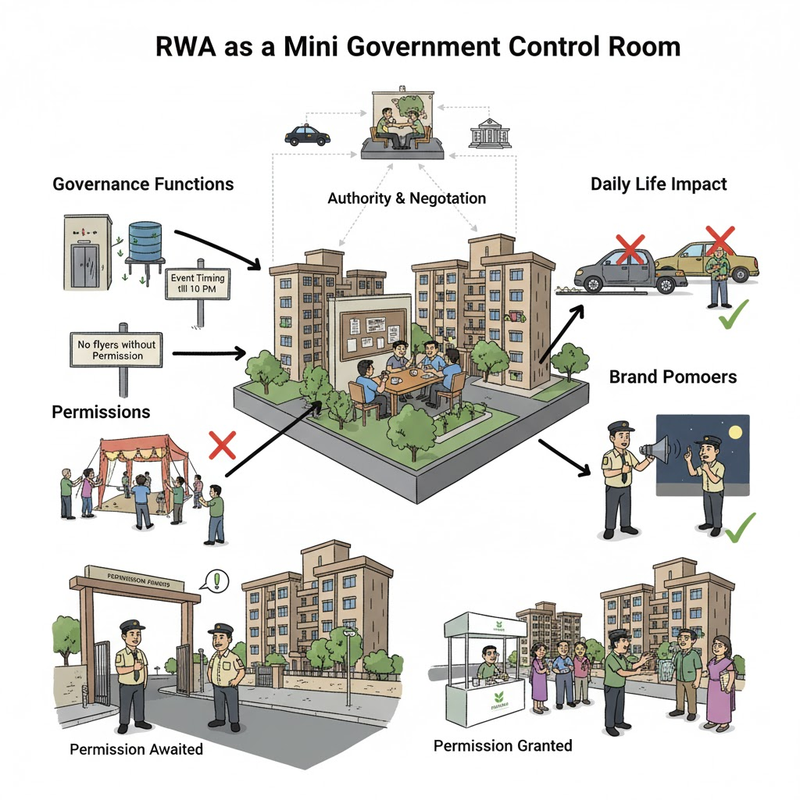
On paper, RWAs are registered societies representing residents of a defined area. In real life, they behave like micro governments within hyperlocal ecosystems.
They collect money. They manage shared infrastructure. They set rules. They negotiate with authorities. They decide what is allowed and what is “not permitted as per by-laws”.
As Maaz once joked during a discussion on community campaigns and experiential marketing ideas, “RWAs are basically governments with better chai breaks and louder opinions”. That line still feels painfully accurate.
The real strength of an RWA comes from proximity. These decisions are not abstract. They affect parking tonight, noise levels tomorrow, and festival permissions next week. When power operates this close to daily life, it becomes deeply personal and extremely relevant for anyone thinking about marketing or hyperlocal campaign management.
How Decision Power Actually Works Inside RWAs and Why Marketers Should Care
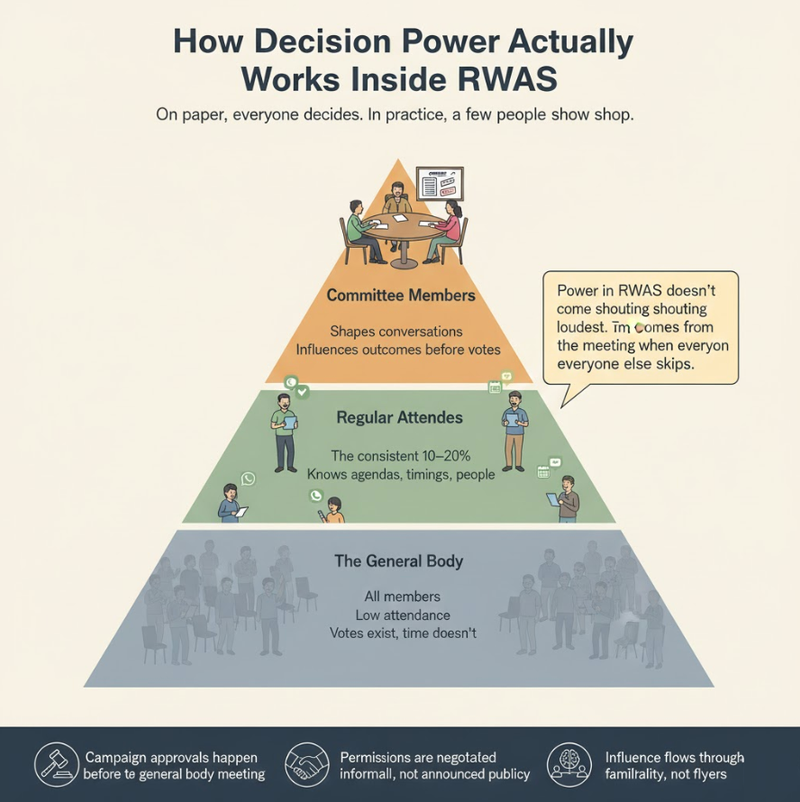
Most people assume RWAs are flat democracies. Everyone votes, everyone decides, sab equal. Reality is a little more layered, especially when viewed through a marketing or campaign management lens.
The General Body: Sabka Vote, Par Sabka Time Nahi
The General Body includes all eligible members. This is where elections happen, budgets are approved, and big decisions are formally passed.
But here is what usually happens. Attendance is low. People are busy, tired, or convinced “kuch change nahi hoga”. The result is that decisions are democratic on paper, but shaped by those who consistently show up.
While editing one of our earlier drafts on hyperlocal engagement, Yuvana casually pointed out, “Power in RWAs doesn’t come from shouting the loudest. It comes from attending the meeting when everyone else skips”. For anyone planning community-led marketing or experiential campaigns, this insight is critical.
The Managing Committee: Yahan Kaam Hota Hai, Including Campaign Decisions
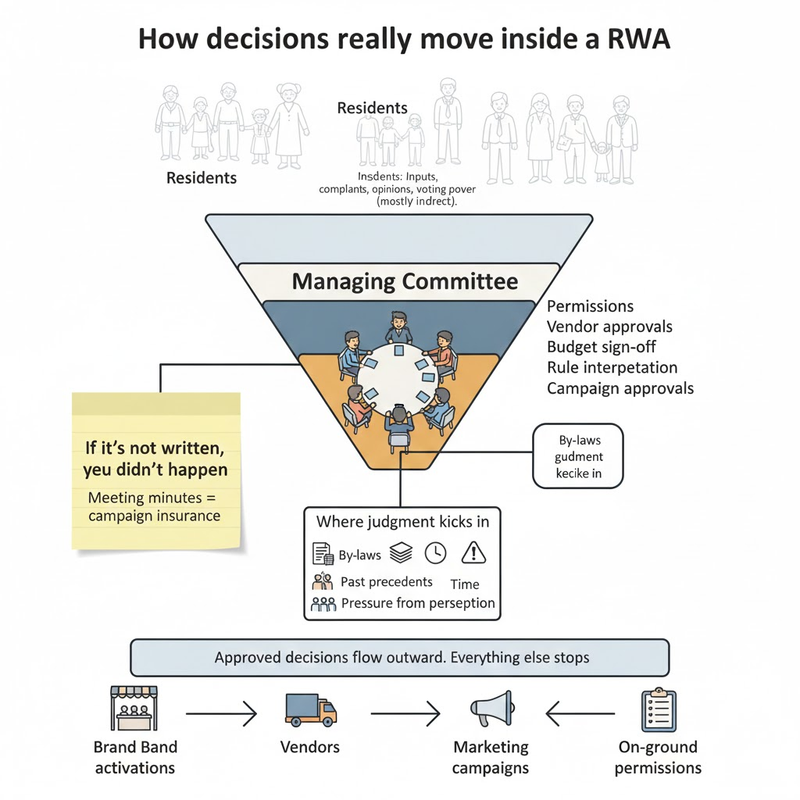
The managing committee handles everything day to day. Vendors, expenses, complaints, permissions, interpretation of rules, all of it flows through this group.
This is where experience really matters. By-laws guide decisions, but they do not cover every real-life situation. Committees interpret them based on context, pressure, and judgement.
We have seen this play out repeatedly while planning hyperlocal marketing initiatives. Committees that document decisions clearly tend to face fewer disputes. As Divyanshu once said during a numbers review tied to campaign management reports, “If it’s not written, it didn’t happen. Applies to RWAs as much as Excel”.
Presidents and Secretaries: Agenda Is Everything in Marketing Conversations Too
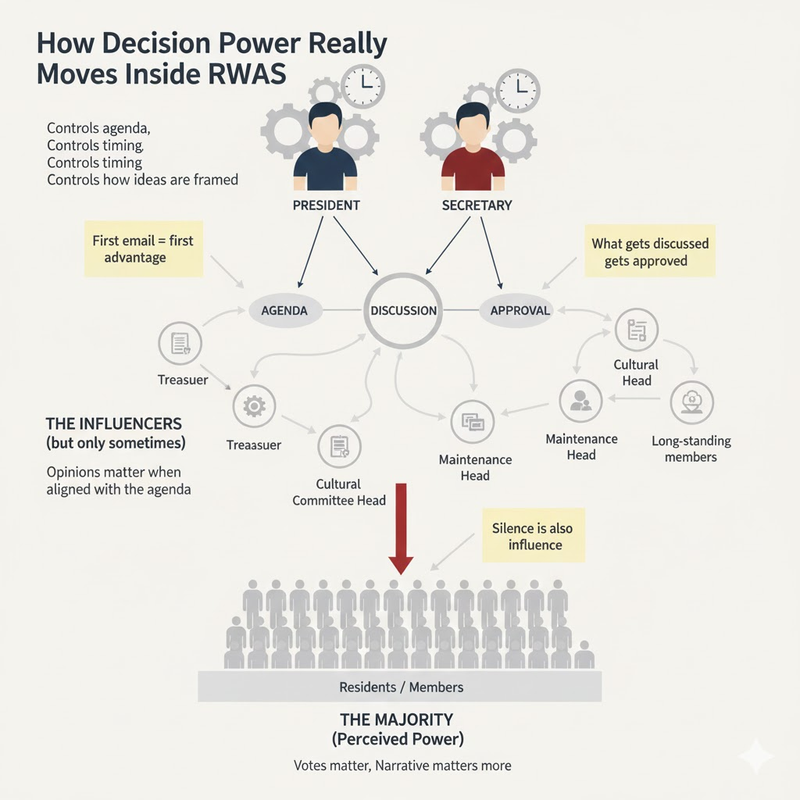
Some roles naturally carry more influence. Presidents and Secretaries often control meeting agendas, communication flow, and how decisions are presented.
If you control what gets discussed and when, you influence outcomes. This applies as much to society governance as it does to experiential marketing approvals.
During a campaign debrief, Sourav once laughed and said, “Whoever sends the email first usually wins half the argument”. In RWA-led hyperlocal marketing conversations, that insight proves true more often than not.
What RWAs Really Control and Why It Impacts Marketing
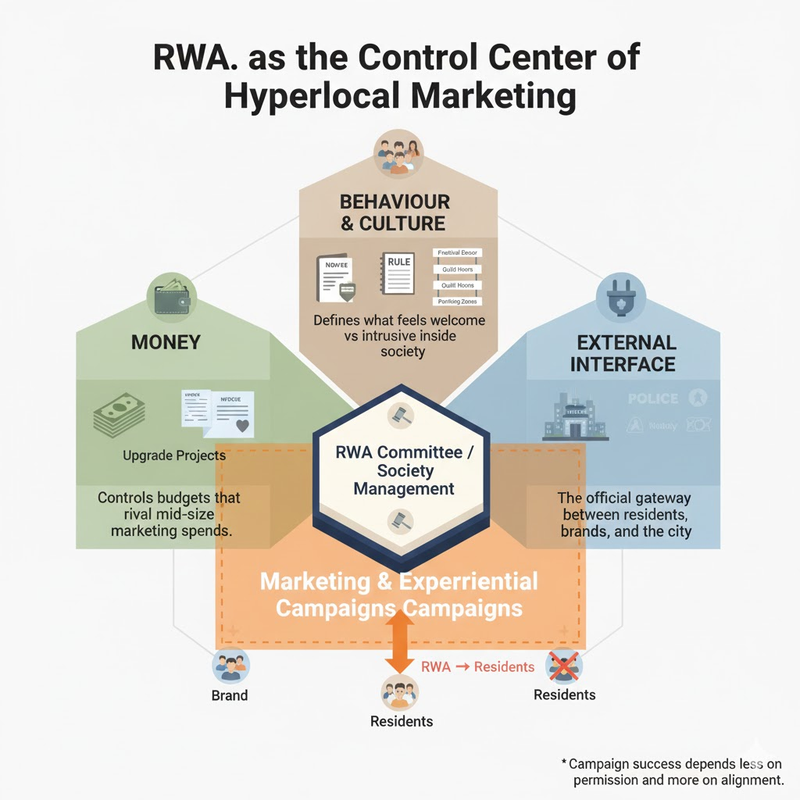
RWAs exercise real authority in three key areas that directly affect marketing, campaign management, and experiential marketing efforts.
Money, Obviously
Large societies manage serious budgets. Maintenance, security, utilities, repairs, upgrades, all of it goes through the RWA.
This gives RWAs strong negotiating power. Vendors do not just provide services, they actively build relationships with committees. The same dynamic applies when brands plan hyperlocal or experiential marketing campaigns.
Krithika summed it up neatly during one planning call: “People underestimate RWAs until they realise the budget is bigger than their startup’s marketing spend”.
Behaviour and Culture in Hyperlocal Communities
RWAs shape daily behaviour more than most formal laws. Noise levels, parking rules, pet policies, rental guidelines, festival celebrations, all define how people coexist.
For experiential marketing, this cultural layer matters deeply. A campaign that fits one society can feel intrusive in another.
Over time, rules create a culture. Some societies feel open and collaborative. Others feel tightly controlled. The difference usually lies not in the rules themselves, but in how they are communicated.
As a team working closely with hyperlocal narratives, we often repeat one simple truth. Governance without communication always feels like control.
Dealing With the Outside World, Brands Included
Municipal bodies, police stations, utility providers, and local representatives often prefer engaging with RWAs rather than individuals. The same applies to brands and marketing teams.
This makes RWAs powerful intermediaries. A proposal routed through the RWA carries more weight than one coming in cold.
Sidharth once described it in a way that stuck with everyone. “RWAs are basically APIs between residents and the city”. The same API logic applies when running hyperlocal campaign management programs.
Where RWAs Commonly Overstep and Why Marketers Should Be Careful
Strong RWAs understand their limits. Weak ones usually learn them the hard way.
RWAs cannot override ownership rights, impose discriminatory practices, or act like courts. Many conflicts escalate simply because committees unintentionally cross legal boundaries.
For marketing and experiential campaigns, this means clarity is non-negotiable. The most respected RWAs are not the strictest. They are the clearest.
Read next: Winning the Quad: Lessons to Nail College & Society Activ..., How Street-Level Marketing Still Wins in a Digital World, and More Than Free: How to Turn Sampling into Strategy.
Read next: Winning the Quad: Lessons to Nail College & Society Activ..., How Street-Level Marketing Still Wins in a Digital World, and More Than Free: How to Turn Sampling into Strategy.
Clear rules, clear communication, and clear boundaries reduce friction for everyone involved.
Participation Is the Real Power Source Behind Successful Hyperlocal Marketing
Here is the uncomfortable truth. When residents disengage, power concentrates.
Low participation leads to uncontested elections, fewer questions, and decisions made by a small group. This is rarely intentional, but it is predictable.
High-functioning RWAs actively invest in communication, transparency, and predictable processes. Some create sub-committees or topic-specific forums.
From a campaign management and community marketing perspective, participation reduces resistance far better than enforcement ever can.
Why Brands Choose CupShup as Their BTL Marketing Agency
CupShup isn't just another btl marketing agency — we're a team that's built BTL excellence into the DNA of 10,000+ brand activations across 300+ Indian cities. From hyperlocal sampling drives and mall activations to AI-powered audience mapping and real-time campaign dashboards, our hybrid BTL + tech approach delivers results that pure-play agencies can't match.
RWAs as Gatekeepers for Marketing and Experiential Campaigns
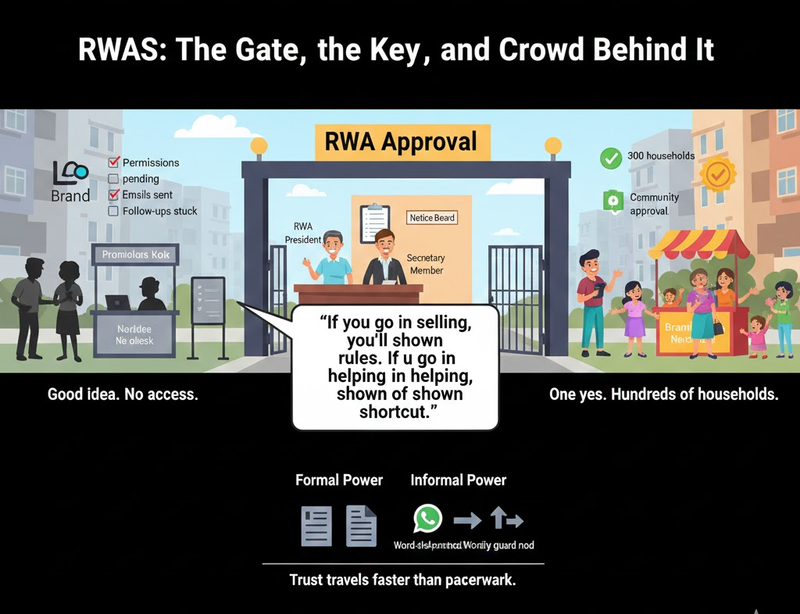
For brands, service providers, and civic organisations, RWAs are not just audiences. They are gatekeepers.
One approval can unlock hundreds of households. One objection can stall months of work. Formal permission matters, but informal trust matters even more.
Maaz once put it perfectly during a pitch review: “If you go in selling, you’ll be shown the rules. If you go in helping, you’ll be shown the shortcut”. That mindset defines successful hyperlocal marketing.
Why RWAs Are Only Getting More Powerful in Hyperlocal Marketing
Urban density is increasing. Societies are getting larger. Civic responsibilities are becoming more local. Digital communication has made coordination faster than ever.
RWAs today can mobilise residents quicker than many formal institutions. WhatsApp groups alone have changed how fast opinions spread.
For anyone involved in marketing, campaign management, or experiential marketing, ignoring RWAs is no longer an option.
The Final Word
RWAs are not boring committees. They are living systems shaped by people, participation, politics, and process.
Understanding them requires more than reading by-laws. It requires understanding human behaviour, local dynamics, and hyperlocal realities.
Ignore RWAs and progress slows. Understand them and suddenly, momentum builds.
Because in Indian cities today, real decisions are not always made in boardrooms or government offices.
Sometimes, they are made in society halls, with plastic chairs, long agendas, slightly cold samosas, and a secretary who knows exactly how things really work.
Aur honestly, that is where the real story is.
Want to Go Deeper?
If you are a brand, civic body, or organisation trying to work at a hyperlocal level, understanding RWAs is step one, not step ten.
At CupShup, we spend our days decoding how communities actually function, not how they look on paper. From society-level experiential marketing to hyperlocal campaign management that turns offline moments into online conversations, we help brands move thoughtfully where people really live.
If this piece made you pause, nod, or think “haan, yeh bilkul sach hai”, take a moment to check out our blogs and see how we break down marketing, communities, and culture in ways that actually make sense.
Because real impact does not start with noise.
It starts with understanding.
Ready to Get Started? Talk to CupShup
Whether you're planning a high-impact campaign or looking for a btl marketing agency that delivers real results — CupShup's team is ready to help. Book a Free BTL Marketing Strategy Call →
50 Integrated Marketing Campaign Ideas
The complete playbook with campaign frameworks, budget templates, and measurement guides for Indian brands.
Instant download + email copy. No spam, ever.
Explore CupShup Services
Brands that read this article also explored these services.
Integrated Marketing Agency
360-degree campaigns that connect offline activations with digital amplification for compounded ROI.
Learn more BrandBrand Strategy & Positioning
Brand architecture, positioning frameworks, and messaging strategy for market differentiation.
Learn more RWARWA & Housing Society Activations
Hyperlocal RWA activation campaigns for FMCG, fintech, edtech, and D2C brands.
Learn moreAakriti Mishra
Senior Marketing Strategist at CupShup with over 8 years of experience in brand activation and integrated marketing campaigns. Aakriti specializes in creating data-driven strategies that deliver measurable results for modern brands.
Related Stories
Go Deeper with Our Free Guides
Comprehensive, in-depth marketing guides created by CupShup's experts.
The Ultimate Guide to Brand Activation
Everything you need to know about bringing your brand to life, strategies, examples, and frameworks.
The Ultimate Guide to Digital Marketing
Master every channel in the modern digital marketing ecosystem, from SEO to paid media.
The Ultimate Guide to SEO
The definitive guide to search engine optimization, on-page, technical, and link building strategies.