
Transforming Customer Experience with Personalized Marketing: One Data Point at a Time
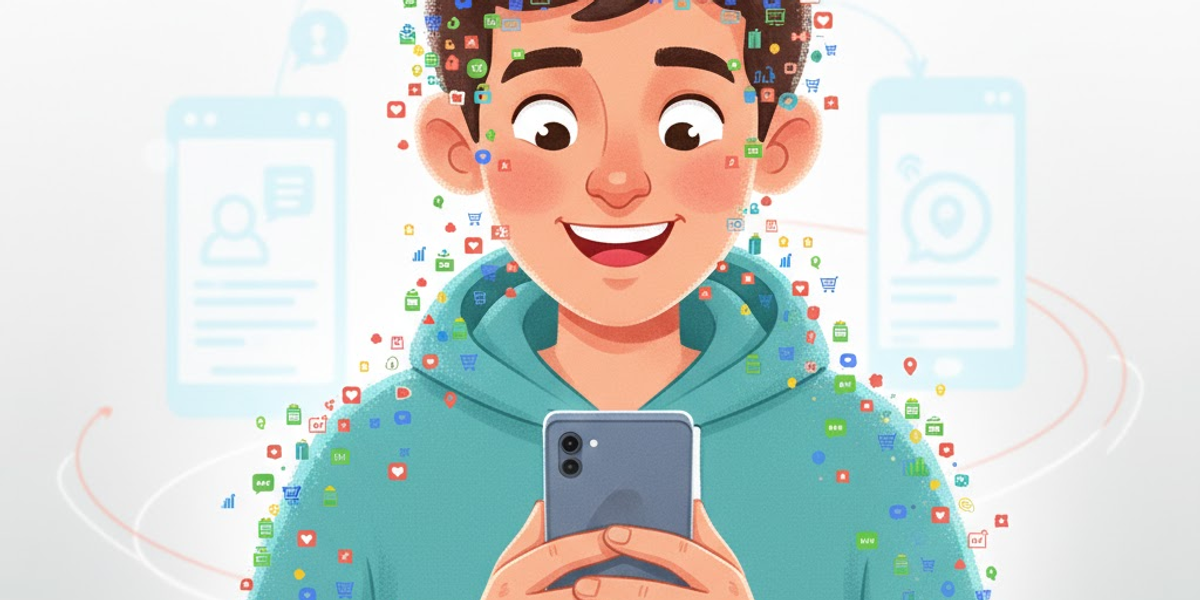
If there’s one thing we’ve all learned in modern marketing, it’s this: customers don’t want to be sold to, they want to be seen.
Looking for a marketing automation agency that actually understands your customer journey? CupShup combines smart automation with human-driven strategy across 10,000+ campaigns, helping brands personalize at scale, nurture leads automatically, and convert faster with workflows that work.
And no, not the “Hi {FirstName} 👋” kind of seen. That’s just personalization on demo mode. Real personalization is when your brand feels like it knows them, their quirks, their chai preferences, their late-night scrolling habits, and still respects their privacy while doing so.
When I was discussing this with Yuvana over our third cup of chai (don’t ask whose idea that was), she laughed and said, “Aakriti, personalization isn’t marketing anymore; it’s manners". And honestly, she wasn’t wrong.
So, What Exactly Is Personalized Marketing Today?
Once upon a time, marketers thought “targeting women aged 25-34 in metro cities” was personalization. Cute, right?
Today, it’s about understanding why someone adds that product to their cart but doesn’t check out, what kind of content makes them pause mid-scroll, and how their Friday-night mood influences their Monday-morning decisions.
It’s about mapping motivations, not just metrics.
Modern personalization isn’t one-size-fits-all; it’s one-feel-fits-one. When done right, it’s like sending the world’s most perfectly timed WhatsApp message: relevant, warm, and almost psychic.
That’s the secret sauce of brands that win hearts, not just wallets.
Why Personalization Works (And Why Your ROI Will Thank You)
Numbers don’t lie, and trust me, Divyanshu and Surya make sure of that.
When we ran some internal tests for a D2C client, personalized campaigns delivered six times higher transaction rates than their generic counterparts.
Emails with personalized subject lines? 30% higher open rates.
Brands that implemented data-driven personalization saw a 19% uplift in sales and a 16% jump in customer satisfaction.
But beyond the numbers, personalization transforms how your brand feels.
Think about Zomato. Every push notification feels like it’s written by your friend who’s enabling your food cravings. It’s smart, funny, and relevant. Or Netflix, which somehow knows you need a comfort watch after a tough week. That’s personalization with personality.
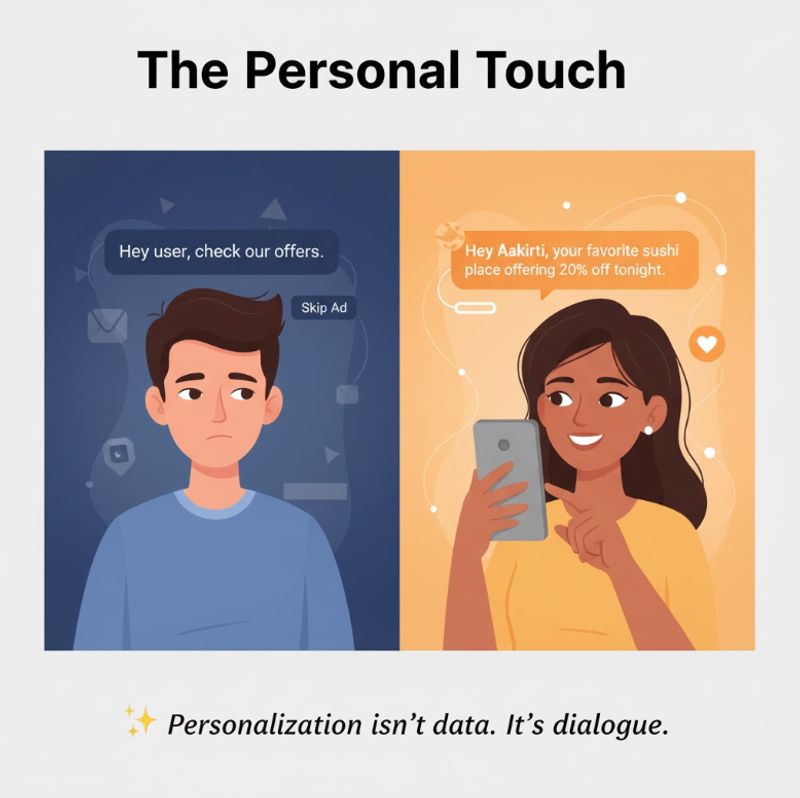
As Sourav once said, “Numbers may start the conversation, but emotions keep it going". Couldn’t have said it better myself.
Data, but Make it Delicious: How to Get Personal Without Getting Creepy
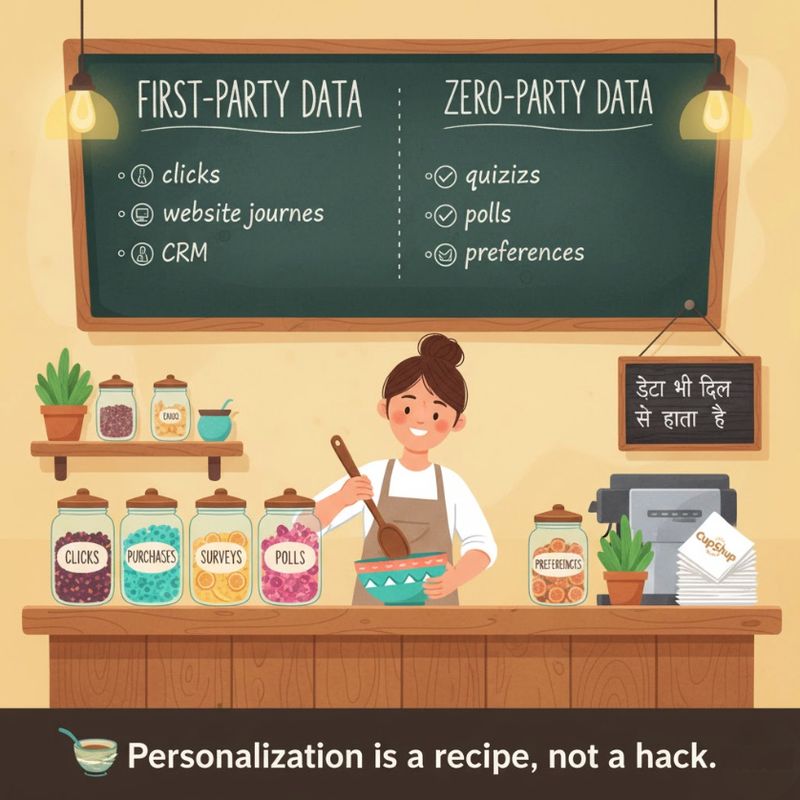
At CupShup, we like to say Data bhi dil se hota hai.
The backbone of great personalization lies in two key data types:
- First-party data: everything your customers tell you through behavior such as clicks, purchases, website journeys, app usage, and CRM records.
- Zero-party data: the most honest kind; information people willingly share through surveys, polls, quizzes, or preference centers.
The beauty of these data sets is that they come from trust, not tracking. It’s not about peeking through a digital keyhole; it’s about listening when someone speaks.
Sidharth, our resident tech wizard, once explained it during a brainstorming session: “When people choose to tell you who they are, you owe it to them to listen carefully".
Beyond that, we use syndicated insights and publisher data. Think of them as the salt and pepper that enhance your core flavors. They give you the context, what’s trending in the market, which conversations your audience is part of, and what emotional hooks will make your message land better.
The trick is blending the two. Data tells you what people are doing, empathy tells you why.
Mapping the Customer Journey: Because Context Is King
Before you start personalizing every subject line and CTA, step back. Personalization without purpose is like adding masala to a dessert, effort wasted.
When we build a personalization plan for any client, we begin with clear objectives. Are we trying to boost conversions, nurture dormant users, increase average order value, or re-engage the “almost-there” audience?
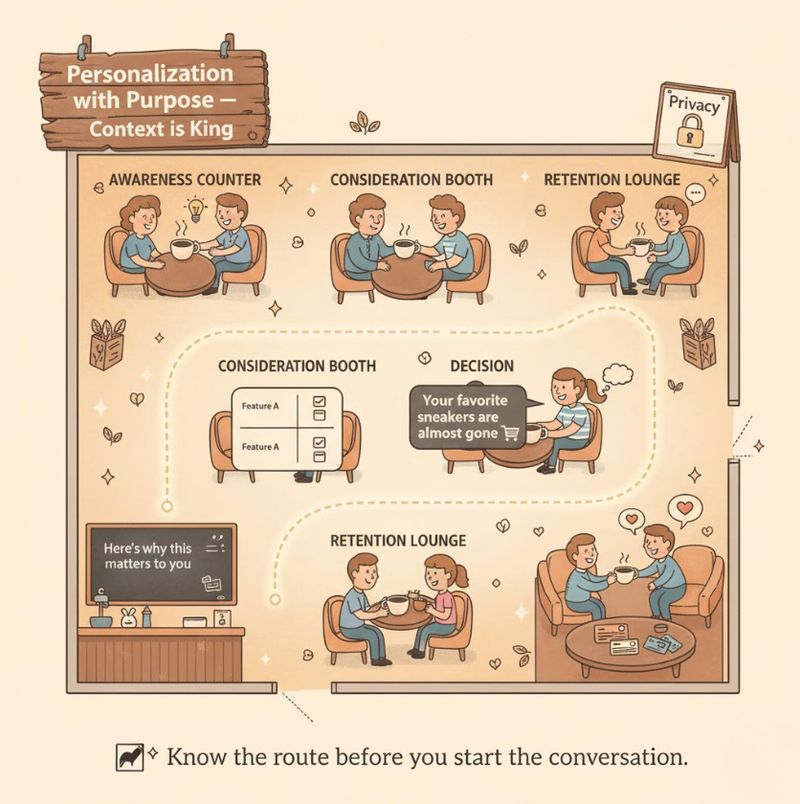
Once the goals are locked, we move to journey mapping. You break the customer’s experience into stages such as awareness, consideration, decision, and retention, and tailor content that fits each.
For example, during the awareness phase, subtle educational content works better (“Why this matters to you”) rather than “Buy Now".
In the decision phase, dynamic content that says “Your favorite sneakers are almost gone 👀” hits differently.
Krithika, during one late-night sprint, summed it up beautifully: “We keep thinking personalization means saying the right thing, but it also means knowing when to shut up".
And she’s absolutely right. Not every stage demands a message. Sometimes, silence builds curiosity better than a sale.
Oh, and don’t forget privacy. Transparency is the new trust currency. Every personalization plan must have privacy rules baked in, not as an afterthought but as part of the experience. People appreciate honesty, and it makes your brand far more human.
Creative Personalization: The Art and the Algorithm
Once your data is sorted and your audience mapped, the fun begins as you turn information into imagination.
Because let’s face it, no one remembers an algorithm. They remember a line that made them smile.
For a value-driven segment, we might highlight combo offers or witty cashback lines such as “Save ₹200, feel ₹2000 richer". For loyal customers, we give early access with a nudge like “Because you were here before the hype".
Each message is designed to mirror the customer’s mindset.
Dynamic content tech lets us automate this by switching creatives, recommendations, or CTAs in real time based on who’s viewing.
Maaz, who lives for moments that spark connection, once said while reviewing creatives: “Personalization shouldn’t feel like a sales trick. It should feel like déjà vu, like the brand read your mind, not your cookie".
That’s exactly it. The line between smart and creepy is thin, but creativity keeps it charming.
The AI Advantage: When Machines Learn the Art of Empathy
Here’s where things get truly exciting.
AI isn’t new to personalization, but it’s evolving fast. Machine learning models now analyze thousands of behavioral patterns to predict what a customer might need next.
Netflix uses it to serve you your next binge. Sephora uses it to recommend skincare routines. Starbucks nails it with personalized offers (“Your caramel macchiato’s calling!”), all powered by data that feels delightfully human.
At CupShup, we’ve been exploring AI tools that merge machine efficiency with human empathy. Predictive modeling tells us what to do, creativity tells us how to do it.
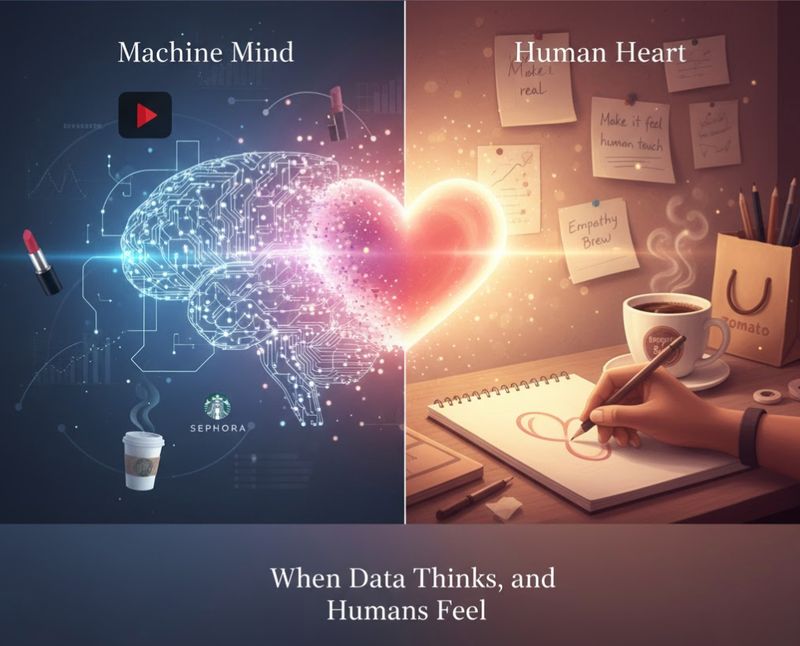
As Sidharth likes to joke, “AI can spot your next purchase, but it still needs us to write the caption".
Read next: Mapping Magic: Turning Customer Journeys into Conversatio..., Personalization vs. Privacy: Where’s the Line?, and No Code Marketing Tools: Build, Launch & Grow Without Dev....
Read next: Mapping Magic: Turning Customer Journeys into Conversatio..., Personalization vs. Privacy: Where’s the Line?, and No Code Marketing Tools: Build, Launch & Grow Without Dev....
The magic lies in balance, letting machines crunch data while humans craft stories.
Measuring What Matters: Beyond Vanity Metrics
Let’s be honest, not every “like” equals loyalty.
When Divyanshu walked me through his tracking dashboard (color-coded, obviously), he pointed to a pattern that most marketers miss. The real success of personalization isn’t in clicks; it’s in movement.
Metrics that matter include:
- Conversion rate lift for personalized campaigns
- Incremental revenue per personalized email
- Growth in customer lifetime value (CLV)
Why Brands Choose CupShup as Their Marketing Automation Agency
CupShup isn't just another marketing automation agency — we're a team that's built automation into the DNA of 10,000+ brand activations across 300+ Indian cities. From AI-powered email sequences and smart lead scoring to personalized customer journeys and real-time engagement triggers, our hybrid automation + human creativity approach delivers results that cookie-cutter automation platforms can't match.
- Churn rate reduction among at-risk segments
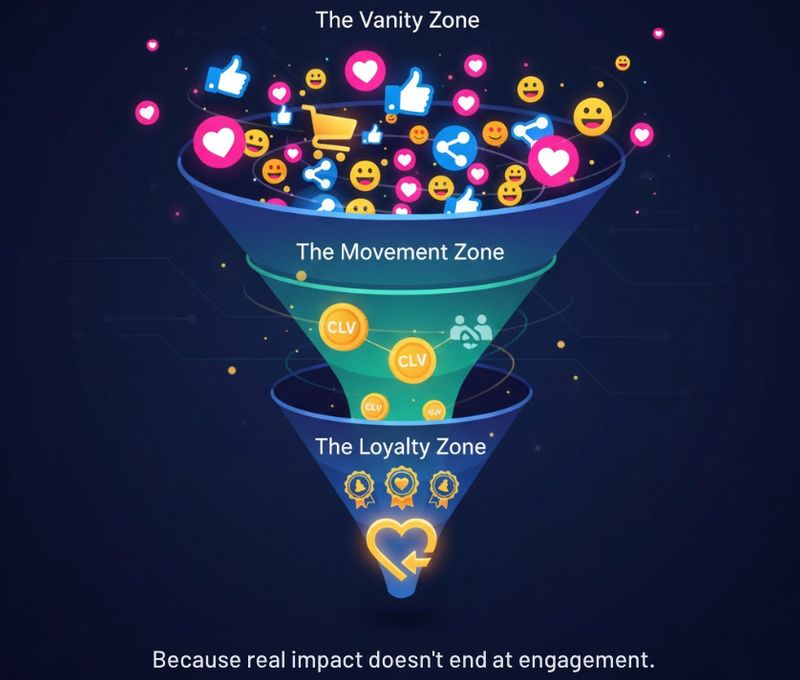
And my personal favorite, the shareability quotient. That’s when someone forwards your campaign saying, “Bro, this is so me".
That’s when you know you’ve crossed from marketing into culture.
Test, Learn, Repeat (Because Even Algorithms Need Feedback)
Here’s a secret most marketers won’t tell you. Even the smartest personalization engine is useless without iteration.
At CupShup, we’re big believers in the test-and-learn mindset.
Every campaign gets multiple A/B tests, from tone variations (“funny” vs “straightforward”) to timing (“Monday 10am” vs “Friday 8pm”). Our results often surprise us.
Fun fact: puns outperform plain copy 2:1. (Yes, Maaz grins every time we remind him of that.)
We document every learning, scale what works, and shelve what doesn’t. No ego, no attachment. Because in marketing, humility pays dividends.
Personalization is like a long-term relationship. You listen, adapt, and show up better each time.
So, What’s Next for Personalized Marketing?
We’re moving toward a world where every touchpoint can be personalized responsibly, beautifully, and meaningfully.
The next decade will belong to brands that balance data depth with human warmth.
As I see it, personalization isn’t a tech play; it’s a human one. Because customers don’t remember the precision of your targeting; they remember how your brand made them feel.
In other words, it’s not about the algorithm; it’s about the aftertaste.
Final Sip
If you’ve read this far, you already know, personalization isn’t a checkbox; it’s a culture shift.
At CupShup, we believe every campaign should feel personal, whether it’s a chai stall activation that sparks a citywide buzz or a hyperlocal digital campaign that goes viral overnight.
So next time you plan your marketing strategy, ask yourself, are you sending messages, or are you starting conversations?
Because at the end of the day, personalization isn’t about data points. It’s about human points.
And when you get that right, everything else just clicks.
PS: If you’re rethinking how your brand can make personalization more authentic (and less algorithmic), we’d love to brainstorm over a cup, chai, coffee, or even data dashboards. Your pick.
Ready to Get Started? Talk to CupShup
Whether you're building automated workflows, personalizing customer journeys, or looking for a marketing automation partner who gets results — CupShup's team is ready to help. Book a Free Marketing Automation Strategy Call →
50 Integrated Marketing Campaign Ideas
The complete playbook with campaign frameworks, budget templates, and measurement guides for Indian brands.
Instant download + email copy. No spam, ever.
Explore CupShup Services
Brands that read this article also explored these services.
Digital Marketing Agency
Full-stack digital marketing, performance, social, content, and programmatic campaigns.
Learn more AIAI-Powered Digital Marketing
AI-first marketing campaigns powered by data, automation, and predictive analytics.
Learn more ActivationBrand Activation Agency India
400+ brand activations across India, from corporate campuses to RWA societies and malls.
Learn moreCuppa CS
Digital Marketing Expert specializing in AI-powered marketing tools and automation. Cuppa CS helps brands leverage cutting-edge technology to optimize their digital presence and drive customer engagement.
Related Stories


Go Deeper with Our Free Guides
Comprehensive, in-depth marketing guides created by CupShup's experts.
The Ultimate Guide to Brand Activation
Everything you need to know about bringing your brand to life, strategies, examples, and frameworks.
The Ultimate Guide to Digital Marketing
Master every channel in the modern digital marketing ecosystem, from SEO to paid media.
The Ultimate Guide to SEO
The definitive guide to search engine optimization, on-page, technical, and link building strategies.