
Reverse-Engineering Virality: A Social Media Marketing Agency Playbook
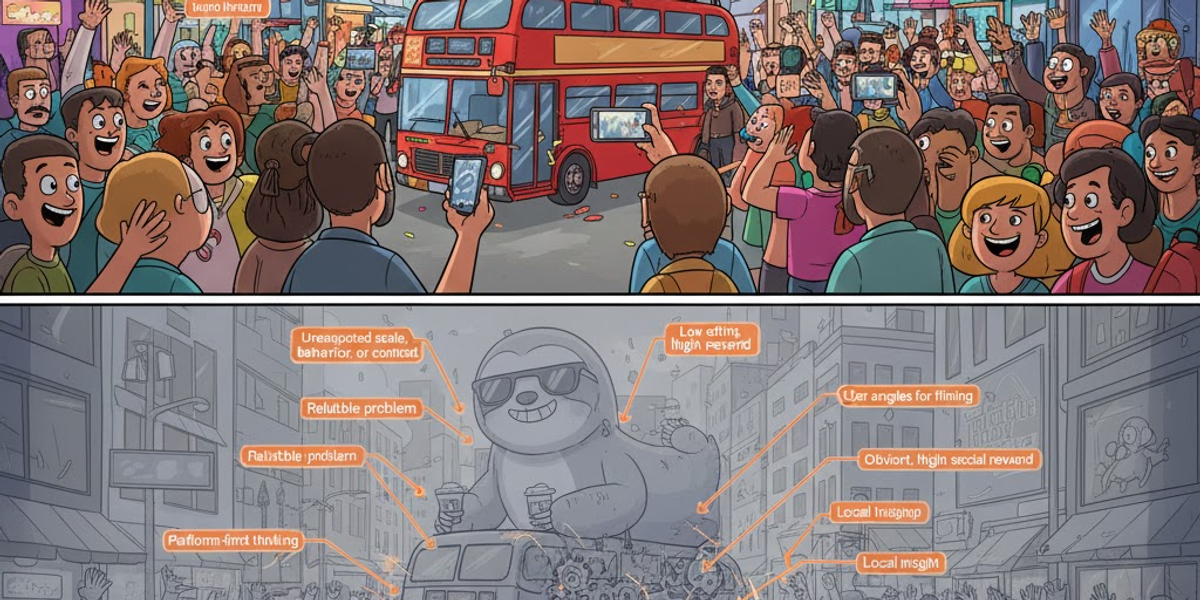
Quick answer: Virality is engineered, not luck. Content spreads when it has an emotional spike, social currency (it makes the sharer look good), and low friction to share within the first three seconds. A social media marketing agency reverse-engineers past viral hits for these three ingredients before writing the next brief.
Virality looks like luck. It rarely is. Behind most campaigns that "blew up" sits a set of repeatable design choices: a strong emotional trigger, a reason to share, and a real-world moment worth filming. This guide reverse-engineers virality for modern marketing, breaking down what actually makes guerrilla and experiential campaigns spread, so you can design for it instead of hoping for it. A social media marketing agency reverse-engineers what makes content spread. Viral marketing is not luck; it is engineered. The best digital marketing agency treats virality as a process.
What Virality Actually Means
Virality is when a piece of content or a campaign spreads from person to person faster than you paid to distribute it. The reach compounds because each viewer becomes a sharer. In marketing terms, virality is earned amplification: the audience does the media buying for you. The best social media marketing agency studies virality, then repeats it. The best viral marketing follows a repeatable structure. A best digital marketing agency ties viral reach to conversion.
It matters because earned reach is cheaper and more trusted than paid reach. A campaign that goes viral lowers your effective cost per impression toward zero and arrives with the credibility of a friend's recommendation rather than an ad. As a social media marketing agency, CupShup maps the triggers behind viral hits. Viral marketing rewards brands that understand triggers. Ask the best digital marketing agency how they measure a viral hit.
The Anatomy of a Viral Campaign
Most viral marketing shares the same underlying parts. Strip away the creative and you find this skeleton: A social media marketing agency turns one viral moment into a system. CupShup works like a best digital marketing agency on every viral play.
A content marketing agency can repurpose the same viral hook across formats.
- Emotional spike -- What it does: Drives the urge to share; Example trigger: Surprise, delight, awe, laughter
- Social currency -- What it does: Makes the sharer look good; Example trigger: "Look what I found"
- A filmable moment -- What it does: Gives the content a body; Example trigger: A stunt, an installation, a reveal
- Low friction to share -- What it does: Removes effort; Example trigger: One tap, obvious hashtag
- A hook in the first 3 seconds -- What it does: Survives the scroll; Example trigger: Pattern interrupt
Hire a social media marketing agency that can explain why something went viral.
Guerrilla and experiential campaigns are uniquely good at virality because they create the filmable moment in the real world, which then lives a second life online. A social media marketing agency should ship the next viral idea, not just report the last.
Reverse-Engineering Virality: The Steps
- Start from the emotion. Decide what feeling will make someone share, then design the moment around it.
Many viral moments start as small guerrilla marketing experiments before they scale.
- Engineer the share trigger. Give people a reason that makes them look good for sharing.
- Build a filmable centrepiece. A real-world stunt or installation gives the content something to capture.
- Design for the first three seconds. The hook has to survive the scroll before anything else matters.
- Remove every barrier to sharing. One obvious hashtag, easy reshare, no friction.
- Seed it deliberately. Hand the first wave to creators and micro-influencers who already have reach.
CupShup's McDonald's drive-thru bike rally is a good study in a filmable, real-world moment built to travel beyond the people who were there. CupShup operates as a social media marketing agency built on virality.
Virality and Guerrilla Marketing
Guerrilla marketing and virality are natural partners. Guerrilla creates the unexpected real-world moment; virality carries it to the millions who were not present. If you are designing a guerrilla campaign, read our guerrilla marketing examples guide for the tactical playbook, then layer the virality design above onto it.
The connection runs through experiential marketing: the experience is the engine, the share is the fuel, and the design choices above are what turn one into the other.
Why Most Campaigns Do Not Go Viral
- Designed for the brand, not the sharer -- Why it kills virality: No social currency; Fix: Make the audience the hero
- No filmable moment -- Why it kills virality: Nothing to capture; Fix: Build a real-world centrepiece
- Weak first 3 seconds -- Why it kills virality: Dies in the scroll; Fix: Lead with the hook
- Hard to share -- Why it kills virality: Friction stops spread; Fix: One tap, one hashtag
- No seeding plan -- Why it kills virality: No first wave; Fix: Brief creators before launch
Virality is not random. It is the result of removing every reason not to share and adding one strong reason to.
Work With CupShup
CupShup designs guerrilla and experiential campaigns engineered to travel, for 400+ brands across 50+ Indian cities. Our experiential marketing team builds the real-world moment and the share mechanics together, so reach is earned, not just bought.
Want a campaign designed to spread? Talk to CupShup.
Engineering Virality With an Experiential Marketing Agency
Virality looks like luck, but the campaigns that travel are usually engineered. An experiential marketing agency designs the surprise, the share-trigger, and the capture mechanism that turns a street moment into a feed moment. Pairing a bold idea with an experiential marketing agency that can execute across cities is what separates a one-off stunt from repeatable virality. CupShup engineered exactly this kind of shareable moment for McDonald's, shown in our McDonald's drive-thru rally case study, through our experiential marketing agency team.
The Anatomy of a Viral Campaign, Reverse-Engineered
Pull apart any campaign that spread organically in India over the last few years and the same structural pieces show up every time: a hook that lands in the first three seconds, a format that is trivially easy to imitate or share, and a payoff that makes the sharer look clever, funny, or in-the-know for having posted it. This is why a social media marketing agency treats virality as an engineering problem with a checklist, not a creative lottery.
Case study: Zomato's notification-led virality
Zomato's push notifications rarely announce a discount directly; they lead with a relatable, slightly cheeky observation about food cravings or Mondays. The format is screenshot-friendly by design (short, punchy, no context needed) and each notification is effectively a micro test of what resonates, with the brand doubling down on tones that get reshared.
Case study: guerrilla marketing stunts that travelled
Physical stunts that go viral almost always share the same trait: they are filmable in a single continuous shot with no editing needed, which lowers the barrier for a bystander to capture and post it themselves. This is the guerrilla marketing principle behind why unconventional street-level activations outperform polished studio ads on organic reach, even with a fraction of the production budget.
A Repeatable Virality Checklist
- Does the hook land in the first three seconds without context?
- Can a viewer imitate or reshare the format with zero editing skill?
- Does sharing it make the sharer look good, funny, or informed?
- Is there a single, obvious hashtag or phrase that becomes the shorthand for the moment?
- Would this still work with the brand logo removed, i.e., is the idea strong enough to travel on its own?
That last question is the hardest filter and the one most campaigns fail. If an idea only works because of heavy paid promotion, it was never actually viral, it was just bought reach. Genuine virality survives the removal of the media budget.
Why Most Brand Attempts at Virality Fail
The most common failure mode is chasing the format of a past viral hit rather than the underlying principle. Brands see a dance trend or a meme format succeed for one company and replicate it literally, missing that the original worked because it fit that specific brand's voice and audience, not because the format itself is inherently viral. A social media team worth hiring should be able to explain why something worked, in terms of the checklist (hook, imitability, social currency), not just that it worked.
Engineering Virality Without a Celebrity Budget
- Start with a genuinely useful or funny insight, not a product feature.
- Design for the remix: leave room for others to add their own spin (a sound, a caption template, a challenge).
- Seed it with 10-20 micro-creators before paid boosting, since organic early traction signals the algorithm correctly.
- Have a follow-up post ready within 24 hours to ride the wave if it does take off.
None of this guarantees virality, nothing does, but it materially raises the odds versus a single polished ad dropped with no seeding strategy at all.
Frequently Asked Questions
What does virality mean in marketing?
Virality is when a campaign or piece of content spreads person to person faster than paid distribution, because each viewer becomes a sharer. It delivers earned, trusted reach at a low effective cost.
How do you make a marketing campaign go viral?
Start from the emotion you want to trigger, engineer a reason to share, build a filmable real-world moment, nail the first three seconds, remove all friction to sharing, and seed it with creators before launch.
Why do guerrilla campaigns go viral more often?
Because they create an unexpected real-world moment that is inherently filmable. That moment then lives a second life online, carrying the campaign to people who were never physically present.
Can virality be planned, or is it luck?
It can be designed for. While no campaign is guaranteed to go viral, the repeatable elements (emotional spike, social currency, a filmable moment, low share friction, seeding) dramatically raise the odds.
What is the difference between viral and paid reach?
Paid reach is distribution you buy directly. Viral reach is earned when the audience shares your content for you, which is cheaper and arrives with the trust of a personal recommendation.
Test which hook performs before you commit spend, using the AI ad copy generator and the subject line tester if the moment also has an email angle.
50 Integrated Marketing Campaign Ideas
The complete playbook with campaign frameworks, budget templates, and measurement guides for Indian brands.
Instant download + email copy. No spam, ever.
Explore CupShup Services
Brands that read this article also explored these services.
Integrated Marketing Agency
360-degree campaigns that connect offline activations with digital amplification for compounded ROI.
Learn more BrandBrand Strategy & Positioning
Brand architecture, positioning frameworks, and messaging strategy for market differentiation.
Learn more BTLGuerrilla & Ambient Marketing
Unconventional BTL campaigns that create buzz, generate UGC, and earn organic amplification.
Learn moreAakriti Mishra
Senior Marketing Strategist at CupShup with over 8 years of experience in brand activation and integrated marketing campaigns. Aakriti specializes in creating data-driven strategies that deliver measurable results for modern brands.
Related Stories
Go Deeper with Our Free Guides
Comprehensive, in-depth marketing guides created by CupShup's experts.
The Ultimate Guide to Brand Activation
Everything you need to know about bringing your brand to life, strategies, examples, and frameworks.
The Ultimate Guide to Digital Marketing
Master every channel in the modern digital marketing ecosystem, from SEO to paid media.
The Ultimate Guide to SEO
The definitive guide to search engine optimization, on-page, technical, and link building strategies.