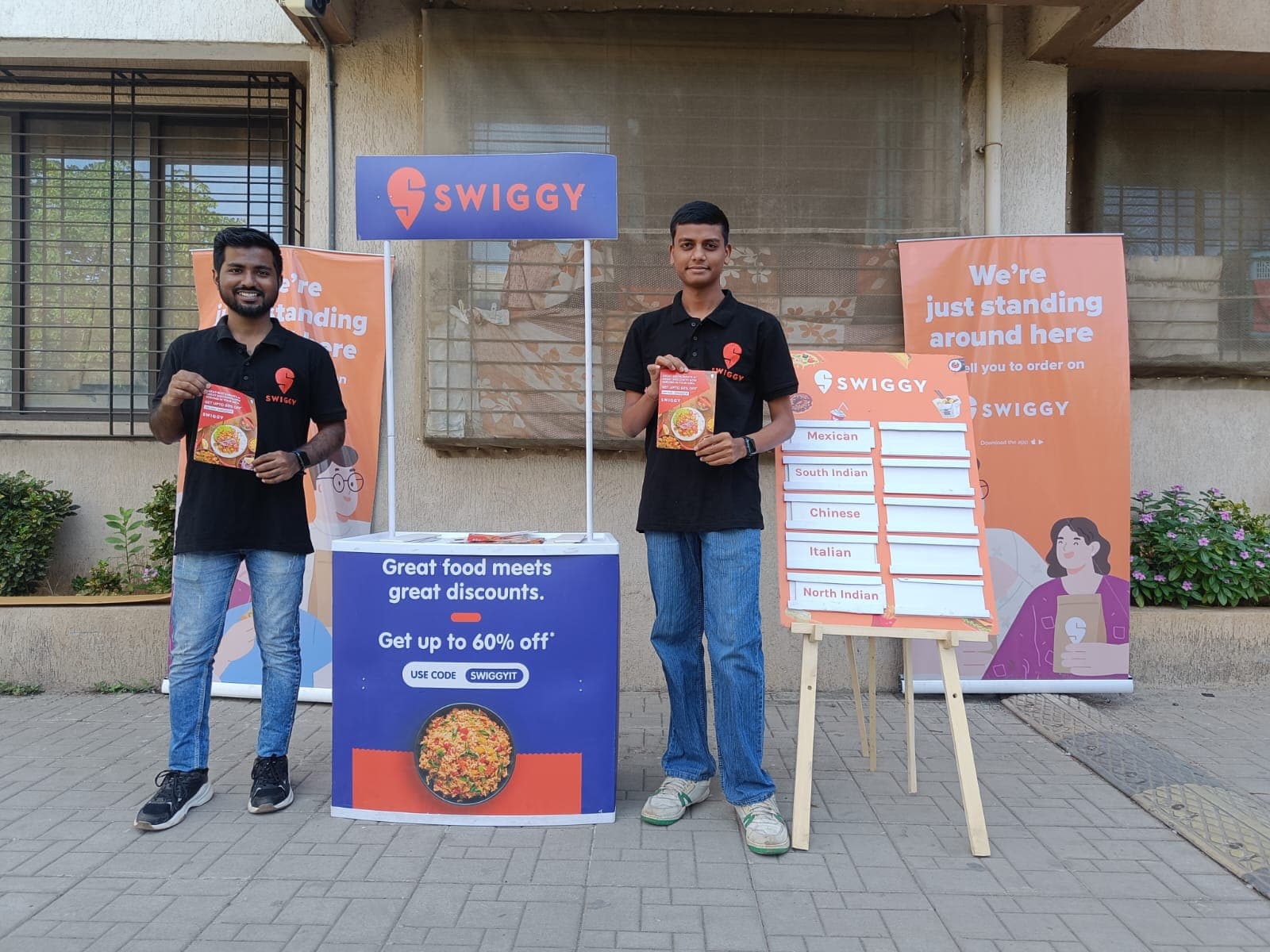
Launching a new quick commerce app in Bangalore and Gurgaon, two cities already saturated with Zepto, Blinkit and Swiggy Instamart, required more than digital ads. CupShup, a leading brand activation agency, designed and executed a 3-month hyperlocal brand activation across RWAs, tech parks and high-footfall hotspots in both cities. The result: 2,80,000+ total reach, 1,80,000+ app downloads, 65,000+ first orders, and a 35%+ download-to-order conversion rate, the highest recorded in India's quick commerce category.
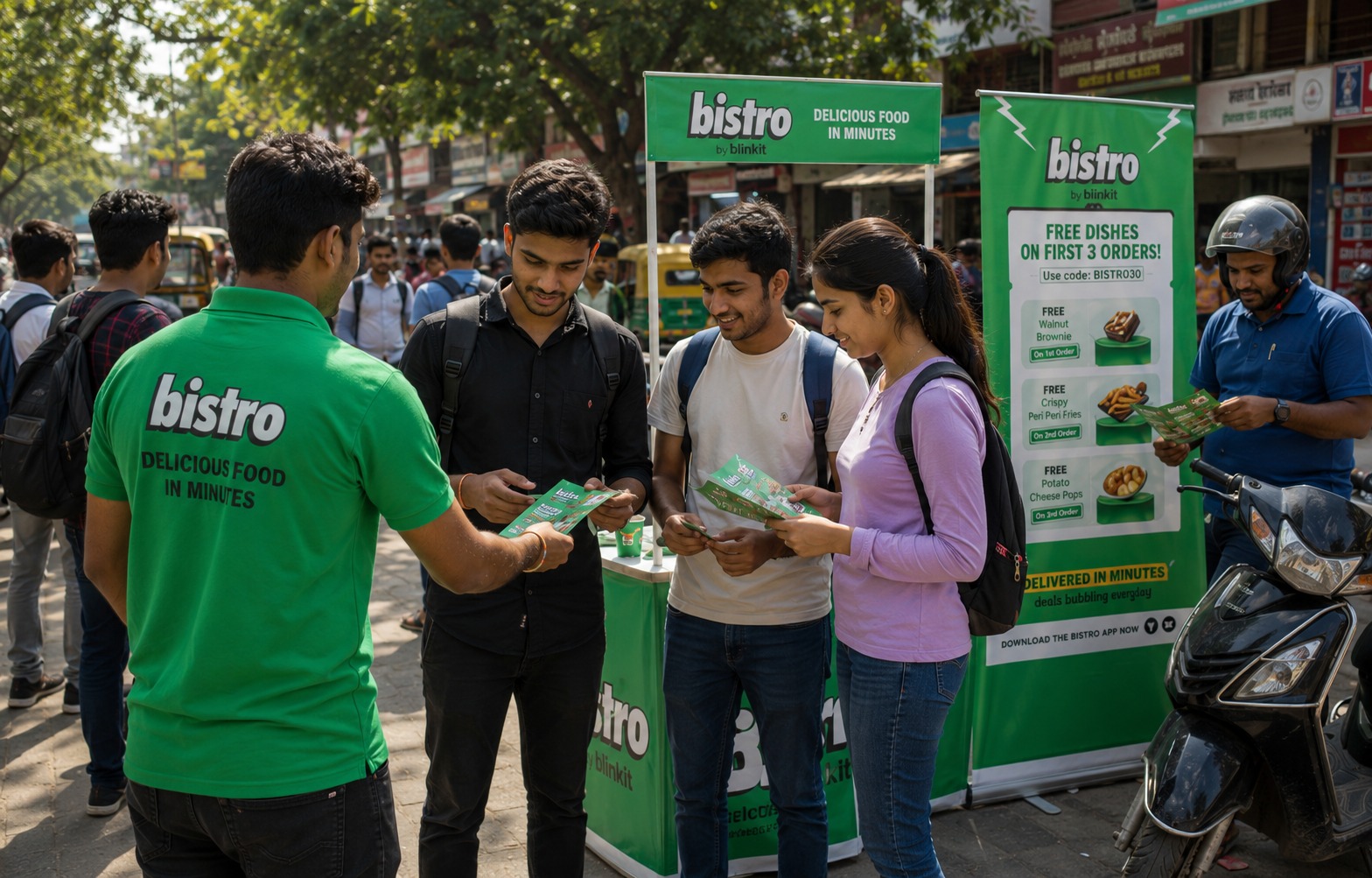
Table of Contents
- Executive Summary
- Campaign Overview
- Category Context: The 10-Minute Delivery War in Bangalore & Gurgaon
- The Challenge: Launching in New Micro-Markets
- CupShup's Strategic Approach: Recce, Activate, Convert
- Execution Detail: Daily Operations and Performance Management
- The Results: What 3 Months and 2 Cities Delivered
- Strategic Takeaways for Quick Commerce Brands
- Frequently Asked Questions
- Why Bistro by Zomato Chose CupShup
Executive Summary
This case study details how Bistro by Zomato (a 10-minute food delivery app entering Bangalore and Gurgaon) used a structured quick commerce BTL campaign to break into markets already dominated by established players. CupShup built and operated a city-wide on-ground activation covering 120+ RWAs, 45+ tech parks and 80+ high-footfall hotspots across both cities. Every activation zone was selected based on delivery polygon overlap, footfall density and audience fit: residential clusters for habit formation, tech parks for working professional acquisition, and hotspots for broad visibility. The campaign ran for 3 months and is ongoing. Total outcome: 2.8 million+ consumer touchpoints, 1,80,000+ app downloads, 65,000+ first orders, and a 35%+ conversion rate from download to first order.
Campaign Overview
Campaign Gallery
Hover to expand media • Click for fullscreen photos
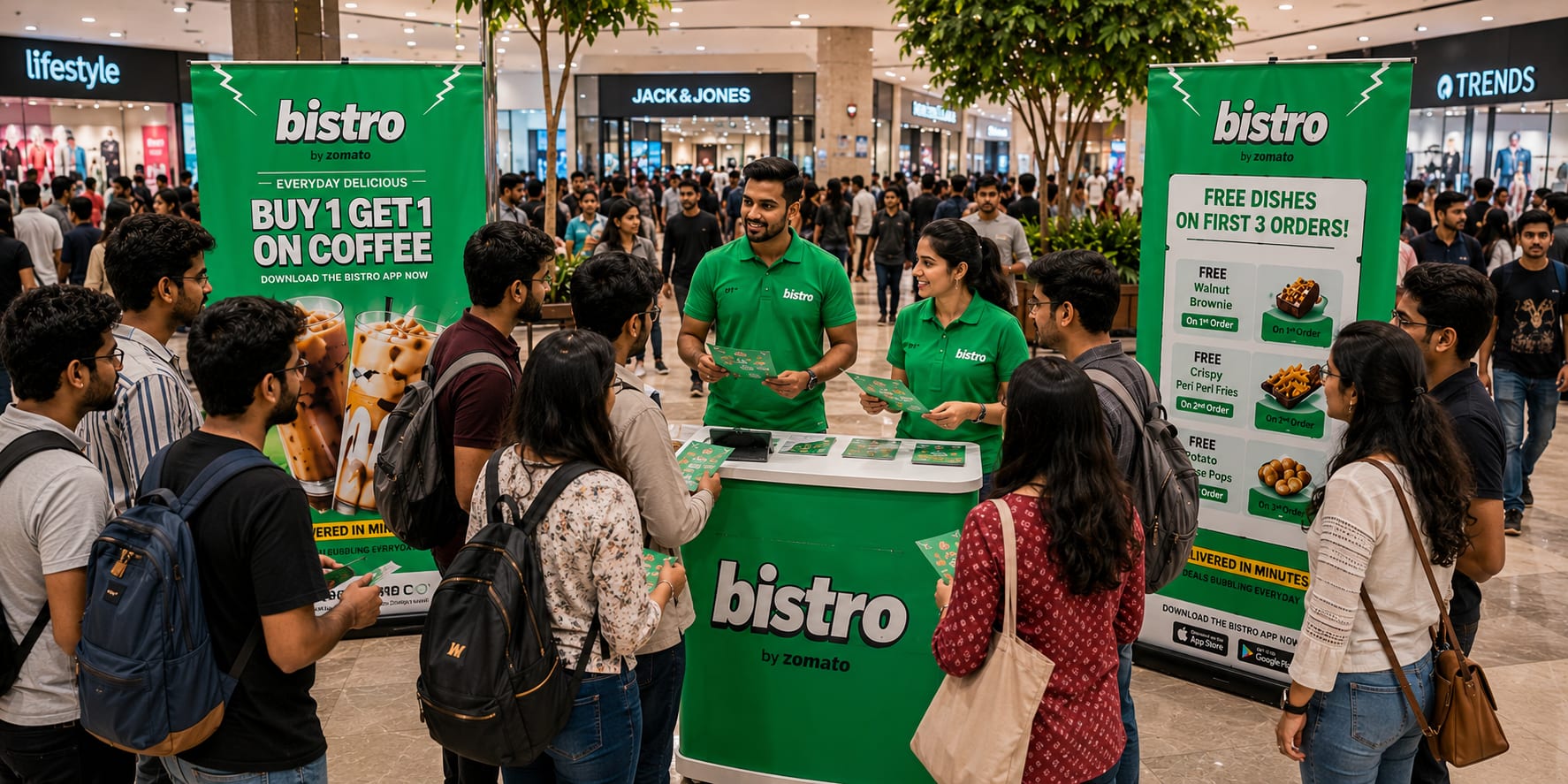
CupShup on-ground activation setup with Bistro branded canopy and standees at RWA gate
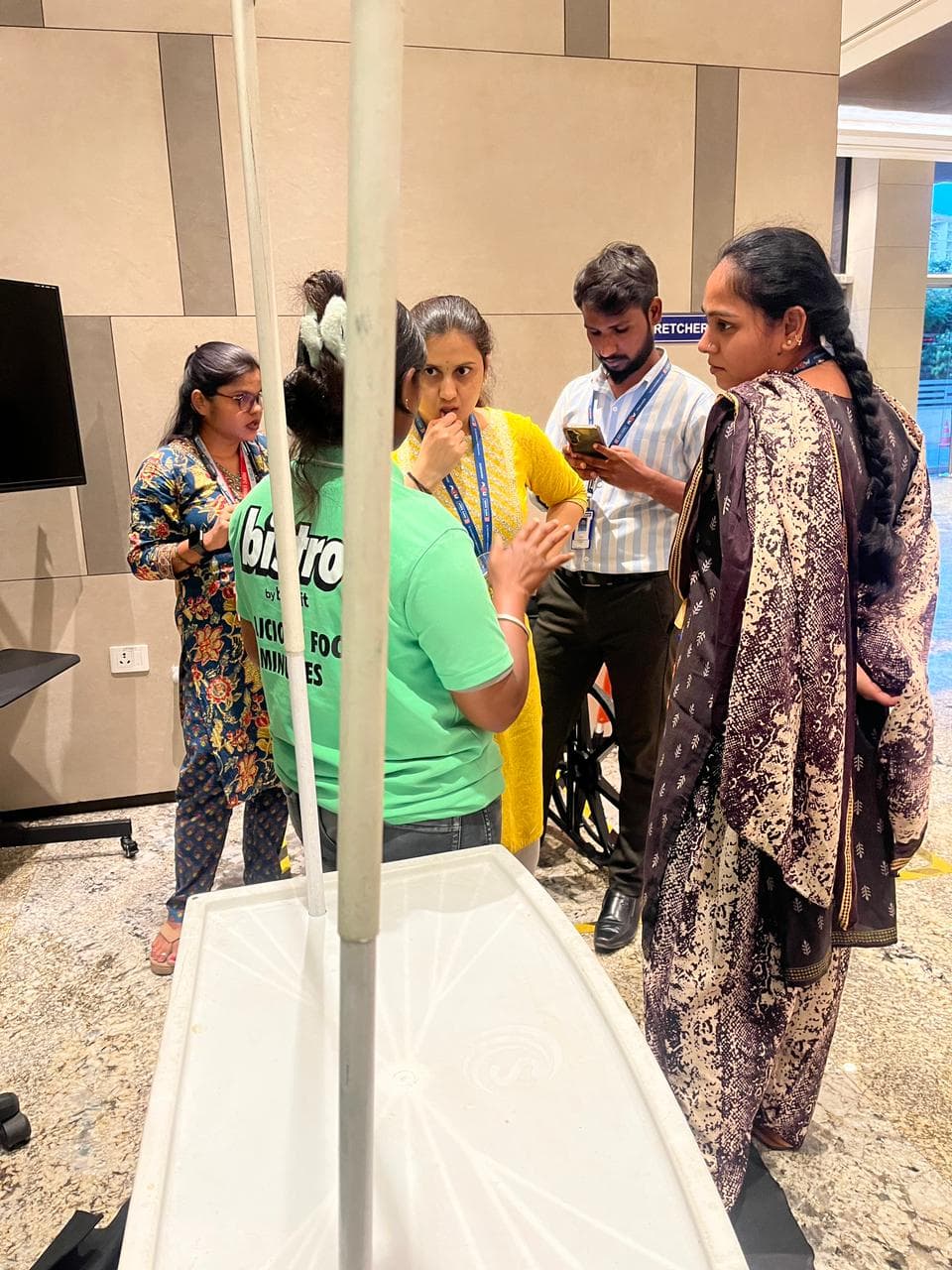
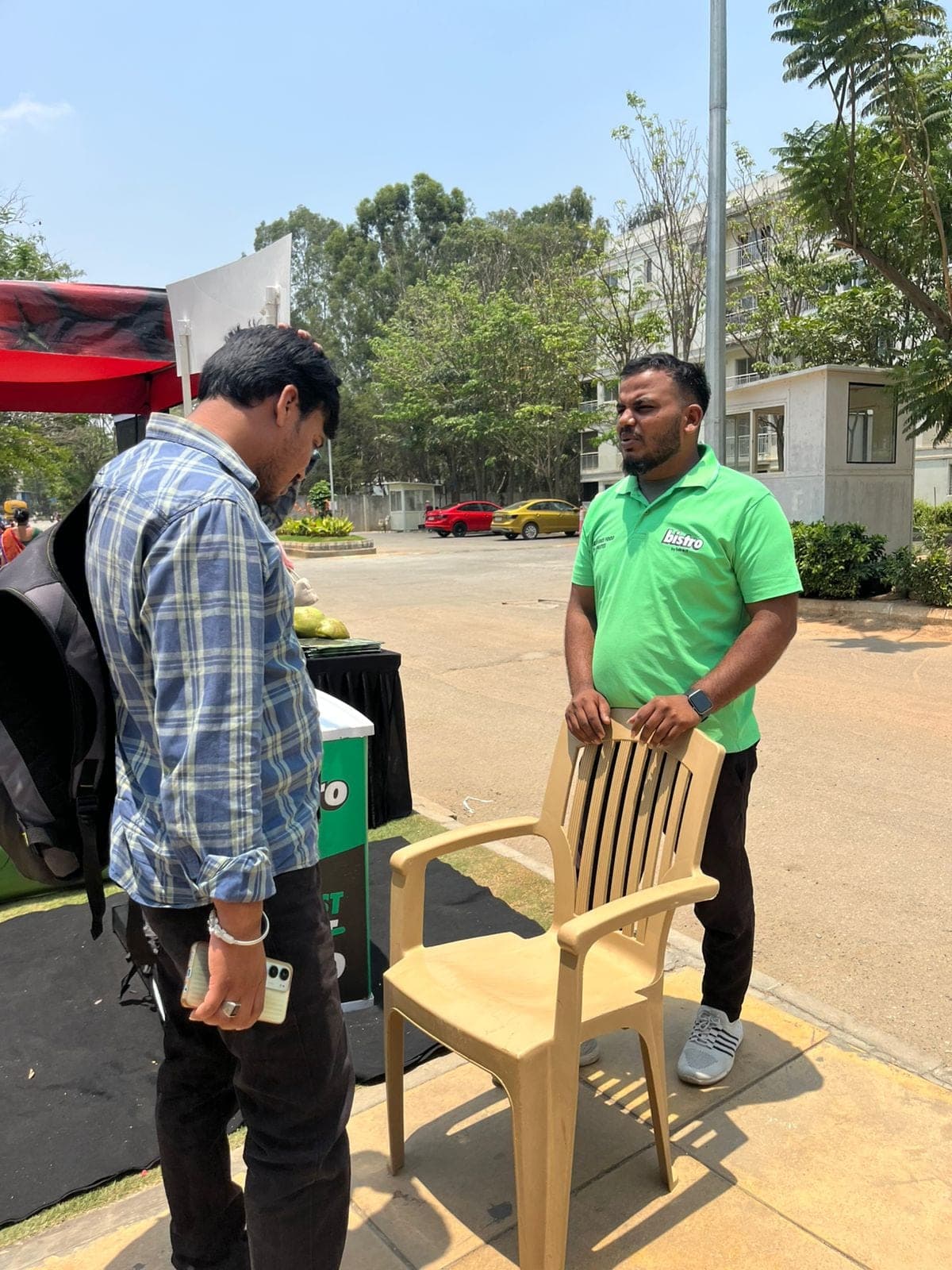
CupShup promoter conducting live Bistro app walkthrough with consumer at activation zone
Bistro first-order offer display and sampling materials at CupShup activation zone
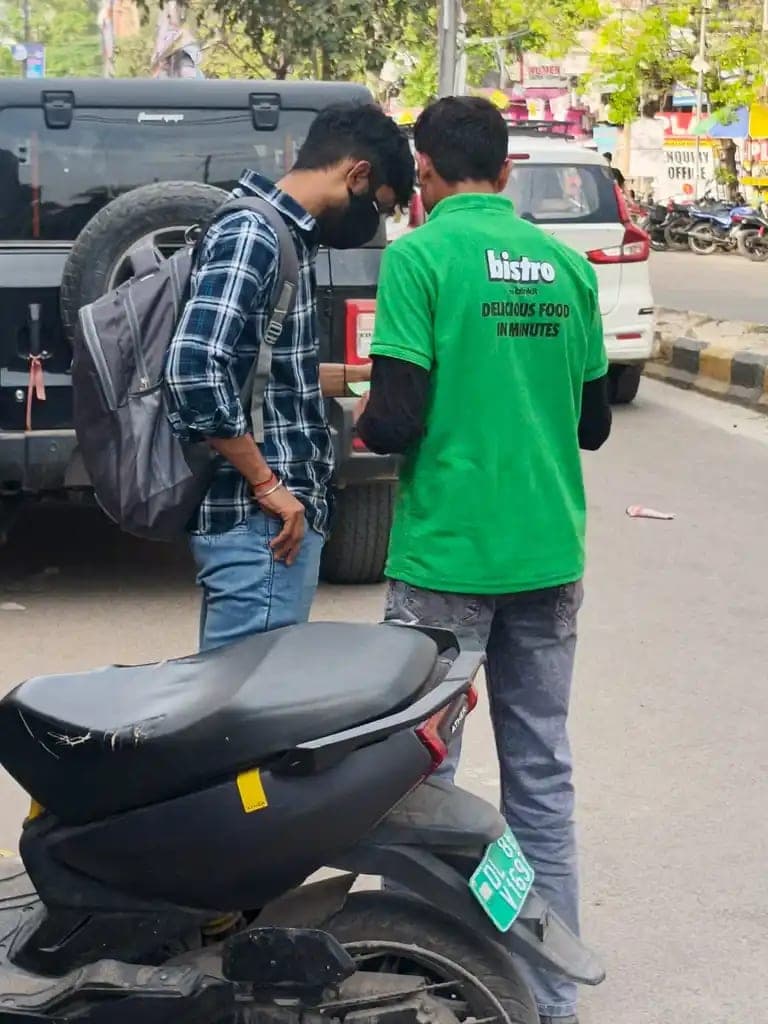
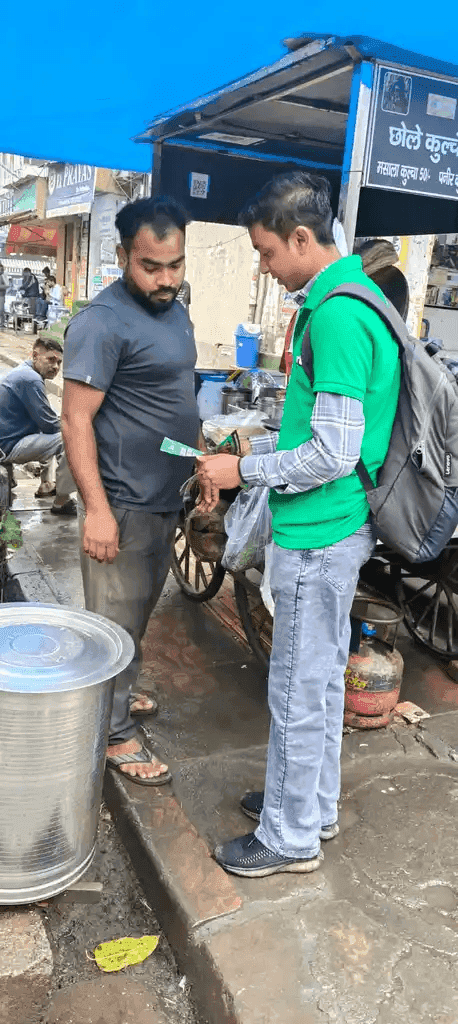
Bistro by Zomato promoter in a green Bistro t-shirt assisting a consumer on the street
Client: Bistro by Zomato Category: Quick Commerce / F&B Campaign: Quick Commerce Brand Activation: RWA, Tech Park and Hotspot App Download Drive Cities: Bangalore, Gurgaon Duration: 3 Months (Ongoing) Media Deployed: RWA Activations | Tech Park Activations | Hotspot Activations (High-Footfall Areas) Key Results: 2,80,000+ total reach | 1,80,000+ app downloads | 65,000+ first orders | 35%+ conversion rate | 20,000+ repeat orders
Category Context: The 10-Minute Delivery War in Bangalore & Gurgaon
By the time Bistro by Zomato launched in Bangalore and Gurgaon, both cities had deeply entrenched quick commerce habits. Zepto, Blinkit and Swiggy Instamart had spent years normalising 10-to-20-minute delivery for groceries and FMCG. Consumers had their preferred apps pinned, their carts pre-loaded and their first-order habits locked.
Bistro entered with a differentiated proposition: 10-minute delivery of ready-to-eat food, snacks and beverages rather than groceries. But it faced three structural headwinds that no amount of digital advertising could address alone:
- New geography, low awareness. Both Bangalore and Gurgaon had pockets of dense residential and commercial activity where Bistro had zero brand recall. Consumers in these micro-markets had never seen the product, the branding or the value proposition in person.
- Category unfamiliarity. Quick commerce for ready-to-eat food is a distinct category from grocery delivery. Consumers needed to understand it differently: not "replace your kirana" but "replace your 3 PM chai run or your late-night snack delivery". That education required a human conversation, not a banner.
- Conversion gap from digital spend alone. In a market where consumers have 3-4 quick commerce apps installed, a new app download via a digital ad rarely produces a first order. The consumer downloads, gets distracted and never places the first order. The only reliable way to close that first order is to be present, in person, at the moment the consumer is ready to try.
This is why a hyperlocal brand activation was not a supplementary tactic for Bistro. It was the primary acquisition and conversion engine.
The Challenge: Launching in New Micro-Markets
Low brand awareness in new micro-markets
Awareness had to be built hyper-locally, block by block, across large and fragmented cities.
Hyperlocal visibility and trust-building
Quick commerce trust is neighbourhood-specific; physical presence at the RWA gate or office lobby builds it.
High competition in quick commerce and food delivery
Zepto, Blinkit, Swiggy Instamart and Zomato food delivery competed for the same consumer phone screen.
First-order conversion in a new category
10-minute ready-to-eat food delivery was unfamiliar, so education and the first-order action had to happen at the point of human contact.
Bistro's brief to CupShup defined four specific problems, each of which digital spend alone couldn't solve:
- Low brand awareness in new micro-markets. Bangalore and Gurgaon are large, fragmented cities. A brand launching in select delivery zones cannot rely on city-wide awareness to drive neighbourhood-level adoption. Awareness had to be built hyper-locally, block by block.
- Hyperlocal visibility and trust-building. Quick commerce trust is neighbourhood-specific. A consumer in Koramangala needs to know that Bistro delivers to their building, reliably, in 10 minutes. Generic brand visibility doesn't build that trust. Physical presence at their RWA gate or office lobby does.
- High competition in quick commerce and food delivery. Both cities had Zepto, Blinkit, Swiggy Instamart and Zomato's own food delivery competing for the same consumer's phone screen. A new app entry required a differentiated, on-ground moment that cut through saturated digital noise.
- First-order conversion in a new category. 10-minute ready-to-eat food delivery was an unfamiliar concept. Consumers who understood grocery quick commerce needed to understand Bistro's distinct use case. That education, and the first-order action it was meant to trigger, had to happen at the point of human contact, not through a retargeting ad.
CupShup's Strategic Approach: Recce, Activate, Convert
The campaign was built around a six-step operating model, each step designed to compound the one before it.
1. Market Recce & Planning
Before a single promoter was deployed, CupShup conducted detailed on-ground recce across RWAs, tech parks and hotspots in both Bangalore and Gurgaon. The brand provided a list of high-footfall micro-markets aligned to their delivery polygon coverage. CupShup mapped these against footfall density, resident/employee demographics, competitive activity and access constraints to finalise the activation calendar. Only zones that sat within Bistro's serviceable delivery radius were activated: every download had to be convertible to a first order.
Pro tip: Recce is not optional in a quick commerce BTL campaign. Activating outside the delivery polygon creates downloads that can never convert. The first hour of planning is worth more than the last week of execution.
2. On-Ground Setup & Branding
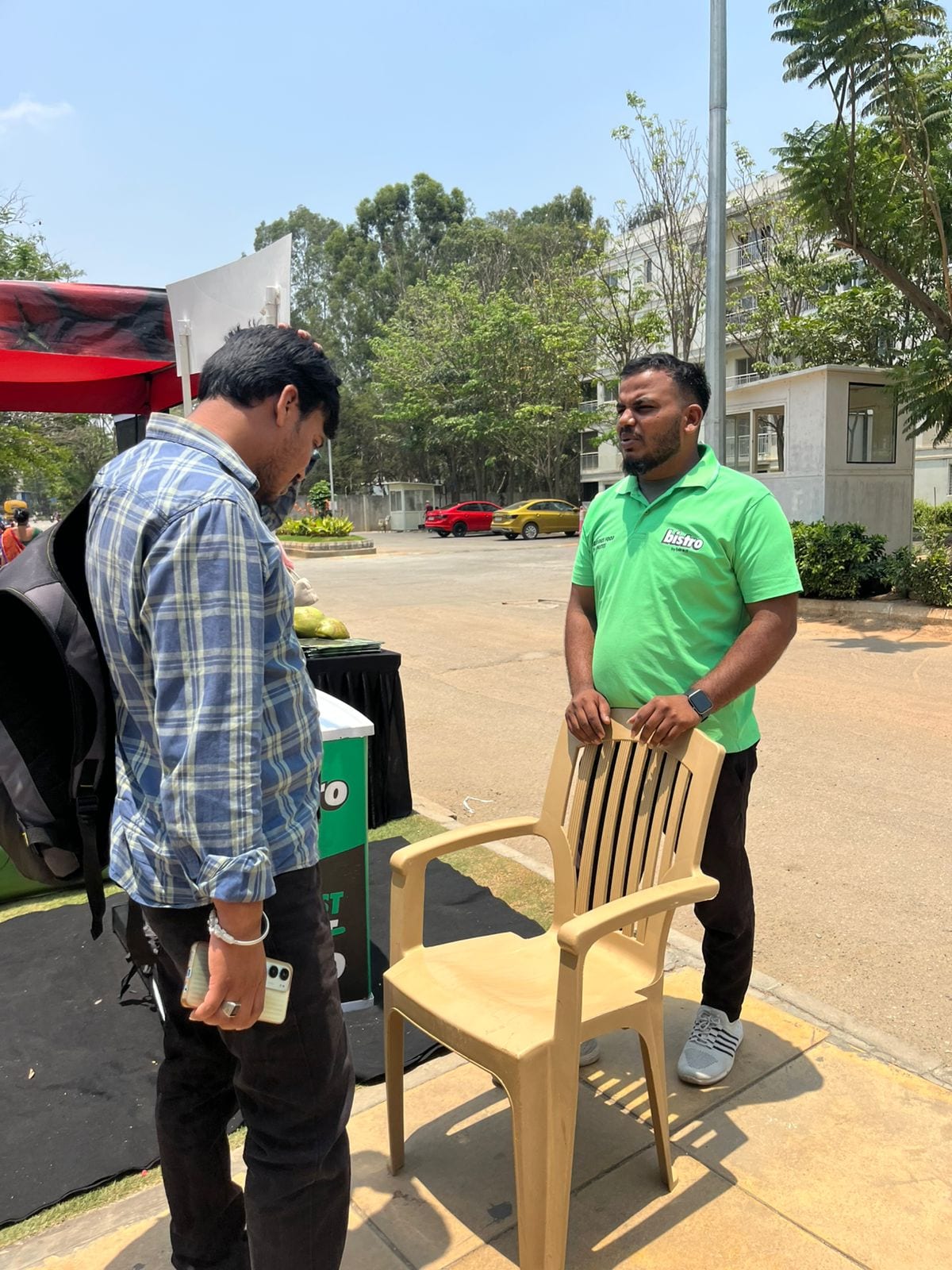
At every activation zone, CupShup deployed canopy setups with high-visibility Bistro branding: standees, product creatives and app-download messaging designed to create a brand moment that was impossible to walk past. The setup communicated two things instantly: this is Bistro and food delivered in 10 minutes, starting now. Branding was zone-specific in placement: RWA gate corners for maximum entry/exit visibility, lobby areas for dwell time, and open hotspot areas for broad impression volume.
Insider hack: In a RWA activation quick commerce context, placement beats size. A well-positioned A4 standee at a building entrance outperforms a large flex banner 50 metres away. Put your brand where the decision is made: at the gate, at the lift lobby, at the food court entrance.
3. Consumer Engagement
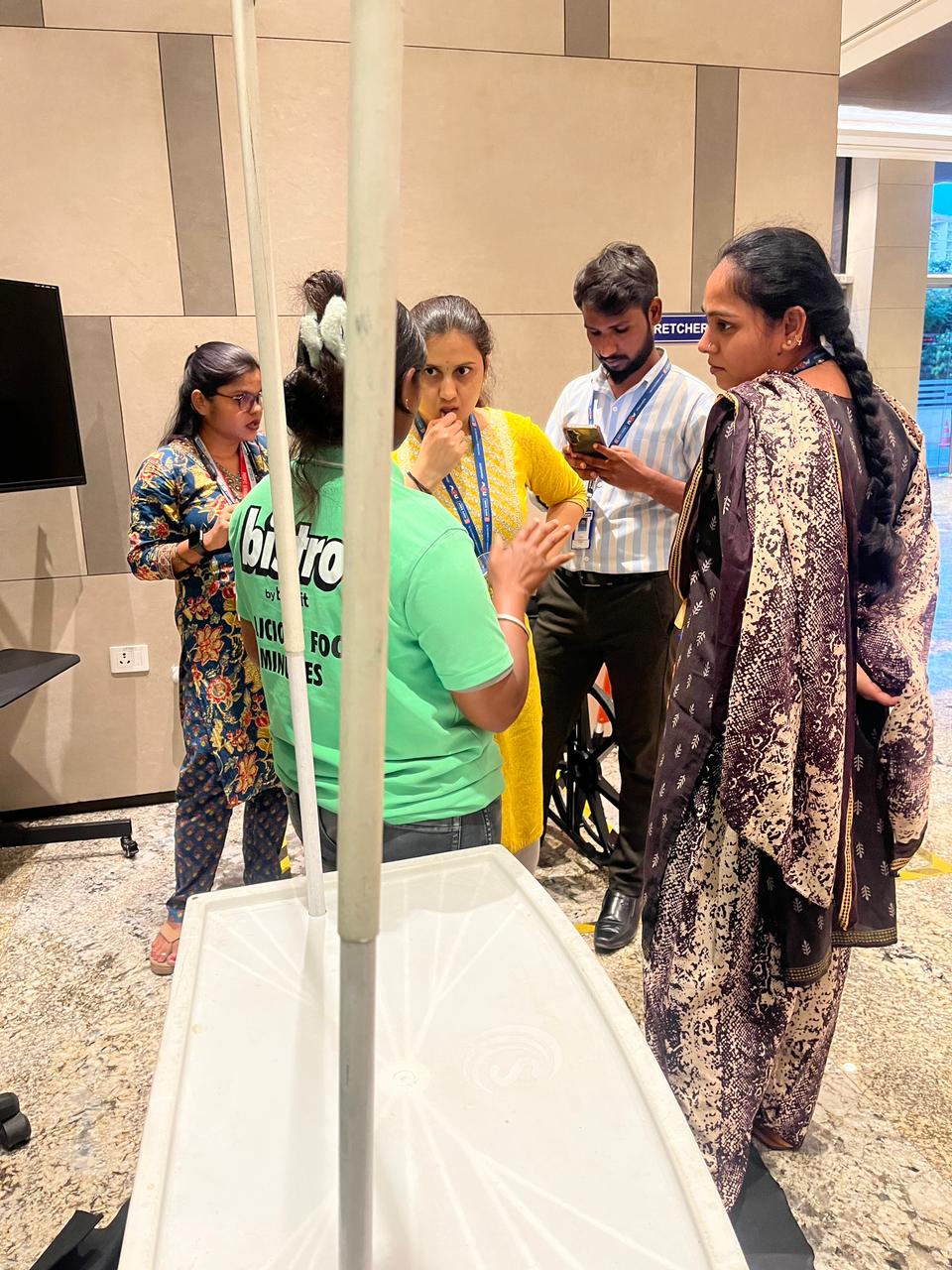
CupShup promoters didn't just hand out flyers. Each promoter was trained to deliver a 90-second Bistro pitch covering three points: the 10-minute delivery promise, the specific offer available today, and a live app walkthrough on the consumer's phone. The engagement model prioritised understanding over awareness: a consumer who can explain Bistro to a colleague after the interaction is worth ten who walked past a banner.
4. Assisted First-Order Conversions
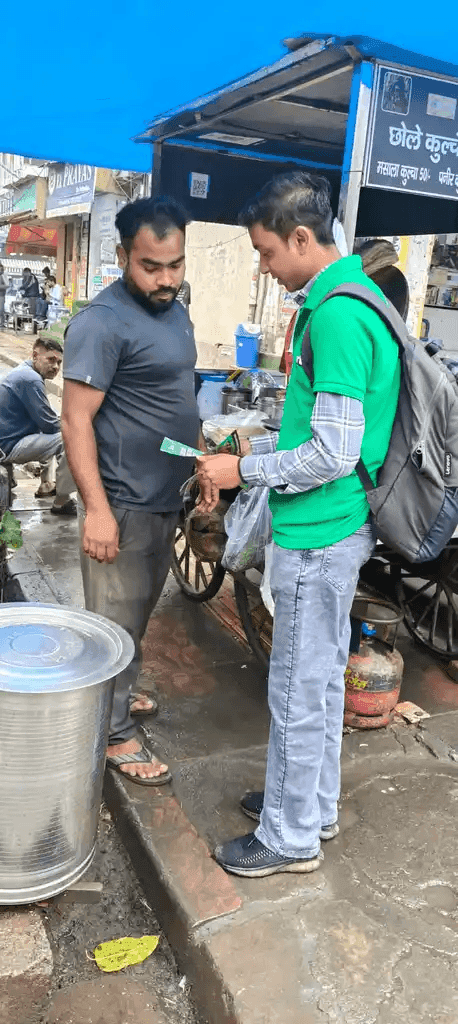
The highest-leverage moment in the entire app download campaign BTL was the assisted conversion: a promoter walking a consumer through their very first order, on the spot, before they left the activation zone. This compressed the install-to-first-order window from days (the category average) to minutes. Promoters were briefed specifically on this step: download is not success, first order is success. Every team member tracked first orders facilitated, not just downloads recorded.
Pro tip: The 48-hour window after install is the highest-risk churn period in quick commerce. A consumer who doesn't order within 48 hours has a 70%+ churn probability. Closing the first order at the activation zone eliminates that risk entirely.
5. Sampling & Experience Hooks
To create instant gratification at the activation zone, CupShup incorporated offer-led hooks: first-order incentives, freebie communication and visual cues that made the 10-minute promise tangible. Consumers who engaged with the activation didn't just understand Bistro intellectually; they experienced a version of the value proposition before leaving the zone. This reinforced the speed-and-convenience narrative that Bistro's category positioning is built on.
6. Hyperlocal Targeting: Residential Clusters and Working Professionals
The activation calendar was structured around two primary consumer cohorts: residential clusters (RWA residents: families, young professionals, domestic decision-makers) and working professionals (tech park and co-working employees: high-frequency food-order behaviour, craving windows at 11 AM, 1 PM and 6 PM). Each cohort received tailored messaging: residential activations emphasised convenience and family use cases, while tech park activations led with speed and snack/coffee delivery.
Insider hack: In on-ground app marketing, generic messaging underperforms cohort-specific messaging by a significant margin. A promoter in a tech park who leads with "order your 3 PM coffee in 10 minutes" will outconvert one who leads with a generic brand line.
Execution Detail: Daily Operations and Performance Management
Daily reporting & performance tracking
Every activation day generated a zone-level report covering downloads, first orders, consumer engagements and promoter hours.
Geo-wise optimisation
Underperforming zones were replaced or rescheduled, and outperforming zones were doubled in frequency.
Promoter performance monitoring
Each promoter was tracked individually on download facilitation and first-order conversion.
Conversion funnel analysis (Download to Order)
Impression, engagement, download, first order and repeat order were tracked at the zone and city level.
Retargeting support for drop-offs
Consumers who downloaded but did not place a first order were served first-order offer creatives within 24-48 hours.
A 3-month, multi-zone campaign across two cities required a structured operations layer running in parallel with on-ground execution:
Daily reporting & performance tracking. Every activation day generated a zone-level performance report: downloads, first orders, consumer engagements, promoter hours. Data was consolidated daily and reviewed weekly to identify high-performing zones and underperforming ones.
Geo-wise optimisation. Zones that consistently underperformed on downloads-per-hour were replaced or rescheduled. Zones that outperformed were doubled in frequency. By Month 2, the activation calendar was significantly different from Month 1, shaped by 30 days of real performance data rather than pre-campaign assumptions.
Promoter performance monitoring. Each promoter was tracked on download facilitation and first-order conversion individually. Low-conversion promoters received additional product training and shadow sessions with high-conversion team members. This individual accountability loop is what kept the campaign's conversion rate consistently above 35% across the full 3-month period.
Conversion funnel analysis (Download → Order). The full funnel: impression, engagement, download, first order, repeat order was tracked at the zone and city level throughout the campaign. This allowed CupShup to identify where in the funnel each zone was leaking and address it operationally.
Retargeting support for drop-offs. Consumers who downloaded but did not place a first order during the activation were flagged for digital retargeting. CupShup's performance marketing layer served first-order offer creatives to these users within 24-48 hours of the activation interaction, significantly improving post-activation conversion recovery.
The Results: What 3 Months and 2 Cities Delivered
| Metric | Result |
|---|---|
| Total Reach | 2,80,0000+ |
| Offline Reach | 20,00,000+ |
| Engagements | 95,000+ |
| App Downloads | 1,80,000+ |
| First Orders Generated | 65,000+ |
| Conversion Rate (Download → Order) | 35%+ |
| Repeat Orders | 20,000+ |
| RWAs Activated | 120+ |
| Tech Parks Covered | 45+ |
| Hotspots Covered | 80+ |
Across RWAs, tech parks and hotspots in Bangalore and Gurgaon
| Metric | Result |
|---|---|
| Total Reach | 2,80,0000+ |
| Offline Reach | 20,00,000+ |
| Engagements | 95,000+ |
| App Downloads | 1,80,000+ |
| First Orders Generated | 65,000+ |
| Conversion Rate (Download → Order) | 35%+ |
| Repeat Orders | 20,000+ |
| RWAs Activated | 120+ |
| Tech Parks Covered | 45+ |
| Hotspots Covered | 80+ |
What the Numbers Mean
The headline metrics tell a clean story. The patterns underneath are equally instructive:
- 35%+ conversion rate across a 3-month window (not a single activation day) means the assisted first-order model held up at scale across 120+ RWAs, 45+ tech parks and 80+ hotspots. This is not a spike; it is a repeatable operating model.
- 20,000+ repeat orders signal that the first-order experience was strong enough to produce habitual behaviour: the ultimate objective of any quick commerce launch campaign.
- Gurgaon vs Bangalore performance split. Tech parks in Gurgaon (dense IT corridor, high concentration of food-ordering professionals) showed the fastest first-order velocity. RWAs in Bangalore showed the highest repeat order rate, reflecting stronger habit formation in residential clusters once the first order was placed.
- Geo-wise optimisation impact. Zones replaced or rescheduled based on Month 1 performance data contributed disproportionately to Month 2-3 download and first-order volumes, validating the importance of real-time campaign optimisation over a fixed activation plan.
According to Redseer's Q-Commerce India Report, India's quick commerce market is growing at 77% year-on-year. And yet first-order conversion rates for new app entrants in competitive markets typically fall well below 35%. Bistro's 35%+ rate, sustained over 3 months and across two cities, is a direct result of the assisted conversion model rather than incentive-led mass install campaigns.
Strategic Takeaways for Quick Commerce Brands
Recce before you deploy
Finalize delivery polygon boundaries and cross-reference with footfall density before committing a single promoter.
Measure first orders, not downloads
Downloads are inputs. First orders are revenue. Structure the brief, promoter incentives and daily reporting around first-order conversion.
Optimise the calendar monthly, not quarterly
Month 1 performance data is the most valuable asset a campaign generates. Use it to reshape the Month 2 zone calendar.
Five principles from Bistro's activation that apply to every quick commerce launch or new-geography expansion:
- Recce before you deploy. Finalize delivery polygon boundaries and cross-reference with footfall density before committing a single promoter. Every download outside your serviceable area is a guaranteed churn event and a negative brand experience.
- Measure first orders, not downloads. Downloads are inputs. First orders are revenue. Structure your activation brief, your promoter incentives and your daily reporting around first-order conversion, not download count.
- Optimise the calendar monthly, not quarterly. Month 1 performance data is the most valuable asset a campaign generates. Use it to reshape the Month 2 zone calendar. A campaign that runs the same zones for 3 months without optimisation is leaving 20-30% of its potential on the table.
- Cohort-specific messaging converts. Tech park promoters should talk about 3 PM coffee runs and late-evening snacks. RWA promoters should talk about family convenience and weekend breakfast delivery. The same generic script underperforms both.
- Retarget the drop-offs within 48 hours. A consumer who downloaded but didn't order during the activation is a warm lead for 48 hours. After that, conversion probability drops sharply. Build a retargeting layer into the campaign architecture before launch, not as an afterthought.
Frequently Asked Questions: Quick Commerce Brand Activation in India
What is quick commerce brand activation? Quick commerce brand activation is a BTL (below-the-line) marketing strategy where on-ground field teams engage consumers within proximity to quick commerce dark stores, typically within 1-3 km delivery polygons, to drive app installs and first orders. For Bistro by Zomato, this meant deploying canopy setups with promoters across RWAs, tech parks and high-footfall hotspots in Bangalore and Gurgaon, facilitating assisted downloads and first-order placements on the spot.
What is an RWA activation in quick commerce? An RWA activation (Residential Welfare Association activation) is an on-ground campaign conducted inside or at the entrance of a residential society. For quick commerce brands, RWAs offer concentrated access to the consumer cohort most likely to become habitual users: resident families and young professionals who receive deliveries at home. RWA activations allow promoters to demonstrate the delivery promise to consumers who are literally at their delivery address, compressing the install-to-first-order window to minutes.
Why is 35% first-order conversion considered exceptional in quick commerce? The quick commerce category typically sees first-order conversion rates well below 35% for new or late-entry apps, where consumers must change an existing habit. Bistro by Zomato's 35%+ rate reflects a campaign architecture built specifically around the assisted conversion model: promoters stayed with consumers through the first order placement at the activation zone, not just the download. This eliminated the 48-hour drop-off window that is responsible for most quick commerce install-to-order churn.
How does a BTL activation compare to digital marketing for quick commerce app downloads? Digital paid campaigns (Meta, Google, CPI networks) drive installs from consumers in a passive browsing state. BTL activation reaches consumers in a craving state: at a tech park at 1 PM or an RWA gate at 6 PM, when the product's value proposition is immediately relevant. Bistro's campaign combined both: on-ground BTL warmed activation zones and facilitated first orders, while digital retargeting recovered drop-offs within 48 hours. Neither channel alone produces a 35%+ first-order conversion rate; the combination does.
Which activation formats work best for quick commerce launches in India? Based on Bistro's campaign across Bangalore and Gurgaon, three formats delivered the highest first-order conversion: RWA gate activations (highest repeat-order rates), tech park lobby activations (fastest first-order velocity), and hotspot activations (highest raw impression volume). Each format serves a different objective in the funnel: awareness, conversion, and habit formation. All three should run concurrently for a new market launch.
How long should a quick commerce brand activation campaign run? A minimum of 3 months is recommended for a new geography launch. Month 1 establishes baseline awareness and generates performance data for zone optimisation. Month 2 applies that optimisation: higher frequency in proven zones, replacement of underperforming zones. Month 3 consolidates habit formation in the residential and professional clusters where repeat order behaviour has been seeded. Bistro's campaign is ongoing, reflecting the compound nature of the results: repeat orders and habit formation continue to grow beyond the initial activation window.
What is the role of promoter training in quick commerce BTL campaigns? Promoter training is the single biggest variable in first-order conversion rate. A promoter who delivers a 90-second product walkthrough and completes an assisted first order converts 4-5x more than one who hands out a flyer. CupShup's promoter training for Bistro covered product positioning (10-minute food delivery vs grocery delivery), offer communication, live app walkthrough, and first-order facilitation. Each promoter was individually tracked on conversion rate throughout the campaign.
How does CupShup handle performance tracking in on-ground app marketing campaigns? CupShup's on-ground app marketing campaigns operate with daily zone-level reporting covering downloads, first orders, engagements, promoter hours and conversion rate. Weekly geo-wise optimisation reviews reshape the activation calendar based on real performance data. A conversion funnel analysis (download → first order → repeat order) runs throughout the campaign, and retargeting support is activated for consumers who downloaded but did not convert within 48 hours.
Why Bistro by Zomato Chose CupShup
Because an app download without a first order is a wasted acquisition cost. CupShup structured the entire Bistro campaign around a single outcome: first-order conversion, and built every operational decision from there: polygon-first zone selection, assisted conversion model, cohort-specific promoter briefing, daily performance tracking and geo-wise optimisation. As a leading brand activation agency in India, CupShup's ability to operate at micro-market precision across Bangalore and Gurgaon (120+ RWAs, 45+ tech parks, 80+ hotspots) while maintaining a 35%+ first-order conversion rate over 3 months is what makes the difference between a launch campaign and a revenue campaign. The Bistro by Zomato marketing strategy succeeded not because of budget, but because of operational discipline at the zone level.
Ready to Launch Your Quick Commerce Activation?
If you're a quick commerce brand planning a new city launch, a hyperlocal brand activation drive, or an app download campaign BTL, CupShup has the city-level field operations, polygon mapping capability and performance overlay to generate measurable first-order revenue from day one.
Let's build Marketing That Moves: from download to doorbell in ten minutes.
Related Case Studies and Services
- Jiffy by Spencer's: Quick Commerce Trust Activation: first-order trust-building playbook for a new QC entrant.
- Swiggy: Hyperlocal Quick Commerce Activation: dark-store polygon activation for an established QC brand.
- Flipkart Minutes: Late-Entry QC Brand Activation: entering a Zepto/Blinkit-dominated market.
- Zepto: BTL Experiential Marketing: the category peer playbook for aggressive early growth.
- Explore all quick commerce case studies and CupShup's QC execution depth.
- Learn about our brand activation services and performance marketing.
Contact us: contact@cupshup.co.in | +91 7982027840 Our services: Brand Activation Agency | Performance Marketing | SEO Content Marketing
Planning Your Next Product Launch?
CupShup designs and executes high-impact brand activations, experiential trials, and creator amplification across 50+ Indian cities.